
The Maigret books are also a good choice for Novellas in November, they’re all under 200 pages. I’ve been a Maigret fan for a long time, ever since I was in my teens, watching the TV series with Rupert Davies in the title role. And I’ve been reading the Maigret series as I’ve come across the books in libraries, bookshops, and more recently as e-books, so not in the order they were originally published.
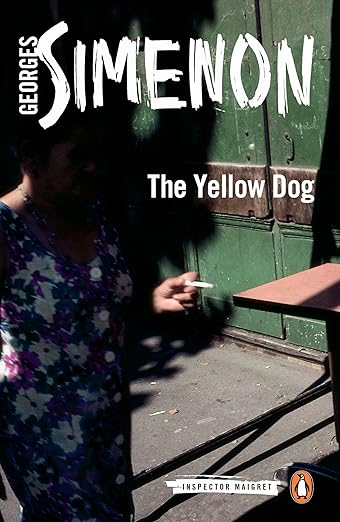
Penguin| 2014| 164 pages| My own copy| 3*
This is a short review because, once more I’m behind with writing reviews. The Yellow Dog is the 5th book in the new Penguin Maigret series, translated by Linda Asher. It was first published in 1931 and also published in a previous translation as A Face for a Clue. It’s a tale of small town suspicion and revenge.
In the windswept seaside town of Concarneau, a local wine merchant is shot. In fact, someone is out to kill all the influential men and the entire town is soon sent into a state of panic. For Maigret, the answers lie with the pale, downtrodden waitress Emma, and a strange yellow dog lurking in the shadows…
It’s only 134 pages but with a slow start it did seem longer than that. It begins with the shooting of Monsieur Mostaguen, a local wine merchant, followed by the appearance of the yellow dog, a big, snarling yellow animal, and then an attempt at poisoning for Maigret to investigate. I wondered what the significance of the yellow dog was and who it belonged to; no one seems to know. The locals had never seen it before and they all viewed it with fear and suspicion. I’ve read some of the earlier Maigret and have noted before that I’ve been confused and baffled, with little idea of what was going on and it was just the same with this book. Maigret doesn’t seem to be very concerned about the man who was shot and seriously injured, nor about the attempted poisoning until there’s a murder and another man disappears. He walks around the town, observing but not actively investigating.
Simenon is good at conveying atmosphere and skilled at setting the scene and drawing convincing characters in a few paragraphs. As the book begins there’s a south-westerly gale slamming the boats together in the harbour in Concarneau and the wind surges through the streets. Contrast the weather at the beginning of the book with the change by the time Maigret is getting close to clearing up the mystery – the weather turned fine, with a vibrant blue sky, the sea sparkled, and ‘the Old Town’s walls, so gloomy in the rain, turn a joyful, dazzling white.‘
I don’t think this is one of the best Maigret book, but it is puzzling with Maigret keeping his thoughts to himself until the end of the book, when like Agatha Christie’s Hercule Poirot, he explains it all.
 BooksPlease