Top Ten Tuesday: Books that Feature Travel

Top Ten Tuesday is a weekly meme created by The Broke and the Bookish and now hosted by Jana at That Artsy Reader Girl. For the rules see her blog.

The topic today is Books that Feature Travel and the books I’ve chosen feature different types of travelling in a variety of countries – on a bicycle, on boats and ocean liners, as well as on foot. I’ve read all of them except for Sea Change, which is still sat on my bookshelves.
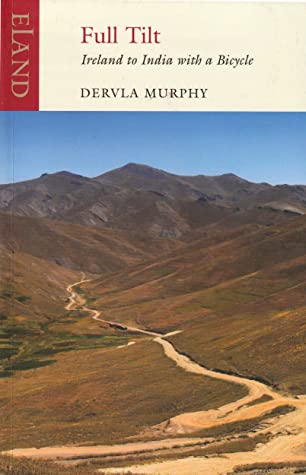
  1. Full Tilt: Dunkirk to Delhi on a Bicycle, first published in 1965  by Dervla Murphy this is an account of her journey in 1963, which took her through Europe, Persia (Iran), Afghanistan, over the Himalayas to Pakistan and into India.
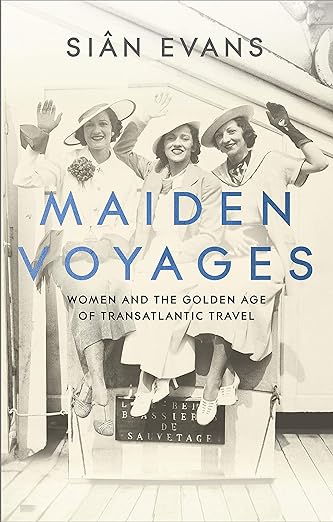
  2. Maiden Voyages by Siân Evans – transatlantic travel between the two World Wars on magnificent ocean liners undertaken by many women. Some travelled for leisure, some for work; others to find a new life, marriage, to reinvent themselves or find new opportunities. 
  3. Eat, Pray, Love by Elizabeth Gilbert. She travelled to Italy (Eat), India (Pray) and Indonesia (Love) spending four months in each place, searching for pleasure in Italy, mainly through food, God in India at an ashram, and balance in Indonesia.
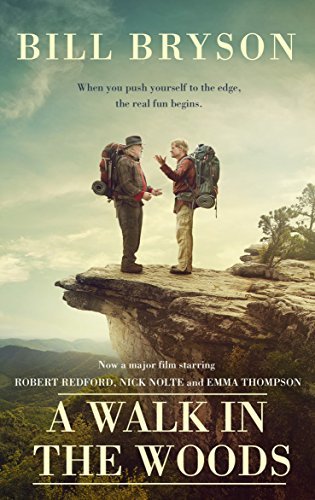
  4. A Walk in the Woods by Bill Bryson about his hike along the Appalachian Trail, the longest continuous footpath in the world.
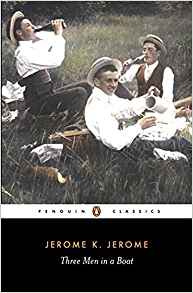
  5. Three Men in a Boat by Jerome K Jerome, first published in 1889. He intended it to be a serious travel book about the Thames, its scenery and history, but, as he wrote it turned into a funny book. It’s a story of a journey, comparing their trip to Stanley’s expedition to Africa searching for Dr Livingstone. 
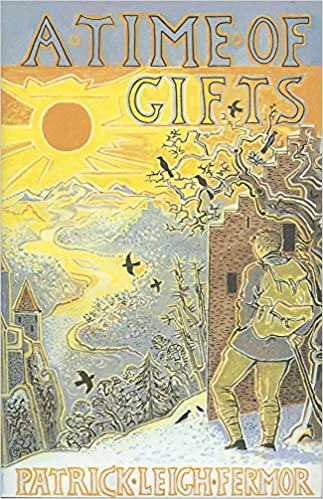
  6. A Time of Gifts by Patrick Leigh Fermor in which he describes his travels on foot in 1933 from the Hook of Holland through Germany, to Austria, Slovakia and Hungary, on his way to Constantinople.
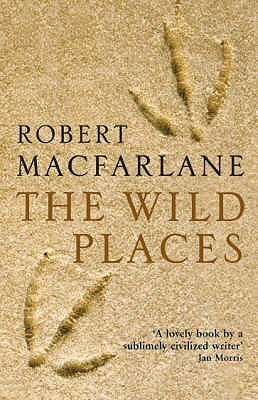
  7. The Wild Places by Robert Macfarlane, with a map showing the places he visited from the cliffs of Cape Wrath, to the holloways of Dorset, the storm-beaches of Norfolk, the saltmarshes and estuaries of Essex, and the moors of Rannoch and the Pennines.
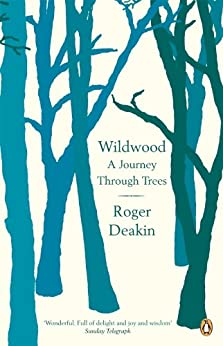
  8. Wildwood: a Journey Through Trees by Roger Deakin about his journeys through a wide variety of trees and woods in various parts of the world. It’s a memoir, a travelogue and also it’s about the interdependence of human beings and trees
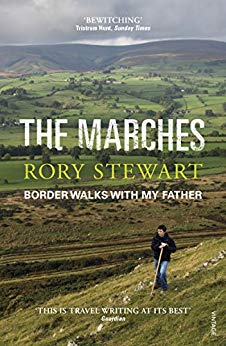
  9. The Marches Border Walks With My Father by Rory Stewart walking in the borderlands between England and Scotland, along Hadrian’s Wall and his coast to coast walk from Cunbria Cumbria to Berwick-upon-Tweed.
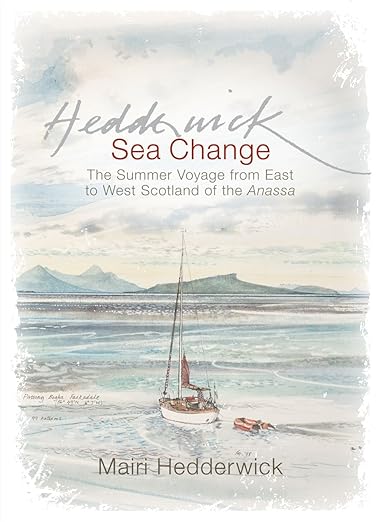
  10. Sea Change: The Summer Voyage from East to West Scotland of the Anassa by Mairi Hedderwick, describing her journey in an antiquated 26-foot long yacht through the Caledonian Canal to the fjords of the west: Lochs Linnhe, Etive, Ailort, Moidart, Nevis and Leven.

The Wild Places by Robert Macfarlane


I read The Wild Places by Robert Macfarlane at the end of December. I didn’t enjoy it as much as I thought I would from reading the blurb:

The Wild Places is both an intellectual and a physical journey, and Macfarlane travels in time as well as space. Guided by monks, questers, scientists, philosophers, poets and artists, both living and dead, he explores our changing ideas of the wild. From the cliffs of Cape Wrath, to the holloways of Dorset, the storm-beaches of Norfolk, the saltmarshes and estuaries of Essex, and the moors of Rannoch and the Pennines, his journeys become the conductors of people and cultures, past and present, who have had intense relationships with these places.Certain birds, animals, trees and objects – snow-hares, falcons, beeches, crows, suns, white stones – recur, and as it progresses this densely patterned book begins to bind tighter and tighter. At once a wonder voyage, an adventure story, an exercise in visionary cartography, and a work of natural history, it is written in a style and a form as unusual as the places with which it is concerned. It also tells the story of a friendship, and of a loss. It mixes history, memory and landscape in a strange and beautiful evocation of wildness and its vital importance.

I have mixed feelings about it. It does do all those things described above and maybe that was the problem for me -it tries to do too much. It is beautifully written, sometimes overwritten and it is also repetitive. There is a map showing the places he visited that helped me  to a certain extent – vague enough if you don’t want to pinpoint the precise locations. It is a book to read in small sections, to dip into rather than to read straight through as I did. I think I would have enjoyed it more if I had taken more time to read it – but during the times I did put it down I was in no hurry to get back to it.

I was intrigued by the places where he slept out and flabbergasted by the risks he took.

For example, he went on a night walk alone in the Cumbrian mountains. By the time he reached the mountains it was late afternoon and when he reached the ridge at over 2,000 feet the snow had thickened to a blizzard and it was hard to stand up in the wind. He decided to sleep on the surface of a frozen tarn that lay between two small crags giving some shelter from the wind. First he tested it by jumping gently on its centre; it didn’t creak, so he slept there in his sleeping and bivouac bags whilst it hailed and snowed. He began

to feel cold, deep down, as though ice were forming inside me, floes of it cruising my core, pressure ridges riding up through my arms and legs, white sheaths forming around my bones. (page 198)

When he woke he did a little dance on the tarn to warm himself and then saw that where he had been lying on the tarn,

the ice had melted, so that there was a shallow indent, shaped like a sarcophagus, shadowed out by the moonlight. (page 199)

However, I did enjoy the experience of reading The Wild Places, and  I’ve decided to read Macfarlane’s The Old Ways:  a Journey on Foot, particularly as a friend told me she had enjoyed it more than The Wild Places. Macfarlane describes how he set off from his Cambridge home to follow ancient tracks, holloways, drove roads and sea paths that criss-cross the British landscape.

Robert Macfarlane  is a Reader in Literature and the Geohumanities in the Faculty of English at Cambridge University. He is well-known as a writer about landscape, nature, memory, language and travel.

  • Paperback: 352 pages
  • Publisher: Granta Books (7 July 2008)
  • Language: English
  • ISBN-10: 1847080189
  • ISBN-13: 978-1847080189
  • Source: I bought my copy