Bello| 2013| 714 pages| e-book|5*
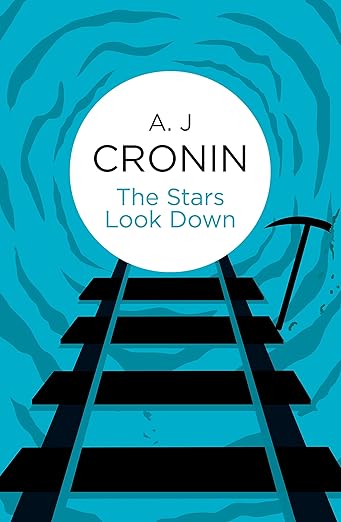
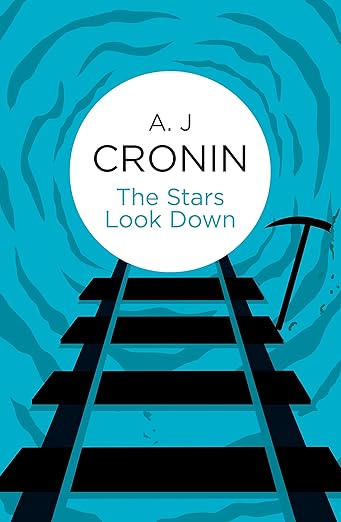
The Stars Look Down by A J Cronin is quite simply one of the best books I’ve read this year. There is so much more in this book than I’m able to mention in this post! it’s a family saga chronicling the lives of a number of interconnected families over a period of thirty years.
Synopsis from Amazon:
The Stars Look Down was A.J. Cronin’s fourth novel, published in 1935, and this tale of a North country mining family was a great favourite with his readers.
Robert Fenwick is a miner, and so are his three sons. His wife is proud that all her four men go down the mines. But David, the youngest, is determined that somehow he will educate himself and work to ameliorate the lives of his comrades who ruin their health to dig the nation’s coal. It is, perhaps, a typical tale of the era in which it was written – there were many novels about coal mining, but Cronin, a doctor turned author, had a gift for storytelling, and in his time wrote several very popular and successful novels
In the magnificent narrative tradition of The Citadel, Hatter’s Castle and Cronin’s other novels, The Stars Look Down is deservedly remembered as a classic of its age.
It’s my spin book for The Classics Club and it was the fourth book he wrote. Many years ago I read his fifth book, The Citadel, which I thought was excellent. The Stars Look Down was first published in 1935. The story starts in 1903 in a North Country mining town, Sleescale, a fictional town, as its inhabitants experienced social and political upheaval. It ends in 1933. It highlights the terrible conditions in the coal mines, the lack of workers’ rights and the need for change in the relationship between the coal miners and the mine owners.
There are three main characters, David Fenwick and Joe Gowlan, both from mining families, and Arthur Barras, the Neptune pit owner’s son. The characters and those connected to them, making up a large cast, are convincingly drawn. It’s a long book, but I read it quickly, completely absorbed in all the sub plots and keen to know how it would all be resolved. There is plenty of drama, with scenes including a flood in the pit, killing one hundred and five miners, including David’s father and brother. Cronin’s descriptive writing is so strong, conveying the terrible conditions in the pit, as the miners find themselves trapped and slowly realise there is no way out. Those scenes in particular made a big impression on me and will stay with me for quite some time.
David goes into politics determined to improve the miners’ working conditions, whilst Joe leaves the mine and becomes a successful businessman, a swindler, engaging in dodgy deals to become wealthy. Arthur, meanwhile, is dominated by his father, Robert, but after the flood, he realises Robert is ignoring the safety of his workers in order to make a profit and the two become estranged. He is unable to forget the men who had died in the Neptune pit and the carnage of the war is abhorrent to him; he refuses to fight and is imprisoned.
Despite the multiple sub plots and characters I was able to keep track of them all. Cronin is a superb storyteller and his story held my interest all the way to its end. He made an excellent case for the nationalisation of the coal mines, as he did for the creation of the National Health Service in his next book, The Citaldel. I’m looking forward to reading more of his books.
About a. j. cronin
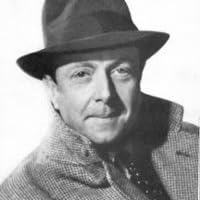
Archibald Joseph Cronin was a Scottish novelist, dramatist, and non-fiction writer who was one of the most renowned storytellers of the twentieth century. His best-known works are The Citadel and The Keys of the Kingdom, both of which were made into Oscar-nominated films. He also created the Dr. Finlay character, the hero of a series of stories that served as the basis for the long-running BBC television and radio series entitled Dr. Finlay’s Casebook.
-Wikipedia: http://en.wikipedia.org/wiki/A.J._Cronin

 BooksPlease