Top Ten Tuesday: Books that Feature Travel

Top Ten Tuesday is a weekly meme created by The Broke and the Bookish and now hosted by Jana at That Artsy Reader Girl. For the rules see her blog.

The topic today is Books that Feature Travel and the books I’ve chosen feature different types of travelling in a variety of countries – on a bicycle, on boats and ocean liners, as well as on foot. I’ve read all of them except for Sea Change, which is still sat on my bookshelves.
  1. Full Tilt: Dunkirk to Delhi on a Bicycle, first published in 1965  by Dervla Murphy this is an account of her journey in 1963, which took her through Europe, Persia (Iran), Afghanistan, over the Himalayas to Pakistan and into India.
  2. Maiden Voyages by Siân Evans – transatlantic travel between the two World Wars on magnificent ocean liners undertaken by many women. Some travelled for leisure, some for work; others to find a new life, marriage, to reinvent themselves or find new opportunities. 
  3. Eat, Pray, Love by Elizabeth Gilbert. She travelled to Italy (Eat), India (Pray) and Indonesia (Love) spending four months in each place, searching for pleasure in Italy, mainly through food, God in India at an ashram, and balance in Indonesia.
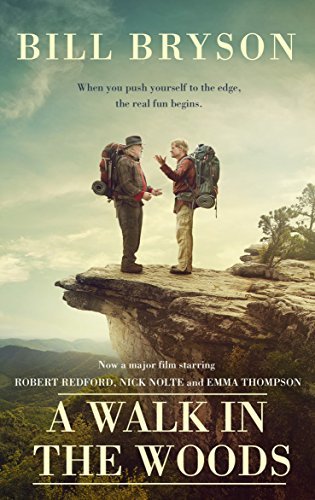
  4. A Walk in the Woods by Bill Bryson about his hike along the Appalachian Trail, the longest continuous footpath in the world.
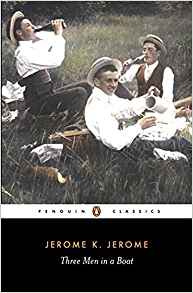
  5. Three Men in a Boat by Jerome K Jerome, first published in 1889. He intended it to be a serious travel book about the Thames, its scenery and history, but, as he wrote it turned into a funny book. It’s a story of a journey, comparing their trip to Stanley’s expedition to Africa searching for Dr Livingstone. 
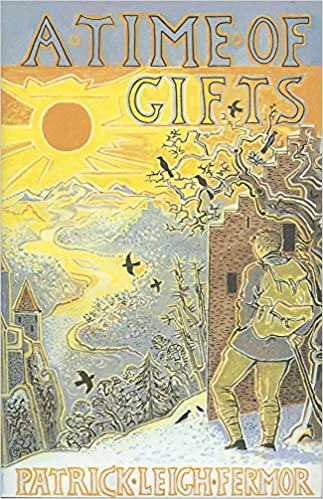
  6. A Time of Gifts by Patrick Leigh Fermor in which he describes his travels on foot in 1933 from the Hook of Holland through Germany, to Austria, Slovakia and Hungary, on his way to Constantinople.
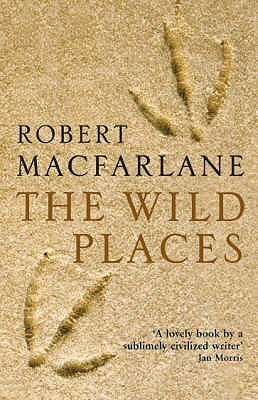
  7. The Wild Places by Robert Macfarlane, with a map showing the places he visited from the cliffs of Cape Wrath, to the holloways of Dorset, the storm-beaches of Norfolk, the saltmarshes and estuaries of Essex, and the moors of Rannoch and the Pennines.
  8. Wildwood: a Journey Through Trees by Roger Deakin about his journeys through a wide variety of trees and woods in various parts of the world. It’s a memoir, a travelogue and also it’s about the interdependence of human beings and trees
  9. The Marches Border Walks With My Father by Rory Stewart walking in the borderlands between England and Scotland, along Hadrian’s Wall and his coast to coast walk from Cunbria Cumbria to Berwick-upon-Tweed.
  10. Sea Change: The Summer Voyage from East to West Scotland of the Anassa by Mairi Hedderwick, describing her journey in an antiquated 26-foot long yacht through the Caledonian Canal to the fjords of the west: Lochs Linnhe, Etive, Ailort, Moidart, Nevis and Leven.
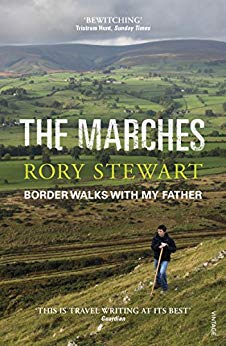
The Marches by Rory Stewart

Marches

Vintage|September 2017|368 pages|Paperback|4*

I enjoyed reading The Marches: Border Walks With My Father by Rory Stewart. He’s been in the news here recently, having stood for leadership of the Conservative Party, and has now formally stood down from Parliament to run as an independent candidate for Mayor of London.

But none of that has anything to do with why I wanted to read his book. It’s because of the subject – walking in the borderlands between England and Scotland, in the place where I live. And it’s not just about walking – he also muses on history, memory and landscape, all topics that interest me immensely.

Blurb:

His father Brian taught Rory Stewart how to walk, and walked with him on journeys from Iran to Malaysia. Now they have chosen to do their final walk together along ‘the Marches’ – the frontier that divides their two countries, Scotland and England.

On their six-hundred-mile, thirty-day journey – with Rory on foot, and his father ‘ambushing’ him by car – the pair relive Scottish dances, reflect on Burmese honey-bears, and on the loss of human presence in the British landscape.
Travelling across mountain ridges and through housing estates they uncover a forgotten country crushed between England and Scotland: the Middleland. They discover unsettling modern lives, lodged in an ancient place, as their odyssey develops into a history of the British nationhood, a chronicle of contemporary Britain and an exuberant encounter between a father and a son.

And as the journey deepens, and the end approaches, Brian and Rory fight to match, step by step, modern voices, nationalisms and contemporary settlements to the natural beauty of the Marches, and a fierce absorption in tradition in their own unconventional lives.

My thoughts:

This is a book of three parts – Book One: The Wall about Rory Stewart’s walk along Hadrian’s Wall in 2011, with his father, then aged 89 – his father walking for the first hour or so each day. They had intended to walk the full length of the Wall, from east to west, but after they reached the fort at Bewcastle they decided to abandon their plan (his father having reached his limits) and drive back to his father’s house, Broich, near Crieff in Perthshire. He writes about the Wall, the Roman occupation of the area, his father’s career, about nationality and clans, and reminisces about his childhood and his time in Afghanistan.

Book Two: Middleland, in which he describes his walk from coast to coast, a distance of about 400 miles, taking him 26 days, walking alone from his cottage in Cumbria to the Solway Firth, then crossing and re-crossing the modern border (established in the 13th century) to Berwick-upon-Tweed and then back to Broich.

I got a bit lost in his descriptions of the route, not knowing some the places along the way. But there are maps of his route that helped me follow where he went. He describes the landscape, the geology, sheep farming and land use, the people he met, their history  and language and much, much more.

Book Three: The General Danced on the Lawn about his father, who died at the age of 93, before this book was finished. The whole book is permeated with his love and respect for his father, but this last section is all about Brian Stewart.

At the end of the Marches is a Chronology which I found very interesting, defining The Middleland before AD100 up to the present days. The Middleland is a term invented by Brian Stewart:

The geographical centre of the island of Britain. An upland landscape, whose core is the Lake District, the Peninnes, the Cheviots and the Scottish Borders, but whose fringes extend to the Humber in the south and the firths of Forth and Clyde in the north. A land naturally unified by geography and culture for two thousand years, but repeatedly divided by political frontiers. (page 339)