I’m the King of the Castle by Susan Hill

I read I’m the King of the Castle by Susan Hill for the 1970 Club hosted by Simon and Karen.
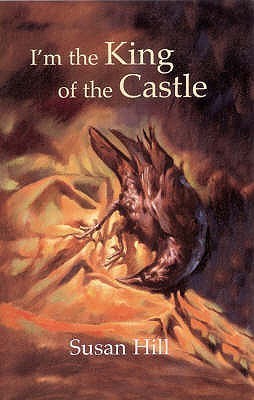
Description from Amazon UK for the Mass Market paperback edition published in 2014:

‘Some people are coming here today, now you will have a companion.’

But young Edmund Hooper doesn’t want anyone else in Warings, the rambling Victorian house he shares with his widowed father. Nevertheless Charles Kingshaw and his mother are soon installed and Edmund sets about persecuting his fearful new playmate.

From the dusty back rooms of Warings through the gloomy labyrinth of Hang Wood to the very top of Leydell Castle, Edmund pursues Charles, the balance of power slipping back and forth between bully and victim. With their parents oblivious, the situation speeds towards a crisis…

Darkly claustrophobic and morally ambiguous, Susan Hill weaves a classic tale of cruelty, power, and the dangerous games we play as children.

It is a depressing, tragic, heart-rending story about 11 year-old Charles Kingshaw’s misery and torture when he and his mother Helena, went to live at Warings, the home of Joseph Hooper and his bully of a son, Edmund, also aged 11. It’s well written, with well defined characters and I could easily visualise the setting, but I can’t say I enjoyed it. There is that awful sense of foreboding all the way through.

I really disliked Edmund who took great delight in terrorising Charles. As for the parents I was shocked at their behaviour and attitudes. Mrs Kingshaw is oblivious to what is going on between the boys and how much Charles fears Edmund. Charles is a sensitive boy, but smart and resourceful. He decides to run away, but Edmund follows him into Hang Wood and they lose their way. Charles can cope, but Edmund falls to pieces, cries like a baby, and injures himself falling into a stream. However, after the adults rescue them and they return to Warings Charles succumbs again to Edmund’s bullying, dominated by his cruelty. Things come to a climax when they all visit a ruined castle, where Charles is really the ‘King of the Castle’ and Edmund falls off a high wall. There is no way that all will end well. It reminded me of that sense of impending tragedy in The Lord of the Flies. It’s disturbing, dark and violent. The ending was inevitable and totally tragic.

I’ve had this book for a long time and can’t remember when or where I bought it, nor why I haven’t read it before now. My copy is a secondhand hardback published by Longman in 1970. The Introduction clarifies that Susan Hill wrote the book for adults. It’s a chilling novel that explores the extremes of childhood cruelty.

The 1970 Club

It’s time for the 1970 Club, the bi-annual event where Simon and Karen ask readers across the internet to join together to build up a picture of a particular year in books. Any book published in 1970 counts – in whatever format, language, place.

I’ve previously read and reviewed read three books published in 1970:

Passenger to Frankfurt by Agatha Christie – not representative of Agatha Christie’s books and not one I’d recommend to anyone who hasn’t read any of her books. Although there is a degree of pessimism and cynicism running through it there is also a strain of humour, a sense that you shouldn’t take it all too seriously and I did enjoy it.

Sir Stafford Nye, a diplomat is on his way back to London, sitting in an airport lounge in Frankfurt. He was thinking that “life and journeys by air were really excessively boring” when he met a dark haired woman whose life was in danger and his own life changed for ever. The woman wanted his passport to get her safely to London, disguised by his dark purply-blue cloak with its scarlet lining and hood.  He agreed. So far, so good. From then on Sir Stafford is dragged along, somewhat unwillingly at first into a world of espionage, and world-wide organisations dedicated to anarchy and violence.

A Clubbable Woman by Reginald Hill, his first published book and the first book featuring Dalziel and Pascoe. My first encounters with Dalziel and Pascoe (played by Warren Clarke and Colin Buchanan respectively) were the TV adaptations that began in 1996 and I was pleased to find out that Warren Clarke’s portrayal of him was a good match for Reginald Hill’s description.

Connon, known as Connie, was set to play rugby for England before an ankle injury ended his career. He is no longer Wetherton Rugby Football Club’s star player but he still plays occasionally. After a match in which he returns home dazed and confused after a blow on the head he finds his wife, Mary watching television, leaving him to get his own meal. Feeling sick he goes upstairs, then passes out. Later he realises that she is still downstairs, apparently still watching the television – then he discovers that she is dead, with a hole in the middle of her forehead. Dalziel, who is a member of the rugby club, and Pascoe investigate the murder. 

Wycliffe and How to Kill a Cat by W J Burley is the second book in the Wycliffe series. It’s set in Cornwall in the late 1960s, specifically at the time of the astronauts’ first moon landing in July 1969. Superintendent Wycliffe, despite being on holiday, can’t help getting involved when a young woman is found murdered in her seedy hotel bedroom. She’d been strangled and her face had been savagely smashed in. A thousand pounds was still in a drawer, hidden beneath her clothes, so the motive wasn’t theft. I like Wycliffe, a quiet man who works on instinct and I’ve read a few more of the books in the series.

I have two other books published in 1970 to read in my TBRs:

I’m the King of the Castle by Susan Hill, which I am currently reading and The Sovereignty of Good by Iris Murdoch.