Nicholas Nickleby by Charles Dickens: Book Beginnings on Friday & The Friday 56

Every Friday Book Beginnings on Friday is hosted by Gillion at Rose City Reader where you can share the first sentence (or so) of the book you are reading. You can also share from a book you want to highlight just because it caught your fancy.
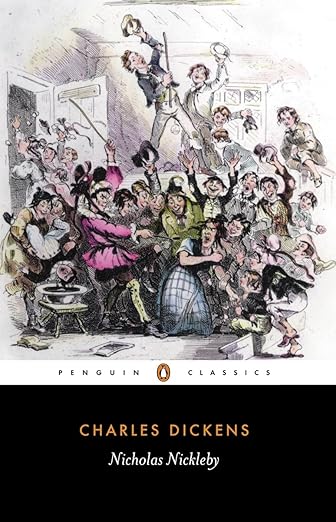
I’m getting to the end of reading Bleak House by Charles Dickens, so I’m looking around to find a book to read to replace it. One of the books I might read is Nicholas Nickleby by Charles Dickens.

Nicholas Nickleby is the third novel by Charles Dickens, originally published as a serial from 1838 to 1839 and published in book form in 1839. I know very little about and don’t remember watching any of the adaptations on TV or film.

The book begins:

There once lived, in a sequestered part of the county of Devonshire, one Godfrey Nickleby: a worthy gentleman, who, taking it into his head rather late in life that he must get married, and not being young enough or rich enough to aspire to the hand of a lady of fortune, had wedded an old flame out of mere attachment, who in her turn had taken him for the same reason. Thus two people who cannot afford to play cards for money, sometimes sit down to a quiet game for love.
Also every Friday there is The Friday 56, hosted by Freda at Freda’s Voice, but she is taking a break and Anne at My Head is Full of Books has taken on hosting duties in her absence. You grab a book and turn to page 56 (or 56% of an eBook), find one or more interesting sentences (no spoilers), and post them.

On page 56

‘Stop,’ cried Nicholas hurriedly; pray hear me. This is the grossest and wildest delusion, the completest and most signal mistake, that ever human being laboured under, or committed. I have scarcely seen the young lady half-a-dozen times, but if I had seen her sixty times, or am destined to see her sixty thousand thousand, it would be, and will be, precisely the same.

Description from Goodreads:

When Nicholas Nickleby is left penniless after his father’s death, he appeals to his wealthy uncle to help him find work and to protect his mother and sister. But Ralph Nickleby proves both hard-hearted and unscrupulous, and Nicholas finds himself forced to make his own way in the world. His adventures gave Dickens the opportunity to portray an extraordinary gallery of rogues and eccentrics, such as Wackford Squeers, the tyrannical headmaster of Dotheboys Hall, a school for unwanted boys; the slow-witted orphan Smike, rescued by Nicholas; and the gloriously theatrical Mr. and Mrs. Crummles and their daughter, the ‘infant phenomenon’. Like many of Dickens’s novels, Nicholas Nickleby is characterised by his outrage at cruelty and social injustice, but it is also a flamboyantly exuberant work, revealing his comic genius at its most unerring.
Top 5:Books on my TBR that intimidate me

Top 5 Tuesday was created by Shanah at Bionic Book Worm, and it is now being hosted by Meeghan at Meeghan Reads. For details of all of the latest prompts for October to December, see Meeghan’s post here.

Do you have a pile of books on your TBR that you were “going to read soon” but now it’s been like 5 years and you don’t know how to start that book any more? Maybe it’s 600 pages long. Or maybe you’ve seen some not-so-great reviews that pushed it down a bit. What books on your TBR intimidate you?

These are books I want to read but each time that I look at them I think ‘not now’ because they are so long AND as these are all either hardbacks or paperbacks they’re heavy, unwieldy and in small print!

Nicholas Nickleby by Charles Dickens (860 pages) – Nicholas Nickleby, is left penniless after his father’s death and forced to make his own way in the world. There’s an extraordinary gallery of rogues and eccentrics: Wackford Squeers, the tyrannical headmaster of Dotheboys Hall; the tragic orphan Smike, rescued by Nicholas; and the gloriously theatrical Mr and Mrs Crummle and their daughter, the ‘infant phenomenon’. Nicholas Nickleby is characterized by Dickens’s outrage at social injustice, but it also reveals his comic genius at its most unerring.
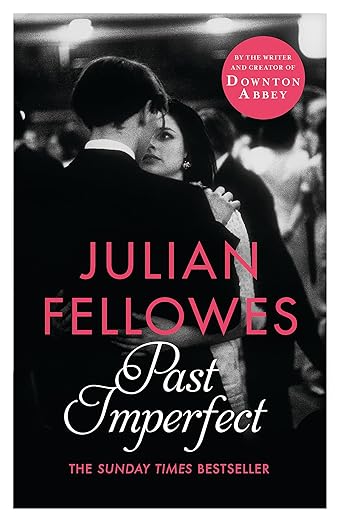
Past Imperfect by Julian Fellowship (528 pages) described on the back cover as a story that takes us back to the Debutante Season of 1968 – ‘Poignant, funny, fascinating and moving’ . Wishing to track down a past girlfriend who claims he had fathered her child, the rich and dying Damian Baxter contacts an old friend from his days at Cambridge. The search takes the narrator back to 1960s London, where everything is changing–just not always quite as expected.

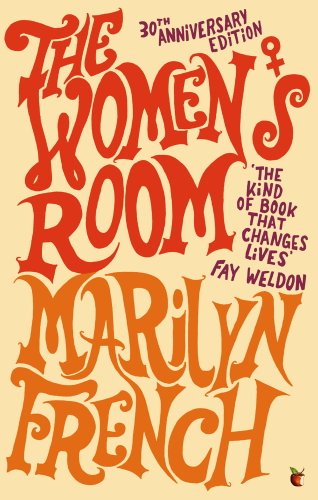
The Women’s Room by Marilyn French (544 pages), described as ‘one of the most influential novels of the modern feminist movement.’ It was first published in 1977 to a barrage of criticism. This is the story of Mira Ward, a wife of the Fifties who becomes a woman of the Seventies. From the shallow excitements of suburban cocktail parties and casual affairs through the varied nightmares of rape, madness and loneliness to the dawning awareness of the exhilaration of liberation, the experiences of Mira and her friends crystallize those of a generation of modern women.

The Wine of Angels by Phil Rickman (623 pages) – the first Merrily Watkins novel, in which the Rev Merrily Watkins tries to be accepted as the vicar (or priest-in-charge as she insists she ought to be called) in the country parish of Ledwardine in Herefordshire, steeped as it is in cider and secrets and echoes of the poet Thomas Traherne who was once based in the area.

This Thing of Darkness by Harry Thompson (750 pages) – In 1831 Charles Darwin set off in HMS Beagle under the command of Captain Robert Fitzroy on a voyage that would change the world. This is the story of a deep friendship between two men, and the twin obsessions that tear them apart, leading one to triumph, and the other to disaster.