Top Ten Tuesday: Novels about or set in Mountains

Top Ten Tuesday is a weekly meme created by The Broke and the Bookish and now hosted by Jana at That Artsy Reader Girl. For the rules see her blog.

The topic this week is a Freebie and I’ve chosen to focus on novels about or set in mountains. I’ve read seven of these books, but the other three are books I own but haven’t read yet – marked with an asterisk*.

Gray Mountain by John Gresham – in which the big coal companies come under the microscope, companies that are  ruining the environment by strip-mining in the Appalachian mountains, clear-felling the forests, scalping the earth and then blasting away the mountain tops to get at the coal. All the trees, topsoil and rocks are then dumped into the valleys, wiping out the vegetation, wildlife and streams.

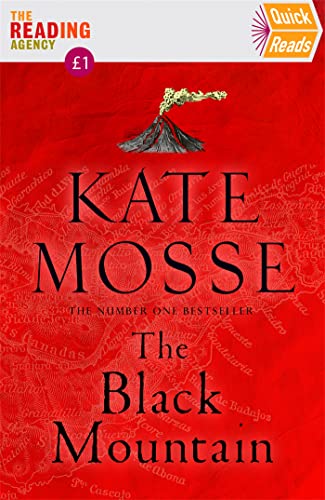
The Black Mountain by Kate Mosse, historical fiction set in May 1706 on the northern part of the island of Tenerife, where Ana and her family live in the shadow of a volcano, known locally as the Black Mountain.

 Thin Air by Michelle Paver, set in the Himalayas on Kangchenjunga, as a group of five men set out to climb the mountain in 1935. It is based on real events, although the 1907 and 1935 expeditions described in it are fictional. But the setting is real, the characterisation is excellent as is the feel of the 1930s, with its class snobbery, and racism and above all the creeping sense of dread that pervades the whole book.

*Cairngorm John: a Life in Mountain Rescue by John Allen, who was an active member of the Cairngorm Mountain Rescue Team and for most of them acted as Team Leader. In ‘Cairngorm John’ (his call sign when in contact with search and rescue helicopters) he recalls the challenges of mountain rescue and the many changes he has witnessed. A TBR.

*Murder in the Glen: a Tale of Death and Rescue on the Scottish Mountains by Hamish MacInnes although fiction it gives a ‘true portrayal of Highland life by a world authority on mountain rescue as well as the the Scottish Highlands.’ Another TBR.
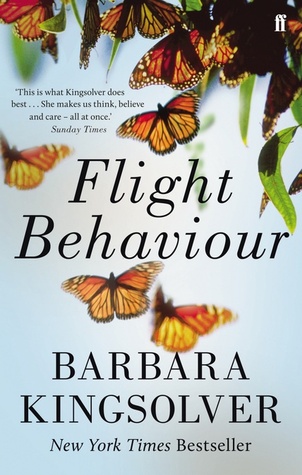
*Flight Behaviour by Barbara Kingsolver, Appalachian Mountains above her home, a young mother discovers a beautiful and terrible marvel of nature: the monarch butterflies have not migrated south for the winter this year As she hikes up a mountain road behind her house to a secret tryst, she encounters a shocking sight: a silent, forested valley filled with what looks like a lake of fire. Yet another TBR.

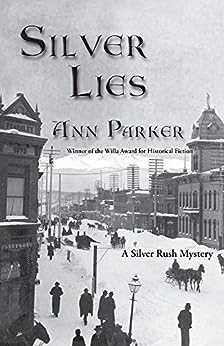
Silver Lies by Ann Parker, a murder mystery set in 1879/80 in the silver-mining town of Leadville, Colarado in the heart of the Rocky Mountains.

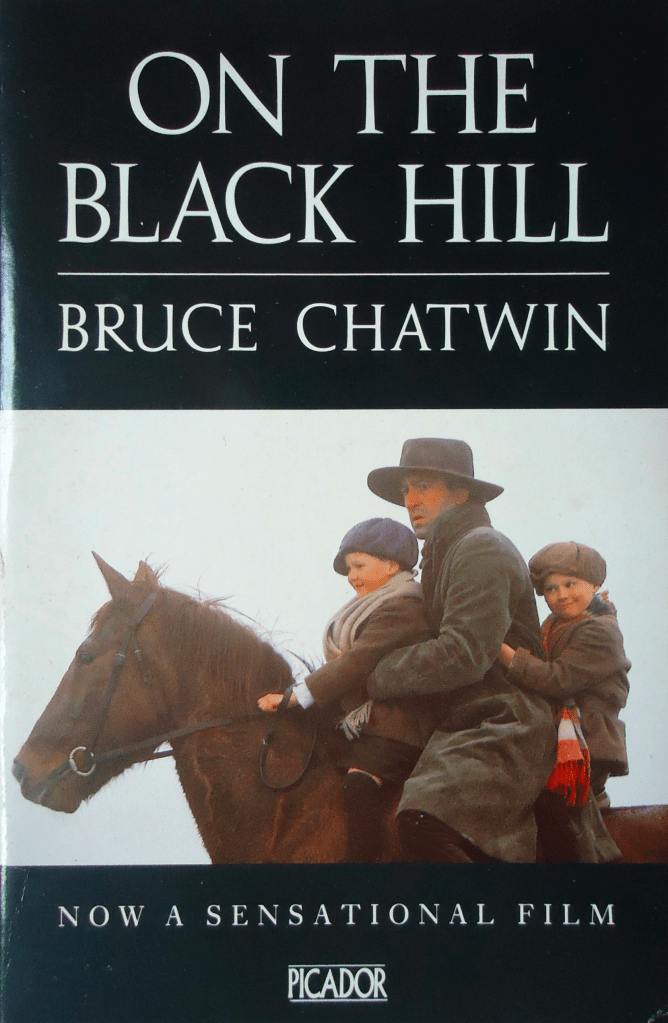
On the Black Hill by Bruce Chatwin was first published in 1982 when it won the James Tait Black Memorial Prize and the Whitbread First Novel of the Year Award. The Black Hill is one of the Black Mountains on the border of England and Wales, although fictionalised in this book.

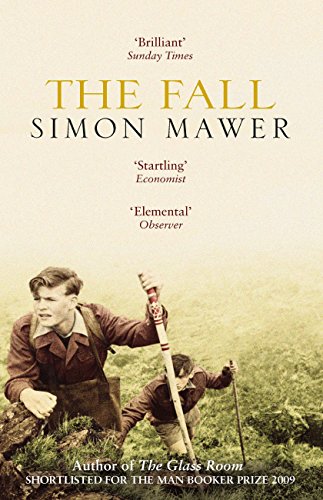
The Fall is not just a gripping account of the dangers of rock climbing and mountaineering, mountains of Wales and the Alps, culminating on the North Face of the Eiger. It is the story of Rob Dewar and Jamie Matthewson from their childhood up to Jamie’s death in Snowdia 40 years later. But it’s also the story of their parents and how their lives are interlinked. I found it enthralling, one of those books that make me want to look at the ending to see how it all turns out. I managed to stop myself, however, and read impatiently to the end anxious to know what actually happened between them all.

The Seven Sisters by Lucinda Riley, the first in the series based the books on the legends of The Seven Sisters of the Pleiades. This one is about Maia, taking her back to Brazil, the country of her birth. I loved all the details about the building of the statue of Christ the Redeemer on Corcovado Mountain in the Carioca Range, overlooking the city of Rio de Janeiro.

Exploring Britain – In Books. A Thursday Thirteen

For a while now I’ve been reading Thursday Thirteen posts on a number of blogs and wondering about writing one myself. Until last week there was no theme to Thursday Thirteen, it could be whatever you wanted it to be. They have now introduced a theme, but I’ve been writing this list on books on Britain, so I’m not following the theme and here is my first Thursday Thirteen.


These are books that explore different aspects of Britain – things that interest me, landscape, places, history, architecture, writers, cookery, walking and so on. They’re books I own and enjoy looking at; some I’ve read and others I’ve only dipped into. They have all provided me with hours of delight. There are a number of books reflecting my fascination with history in its physical form – standing stones, castle, churches, stately homes – others my interest in Britain’s geography and topography. The book that triggered this list is A Reader’s Guide to Writers Britain by Sally Varlow, which I bought this week in the library book sale.

From bottom to top they are:

1. English Landscapes photography by Rob Talbot, text by Robin Whiteman (1995). The English countryside in full colour, explored region by region from Penzance to Penrith, landmarks, local architecture, social and historical surveys, literary and artistic connections, geography and local customs. An amazing collection exploring the byways of England. A book to sit and pore over planning where to go.

2. Yesterday’s Britain published by the Readers’ Digest. Full of photographs this book covers the period 1900 -1979 and is ‘the story of how we lived, worked an played’ throughout the 20th century. It contains personal anecdotes, eyewitness accounts and intimate stories: a ‘family scrapbook of the nation’.

3. British Isles: a Natural History by Alan Titchmarsh, accompanying the BBC1 series. Beginning in the mists of time, 3 billion years ago this book traces the evolution of Britain exploring everything from geology and geography to flora and fauna. It includes a section on Places to Visit, from Stone Age villages at Skara Brae, Orkney to the Centre for Alternative Technology, Powys, Wales. A beautifully illustrated and informative book.

4. Land of the Poets: Lake District, Photographs by David Lyons (1996). The English Lake District, that much visited area of Britain, is one of my favourite places. I’d love to live there, even though it rains and is often full of tourists. This book illustrates the drama and beauty of the countryside, the grandeur of the crags and hills, complimented with poetry inspired by the mountain streams and lakes. The anthology is mainly drawn from William Wordsworth and his near contemporaries, with photographs relating directly to the poems – The Langdale Pikes, Home at Grasmere, (Wordsworth), Helvellyn (Walter Scott) to name but a few.

5. Mountain: exploring Britain’s High Places by Griff Rhys Jones to accompany the BBC series. I was so impressed with Griff’s fitness as well as his great sense of humour as he climbed Snowdon and the other High Peaks in England, Scotland and Wales. These are such spectacular places, also rough and arduous climbs. Amazingly he had never done any climbing before! One third of Britain is covered in mountains – I didn’t know that before. There’s a bit of history in this book too.

6. Great British Menu, the book that accompanied the first series on BBC2, when 14 chefs competed to decide who should cook for the Queen at the celebration lunch marking Her Majesty’s 80th birthday. It contains recipes from the chefs representing the South East, the North, Wales, the South West, Northern Ireland, the Midlands and East Anglia, and Scotland – including Lancashire Hot Pot made with wild boar, Finnebroague Venison with Colcannon Pie and Wild Mushrooms (Northern Ireland) and Pan-Fried Cornish Lobster (South West). Delicious, mouth-watering recipes.

7. How We Built Britain by David Dimbleby, describing a journey through Britain and a thousand years of history seen through Britain’s buildings and the people who built them. This is more than the book of the TV series, immensely detailed, reflecting Dimbleby’s enthusiasm and delight in a huge span of British history from 1066 to the modern day.

8. Sacred Britain: a guide to the sacred sites and pilgrim routes of England, Scotland and Wales by Martin Palmer and Nigel Palmer. This gives information about ancient stone circles and tombs, Christian and pre-Christian shrines, medieval synagogues, churches, cathedrals, holy wells and rivers, ancient yew trees and symbolic plants. It also describes 13 traditional pilgrimage routes eg the Canterbury Pilgrimage from Winchester to Canterbury (129 miles). Illustrated with colour photographs and coloured sketch plans of the routes.

9. A Reader’s Guide to Writers’ Britain by Sally Varlow (2000). This is a beautiful book containing maps and photographs, and giving a guide to places to visit linked with writers and books, from all parts of the British Isles. There’s an index of authors and places with anecdotes and fascinating facts. Hours of endless pleasure reading about where to visit.

10. In Search of Stones:a pilgrimage of faith, reason and discovery by M Scott Peck. Scott Peck’s account of the trip he and his wife took through the countryside of Wales, England and Scotland looking for ancient megalithic stones. It covers travel, history, archaeology, as well as Scott Peck’s meditations on spirituality and mysticism. Illustrated with drawings by Christopher Peck. I’ve read this book twice so far and have visited some of the sites he describes.

11. Mysterious Wales by Chris Barber looks at beautiful and magical places in Wales. It’s a guide to prehistoric megaliths, holy wells, magic trees, secret caves, lonely lakes, bottomless pools and sites associated with legends concerning King Arthur, Merlin and the Devil. Illustrated with photographs and drawings. Absolutely fascinating.

12. The Hidden Places of England edited by Joanna Billing is a travel guide to some of the less well known places of interest to visit (together with other less ‘hidden’ places eg Stratford-upon-Avon, Bath and Oxford), with short descriptions accompanied by line drawings and coloured maps. It also has information about places to stay and eat, many in out-of-the way places. My edition was published in 1997 but it is still a useful book to find out about the history of villages and towns, churches, pubs, restaurants, cafes, tearooms, and numerous other attractions.

13. A Pictorial Guide to the Lakeland Fells: The Central Fells by A Wainwright. This is one in a series of the Wainwright walking guides to the Lakeland Fells, reproduced from the original handwritten pages and intricate pen and ink sketches of the routes and the landscape. Alfred Wainwright was born in 1907, fell in love with the Lake District and moved to Kendal in 1941. The guides describe the fell walks as they were in the 1950s and 1960s; the footpaths, cairns and other waymarks may not all be the same now and you do need to take an up-to-date map with you but, as the BBC series ‘Wainwright Walks’ have shown, the routes are very much as Wainwright knew them.