Top 5 Tuesday was created by Shanah at Bionic Book Worm, and it is now being hosted by Meeghan at Meeghan Reads. For details of all of the latest prompts for January to March, see Meeghan’s post here.
Today the topic is Top 5 books with a place in the title – any location or place in a title is fine. I decided to feature books in different countries than my own (UK) – namely Italy, Japan, Greece, Russia and France.
These are all books I’ve read with links to my reviews.
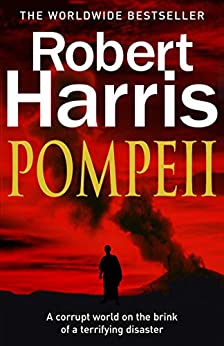

Pompeii by Robert Harris – one of my favourite books. Vesuvius erupts destroying the town of Pompeii and killing its inhabitants as they tried to flee the pumice, ash, searing heat and flames. The story begins just two days before the eruption of Mount Vesuvius and builds up to a climax.
Nagasaki : Life After Nuclear War by Susan Southard, nonfiction, an amazing, heart-wrenching book. On August 9th 1945, two days after the atomic bombing of Hiroshima, a five-ton plutonium bomb was dropped on the small coastal town of Nagasaki. The effects were cataclysmic. It follows the lives of five of the survivors from then to the present day.
This must be one of the most devastatingly sad and depressing books I’ve read and yet also one of the most uplifting, detailing the dropping of the bomb, which killed 74,000 people and injured another 75,000.
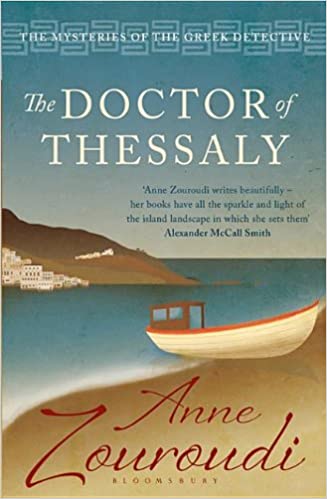
The Doctor of Thessaly by Anne Zouroudi, the third in the series of her Mysteries of the Greek Detective, about Hermes Diaktoros, a mysterious fat man. I was never sure who he worked for, or how he knew of the mystery to solve. Each of the books in the series features one of the Seven Deadly Sins – in this one it is envy, a tale of revenge and retribution.
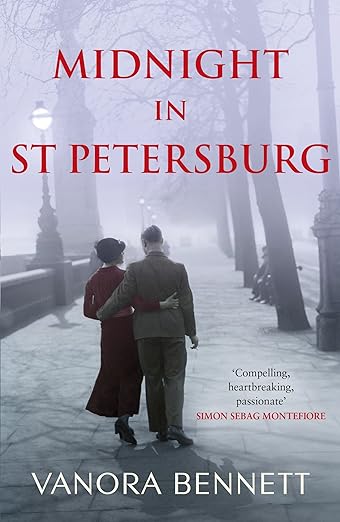
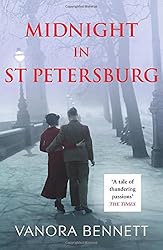
Midnight in St Petersburg by Vanora Bennett. It begins in 1911 in pre-revolutionary Russia with Inna Feldman travelling by train to St Petersburg to escape the pogroms in Kiev hoping to stay with her distant cousin, Yasha Kagan. The book is split into three sections – September – December 1911, 1916-17 and 1918-19 as Russia enters the First World War and is plunged into Revolution and life becomes increasingly dangerous for them all.
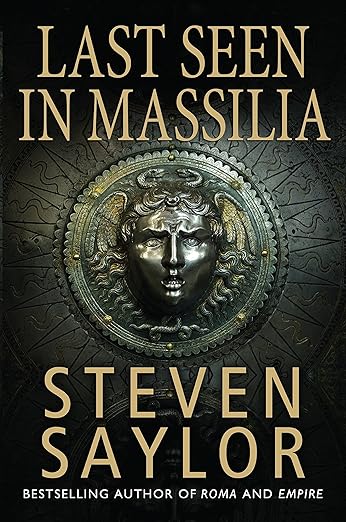
Last Seen in Massilia by Steven Saylor, historical crime fiction set in in Massilia – modern day Marseilles. It’s 49BC during Caesar’s siege of the city., featuring an investigator called Gordianus the Finder. I really liked all the details about Massilia – how it was governed – the hierarchy of the Timouchoi its ruling officials, its relationship to Rome, its traditions and customs. This is the 8th book in Saylor’s Roma Sub Rosa series set in ancient Rome.
 unexpectedly received a copy of
  BooksPlease