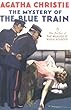
Crime Fiction Pick of the Month: January

I didn’t read much crime fiction in January, just two books, if you don’t count The Woman in White by Wilkie Collins. They are The Burry Man’s Day by Catriona McPherson and One, Two, Buckle My Shoe by Agatha Christie.
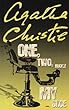
And I’ve chosen One, Two, Buckle My Shoe as my crime fiction pick of the month. This was first published in 1940 (in the USA it was published as The Patriotic Murders).  Hercule Poirot and Inspector Japp investigate the apparent suicide of Mr Morley, Poirot’s Harley Street dentist, who was found dead in his surgery, shot through the head and with a pistol in his hand. Each chapter is entitled after a line of the nursery rhyme and the first line contains an important clue.Earlier in the morning Poirot had visited his dentist and as he was leaving the surgery another patient was arriving by taxi. He watched as a foot  appeared.

Poirot observed the foot with gallant interest.

A neat ankle, quite a good quality stocking. Not a bad foot. But he didn’t like the shoe. A brand new patent leather shoe with a large gleaming buckle. He shook his head.

Not chic – very provincial! (page 26)

The importance of the shoe and its buckle don’t become clear until much later in the book!

Mr Morley had seemed in good spirits when Poirot saw him and had shown no signs of wanting to take his own life. Was it coincidence that his assistant, Gladys, had been called away from his surgery on that day, leaving him on his own in his surgery? As Poirot and Japp interview the other patients it becomes obvious to Poirot that it was murder not suicide. Then one of the patients, a rich Greek, Mr Amberiotis is found dead, and another patient, Miss Sainsbury Seale, the owner of the buckled shoe, goes missing. Poirot begins to wonder if Morley had been killed by mistake whilst another of the patients Alistair Blunt, a banker was the intended victim.

This really is a most complicated plot, and even though the facts are clearly presented and I was on the lookout for clues, Agatha Christie, once again fooled me. Not all the characters are who they purport to be and the involvement of international politics and intrigue doesn’t help in unravelling the puzzle. Poirot, himself, is perplexed until during a church service he is alerted to the trap that has been set for him:

Hercule Poirot essayed in a hesitant baritone.

‘The proud have laid a snare for me,’ he sang, ‘and spread a net with cords: yea and set traps in my way …’

He saw it – saw clearly the trap into which he had so nearly fallen! (page 215)

It all fell into place and he saw the case ‘the right way up’.

Written in 1939, this book reflects the economic and political conditions of the time, with  a definite pre-war atmosphere of a world on the brink of war. But Poirot is concerned with the truth, with the importance of the lives of each individual, no matter how ordinary or insignificant they may seem.

  • My Rating: 4.5/5
  • Paperback: 294 pages
  • Publisher: HarperCollins; Masterpiece edition (Reissue) edition (18 Aug 2008)
  • Language English
  • ISBN-10: 0007120893
  • ISBN-13: 978-0007120895

You can see other people’s crime fiction picks of the month at Mysteries in Paradise.

Dumb Witness by Agatha Christie: a Book Review

I found it wasn’t too difficult to work out who the murderer was in Agatha  Christie’s Dumb Witness, because there is a rather obvious clue at one point, but that didn’t spoil my enjoyment of this book. In fact I felt it added to my satisfaction and there was a further development which I hadn’t thought of at the end, which surprised me.

From the back cover:

Everyone blamed Emily’s accident on a rubber ball left on the stairs by her frisky terrier. But the more she thought about her fall, the more convinced she became that one of her relatives was trying to kill her. On April 17th she wrote her suspicions in a letter to Hercule Poirot. Mysteriously he didn’t receive the letter until June 28th … by which time Emily was already dead!

Dumb Witness is set in the small country town of Market Basing (a fictional name) where Miss Emily Arundell lived in Littlegreen House. Part of Poirot’s problem is that he doesn’t actually have a murder to investigate because Miss Arundell’s death was certified by her doctor as a death from natural causes from a long standing medical condition. But he thought he was under an obligation from Miss Arundell to investigate. He uses subterfuge to find out more information, pretending to be writing a biography of General Arundell, Emily’s father. And from some very slender facts he reconstructs the sequence of events leading up to her death.

As usual there are a number of suspects, mostly the members of her family, her nephew and niece Charles and Theresa Arundell and her married niece Bella and her husband Doctor Tanios. Then there is her companion, the rather ineffectual Miss Wilhelmina Lawson, and the servants. Poirot considers each one in turn. He also considers the character of the murderer, as he explains to Captain Hastings, the narrator, who is completely baffled as he assists Poirot in looking at the evidence:

‘Since at the moment, it is only suspicion and there is no definite proof, I think I must leave you to draw your own deductions, Hastings. And do not neglect the psychology – that is important. The character of the murderer – that is an essential clue to the crime.’

‘I can’t consider the character of the murderer if I don’t know who the murderer is!’

‘No, no, you have not paid attention to what I have just said. If you reflect sufficiently on the character – the necessary character of the murder – then you will realize who the murderer is!’ (page 184)

The ‘dumb witness’of the title is Bob, Emily’s wire-haired terrier in what is described as ‘the incident of the dog’s ball.’ Agatha Christie dedicated Dumb Witness to her wire-haired terrier, Peter, describing him as ‘most faithful of friends and dearest companion, a dog in a thousand‘. Bob plays an important part in the plot and indeed Agatha Christie gives him some dialogue!

I didn’t think I knew anything about Dumb Witness before I read it – I didn’t even know the title. But after I read it I checked the entry in wikipedia and found that Dumb Witness  had been adapted for television in 1996 as one of the episodes of Agatha Christie’s Poirot with David Suchet playing the role of Hercule Poirot. I then remembered watching it and being surprised because it was set in the Lake District, which I thought was most unusual for an Agatha Christie book.  Now I’ve read the book I can see that the TV adaptation differed considerably from the original story. As I hadn’t read it when I watched the adaptation that didn’t bother me in the slightest. It would have done the other way round!

NB: take care reading because if you haven’t read earlier books featuring Poirot, in chapter 18 he gives away the names of the murderers in four of his earlier cases.

First published in Great Britain in 1937
published in the US as Poirot Loses a Client, also known as Mystery at Littlegreen House or Murder at Little Green House.
This edition published by Harper Collins 1994
ISBN: 9780006168089
251 pages
Source: My own copy

Crime Fiction Alphabet – Letter M

The Murder of Roger Ackroyd by Agatha Christie is my choice to illustrate the letter M in Kerrie’s Crime Fiction Alphabet.

This is Agatha Christie’s 6th book, published in 1926, one of her best known books and possibly one of the most controversial because of its solution to the mystery. I hadn’t read it before, but I knew a bit about it from reading Agatha Christie’s Autobiography, in which she wrote:

Of course, a lot of people say that The Murder of Roger Ackroyd is cheating; but if they read it carefully they will see that they are wrong. Such little lapses of time as there have to be are nicely concealed in an ambiguous sentence … (page 352)

I won’t write any more about the controversy – no spoilers!

Set in the village of King’s Abbot, the story begins with the death of Mrs Ferrars, a wealthy widow and the local doctor, Dr Sheppard suspects it is suicide. The following evening Roger Ackroyd, a wealthy widower who it was rumoured would marry Mrs Ferrars, is found murdered in his study.

Poirot has retired to King’s Abbot, to grow vegetable marrows, not very successfully. He’s missing Captain Hastings who is living in the Argentine, so when he is asked to investigate the murder he enlists Dr Sheppard, who lives next door with his sister Caroline, to help him and it is Dr Sheppard who narrates the story. Caroline is a most interesting character who takes a great interest in other people and likes to know everything that goes on in the village. She is, possibly, a forerunner of Miss Marple as Agatha Christie wrote in her Autobiography:

I think it is possible that Miss Marple arose from the pleasure I had taken in portraying Dr Sheppard’s sister in The Murder of Roger Ackroyd. She had been my favourite character in the book – an acidulated spinster, full of curiosity, knowing everything, hearing everything: the complete detective service in the home. (page 448)

This has to be one of my favourite Agatha Christie books. It’s full of believable characters, suspects aplenty including Major Blunt, an old friend staying with Ackroyd, Flora, Ackroyd’s niece and her mother, his sister-in-law and poor relation, Geoffrey Raymond, his secretary, Ursula Bourne, a parlourmaid who may not be all she appears and Ralph Paton, Ackroyd’s adopted son who has large gambling debts.

The setting is that of the quintessential English village where Poirot appears as an mysterious foreigner. Dr Sheppard’s first impression of him is that he must be a retired hairdresser because of his immense moustaches. He also doubts his ability to solve the mystery and described his as

… ridiculously full of his own importance. It crossed my mind to wonder whether he was really any good as a detective. Had his reputation been built up on a series of lucky chances? (page 80)

Of course, it hadn’t and Poirot meticulously works through the timing of events, and disposes of all the suspects to find the culprit. It was only towards the end of the book that I began to realise who it had to be.

  • Hardcover: 237 pages
  • Publisher: HarperCollins; Facsimile edition (2011)
  • Language English
  • Source: My own copy, part of an issue of The Agatha Christie Book Collection partwork published by Agatha Christie Limited

Curtain: Poirot’s Last Case by Agatha Christie: Book Review

Curtain was first published in 1975, but it was written in the 1940s during the Second World War. Agatha Christie had written it with the intention that it be published after her death, but in 1975 her publishers persuaded her to release it so that it could appear in time for the Christmas season – a ‘Christie for Christmas’.

In this book Poirot and Hastings have come full circle, returning to Styles, the scene of their first case. Poirot is now an old man (just how old is not revealed  – I think if you go by the chronology of the novels he must have been about 120, but there is no need to be too precise), and close to death.  Hastings is the narrator of this mystery. He is saddened by the devastation age has had on Poirot:

My poor friend. I have described him many times. Now to convey to you the difference. Crippled with arthritis, he propelled himself about in a wheeled chair. His once plump frame had fallen in. He was a thin little man now. His face was lined and wrinkled. His moustache and hair, it is true, were still of a jet black colour, but candidly, though I would not for the world have hurt his feeling by saying so to him, this was a mistake. There comes a moment when hair dye is only too painfully obvious. There had been a time when I had been surprised to learn that the blackness of Poirot’s hair came out of a bottle. but now the theatricality was apparent and merely created the impression that he wore a wig and had adorned his upper lip to amuse the children!

Only his eyes were the same as ever, shrewd and twinkling, and now – yes, undoubtedly – softened with emotion. (pages 12-13)

Curtain is in many ways a sad book. Sad because this is Poirot’s last case and he dies, with  X, the murderer, apparently having got away with his crimes. Sad, too because Hastings is in a nostalgic and morbid frame of mind, mourning the death of his wife and wishing himself back into happier times. It doesn’t help him that one of his children, Judith, a secretive child now aged 21, is also staying at Styles, the assistant to Dr Franklin who is engaged in research work connected with tropical disease. She resents her father’s interference in her life and is scornful of what she considers his sentimental and old fashioned ideas. Sad too, because of the setting. Styles, once a well-kept country house has been sold  and is now being run as a guest house, the drive badly kept and overgrown with weeds and the house iself badly needing a coat of paint.

But is also an interesting puzzle. Poirot knows the identity of X, a murderer who is present at Styles but will not tell Hastings, because Hastings would not be able to conceal his knowledge – his face would give him away. Poirot is convinced that X will kill again, but he doesn’t know who the victim will be. He asks Hastings to be his eyes and ears whilst he is confined to his wheelchair. He also gives Hastings newspaper cuttings of five murder cases, all of which were committed by different people. X apparently had no motive for killing any of the victims, but he/she was connected with all of them.

Hastings is intrigued and suspects all the people staying at Styles in turn. The first mishap occurs when Colonel Luttrell, the owner of Styles, accidently shoots his wife, but she is only wounded and recovers. Then Barbara, Dr Franklin’s wife, who suffers from her nerves and is looked after by Nurse Craven is found dead, poisoned by one of the toxic substances her husband is researching. Finally Stephen Norton, another guest is found dead in his locked bedroom with a bullet hole in the middle of his forehead. It looks like suicide, but there is something about the scene that reminds Hastings of an earlier death.

When Poirot, himself dies, the mystery is unsolved, but there is a twist in the ending, which I didn’t see coming, making this one of my favourite Agatha Christie books. It is also a theatrical and dramatic ending to the book and to Poirot, himself.

Agatha Christie on Poirot

These are some of Agatha Christie’s thoughts on creating Hercule Poirot, taken from her Autobiography.

She had decided to write a detective story whilst working in a hospital dispensary during World War 1. Surrounded by poisons it seemed natural that death by poisoning would be the method. She then decided who should be poisoned, who would be the poisoner, when, where and how. And then who should be the detective? She was steeped in the Sherlock Holmes tradition but decided she had to invent a detective of her own and he had to have a friend as a ‘kind of butt or stooge’. He had to be unique, a character that hadn’t been used before. She considered a schoolboy, or a scientist, but when she remembered the Belgian refugees who were living in a colony in Tor that is who she settled on.

She decided her detective should be a Belgian – a refugee and a retired police officer and only later realised what a mistake she had made:

What a mistake I made there. The result is that my fictional detective must be well over a hundred by now.

Anyway, I settled on a Belgian detective. I allowed him to grow slowly into his part. He should have been an inspector, so that he would have a certain knowledge of crime. He would be meticulous, very tidy, I thought to myself, as I cleared away a good many untidy odds and ends in my own bedroom. A tidy little man, I could see him as a tidy little man, always arranging things, liking things in pairs, liking things square instead of round. And he should be very brainy – he should have little grey cells of the mind – that was a good phrase: I must remember that – yes he would have the little grey cells. (page 263 -4)

And then he had to have a name, rather a grand name. She wondered about calling her little man Hercules but his last name was more difficult. She didn’t know how the name Poirot came to her – whether it just came into her head or whether she saw it in a newspaper or written down somewhere, but it didn’t go with Hercules; eventually she decided that it should be Hercule – Hercule Poirot. So, The Mysterious Affair at Styles was conceived and eventually published. She was jubilant – her book was going to appear in print. She didn’t know that this was the start of her long  writing career and that

Hercule Poirot, my Belgian invention, was hanging round my neck, firmly attached there like the old man of the sea. (page 285)

Because  Poirot had been quite a success in The Mysterious Affair at Styles she was encouraged to use him again and then she realised that she was tied to both Poirot and his Watson: Captain Hastings.

I quite enjoyed Captain Hastings. He was a stereotyped creation, but he and Poirot represented my idea of  a detective team. I was still writing in the Sherlock Holmes tradition, eccentric detective, stooge assistant, with a Lestrade-type Scotland Yard detective, Inspector Japp – and now I added a ‘human foxhound’, Inspector Giraud, of the French police. Giraud despises Poirot as being old and passé.

Now I saw what a terrible mistake I had made in starting with Hercule Poirot so old – I ought to have abandoned him after the first three or four books, and begun with someone much younger. (page 290)

Poirot, whatever Agatha Christie thought of him is one of her most famous characters, vying in popularity with Miss Marple. Each time I read on of the 33 novels he appears in or see him portrayed by David Suchet (who is Poirot for me) I think he is my favourite. But then I’m equally as fond of Miss Marple (Joan Hickson fitted the part to perfection) and she too is my favourite. I can’t pick one over the other – they are both outstanding creations.

The Mystery of the Blue Train by Agatha Christie: Book Review

Agatha Christie didn’t enjoy writing The Mystery of the Blue Train (first published in 1928). In her autobiography she wrote that it had not been easy writing it and that she had always “hated” it:

To begin with I had no joy in writing, no élan. I had worked out the plot – a conventional plot, partly adapted from one of my other stories. I knew, as one might say, where I was going, but I could not see the scene in my mind’s eye, and the people would not come alive. I was driven on by the desire, indeed the necessity, to write another book and make some money.

That was the moment when I changed from being an amateur to a professional. I assumed the burden of a profession, which is to write even when you don’t want to, don’t much like what you are writing and aren’t writing particularly well. (pages 368-9)

As she was writing this book at the time of her disappearance and divorce from her first husband, Archibald Christie it’s hardly surprising. It may not be her best book, but it’s still a good read. Ruth Kettering, the daughter of millionaire Rufus Van Aldin, is married to Derek, against her father’s advice. Agatha’s views on divorce are clear when Van Aldin tells Ruth she should divorce Derek, who he thinks is no good, rotten through and through and had only married her for her money, saying:

Have you got the grit to admit to all the world that you’ve made a mistake. There’s only one way out of this mess, Ruthie. Cut your losses and start afresh. (page 20)

Later Ruth is found strangled in her compartment in the Paris-Nice train, known as the train bleu, on its arrival in Nice and the fabulous ruby, the Heart of Fire that Van Aldin had given her, has been stolen. Fortunately Hercule Poirot is also travelling on the train and he of course unravels the mystery. There are a number of suspects ranging from Derek and his mistress, the dancer Mirelle, who had both the motive and the opportunity, to Ruth’s lover, the Comte de la Roche, suspected of stealing the jewels.

I liked the reflections on detective novels through a conversation Poirot has with another passenger on the train, Katherine Grey, from St Mary Mead who has inherited money from her employer. She is reading a roman policier when they meet at dinner and Poirot comments that they always sell well. She replies that may be because they give ‘the illusion of living an exciting life’ and that ‘nothing of that kind ever happens to me.‘ From then on however, she is drawn into the mystery along with Poirot, that

 small man, distinctly foreign in appearance, with a rigidly waxed moustache and an egg-shaped head which he carried rather on one side. (page 80)

It may be that Poirot is a bit of a caricature in this book, but the characters are in the main believable and the book certainly has a 1920s feel to it.