Julius by Daphne du Maurier

Daphne du Maurier’s Rebecca was one of the first adult books that I remember reading and it has remained a favourite ever since I first read it. It led me on to read more of her books and in my teens and twenties I read and re-read Jamaica Inn, Frenchman’s Creek, The Scapegoat, Mary Anne and The King’s General. They were the type of books that I loved.

Later on I discovered that she had written many more books and I’ve gradually been reading them, but, with perhaps the exception of My Cousin Rachel, they have not had the same magic quality that had kept me enthralled in the past. So I wasn’t quite sure what to expect when I began reading Julius, her third book written when she was twenty-six. It may lack that magic quality of her later books, but it is still compelling and disturbing reading, rich in detail and characterisation.
Julius (originally published in 1933 as The Progress of Julius) is the life story of a ruthless man, driven by his lust for power, and his dedication to getting ‘something for nothing’. It’s a chilling tale about a man whose love for his daughter brings about his ruin.

But that is jumping ahead in the story. It begins with his birth in Paris in 1860. Julius Levy grows up in a peasant family in a village on the banks of the Seine and caught up in the Franco-Prussian War, he escapes to Algeria, where he learns to swindle and manipulate. He moves on to London, all the time scheming and making money, getting richer, regardless of who he hurt, or indeed of whose death he caused as he built up his empire of cafés and married Rachel, the daughter of a diamond merchant.

It’s a dramatic story covering the years 1860 -1932, as the old century ended and the new one began:

Now came the close of the century and the death of the Queen followed by peace in South Africa, and these things also served as a milestone in the life of Julius Lévy. They marked the end of an era  showing him the path to greater prosperity than he had as yet achieved. It was the beginning of a new age – the age of progress and speed and efficiency that he had long foreseen and the dawn of mechanism in all things, electricity, motor-cars and soon flying-machines in the air. The spirit abroad was one he understood, the demon of restlessness unsatisfied stretching hungry fingers to the skies in a superhuman effort to conquer insatiable hunger, a spirit of rapacity and greed and excitement burning like a living flame. (page 195)

Julius is half-Jewish and the book veers on anti-Semitism, indeed in later years Daphne du Maurier considered excising those elements from the novel. But that would have meant the novel would have lacked depth as it is his Jewishness that lifts him from being a complete monster. As a mixed-up, lonely child he found in the temple that he was among his own people, and the music took hold of his heart, giving him peace. It is his tragedy that he lost that peace and struggled throughout the rest of his life trying to re-capture it.

His love for his daughter, Gabriel overwhelms him, but it is a possessive, suffocating love that leads him to extremes. His inability to love without the need to possess and control is shown early on in the book when forced to leave home and unable to take his cat he ties a stone around her neck and throws her in the Seine, rather than leave her to fend for herself or for someone else to take care of her. That made me shudder, but it is little compared to how he treated people.

I’ve read that Du Maurier based the character of Julius on that of her father, Gerald, that the possessiveness, the emotional demands and the sentiments Julius expresses were Gerald’s, and the words Gabriel speaks were her own thoughts. (Daphne du Maurier by Margaret Forster page 84)

At times melodramatic, this is a powerful novel, of a deprived, starving child who sold rats on the streets of Paris, and who dragged himself up from poverty and obscurity to become a man of  wealth and status and a cold-blooded sadist and murderer. I wrote about the beginning  of the book in an earlier post, describing how as a baby he was reaching for things beyond his grasp. The book ends as it began with Julius still reaching for the clouds:

He cried to them and they did not come. They passed away from him as though they had never been, indifferent and aloof, like wreaths of smoke they were carried away by the wind, born of nothing, dissolving into nothing, a momentary breath that vanished in the air. (page 308)

First Chapter First Paragraph: Julius

First chapterEvery Tuesday Diane at Bibliophile by the Sea hosts First Chapter First Paragraph Tuesday Intros, where you can share the first paragraph or (a few) of a book you are reading or thinking about reading soon.

One of the books I’m currently reading is Julius by Daphne du Maurier. The first chapter is called Childhood (1860-1872). It begins:

 His first instinct was to stretch out his hands to the sky. The white clouds seemed so near to him, surely they were easy to hold and to caress, strange-moving, things belonging to the wide blue space of heaven.

They floated just above his head, they almost brushed his eyelids as they passed, and he only had to grasp the long curling fringe of them with his fingers and they would belong to him instead, becoming part of him for ever. Something in him whispered that he must clutch at the clouds and bring them down from the sky. So he held out his hands to them and they did not come. He cried out to them and they did not come. They passed away from him as though they had never been, indifferent and aloof; like wreaths of white smoke they were carried away by the wind, born of nothing, dissolving into nothing, a momentary breath that vanished in the air.

What do you think? Would you keep reading?

I did and I’m finding it quite captivating. The ‘he’ in these first two paragraphs is Julius and right from his birth you can see him reaching out for things beyond his grasp.

Daphne du Maurier: Fact and Fiction

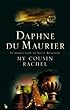
Recently I’ve had a bit of a run on books by and about Daphne du Maurier. First of all I read The Parasites, which reminded me that I’d had Justine Picardie’s novel, Daphne sitting on my bookshelves unread, so I immediately got it down. Then I just had to read My Cousin Rachel, a book I’ve had for years and never got round to reading before now. After that I read Daphne du Maurier: a Daughter’s Memoir by Flavia Leng, just because it was one of the books Justine Picardie consulted in writing her novel. I’ve previously read Margaret Forster’s biography Daphne du Maurier and Daphne du Maurier’s The ‘Rebecca’ Notebook and Other Memories, which is mainly autobiographical.

Daphne by Justine Picardie (2008) – synopsis (from the back cover):

It is 1957. As Daphne du Maurier wanders alone through her remote mansion on the Cornish coast, she is haunted by thoughts of her failing marriage and the legendary heroine of her most famous novel, Rebecca, who now seems close at hand. Seeking distraction, she becomes fascinated by Branwell, the reprobate brother of the Bronte sisters, and begins a correspondence with the enigmatic scholar Alex Symington in which truth and fiction combine. Meanwhile, in present day London, a lonely young woman struggles with her thesis on du Maurier and the Brontes and finds herself retreating from her distant husband into a fifty-year-old literary mystery.

My view: 4/5

This book merges fact and fiction so well that it’s hard to differentiate between the two. I much preferred the story of Daphne herself and her search for information about Branwell. I had to go back to Forster’s biography of Daphne to compare the accounts of her life, which matched up pretty well. I was less keen on the modern day story of a young woman, the second wife of an older man. It had too many obvious parallels with Rebecca for my liking. And if you haven’t read Rebecca, this book gives away the plot. There are also references to My Cousin Rachel, which I glossed over in case there were any spoilers there too (I don’t think there were). All in all, a very satisfying mystery about Daphne and the missing Bronte documents.

My Cousin Rachel by Daphne du Maurier (1951) – synopsis (Amazon):

Orphaned at an early age, Philip Ashley is raised by his benevolent older cousin, Ambrose. Resolutely single, Ambrose delights in Philip as his heir, a man who will love his grand home as much as he does himself. But the cosy world the two construct is shattered when Ambrose sets off on a trip to Florence. There he falls in love and marries – and there he dies suddenly. In almost no time at all, the new widow – Philip’s cousin Rachel – turns up in England. Despite himself, Philip is drawn to this beautiful, sophisticated, mysterious woman like a moth to the flame. And yet …might she have had a hand in Ambrose’s death?

My view: 4/5

I thoroughly enjoyed this book, completely taken in by the characters and loving the setting in an old mansion in Cornwall. The story is narrated by Philip, so the other characters are seen through his eyes. The tension mounts as Philip becomes obsessed with Rachel and I was never quite sure what was real and what to believe. He is not a stable character and as Rachel’s own thoughts are not revealed it’s not clear if she can be believed either, whether she is sincere or evil and manipulative.

Daphne du Maurier: a Daughter’s Memoir (1994) – synopsis (from the back cover):

In this moving and revealing memoir, Flavia Leng paints a powerful portrait of her mother, Daphne du Maurier. She presents an account of an unusual and often lonely childhood spent in London and especially Cornwall, at her mother’s beloved home, Menabilly. Family friends included Nelson and Ellen Doubleday, Gertrude Lawrence and Noel Coward. However, at the centre of this story is Daphne du Maurier herself. The book reveals a writer with a deep attachment to Cornwall, where she put down her roots and found inspiration for her novels, and who spent much of her life as a recluse, withdrawn not only from the outside world but also from members of her own family. A picture emerges of a woman who lived in a world of her own creation that was beyond the comprehension of those around her.

My view: 3.5/5

In the epilogue Flavia Leng, Daphne du Maurier younger daughter, explained that she began to write this memoir of her childhood two years before her mother died in 1989 and it was never meant for publication – it was just for the family. And that to me epitomises this memoir – it’s an account of her childhood and of her family as seen through a child’s eyes. It seems a lonely childhood, despite being the middle child. As children Flavia and her older sister Tessa didn’t get on and both she and Tessa saw that their mother lavished more affection on her beloved son, Christopher who they called Kits. But a picture emerges of Daphne, who they called Bing, as a solitary person, closeted away with her typewriter or lost in her world of ‘never, never land’, peopled by the characters she invented, with little time for her children, who were looked after by Nanny and then ‘Tod’, their governess.

Like her mother Flavia has a great love of Cornwall which shines through the book – she was never happier than when alone in Menabilly and the surrounding woodlands. It’s a sad memoir ending with Flavia feeling she had no roots left after her parents died:

I have heard it said that a person only really grows up when both parents have gone; what I do know is that life will never be quite the same again. Cornwall no longer holds the enchantment it once did. Gone is the excitement of driving down those leafy, winding roads to the lovely old houses, my beloved Menabilly, and then later Kilmarth where Bing lived out her years.

The Parasites by Daphne du Maurier: a Book Review

Daphne Du Maurier has been one of my favourite authors ever since I read Rebecca as a young teenager. I’ve read quite a lot of her books, some more than once, but this is the first time I’ve read The Parasites.

This is different from the other books by Du Maurier that I’ve read. There’s no real mystery, no dramatic suspense, no need to hold your breath and wonder what comes next. In some ways it’s a family drama and in others it’s a psychological study. The characters, for the most part, are not likeable – they’re selfish and self-centred, the ‘dreadful Delaneys‘. They’re from the theatrical, artistic world and they mix with the rich and the upper classes. They are siblings, with famous parents – Pappy, a singer who is a  larger-than life character and Mama who is a dancer. Between them they have three children – Maria, who is Pappy’s daughter; Niall, who is Mama’s son; and Celia who is their daughter.

At the beginning of this book Charles, Maria’s husband accuses her and her stepbrother, Niall and half-sister Celia of being parasites:

… that’s what you are, the three of you. Parasites. The whole bunch. You always have been and you always will be. Nothing can change you. You are doubly, triply parasitic; first, because you’ve traded ever since childhood on that seed of talent you had the luck to inherit from your fantastic forbears; secondly, because you’ve none of you done a stroke of ordinary honest work in your lives, but batten upon us, the fool public who allow you to exist; and thirdly, because you prey upon each other, the three of you, living in a world of fantasy which you have created for yourselves and which bears no relation to anything in heaven or on earth. (page 5)

The narration alternates between the past and the present and between the first person narrator and third person description, which I found rather odd at first. The narrator could be any one of the three – Maria, Niall or Celia – or is it Daphne Du Maurier herself? I read Margaret Forster’s biography of Daphne a while ago and checked what she had to say about The Parasites. I wasn’t surprised to find out that this book is semi-autobiographical. Daphne had written to a friend in 1957 explaining that these characters were her ‘three inner selves’ and Margaret Forster considers that Pappy was modelled on Gerald, Daphne’s father.

It’s the relationships between the three siblings that forms the core of The Parasites. After Charles’s outburst the three of them discuss what he meant and go back through their lives. There are poignant moments as they remember the joys and difficulties of growing up and that strange realisation that you’re no longer a child:

Grown-up people … How suddenly would it happen, the final plunge into their world? Did it really come overnight, as Pappy said, between sleeping and waking? A day would come, a day like any other day, and looking over your shoulder you would see the shadow of the child that was, receding; and there would be no going back, no possibility of recapturing the shadow. You had to go on; you had to step forward into the future, however much you dreaded the thought, however much you were afraid. (page 61)

Like all of Du Maurier’s books I could visualise the scenes, almost as though I was really there. I may not have liked the characters but they are convincing –  I wouldn’t want to have to spend much time with any of them. But it’s not all intense. There is also humour to balance the drama, such as the hilarious scene where the Delaneys visit the Wyndham family soon after Maria has married Charles.

Even though this does not rank with my favourites of Daphne’s books I did enjoy it and it spurred me on to read My Cousin Rachel, which I’ve been meaning to read for years, and Justine Picardie’s novel, Daphne – more about both books another time.

  • Paperback: 352 pages
  • Publisher: Virago Press Ltd; New edition edition (5 May 2005)
  • Language English
  • ISBN-10: 1844080722
  • ISBN-13: 978-1844080724
  • Source: I bought it
  • My Rating: 3.5/5

Still a Favourite

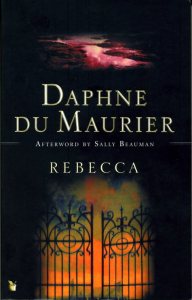
Rebecca001

Rebecca begins with a dream:

Last night I dreamt I went to Manderley again.

That first line has never failed to delight me and that dream sets the tone for the book. I’ve read it many times and each time I fall under its spell. Identity is a recurrent theme, just who was Rebecca, what was she really like and what lead to her death. I still want to know the narrator’s name and her awe of Rebecca still exasperates me. Daphne du Maurier described the book to her publisher as:

a sinister tale about a woman who marries a widower … Pyschological and rather macabre.

Dreaming is another theme. The new Mrs de Winter is in awe of Rebecca, Maxim’s first wife, and has nightmares about her. She daydreams, imagining what Rebecca was like, how beautiful she was, how much Maxim and everyone else must have loved her and how capable and talented she was. She pictures what she thinks life was like for the family in the past and imagines what will happen in the future. She builds up false pictures in her mind and lacks the courage to demand the truth.

Then of course there is the house, Manderley:

A thing of grace and beauty, exquisite and faultless, lovelier even than I had ever dreamed, built in its hollow of smooth grassland and mossy lawns, the terraces sloping to the gardens, and the gardens to the sea. (page 73)

There is a nightmarish quality to the house, approached down with a dark and twisting drive, that turns and twists like

“a serpent … very silent, very still … like an enchanted ribbon through the dark and silent woods.

Then coming out of the dark woods the drive is edged on either side by

a wall of colour, blood-red, reaching far above our heads. We were among the rhododendrons. There was something bewildering, even shocking, about the suddeness of their discovery. The woods had not prepared me for them. they startled me with their crimson faces, massed one upon the other in incredible profusion, showing no leaf, no twig, nothing but the slaughterous red, luscious and fantastic, unlike any rhododendron plant I had seen before. (pages 71 and 72)

The “slaughterous red”  symbolises blood and death. The rhododendrons intrude into the house, not only are they growing outside the morning room “blood-red and luscious”, making the room glow with their colour, but they are also filling the room – on the mantlepiece, on the writing desk and floating in a bowl on a table. There are more shocks lying in wait for the new Mrs de Winter, a shy and socially awkward young woman, married to a man twice her age, haunted by Rebecca and as she struggles to fit in with the social class, her confidence is continually undermined by her own insecurity and the hostile and resentful presence of the housekeeper Mrs Danvers, whose eyes were “dark and sombre” in her “white skull’s face”, “malevolent” and “full of hatred”.

A novel where secrets are only just  supressed, like a ticking bomb waiting to explode revealing the devastating truth.

May – Books of the Month

I’ve slowed down in my reading this month, partly because I’ve been blogging more, but also because some of the books have been long and detailed. So, I’ve read 6 books. The first one to be finished was The Giant’s House, which I’ve already written about. I read two non-fiction books – a biography Daphne by Margaret Forster and Alistair McGrath’s The Dawkin’s Delusion? which is a critique of Richard Dawkin’s God Delusion.

Daphne is an extremely well researched and informative account of Daphne Du Maurier’s life, taken from her letters and private papers, with personal memories of her from her children, grandchildren and friends. I didn’t realise until I started this that this year is the 100th anniversary of Daphne Du Maurier’s birth and my reading was enhanced by several broadcasts on the radio and television of dramatisations of her books, plus the excellent programme made by Rick Stein “In Du Maurier Country”, filming the locations of her books and interviews with her family. I’m also enthusiastic about Rick Stein’s books and programmes, (cookery for those who don’t know) – but I digress.
There is too much I could say about Daphne, not least that it is a candid account of her relationships, eg her troubled married life; wartime love affair; and friendships with Gertrude Lawrence and Ellen Doubleday, as well as an excellent source of information on Du Maurier’s method of writing and views on life. She doesn’t sound an easy person to live with or be related to, but that doesn’t detract from her passion for writing and Cornwall. Of course there is Menabilly and the biography gives so much detail of her love for the house and how she renovated and restored it that made me realise all the more how poignant it was when she had to give it up. What makes this book unforgettable for me is Forster’s eloquent way of writing, including so much detail, but never being boring or stilted, leaving me wanting to read on and on. And the book is illustrated with lots of photos.

In complete contrast to this is The Dawkin’s Delusion, which I borrowed from the library. I read Dawkin’s book earlier this year and didn’t have it to hand when I read this one (I’ve lent it to my son), so I had to rely on my memory of The God Delusion. I was interested to read what an Evangelical Christian had made of Dawkin’s book and wasn’t surprised – he didn’t agree with Dawkins! For an excellent review of Dawkin’s book have a look at Bill Hanage’s article “Them’s fightin’ words”on LabLit’s blog . I think I got more out of this article than from McGrath’s book.

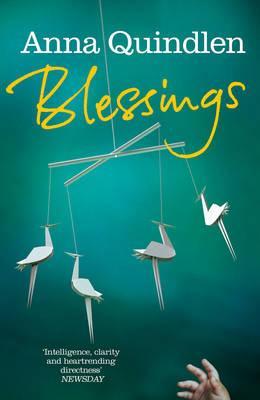
Turning to the fiction, I read Blessings, by Anna Quindlen, The Thirteenth Tale by Diane Setterfield, Body Surfing by Anita Shreve and finally Thomas Hardy’s The Woodlanders.

 Anna Quindlen is a new author to me. I came across her whilst reading Danielle’s blog. Blessings is a satisfying read about a baby abandoned outside “Blessings”, a large house owned by Lydia Blessing. The baby is taken in by Skip, the caretaker cum handyman-gardener, who looks after her at first in secret. The past of all the characters is slowly revealed and the effect that the baby has on them all. It’s a sad book over all, with regrets for what has happened in the past. I shall look out for more books by her.

As for The Thirteenth Tale, I have resisted buying this book, after reading either how fantastic people have found it, or how disappointing it is. The copy I read is a BookCrossing book I found in our local coffee shop. It took me some time to get into this book and I found myself being both reluctant to read it and yet unable to stop. It was only with the appearance of the governess that I found myself actually enjoying the book – and that is the second section. I usually give up on a book before then. Part of the problem I have with this book is that I couldn’t really like the characters, even Margaret, the narrator irritated me somewhat, even though she loves books. Another problem is the ending, which I found to be contrived. All in all, it is not a book I’ll read again and I’m going to release it back to its travels.

Which brings me to The Woodlanders. I borrowed this book from the library to read before continuing with Tomalin’s The Time-Torn Man. I enjoyed it so much that I went out and bought a copy for myself. I’ll post my thoughts in another post. This one has gone on long enough and the sun is shining!