What are you currently reading? What did you recently finish reading? What do you think you’ll read next?
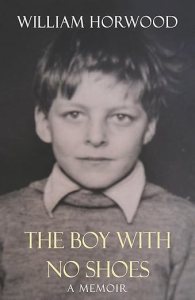
Currently I am reading The Boy With No Shoes: a Memoir by William Horwood, the author of The Duncton Chronicles an allegorical tale about the moles of Duncton Wood. It’s about his childhood in south-east England after the Second World War – the unwanted child of a mother who rejects him, and whose other children bully him.
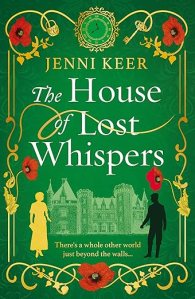
I’m also reading The House of Lost Whispers by Jennie Kerr, a mix of historical fiction and magical realism. It begins in 1912 when thirteen-year-old Olivia goes to live at Merriford Manor with her guardians after her parents were drowned when the Titanic sank. She hears a voice through her bedroom wall. A voice from a man called Seth. At first she thinks he’s a ghost. But it soon becomes clear that he lives in an overlapping world that is just a shudder in time away from her own. I wasn’t too sure about the mix of genres, but it’s working well so far.
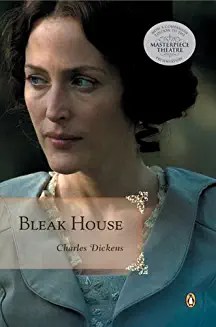
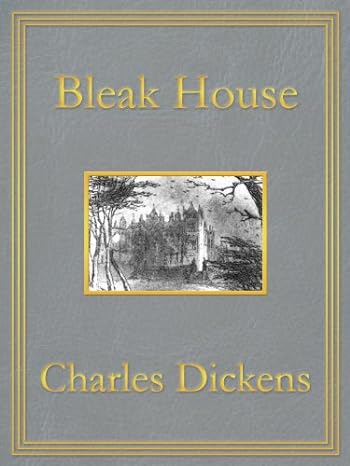
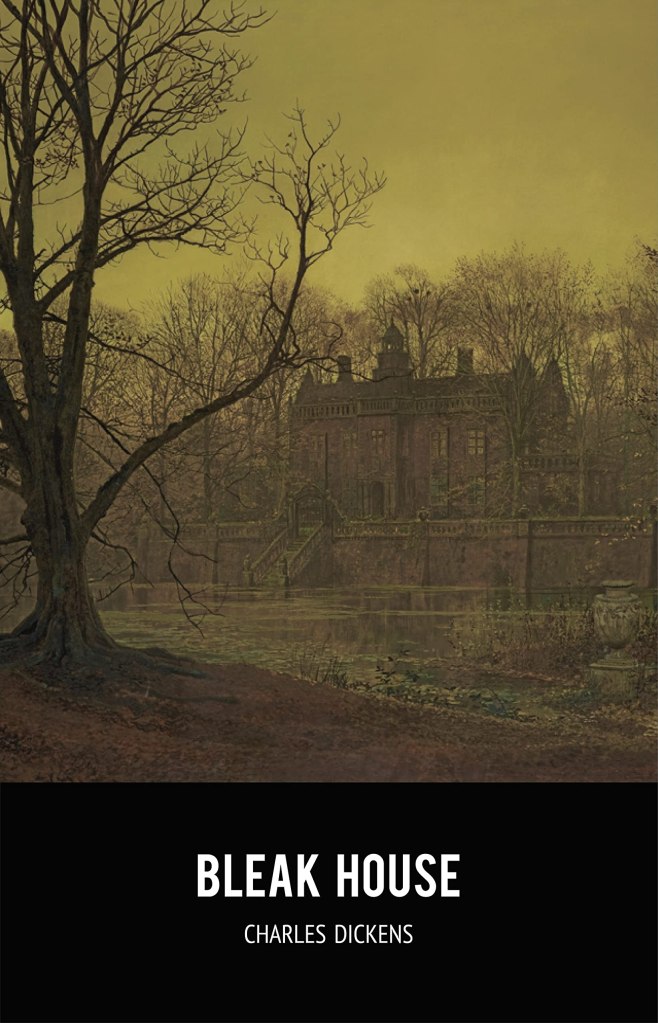
The last book I read was Bleak House by Charles Dickens, which is over 1000 pages full of description and lots of characters, about the complex and long-drawn out lawsuit of Jarndyce v Jarndyce. I’ll be writing more about it in a later post.
What will I read next? I’m thinking of reading The Curious Case of the Village in the Moonlight by Steve Wiley, a novella about Vincent Van Gogh. Van Gogh painted Starry Night whilst living in an asylum, near the village of Saint-Rémy, where a lamplighter is doing his rounds in the village. It will be his last round before electricity is installed during green hour — an absinthe-drenched celebration in his honour. The curious hour would transform the night from familiar to fantastical, with the village street lamps mysteriously vanishing.
But when the time comes I may find myself reading something different, as the mood takes me.
Every Friday Book Beginnings on Friday is hosted by Gillion at Rose City Readerwhere you can share the first sentence (or so) of the book you are reading. You can also share from a book you want to highlight just because it caught your fancy.
I’m featuring Bleak House, one of the books I’m currently reading.
Chapter 1 In Chancery
London. Michaelmas term lately over, and the Lord Chancellor sitting in Lincoln’s Inn Hall. Implacable November weather. As much mud in the streets as if the waters had but newly retired from the face of the earth, and it would not be wonderful to meet a Megalosaurus, forty feet long or so, waddling like an elephantine lizard up Holborn Hill.
Also every Friday there is The Friday 56, hosted by Freda at Freda’s Voice, but she is taking a break and Anne at My Head is Full of Books has taken on hosting duties in her absence. You grab a book and turn to page 56 (or 56% of an eBook), find one or more interesting sentences (no spoilers), and post them.
I found it a quite delightful place – in front, the pretty avenue and drive by which we had approached (and where, by the by, we had cut up the gravel so terribly with our wheels that I asked the gardener to roll it) at the back, the flower garden, with my darling at her window up there, throwing it open to smile at me, as if she would have kissed me from that distance.
The narrator in this passage is Esther Summerson. She and the two wards in the Jarndyce and Jarndyce case, had arrived at Bleak House and she is describing the scene that she saw from her bedroom window on their first morning at Bleak House.
Description:
Bleak House is the ninth novel by Charles Dickens, published in twenty monthly installments between March 1852 and September 1853. It is held to be one of Dickens’s finest novels, containing one of the most vast, complex and engaging arrays of minor characters and sub-plots in his entire canon. The story is told partly by the novel’s heroine, Esther Summerson, and partly by an omniscient narrator. Memorable characters include the menacing lawyer Tulkinghorn, the friendly but depressive John Jarndyce and the childish Harold Skimpole, as well as the likeable but imprudent Richard Carstone.
At the novel’s core is long-running litigation in England’s Court of Chancery, Jarndyce and Jarndyce, which has far-reaching consequences for all involved. This case revolves around a testator who apparently made several wills, all of them seeking to bequeath money and land surrounding the Manor of Marr in South Yorkshire. The litigation, which already has consumed years and sixty to seventy thousand pounds sterling in court costs, is emblematic of the failure of Chancery. Dickens’s assault on the flaws of the British judiciary system is based in part on his own experiences as a law clerk, and in part on his experiences as a Chancery litigant seeking to enforce his copyright on his earlier books. His harsh characterisation of the slow, arcane Chancery law process gave memorable form to pre-existing widespread frustration with the system. Though Chancery lawyers and judges criticized Dickens’s portrait of Chancery as exaggerated and unmerited, his novel helped to spur an ongoing movement that culminated in enactment of the legal reform in the 1870s. In fact, Dickens was writing just as Chancery was reforming itself, with the Six Clerks and Masters mentioned in Chapter One abolished in 1842 and 1852 the need for further reform was being widely debated.
I first read this book many years ago before I began my blog.
What are you currently reading? What did you recently finish reading? What do you think you’ll read next?
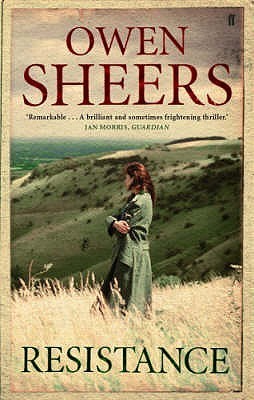
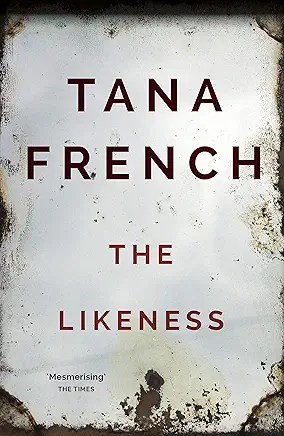
Currently I am reading Resistance by Owen Sheers, The Likeness by Tana French and Bleak House by Charles Dickens. They’re all what I call ‘wordy’ books and are taking me quite a while to read.
Resistance is an alternative history novel by Welsh poet and author Owen Sheers. The plot centres on the inhabitants of the isolated Olchon valley in the Black Mountains of south-east Wales close to Hereford and the border. It’s set in 1944–45, shortly after the failure of Operation Overlord and a successful German counterinvasion of Great Britain. It has beautiful descriptions of the Welsh countryside and farming life. I’m enjoying it but finding it slow reading.
The Likeness by Tana French, book 2 of the Dublin Murder Squad. I enjoyed reading the first book In the Woods, in 2014 but I don’t remember the details. No matter it reads well as a standalone. Detective Cassie Maddox is shocked to find out that a murdered girl is her double. At nearly 500 pages this will take me a while to read!
Bleak House by Charles Dickens is another chunkster, over 1000 pages full of description and lots of characters, about the complex and long-drawn out lawsuit of Jarndyce v Jarndyce. I’m only on page 43. I love the beginning – London in the fog.
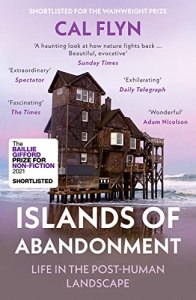
The last book I read was Islands of Abandonment: Life in the post-human landscape by Cal Flyn, a remarkable book, about abandoned places: ghost towns and exclusion zones, no man’s lands and fortress islands – and what happens when nature is allowed to reclaim its place.
I began reading this book in October and have been reading it slowly since then, only finishing it yesterday. It’s not a book to read quickly, but rather one to take your time to take in all the details. It’s fascinating, thoroughly researched and beautifully written.
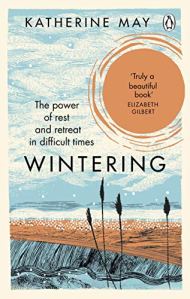
What will I read next? As I’m currently reading the three novels shown above, which will probably take me until the end of the month and beyond I’m not planning to start any more novels. However, I like to have a nonfiction book on the go to read with my breakfast, so tomorrow I’ll start reading Wintering by Katherine May. It’s described as ‘a poignant and comforting meditation on the fallow periods of life, times when we must retreat to care for and repair ourselves. Katherine May thoughtfully shows us how to come through these times with the wisdom of knowing that, like the seasons, our winters and summers are the ebb and flow of life.’ (Amazon UK)
Top 5 Tuesday was created by Shanah at Bionic Book Worm, and it is now being hosted by Meeghan at Meeghan Reads. For details of all of the latest prompts for January to March, see Meeghan’s post here.
Today the topic is Top 5 books I want to reread in 2025. Are you planning to reread some favourites in 2025? Maybe that classic you read back in school. Or maybe there’s a new book coming out in a series, and you want to remind yourself what happened in the last book. Whatever it is, let’s share all of our reread plans!!
I don’t often reread books, with the exception of Pride and Prejudice and A Christmas Carol both of which have reread many times.
This year is the 250th anniversary of Jane Austen’s birth and I’ve joined Brona at This Reading Life in her Austen 2025 project to reread her books, along with the Classics Club’s Sync Read (or readalong), so two of these books are by Austen.
The descriptions are from LibraryThing:
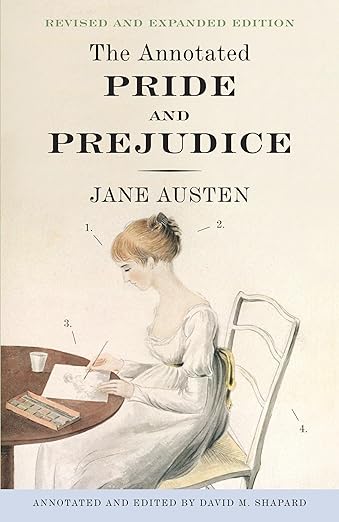
Pride and Prejudice by Jane Austen. I first read this when I was about 11 or 12 and have reread it many times since. It never fails to delight me. This time I’ll be reading The Annotated Pride and Prejudice edited by David M Shapard. In this classic 19th century story of love battling pride, we meet Elizabeth Bennet. Elizabeth is a smart, well-rounded woman, and she is one of five unmarried daughters of the country gentleman, Mr. Bennet, a country gentleman. Marriage is at the forefront Mrs. Bennet’s mind, especially since her elderly husband’s estate will not pass down to any of their daughters. The Bennets’ small town is in an uproar when two highborn, eligible gentlemen, Mr. Bingley and Mr. Darcy, come to stay. Mr. Bingley takes and instant liking to the eldest Bennet daughter, Jane. Elizabeth’s prideful self does not realize her life is about to change when she meets the intolerable Mr. Darcy, who will make her questions her sensibilities.
Emma by Jane Austen. I’ve only read this once. Emma is the story of a charmingly self-deluded heroine whose injudicious matchmaking schemes often lead to substantial mortification. Emma, “handsome, clever, and rich, with a comfortable home and happy disposition, seemed to unite some of the best blessings of existence; and had lived nearly twenty-one years in the world with very little to distress or vex her.” Her own great fortune has blinded Emma to the true feelings and motivations of others and leads her to some hilarious misjudgments. But it is through her mistakes that Emma finds humility, wisdom, and true love. Told with the shrewd wit and delicate irony which have made Jane Austen a master of the English novel, Emma is a comic masterpiece whose fanciful heroine has gained the affection of generations of readers.
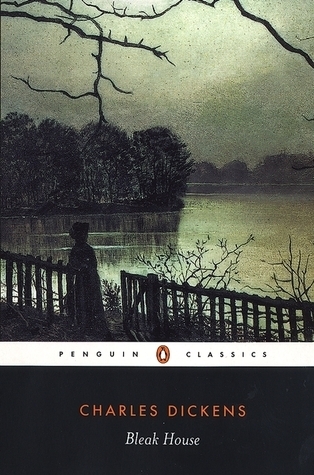
Bleak House by Charles Dickens. I first read this after watching the 2005 BBC adaptation with Gillian Anderson as Lady Dedlock and Charles Dance as lawyer Mr Tulkinghorn. A enthralling story about the inequalities of the 19th-century English legal system Bleak House is one of Charles Dicken’s most multifaceted novels. Bleak House deals with a multiplicity of characters, plots and subplots that all weave in and around the true story of the famous case of Jarndyce and Jarndyce, a case of litigation in England’s Court of Chancery, which starts as a problem of legacy and wills, but soon raises the question of murder.
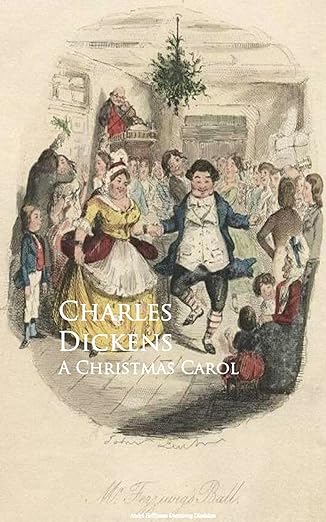
A Christmas Carol by Charles Dickens. I can’t remember how old I was when I first read this, but I think I was about 10. It was a Christmas present. Dickens wrote A Christmas Carol under financial duress, but it became one of his most popular and enduring stories. The old miser Ebenezer Scrooge cares nothing for family, friends, love or Christmas. All he cares about is money. Then one Christmas Eve he is visited by three ghosts: Christmas Past, Christmas Present and Christmas Yet To Come. These encounters leave Scrooge deeply moved and forever changed. Historians believe that A Christmas Carol contributed greatly to the modern sentimental Christmas.
Lark Rise to Candleford by Flora Thompson. I first read this many years ago, whilst I was recovering from flu (years before Covid). I loved this book, beautifully written and capturing a vanishing way of life as countryside farming turns to Victorian towns An autobiography of “Laura” – as the author calls herself – which describes in detail her delightful life in a country village. Her self-sufficient world of farm labourers and craftsmen working to the rhythms of the seasons and enjoying their traditional festivities is preserved for readers in this interesting and entertaining narrative.
As the interminable case of Jarndyce and Jarndyce grinds its way through the Court of Chancery, it draws together a disparate group of people: Ada and Richard Clare, whose inheritance is gradually being devoured by legal costs; Esther Summerson, a ward of court, whose parentage is a source of deepening mystery; the menacing lawyer Tulkinghorn; the determined sleuth Inspector Bucket; and even Jo, the destitute little crossing-sweeper. A savage, but often comic, indictment of a society that is rotten to the core, Bleak House is one of Dickens’s most ambitious novels, with a range that extends from the drawing rooms of the aristocracy to the poorest of London slums.
I first read Bleak House after watching the 2005 Andrew Davies’ adaptation of the novel on BBC1 with Gillian Anderson as Lady Dedlock and Charles Dance as lawyer, Mr Tulkinghorn, with many more well known actors in the cast. I’ve been meaning to re-read it sometime and so I am pleased to be reading it again.
Did you take part in the Classics Spin? What will you be reading?



 BooksPlease