My Friday Post: The Scent of Death

Book Beginnings ButtonEvery Friday Book Beginnings on Friday is hosted by Gillion at Rose City
Reader
 where you can share the first sentence (or so) of the book you are reading, along with your initial thoughts about the sentence, impressions of the book, or anything else the opener inspires.

This week’s book is a library book I’m thinking of reading. It’s The Scent of Death by Andrew Taylor. I borrowed it because I’ve enjoyed some of his other books. It begins:

This is the story of a woman and a city. I saw the city first, glimpsing it from afar as it shimmered like the new Jerusalem in the light of the setting sun.

Synopsis:

August, 1778. British-controlled Manhattan is a melting pot of soldiers, traitors and refugees, surrounded by rebel forces as the American War of Independence rages on. Into this simmering tension sails Edward Savill, a London clerk tasked with assessing the claims of loyalists who have lost out during the war.

Savill lodges with the ageing Judge Wintour, his ailing wife, and their enigmatic daughter-in-law Arabella. However, as Savill soon learns, what the Wintours have lost in wealth, they have gained in secrets.

The murder of a gentleman in the slums pulls Savill into the city’s underbelly. But when life is so cheap, why does one death matter? Because making a nation is a lucrative business, and some people cannot afford to miss out, whatever the price’¦

Also every Friday there is The Friday 56, hosted by Freda at Freda’s Voice.Friday 56

These are the rules:

  1. Grab a book, any book.
  2. Turn to page 56, or 56% on your eReader.
  3. Find any sentence (or a few, just don’t spoil it) that grabs you.
  4. Post it.
  5. Add the URL to your post in the link on Freda’s most recent Friday 56 post.

Page 56:

You’re a thief, a damned pickpocket. There were two empty purses in your bundle. And those shoes you had on your feet – well they tell their own story don’t they?

I like the promise of this book – historical crime fiction set during the American War of Independence, a war about which I know only the briefest of details.

New-To-Me Books August 2015

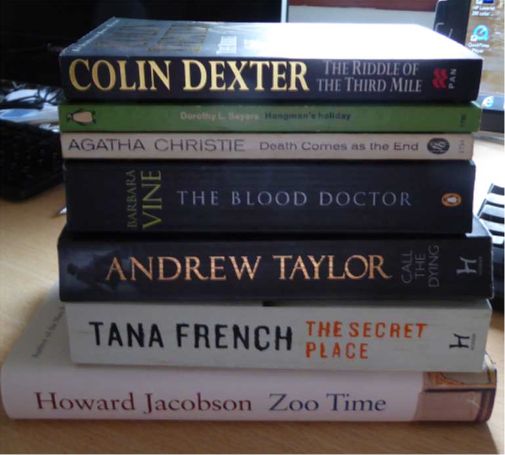
Another visit to Barter Books in Alnwick resulted in another pile of books to add to my TBR shelves.

From top to bottom they are:

  • The Riddle of the Third Mile by Colin Dexter – to fill in my gaps in reading his Inspector Morse books. This is the 6th in the series – Inspector Morse isn’t sure what to make of the truncated body found dumped in the Oxford Canal. He suspects it may be all that’s left of an elderly Oxford don last seen boarding a London train days before.
  • Hangman’s Holiday and Other Stories by Dorothy L Sayers – the ninth in her Lord Peter Wimsey series, this includes  four Wimsey stories, six stories featuring Montague Egg (travelling salesman for Plummet & Rose, Wine & Spirits), and two more separate stories.
  • Death Comes as the End by Agatha Christie – this is one of the last few books of hers I have yet to read. It’s historical crime fiction set in Egypt 4,000 years ago, written drawing on her experience of several  expeditions to the Middle East with her husband, Max Malloran, an eminent archaeologist.
  • The Blood Doctor by Barbara Vine (Ruth Rendell) – one of her psychological thrillers, described on the back cover as ‘a chilling tale of ambition, obsession and bad blood.‘ I still have a lot of Barbara Vine/Ruth Rendell books to read.
  • Call the Dying by Andrew Taylor – I’m jumping into a series with this book as this is the 7th in the Lydmouth mysteries and I haven’t read any of the others. They are all are set in and around a fictional town on the Anglo-Welsh borders in the years after World War II.
  • The Secret Place by Tana French – the 5th in the Dublin Murder Mystery series. I read the first,  In the Woods a few years ago and liked its psychological elements and the twists and turns.  In this book Detective Stephen Moran investigates the murder of handsome, popular Chris Harper when sixteen-year-old Holly Mackey brings him a photo of Chris with the caption, I KNOW WHO KILLED HIM.
  • Zoo Time by Howard Jacobson – a complete change from crime fiction – a book I bought in Tescos for £1. It’s described on the book cover as  ‘a novel about love – love of women, love of literature, love of laughter. It shows our funniest writer at his brilliant best.‘ I felt like reading something different.

If you’ve read any of these books I’d love to know what you think about them.

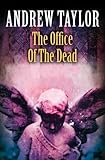
The Office of the Dead

The Office of the Dead by Andrew Taylor is the third book in the Roth Trilogy. I read the first two, The Four Last Things and The Judgement of Strangers a couple of years ago and I wish I’d read this one straight afterwards, because I had to refresh my memory before I started The Office of the Dead.

It’s set in the 1950s, some twenty years earlier than The Judgement of Strangers, and completes the story of the Byfield and Appleyard families. I absolutely loved it. As it says on the back cover this is a chilling novel of crime and retribution. It works perfectly well on its own, but is even better if you’ve read the first two books. The way Andrew Taylor has constructed this trilogy, working backwards in time is just perfect.

Synopsis from Andrew Taylor’s website:

It’s 1958, and the party’s over for Wendy Appleyard: she finds herself penniless, jobless and on the brink of divorce. So she runs to her oldest friend Janet Byfield, who seems to have everything Wendy lacks: a handsome husband, a lovely little daughter, Rosie, and a beautiful home in the Cathedral Close of Rosington. David Byfield is on the verge of promotion, and Janet is the perfect wife for an ambitious young clergyman.

But perfection has always been dangerous, and gradually the idyll sours. Old sins come to haunt the present and breed new sins in their place. The shadow of death seeps through the Close, and with it comes a double mystery stretching back to turn-of-the-century Rosington, to a doomed poet-priest called Francis Youlgreave.

Only Wendy, the outsider looking in, glimpses the truth. But can she grasp its dark and twisted logic in time to prevent the coming tragedy?

My view:

The Office of the Dead answers many of the questions I had from the other two books – questions about David Byfield, the theologian who can barely control his emotions; Reverend Francis Youlgreave, the turn of the century canon librarian and poet, and most of all about Rosie, David and Janet’s daughter. In this book she is a small and very self absorbed little girl who has her 5th birthday during the course of the book. She calls herself ‘Nobody‘, because ‘Nobody’s perfect‘ and she can’t be parted from her doll, Angel.

There is also an excellent portrayal of senile dementia in Janet’s father – John Treevor. Janet says he is ‘getting a bit confused‘, but at times he was capable of acting perfectly rationally and at times not – which made it all the more difficult to know what was true and what only took place in his mind, and so all the more tense and sinister. Did John Treevor commit suicide or was he murdered and if so, was it the stranger he said was watching the house, or someone else?

Running alongside the story of the Byfields are several other inter-connecting strands, Wendy (who is the narrator) and her estranged husband, Henry; the man with the bald spot roughly the shape of a map of Africa, who is following Wendy – who is he working for and why is he interested in Canon Youlgreave. Youlgreave, a character from the past who had died in 1903? He is described by old Mrs Gotobed as a ‘good man‘, but he had been forced to resign after he had ‘lost all touch with reality ‘ and had caused a scandal.

In fact the overall mood of the book is about the difficulties in remembering, or is it twisting, the past, about mental breakdowns and about the effect the past had on the future. In that respect I think it’s best to read the books in order.

I’ve just seen that there is a new short story, The Long Sonata of the Dead, about the continuing legacy of Francis Youlgreave, due to be published on Kindle on 1 April. I’m looking forward to reading it.

And then I’d like to read the first two books in reverse order and see what it effect that has on the story. There is so much more I could write about this book – about the characters (totally convincing), about the setting and the writing (well written etc) and about the pace – the creation of tension and suspense etc (just right), but really all I need to say is that I thought it was brilliant!

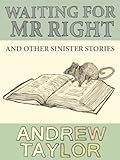
Waiting For Mr Right by Andrew Taylor

The full title of this collection of three short stories is Waiting For Mr Right & Other Sinister Stories and it is an ideal book to read for Carl’s R.I.P Challenge – reading books of a macabre and fantastical nature .

Andrew Taylor writes in his introduction to this collection that ‘short stories permit concentration, the ability to focus on a single idea,’ I like the good ones for just that reason, but more often than not when I read some short stories I’m left feeling ‘oh, so what’ – they can be trivial and unsatisfying. Not so with this collection, because these are very good stories. Taylor also writes:

Unfortunately, good short stories are also incredibly difficult to write. Each word counts for more than a word in a full-length novel; each word costs more to write. Short stories may be short but they make a author sweat blood.

He has succeeded in my opinion. These cleverly written stories work on two levels – they are works of fantasy that made me both amused and chilled; they present a different form of ‘reality’.

The first story, Waiting For Mr Right,  is set in the cemetery of Kensal Vale where a remarkably well-educated creature lives and is the narrator, telling the tale of Jack and Tracy. Jack is in hiding in the vault of the Makepiece family, which has a Bateson’s Belfry – a Victorian invention that enabled you to summon help if you’d been buried alive. The ending is both horrific and well, amusingly satisfying.

The second slightly less sinister story is perhaps not quite as good as the first one. It is Nibble-Nibble, but it is still an entertaining story about a little boy and his imaginary friend, John – or is he really a ghost? The little boy lives with his Aunt and Uncle. Then his Granny comes to stay and she doesn’t believe in ghosts, but ghosts are like people, or so John says – there are some you like and some you don’t. The little boy realises:

Normally grannies were meant to be nice and ghosts were meant to be scary. Why did it have to be the other way round for me? Why couldn’t I be like everyone else?

I think the final story is the best. It’s called Keeping My Head. It was written for an anthology celebrating the eightieth birthday of the late H R F Keating, a former president of the Detection Club.

The narrator is an old lady looking back over the events of her life – and her death. I can’t write much about it or I’ll be giving away too much. I’ll just say that her husband was having an affair and she decided to kill him, but it all went wrong. When she was fifteen a tinker told her fortune and warned her that although she was going to have a long life and would be known around the world she must always ‘beware of keeping her head‘. She was a heedless girl and soon forgot the tinker.

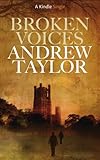
Broken Voices by Andrew Taylor

I like Andrew Taylor’s books, so when I saw this novella on Kindle I downloaded it anticipating a good read. Broken Voices is a ghost story set in an East Anglian cathedral city just before the First World War when two schoolboys are left at the cathedral school during the Christmas holidays. They lodge with Mr Ratcliffe, a semi-retired schoolmaster, a bachelor now in his seventies who lived with Mordred, his malevolent cat, in a grace-and-favour house granted to him by the Dean and chapter of the cathedral.

Andrew Taylor has drawn both the setting in the Fens and the atmosphere of the times well. The two boys, both upset at being left at school have little to occupy themselves with and are entertained by the ghost stories that Mr Ratcliffe tells them. There was an ancient tragedy connected with the cathedral bells, the tower and a Canon who had been commissioned to write an anthem to mark the occasion when the bells were recast. The cathedral is full of shifting shadows, and the bell tower is haunted by fragments of melody, which one of the boys can hear.

I didn’t find it that chilling, but the story does have a creepy atmosphere and a tension as the boys investigate the tower in the dead of night. It’s suitably ambiguous. It’s not spelled out and you can make your own decision – as one of the boys says at the beginning of the story, looking back forty years to the events he is relating:

Was there a ghost? Was there, in a manner of speaking, a murder?

Ask me these questions and I cannot answer a simple yes or no. I did not know at the time and now, more than forty years later, I am even less able to answer them.

I read this quickly. It may be just a bit predictable, but none the less I enjoyed it for what it is – a ghost story told with eloquence and sufficient pace to build up the suspense and keep me entertained to the end.

The Sleeping Policeman by Andrew Taylor

Tragedy is a word that has come to have several meanings. By most definitions, the Hanslope case had elements of tragedy. Afterwards, Dougal remembered that tragedy derives from two Greek words which can be translated as goat song.

And that was appropriate too, because in one sense of the word Graham Hanslope was undoubtedly a goat. Hanslope’s goat song ended in discord on the southbound platform of the Bakerloo Line at Paddington Station. It ended with the arrival of a tube train at a few minutes after ten o’clock on the morning of Saturday 16 February. It ended, as tragedies so often end, with death and the destruction of hope. (page 1)

I borrowed The Sleeping Policeman from my local library because I’ve read and liked some of Andrew Taylor’s other books. This book is the seventh novel in the William Dougal series. I haven’t read any of the earlier books, but I don’t think it made any difference; William Dougal, himself, has just a small, but important part in the book. (The sleeping policeman in question is not a police officer – it’s a speed bump!)

Dougal, a private investigator, is hired by Hanslope, a GP, to discover who is blackmailing him after had started an affair with one of his patients. But that isn’t the whole story because Hanslope has omitted to tell Dougal all the facts and has lied to him. What follows is a tense, taut mystery, resulting in a murder, which Dougal eventually solves.

None of the characters are very likeable, in fact some of them are downright nasty, but each one of them is a well-drawn cameo. There’s a reckless hit and run, corruption in the police ranks, a series of petty thefts, hostility between two families whose teenage daughters are too friendly for their parents’ liking and a journalist whose garden is filled with gnomes. I liked it immensely and am looking out for the other William Dougal books:

(Details copied from Fantastic Fiction)
Caroline MinusculeWaiting for the End of the WorldOur Fathers' LiesAn Old School Tie
Freelance DeathBlood RelationThe Sleeping PolicemanOdd Man Out