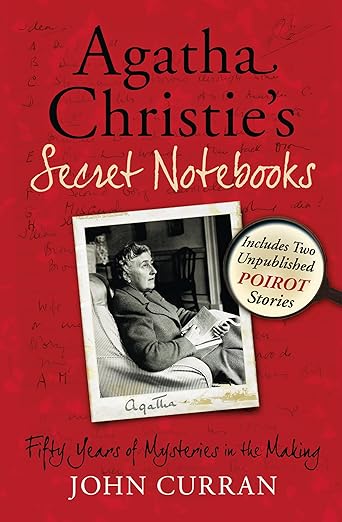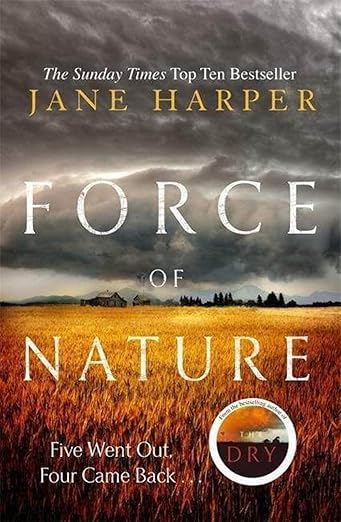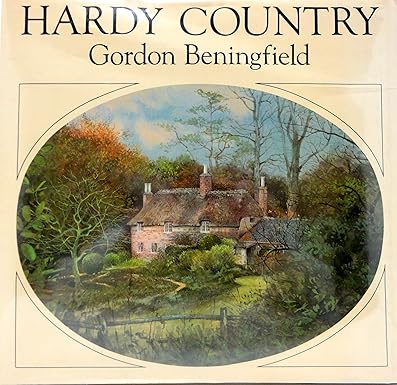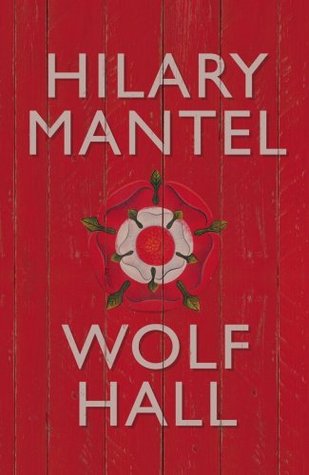
The Accordionist by Fred Vargas – quirky crime fiction, set in Paris
The Craftsman by Sharon Bolton – creepy crime fiction about a coffin-maker
The Sea Detective by Mark Douglas-Home – oceanographer, Cal McGill, more of an investigative story than crime fiction
The Hangman’s Song by James Oswald – the third Inspector McLean series set in Edinburgh, crime fiction with elements of the supernatural and parapsychology thrown in
The Dressmaker by Beryl Bainbridge – a wartime tale of life in Liverpool in 1944, with an under current of psychological suspense.
The Clockmaker’s Daughter by Kate Morton – historical fiction set in the summer of 1862, a story of murder, mystery and thievery, of art, love and loss
I saw the Do I have that Book? challenge on Janette’s blog, Wicked Witch, who saw it on Alli the Book Giraffe. It was originally created way back in August 2018 by Tabby, a booktuber.
I liked the idea and thought I’d have a go too. Here are my answers:
1. Do you have a book with deckled edges?
Pride and Prejudice, Emma and Sense and Sensibility by Jane Austen, a three book set published by Nelson Doubleday has deckled edges. A note with the books explained that deckled edges are formed at an early stage as pulp is allowed to flow against rubber deckle straps between the frame and the edges of a paper makers mould.
2. Do you have a book with 3 or more people on the cover?
This is set in 1950, as a Liverpool repertory theatre company is rehearsing its Christmas production of Peter Pan. The story centres around Stella, a teenager and an aspiring actress who has been taken on as the assistant stage manager.
It’s semi-autobiographical based on Beryl Bainbridge’s own experience as an assistant stage manager in a Liverpool theatre. On the face of it this is a straight forward story of the theatre company but underneath it’s packed with emotion, pathos and drama. And it’s firmly grounded in a grim post-war 1950s England, food rationing still in operation and bombed buildings still in ruins overgrown with weeds. It really is an awfully good book.
3. Do you have a book based on another fictional story?
I loved the first two books, The Silence of the Girls and The Women of Troy both of which are based on Homer’s Iliad and Virgil’s Aeneid, so I was very keen to read The Voyage Home. I wasn’t disappointed but it is slightly different in that this third book is loosely based on the first part of Aeschylus’s Oresteia.
4. Do you have a book with a title 10 letters long?
It’s told mainly from Stephen Lamb’s perspective. Stephen is twelve years old. Nineteen years earlier Billy, Stephen’s uncle then aged eleven had disappeared. It was assumed that he had fallen victim to the notorious serial killer Arnold Avery, but his body had never been found. Stephen is determined to find where Arnold had buried his body and writes to him in prison.
5. Do you have a book with a title that starts and ends with the same letter?
Seven White Gates by Malcolm Saville, the second in his Lone Pine series, first published in 1944, an exciting adventure story. The Lone Pine books are about a group of children who formed a secret society in wartime Shropshire. I particularly like the setting of Seven White Gates, in Shropshire not far from the border with Wales, an area rich in folklore and legend.
Set in the late 1960s in Cornwall, Superintendent Wycliffe, despite being on holiday can’t help getting involved when a young woman is found murdered in her seedy hotel bedroom. She’d been strangled and her face had been savagely smashed in. A thousand pounds was still in a drawer, hidden beneath her clothes, so the motive wasn’t theft.
I wondered about the title as there are no details in it about how to kill a cat!
7. Do you have a book written by an author using a pen name?
Fell Murder by E C R Lorac E C R Lorac was a pen name of Edith Caroline Rivett (1894-1958) who was a prolific writer of crime fiction from the 1930s to the 1950s. It’s the 25th book featuring Chief Inspector Robert Macdonald, set in Lunesdale in Lancashire towards the end of the Second World War. The mystery begins with the discovery of the body of old Robert Garth – found dead–’dead as mutton‘–in the trampled mud of an ancient outhouse.
8. Do you have a book with a character’s name in the title?
The Immortal Life of Henrietta Lacks by Rebecca Skloot, an outstanding book! It’s fascinating, but harrowing to read in parts, from all the details of Henrietta’s life, how she was treated for cervical cancer in 1951, when she was just 30, to her death nine months later. Cancer treatment in 1951 with radium was brutal, but what made it worse was that Henrietta was a black woman, living in near-poverty in Baltimore. It is a remarkable and personal record of the Lacks family based on an impressive amount of research using legal documents and medical records, personal journals and interviews with Henrietta’s family and friends, and lawyers, ethicists, scientists and journalists.
9. Do you have a book with 2 maps in it?
Standing in Another Man’s Grave by Ian Rankin. Both the endpapers in my hardback copy of the book are copies of OS maps of the area, showing the route along the A9 in Scotland that Rebus took whilst investing a cold case as a retired police officer.
10. Do you have a book that was turned into a TV show?
The Remorseful Day by Colin Dexter, the last book in his Inspector Morse series. Chief Inspector Morse is one of my favourite fictional detectives. I first came across him watching the ITV series Inspector Morse. I enjoyed both the books and the TV adaptations.
11. Do you have a book written by someone who is originally famous for something else? (celebrity/athlete/politician/tv personality…)
The Marches Border Walks with My Father by Rory Stewart. He is a British academic, broadcaster, writer, and former diplomat and politician. He has taught at Harvard University and at Yale University.
But the reason I read his book is because of the subject – walking in the borderlands between England and Scotland, in the place where I live. And it’s not just about walking – he also muses on history, memory and landscape, all topics that interest me immensely.
Timekeepers is a book about our obsession with time and our desire to measure it, control it, sell it, film it, perform it, immortalise it and make it meaningful. It has two simple intentions: to tell some illuminating stories, and to ask whether we have all gone completely nuts.
The story that interested me most was Movie Time, with an account of how the silent film, Safety Last!was made in 1923.
13. Do you have a poetry book?
I have a few. One of my favourites is Robert Frost (The Illustrated Poets series) – a slim little book with a selection of Frost’s verse illustrated by American, English and French painters of the nineteenth and twentieth centuries. Frost’s poems are written in deceptively simple language but they convey great depth of meaning. They are compact and powerful. And the illustrations are beautiful.
The beauty of poetry is the way that so much meaning is condensed into such few words.
14. Do you have a book with an award stamp on it?
All that Matters by Sir Chris Hoy, the Winner of the Charles Tyrwhitt Sports Book Award Autobiography of the Year 2025. Chris Hoy is a former track cyclist and racing driver from Scotland who represented Great Britain at the Olympic and World Championships and Scotland at the Commonwealth Games. Hoy is an 11-time world champion and a six-time Olympic champion.
In 2023 he was diagnosed with Stage 4 cancer. Chris shares the next phase of his extraordinary life with exceptional bravery. He looks over the challenges he has faced thus far, and the ways he has taken them on. With his wife Sarra and their young children by his side, he shares how he has used these experiences to find ways to focus on the moments that matter, showing us how to do the same.
I haven’t read it yet.
15. Do you have a book written by an author with the same initials as you?
A love story set in Italy in the 16th century, about a young widow, Simonetta di Saronno, struggling to save her home, who meets the artist Bernadino, a protege of Leonardo da Vinci. Bernardino was so captivated by Simonetta’s beauty that her face is the face of every female Saint, every Magdalene and every Madonna that he painted. Simonetta at first resists Bernardino’s advances but of course eventually falls in love with him, causing scandal in the local community.
I enjoyed this collection of stories, which are brooding, somewhat melancholic, dark, disturbing and full of sharp and penetrating observations – brilliant! The title story is the last one in the book and is the only new story, the others having first appeared in other publications. Waiting for the plumber to arrive, a woman lets a man into her flat, only to find out he has a gun and wants to shoot Margaret Thatcher from the flat window, as she leaves the hospital behind the flats.
17. Do you have a book that is between 500-510 pages long?
Beginning in 1768 this roughly follows the fortunes of the Wedgwood family until 1805, 10 years after the death of Josiah Wedgwood, an English potter and the founder of the Wedgwood company. It’s the story of a remarkable family, their lives, loves, work, illnesses, depressions, addictions and deaths. I found it fascinating throughout, whether it was set in America during the fight for independence, or in England in Wedgwood’s factories, or in Josiah’s grand new house Etruria Hall, or travelling through England on the new canals.
18. Do you have a book that was turned into a movie?
Atonement by Ian McEwan, one of my favourite novels was made into a 2007 romantic war film starring James McAvoy, Keira Knightley, Saoirse Ronan, Romola Garai, and Vanessa Redgrave. The film is mostly faithful to the book, with minor alterations, except for the ending. I prefer the book’s ending. I think the book is superior overall to the film. It was shortlisted for the Booker Prize in 2001. As well as being a love story and a war novel it’s also a mystery and a reflection on society and writing and writers.
19. Do you have a graphic novel?
No, although I have looked at them in the library – and decided not to borrow one.
20. Do you have a book written by 2 or more authors?
The Floating Admiral by Agatha Christie, Dorothy L Sayers and ten other crime writers from the Detection Club, with a prologue by G K Chesterton, first published in 1931. In a literary game of consequences, each author wrote one chapter, leaving G.K. Chesterton to write a typically paradoxical prologue and Anthony Berkeley to tie up all the loose ends. In addition, each of the authors provided their own solution in a sealed envelope, all of which appeared at the end of the book, with Agatha Christie’s ingenious conclusion acknowledged at the time to be ‘enough to make the book worth buying on its own’. I haven’t read it yet.
I have 19 books out of the 20 prompts. It took me several days (on and off) to compile this post, but I enjoyed doing it immensely, reminding me of books I’ve read years ago and some more recently – and some I haven’t read yet!
How many of these 20 book categories do you have on your bookshelves?
If you fancy having a go at the challenge, here’s a list of the 20 prompts
1. Do you have a book with deckled edges? 2. DO you have a book with 3 or more people on the cover? 3. Do you have a book based on another fictional story? 4. Do you have a book with a title 10 letters long? 5. Do you have a book with a title that starts and ends with the same letter? 6. Do you have a Mass Market Paperback book? 7. Do you have a book written by an author using a pen name? 8. Do you have a book with a character’s name in the title? 9. Do you have a book with 2 maps in it? 10. Do you have a book that was turned into a TV show? 11. Do you have a book written by someone who is originally famous for something else? (celebrity/athlete/politician/tv personality…) 12. Do you have a book with a clock on the cover? 13. Do you have a poetry book? 14. Do you have a book with an award stamp on it? 15. Do you have a book written by an author with the same initials as you? 16. Do you have a book of short stories? 17. Do you have a book that is between 500-510 pages long? 18. Do you have a book that was turned into a movie? 19. Do you have a graphic novel? 20. Do you have a book written by 2 or more authors?
Every Friday Book Beginnings on Friday is hosted by Gillion at Rose City Readerwhere you can share the first sentence (or so) of the book you are reading. You can also share from a book you want to highlight just because it caught your fancy.
Maigret and the Wine Merchant is one of the books I’m currently reading. I fancied reading something shorter that the books I’ve been reading and thought this one with just 176 pages was ideal. It’s the seventy first book in the Maigret series, and was originally published in 1971. The Penguin Classics edition was first published in September 2019.
The book begins:
“You only killed her to rob her, didn’t you?”
Also every Friday there is The Friday 56, hosted by Freda at Freda’s Voice, but she is taking a break and Anne at My Head is Full of Books has taken on hosting duties in her absence. You grab a book and turn to page 56 (or 56% of an eBook), find one or more interesting sentences (no spoilers), and post them.
Page 56:
‘Was Madame Thorel one of Oscar Chabut’s mistresses?’
‘Rita? She’s come with him and with overs. She’s a sexy little brunette who can’t do without men.’
Description from Goodreads:
‘Maigret had never been comfortable in certain circles, among the wealthy bourgeoisie where he felt clumsy and awkward … Built like a labourer, Oscar Chabut had hauled himself up into this little world through sheer hard work and, to convince himself that he was accepted, he felt the need to sleep with most of the women.’
When a wealthy wine merchant is shot in a Paris street, Maigret must investigate a long list of the ruthless businessman’s enemies before he can get to the sad truth of the affair.
Stacking the Shelves is hosted by Marlene at Reading Realityand the details are on her blog, as well as a huge amount of book reviews. Why not visit her blog if you haven’t already found it? The gorgeous graphic is also used courtesy of the site.
The idea is to share the books you are adding to your shelves, may they be physical or virtual. This means you can include books you buy in physical stores or online, books you borrow from friends or the library, review books, gifts and of course e-books!
I’ve been away on holiday near Gatehouse of Fleet in Dumfries and Galloway, Scotland. We had a brilliant time in a lodge overlooking Fleet Bay, part of the Solway Firth.
I bought these three paperbacks from a charity shop in Gatehouse of Fleet:
Birnam Wood by Eleanor Catton – Like her previous novel The Luminaries, which I loved, this book is set in a fictionalised New Zealand, primarily in and around a national park in the South Canterbury region. The title is taken from a line in Macbeth. It follows members of a guerilla gardening collective, Birnam Wood as, with the help of a charismatic tech billionaire, they undertake a new project on abandoned farmland.
Nutshell by Ian McEwan, a version of Hamlet. Trudy has betrayed her husband, John. She’s still in the marital home – a dilapidated, priceless London townhouse – but not with John. Instead, she’s with his brother, the profoundly banal Claude, and the two of them have a plan. But there is a witness to their plot: the inquisitive, nine-month-old resident of Trudy’s womb. I’ve enjoyed some of McEwan’s books, but this one looks rather different and, having read a few pages, I’m not sure about it.
A Bit on the Side by William Trevor, a collection of twelve short stories. I don’t think I’ve read any of Trevor’s books, but I thought this one looks interesting, with stories about adultery, secret passions and domestic infidelities. ‘A treat … each meditate[s] on the subject of love – adulterous, unspoken, clandestine, sometimes cruel. Whether set in rural Ireland or London, their pages whisper of relished secrets and dreams foolishly clung to’ Mail on Sunday.
These are e-books I’ve either bought for 99p or acquired for free this month:
The Testaments – Margaret Atwood’s sequel picks up the story more than fifteen years after Offred stepped into the unknown, with the explosive testaments of three female narrators from Gilead. The Republic of Gilead is beginning to rot from within. At this crucial moment, two girls with radically different experiences of the regime come face to face with the legendary, ruthless Aunt Lydia. But how far will each go for what she believes?
Step by Step: The Life In My Journeys by Simon Reeve. I love his TV travel programmes, so this was a 99p must for me. It’s his autobiography describing how he has journeyed across epic landscapes, dodged bullets on frontlines, walked through minefields and been detained for spying by the KGB. His travels have taken him across jungles, deserts, mountains and oceans, and to some of the most beautiful, dangerous and remote regions of the world. He gives the full story behind some of his favourite expeditions, and traces his own inspiring personal journey back to leaving school without qualifications, teetering on a bridge, and then overcoming his challenges by climbing to a ‘Lost Valley’ and changing his life … step by step.
The First Witch of Boston by Andrea Catalano, her debut novel. This was free from Amazon Prime this month. It is based on the true story of Margaret Jones, the first woman to be found guilty of witchcraft in Massachusetts Bay Colony, 1646. When Thomas and Margaret Jones arrive from England to build a life in the New World Margaret’s skill with healing herbs rouses suspicion of black magic. Personal tragedies, religious hysteria, and wariness of the unknown turn most against her, and even the devotion Margaret and her husband share is at risk.
I enjoy historical fiction and Mist Over Pendle by Robert Neill, (American title, The Elegant Witch) is one of my favourite novels. It tells the tale of witchcraft set in a wild inaccessible corner of Lancashire leading up to the trials of the famous Pendle witches in 1612. So, I thought it would be interesting to compare the two books.
The latest Classic Club Spin challenged you to read book 11 on your CC Spin #41 list by 24th August. That was Brighton Rock by Graham Greene for me.
Vintage Digital| 2 October 2010| 258 pages| e-book| 4*
Description on Amazon:
A gang war is raging through the dark underworld of Brighton. Seventeen-year-old Pinkie, malign and ruthless, has killed a man. Believing he can escape retribution, he is unprepared for the courageous, life-embracing Ida Arnold. Greene’s gripping thriller exposes a world of loneliness and fear, of life lived on the ‘dangerous edge of things.
In this gripping, terrifying, and unputdownable read, discover Greene’s iconic tale of the razor-wielding Pinkie.
I’ve enjoyed some of Greene’s books, so I’ve been meaning to get round to reading Brighton Rock for some years and I was pleased it came up as my Spin book. It was his ninth book, first published in 1938, and one of his Catholic Novels (the others being The End of the Affair, The Power and the Glory and The Heart of the Matter). In his Introduction J M Coetzee writes that it was hisfirst serious novel, serious in the sense of working with serious ideas. Brighton in the 1930s had two faces, one the attractive seaside resort, and the other a nest of criminal activity in the desolate industrial suburbs.
The opening line sets the scene for a murder – “Hale knew, before he had been in Brighton three hours, that they meant to murder him.’ Later he is found dead, apparently from a heart attack. Ida Arnold, who had met Fred as he tried to evade the gang, had left him alone for a few minutes and when she returned he was nowhere to be seen. She is determined to find out what really had happened to him as the official account of his death doesn’t match up with what she knew. So when the police ignore what she says she carries out her own investigation. She believes in Right and Wrong – to Ida death was the end of everything, she didn’t believe in heaven or hell, and she wants justice for Fred.
To say that Pinkie Brown, the teenage gangleader, is a complex character is an understatement. He is desperately trying to cover up his involvement with Fred. Rose is a young innocent girl who could reveal his guilt although she doesn’t realise it. Pinkie believes that if he marries her she wouldn’t be able to give evidence against him. Both of them are Roman Catholics. Rose believes in Good and Evil and salvation, whereas Pinkie believes in Hell fire and damnation, but is unsure about the existence of Heaven. He becomes increasingly paranoiac, more desperate and violent.
This novel is bleak, full of violence, menace and suspense, not a book I could enjoy. I struggled at first to understand what was going on and who all the characters were. It’s an odd mixture really – a crime is committed and the amount of violence is shocking, but it is also a psychological character study and an in-depth consideration of the questions of life and death. It’s a tough book to read and to review without giving away any spoilers, which is why I haven’t gone into much detail about the plot. Whilst it is not my favourite book by Graham Greene, it is well written with memorable characters and brilliantly described which brings it all vividly and terrifyingly to life.