Sunday Salon

tssbadge1Today I started reading The Birthday Present by Barbara Vine. but I’m not sure that I really want to finish it. Maybe I’ve read too much crime fiction recently because this one just seems rather silly.
Ivor Tesham, MP decides to give his married girl friend a birthday present, one with a difference.  He arranges to have her “kidnapped” and delivered to him bound and gagged. Not my idea of fun and I nearly stopped reading at that point, but thought I’d go on a bit longer with it before giving up. I can’t say any of the characters are likeable, in fact they’re rather more stereotypes than real people – a sleazy politician, a plain single woman with no hope of romance, a beautiful young woman with no morals stuck in a boring marriage etc. And despite Ivor’s fears that he’s going to be found out and his name splashed across the newspapers ruining his chances of a dazzling political career it’s sadly lacking in tension.

Much more interesting are my current non-fiction reads:

after-the-victoriansAfter the Victorians by A N Wilson. This is not an academic study of the period 1900 – 1952 and Wilson interjects history with his own opinions and it’s full of references to art and literature as well as being an account of the political events of the times:

 … artists … hold up mirrors to what is going on in societies, they take soundings of a society’s cohesion, moral wellbeing, strength or lack of it. That is why totalitarian regimes persecute poets and composers with just as much rigour as they do to silencing overtly political opposition. Stalin and Hitler both had violently strong views about art and music. (p.156)

When the Lights Went Out by Andy Beckett. I’m enjoying this much more than I expected when-the-lights-went-outand surprising myself by wanting to read about the politics of the 1970s. But again this book is not solely a political history and there are plenty of personal touches. Beckett had interviewed many of the personalities and his accounts are compelling reading. Here he is on meeting Ted Heath:
Heath came slowly into the room, supported by a walking stick and another of his staff. His clothes – a baggy cream short-sleeved shirt with half the buttons undone, and the casual grey chinos – came as a small shock after watching hours of his pinstriped and uncomfortable early seventies political broadcasts. But his face was much the same: small determined eyes, the proud dagger nose, big plump cheeks barely lined despite his lingering yactsman’s tan – a usefully aspirational political signal back in the pre-easy Jet Britain of his premiership. (p. 28)

Part of its attraction is that it reminds me of many things I’d forgotten  – like the three-day week, the Winter of Discontent, and the TV programmes The Good Life and Fawlty Towers.

Library Loot

library-loot

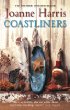
I borrowed just three books this week from the library.coastliners For more Library Loot click on the button above.

  • Coastliners by Joanne Harris:  a novel about a hardy island community fighting the encroaching seas. A young woman returns to her home island off the Atlantic coast and tries to stop the decline of her father’s fishing village. I borrowed this book because I loved Chocolat and Gentlemen and Players.


  • The Thirteen Problems by Agatha Christie. This is a collection of short stories. A thirteen-problemsgroup of friends, including Miss Marple meet on a Tuesday night and tell sinister stories of unsolved crimes. I’m taking part in the Agatha Christie Reading Challenge and this week this was the only book in the library by AC. I’ve started reading it and am finding it a bit simplistic. So far it’s been Miss Marple much to the surprise of the others (but not to me) who comes up with the solution.


  • The Gardens of the Dead by William Brodrick: When Elizabeth Glendinning QC dies of gardens-of-the-deada sudden heart attack while making a desperate phone call to the police, her colleagues and family are devastated and mystified. What was she doing in east London at the time of her death, and what was she trying to tell Inspector Cartwright in her last phone call? I’ve never read anything by William Brodrick, so this is new territory. The quotes on the back cover are promising eg: “Worthy of Le Carre at his best”  from Allan Massie writing in the Scotsman.

Books That Stick – Booking Through Thursday

btt button

Today’s question is from Shelley:

‘This can be a quick one. Don’t take too long to think about it. Fifteen books you’ve read that will always stick with you. First fifteen you can recall in no more than 15 minutes.’

  1. Pride and Prejudice by Jane Austen
  2. Heidi by Joanna Spyri
  3. Little Women by Louisa May Alcott (& Good Wives, Little Men and Jo’s Boys)
  4. Alice in Wonderland by Lewis Carroll
  5. Through the Looking Glass by Lewis Carroll
  6. What Katy Did and What Katy Did Next by Susan Coolidge
  7. Great Expectations by Charles Dickens
  8. Tale of Two Cities by Charles Dickens
  9. The Mayor of Casterbridge by Thomas Hardy
  10. Angle of Repose by Wallace Stegner
  11. One Fine Day by Mollie Panter Downes
  12. Enduring Love by Ian McEwan
  13. Atonement by Ian McEwan
  14. Alias Grace by Margaret Atwood
  15. Cider With Rosie by Laurie Lee

I did this is just about 15 minutes and couldn’t actually restrict it to 15 books. Numbers one to nine are all books are ones I read when was a child/teenager, so that means they really have stuck with me. Some of the others are more recent reads and I’m quite surprised by the ones that came to my mind straight away, but yes I think they’ll all stay with me for quite a while – there are more, of course!

Not So Wordless Wednesday – Eggsplosion

To make exploding eggs:

  • Take two eggs and place them in a saucepan
  • Cover with water and put on the cooker to boil
  • Take a cup of tea upstairs
  • Sit down at computer to finish writing a post for your blog
  • Get completely engrossed in writing
  • Wonder what that funny smell is
  • Have a look out of the window to see if next door neighbours are having a barbecue
  • Can’t see them and decide someone must be having a bonfire
  • Go back to writing
  • When you hear an explosion run downstairs to see what the cat has broken
  • Find a burned out saucepan and the cooker covered in bits of egg

Note to Self : Don’t blog and boil eggs at the same time!

Check out other Wordless Wednesday participants.

Teaser Tuesday and Where Are You?

teaser-tuesday

Teaser Tuesday is hosted by MizB at Should Be Reading.

  • Grab your current read.
  • Let the book fall open to a random page.
  • Share with us two (2) ‘teaser’ sentences from that page.
  • You also need to share the title of the book that you’re getting your ‘teaser’ from €¦ that way people can have some great book recommendations if they like the teaser you’ve given!
  • Please avoid spoilers!

a-judgement-in-stoneMy teasers today are from page 29 of Ruth Rendell’s A Judgement in Stone:

She was the strangest person they were ever likely to meet. And had they known what her past contained, they would have fled from her or barred their doors against her as against the plague – not to mention her future, now inextricably bound up with theirs.

tuesdaywhereareyou

I’m in Suffolk, at Lowfield Hall, a large 1930-ish house on the outskirts of Stanwich, with the Coverdale family and their new housekeeper Eunice Parchman.

This is a chilling tale full of psychological insights into the mind and motives of a killer.

For more Where Are You? answers, visit Raidergirl3 at An Adventure in Reading.

Beachcombing by Maggie Dana: Book Review

beachcombingRecently, Maggie Dana kindly sent me a copy of her book  Beachcombing which  is to be published this week, on June 5.  It’s the story of Jill who is fifty-two, divorced and living alone in a beach cottage in Connecticut. On a visit to her friend, Sophie in England where they grew up, she meets Colin, a boyfriend from their teenage years. From the moment she fell down the stairs  and fainted at his feet I could see what was coming.

Of course, Jill falls in love with Colin, who thirty-five years later is not the boy she thought he was.  She thinks he’s going to marry her and come to live with her leaving his partner, Shelby, and the prosperous little hotel they run in the Cotswolds. And then, everything  goes wrong! She has to work her way through heartbreak, work and financial problems, and innumerable car problems. At times she had fallen out with both of her best friends. The only problem free relationships she has are those with her two grown up sons.

Jill has a phobia about middle aged men leaving their wives for younger women and that colours her relationships so much so that she cannot see what is so obvious to everyone else. Despite having friends she is lonely and mistakes lust for love. I began to despair that she would ever come to her senses.  I got to the point where I wondered what could possibly go wrong next and even at the end when things seem about to get better I wasn’t convinced they would.

The things I liked about Beachcombing were the way the characters are delineated (Jill is actually an amalgamation of a few women I’ve known) and the descriptions of the locations:

I race across my patio and head for the path between the dunes that separate my backyard from the beach. The tide’s coming in. I jump a line of seaweed and shells and plunge into the waves. The cold takes my breath away. Ducking under I swim a few strokes, then tread water and watch windsurfers bounce like butterflies across the metallic blue chop. In the distance, a freighter ploughs its way toward New York, and just beyond the lighthouse a small fishing boat chugs into the harbour.

I’ve lived on the beach for sixteen years and this view still gives me goosebumps. It validates my life. It keeps me from knuckling under when cranky clients, clogged sinks, and leaky roofs gang up on me at the same time.

But I’d have liked it more if it wasn’t written in the first person present tense.  It’s a personal thing – I’m never too keen on that. Instead of adding to the drama I found that the continual crises Jill encountered actually lessened their impact; once one had passed it had gone, in a series of “nows”. I had the same problem reading The Time Traveler’s Wife.

The back cover describes Beachcombing as

… a coming-of-middle-age story about girl friends when you’re no longer a girl, and growing up when you’re already grown up, and the price you’re willing to pay for the love of your life.

I think that is a good summary. I wondered what the title – Beachcombing – implies. It occurred to me that the sea casts up a lot of rubbish on the beach and maybe that symbolises the rubbish that came into Jill’s life. It can also leave treasures. Jill’s problem was that she had difficulty in distinguishing  the rubbish from the treasures.