Sunday Salon

Today’s reading:

I finished reading Pardonable Lies by Jacqueline Winspear this morning. I’ve read a couple of the Maisie Dobbs mystery books before and this one is  very good. Set in 1930 Maisie is asked by Sir Cecil Lawton to prove that his son, Ralph really did die in 1917 during the First World War. Sir Cecil’s wife, who had recently died, had been convinced that Ralph was still alive and on her deathbed made him promise to search for their son. This takes Maisie on a traumatic and dangerous trip to France – to the battlefields where she had been a nurse. Knowing she is going to France her old friend from Girton, Priscilla whose brother, Patrick died in France asks her to find out where he is buried. Maisie’s investigations reveal a number of photographs and a journal written in code leading her to to discover what actually did happen in 1917.  She then has to decide whether telling the truth is the right thing to do. Parallel with her investigations in France, Maisie is also involved in discovering the truth about a young girl accused of murdering her ‘uncle’.

I like the Maisie Dobbs books. They’re easy to read, but not simple, the plots are nicely complicated and Maisie’s own story is seamlessly interwoven with the mystery. They give a good overall impression of the period, describing what people were wearing, the contrast between the rich and the poor and the all-pervading poisonous London smog. The horror of the War is still  strong, people still grieving for friends and relations killed or missing, visiting the battlefields and working to improve life for the soldiers who had returned home injured, and for the homeless children forced into life on the streets. Maisie is an example of a working girl who has moved out of her ‘class’, driving an MG and supporting herself independently.

With the description of a police woman in the first chapter I wondered when women were first employed in the police force. The Metropolitan Police Service’s website provided the answer – in 1914 Margaret Damer Dawson, an anti-white slavery campaigner, and Nina Boyle, a militant suffragette journalist founded the Women Police Service and by 1923 – 30, women police were fully attested and given limited powers of arrest. I also found it interesting that later in the book Maisie and Billy see

one of the new female recruits to criminal investigation disguised as a passer-by

and the undercover police using

 a new police wireless radio … invented at the request of the chief of police down in Brighton. Scotland Yard have been testing it for about a month now – it looks as if it might come in handy today. (page 310)

I have the latest book in the series, Among the Mad on loan from the library, so I can continue reading about Maisie Dobbs very soon. But maybe I should read the earlier books first. Now I want to get back to Wolf Hall by Hilary Mantel, even though I’m tempted to read another crime fiction – Murder Being Once Done by Ruth Rendell – which I borrowed from the library yesterday. As usual I have too many books clamouring to be read and I haven’t done the ironing or any de-cluttering ready for moving house!

Busy, Amost Too Busy To Write!

Today I want to write! We’ve been  so busy recentlythat some things, like writing have had to be abandoned. We’ve been house-hunting and it is not only time consuming, it is frustrating, expensive (because we’re looking for a house in another part of the country), and fast becoming an obsession. We think, talk and dream about finding the “perfect” house – even though I know Kirstie Allsop (Location, Location, Location) insists it doesn’t exist and would have a real go at me for being so picky. Almost all my time on the internet is spent looking for houses and I’m sadly neglecting reading blogs as well as writing my own.

We’ve looked at all sorts of properties,( some in person and some online):

  • New builds
  • Bungalows
  • Converted mill buildings
  • Converted castle buildings
  • Mews houses in town
  • Isolated country cottages
  • Houses on busy main roads
  • Converted bank buildings –

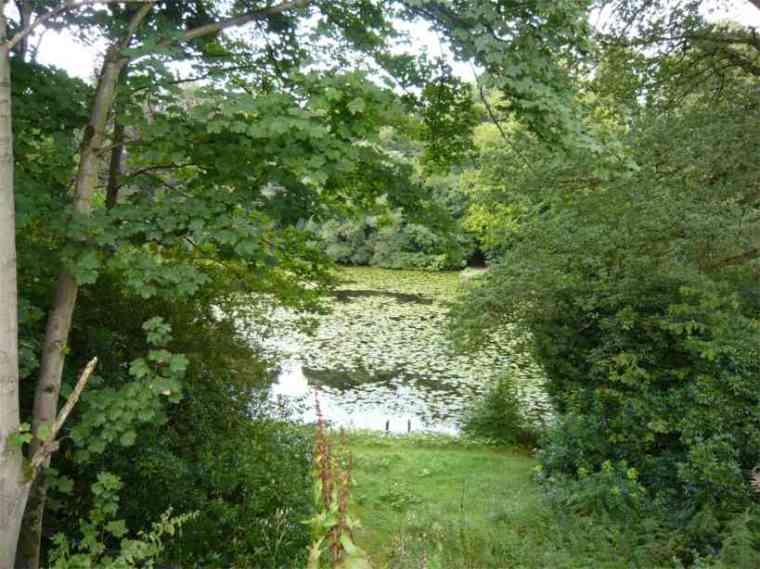
We’ve viewed properties with fishing rights – next to rivers and a lake. How about this for a view?

Or this?

We’ve wondered what it would be like living without any or no near neighbours, with beautiful views in places where you have to go miles just to post a letter or buy milk. We’ve considered whether we could live in a town surrounded by other people or on a main road with all the noise and hassle of traffic roaring by.

We had almost decided on one house, which had a room we could use as a library, but the location wasn’t quite right and then it was sold to someone else. So it was back to scouring the internet – so many houses look beautiful until you see where they are or the locations look fantastic but the houses need too much work, or are too small, too big or too expensive. We’ve looked at the Borders and the north-west around Carlisle. Next up we’re visiting the north-east coast, hoping to find a house near the sea, not too far from civilisation, with room for all our  books, away from a busy road, not overlooked, and a smallish garden with a lovely view. Or am I asking too much? I would like a walled garden too, but that is expecting far too much I know.

I have been reading amidst all this the house- hunting. I’ve finished reading The Riddle of the River by Catherine Shaw and The Brading Collection by Patricia Wentworth and right now I’ve nearly finished Pardonable Lies (a Maisie Dobbs mystery) by Jacqueline Winspear. At a motorway service station I bought The Private Patient by P D James and Hearts and Minds by Amanda Craig (Buy 1 Get 1 Half Price) and today I borrowed six books from the library (I was getting withdrawal symptoms). I think I’ll write about those tomorrow.

I have several posts I want to write – about our visits to Kew Gardens, to the Courtauld Art Gallery in London, and to the site of the Battle of Flodden at Flodden Field near Branxton in Northumberland, not to mention writing about books.

The Bradshaw Variations by Rachel Cusk: a Book Review

I expected  The Bradshaw Variations by Rachel Cusk to be much better than it is. It begins well, and every now and then I thought this is really good, but at times it seems to get lost in itself. It’s about the life of a family – the Bradshaws, mainly concentrating on Thomas and his wife Tonie – over the course of a year. Not a lot happens on the surface but underneath everyone’s life is in turmoil and change.

Thomas is the middle brother. Howard is his older brother, married to Claudia; Leo, is his younger brother married to Susie. We also meet his parents and Tonie’s parents. The book is a series of episodes in their lives, both individually and collectively. It’s a mixture of straight forward narrative about their daily lives, interspersed with interesting reflections on such themes as what is real/unreal/artificial, what is the value and nature of success, what is art, the duality of character, the question of work/home balance, women going out to work versus staying at home, progress, the impossibility of perfection, the nature of love, the importance of wanting what you have and of avoiding not wanting what you have and so on and so forth.

 Thomas, the house-husband, is learning to play the piano whilst he is at home looking after Alexa, their eight-year old daughter, and much of the description of him has a musical theme – he is a “symphony” crashing about. Tonie, getting on with her career, seems a very negative character, usually dressed all in black and uncertain of what she wants from life. The crisis comes when Alexa falls ill and Thomas has to cope on his own. Howard and Claudia are muddling along with their three children and Skittle, their little dog and their crisis comes as they are preparing to go away on holiday – I found this chapter one of the most “real” in the book, describing the “ordeal” of it all.

My overall impression of it is that although it’s intense, it’s also emotionally detached; the characters are well drawn for the most part, but just as I was getting involved with them, the narrative moved away.

(The Bradshaw Variations – an Uncorrected Proof copy supplied by LibraryThing Early Reviewer Programme)

Seventy Years Ago Today …

… Neville Chamberlain broadcast that Britain was at war with Germany. In Wartime Britain 1939-1945 by Juliet Gardiner she quotes from the diary of  a twenty-four year old civil servant living in Croydon on 3 September 1939:

The sun is shining, the garden never looked lovelier – everything is in bloom. Tiger [the cat] lies there in the sun; all looks happy and peaceful. But it’s not. War has broken out between England and Germany, beastly, beastly war.

 Winston Churchill’s frame of mind was rather different. He wrote in his memoirs, The Second World War Volume 1: The Gathering Storm, that he knew if war came a major burden would fall on him. On 3 September 1939 he wrote

As I sat in my place [in the House of Commons], listening to the speeches, a very strong sense of calm came over me, after the intense passions and excitements of the last few days. I felt a serenity of mind and was conscious of a kind of uplifted detachment from human and personal affairs. The glory of Old England, peace-loving and ill-prepared as she was, but instant and fearless at the call of honour, thrilled my being and seemed to lift our fate to those spheres far removed from earthly facts and physical sensation.

And so it began …