The Sunday Salon – Books and Cross-Stitch

This week I’ve been reading just two books. Often I read more than this but I’ve decided for the time being to stick to one or two at a time. It’s been easy this week as one of the books is compelling reading – Black and Blue by Ian Rankin.
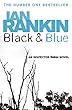
It’s a real page-turner and very complicated. I’m reading it quickly because I want to know what happens next and to see how Rebus gets himself of the terrible mess he is in – suspected by his superiors of being a killer(!) and of corruption back in his early days as a detective, along with Lawson Geddes, his boss at the time. He’s being investigated by a TV company and also by the police themselves in an internal enquiry and all the time he’s spiralling downhill under alcohol and cigarettes. I’m thinking that when I get to the end I may go back to the beginning and read it again more slowly to appreciate the detail.
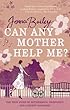
This contrasts so well with the other book I’m reading – Can Any Mother Help Me? by Jenna Bailey. I’m reading this one slowly, one or two chapters at a time, because it is quite intense. It’s comprised of letters between a group of  women writing from the 1930s to the 1980s about their “ordinary” lives, but it’s by no means mundane or ordinary at all. It’s  social history, as told by the people who lived their lives through the Second World War and into the late 20th century. It’s a bit like eavesdropping on private conversations, reading these personal letters between woman who became friends through their Correspondence Club.

Both books are ones I’ve owned for a while and so are books off my TBR mountain. I have bought one new book this year, but as it’s a craft book it’s not adding to the pile to read, but adding to the pile of cross-stitch projects I want to do! The book is The Portable Crafter: Cross-Stitch by Liz Turner Diehl, a beautiful book full of designs for small(ish) items that you can work on anywhere.

One that caught my eye is a corner bookmark. But it looks quite tricky with Kloster blocks – you have to cut out the centres and it might be a bit bulky for a bookmark

There’s a design for a little  Persian rug, finished size 3½” x 5″ I’d like to make.

But the one that I’d like to start first is a Garden Clock, the only thing is I don’t know where I can get a wooden clock in which to insert the design.
Crime Fiction Alphabet: M is for Mortal Causes

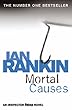
crime_fiction_alphabetThis week’s letter in the Crime Fiction Alphabet series is M and I’ve chosen Ian Rankin’s Mortal Causes, which is the one book I finished reading in December.

Mortal Causes is the sixth book in the Inspector Rebus series. In his introduction Ian Rankin explains that ‘mortal’ in the Scots vernacular means ‘drunk’ so Mortal Causes

 evoked, in his mind, the demon drink, just as surely as it did any darker and more violent imagery. (page xii)

And there is a fair amount of violence in this dark book, starting with the discovery of a brutally tortured body in Mary King’s Close, an ancient Edinburgh street now buried beneath the High Street. It’s August in Edinburgh during the Festival.

Next time I visit Edinburgh I’d like to see Mary King’s Close. It’s open to the public and according to this website you can “experience the sights, sounds and maybe even smells of an amazing street that time forgot.  Where everyday people went about their day to day lives and where you can now walk in their footsteps.” Just the place for a murder, away from the busy streets, undisturbed by the festival goers and soundproofed so no one would hear any gunshots or screams.

There are links to the Northern Ireland ‘troubles’, the IRA, the Catholic/Protestant conflict, the Secret Service and organised crime. Rebus works his way through this mix, seconded to the SCS (the Scottish Crime Squad) because he’d been in the Army and had served in Ulster in the 1960s. The relationship between Rebus and Big Ger Caffety, Edinburgh’s gangster boss, develops in this book as the victim is none other than Big Ger’s son and he insists Rebus finds his killer. He tells Rebus he wants revenge. His men

… are out there hunting, understood? And they’ll be keeping an eye on you. I want a result Strawman. … Revenge, Strawman, I’ll have it one way or the other. I’ll have it on somebody. (page 74)

Rebus’s personal life is no better, his relationship with Dr Patience Aitken is  difficult. They quarrel, she tries to civilise him, giving him poetry books and tickets for ballet and modern dance:

Rebus had been there before, other times, other women. Asking for something more, for commitment beyond the commitment.

He didn’t like it. (page 81)

Their relationship is also threatened by Rebus’s involvement with Caroline Rattray, from the Procurator Fiscal’s office, who ‘is mad about him’.

This book, like the other Rebus books I’ve read, is more than crime fiction. It’s a complex story exploring the psychology of guilt, revenge and fear.

Ian Rankin

me & IR

On Tuesday evening Ian Rankin was presented with the West Lothian Libraries’  Scot Scriever Award and I was there, thanks to my son, who lives in West Lothian. He’d managed to get the last tickets. Ian Rankin was voted the public’s favourite Scottish author. He’s been my favourite Scottish author for some time so I was delighted to hear him talk about his work and shocked when he drew my ticket number to win a signed copy of one of his books, Exit Music.

(Photo courtesy of West Lothian Council)

It was a fascinating evening. Ian Rankin is an excellent speaker, even though he said that he isn’t a stand-up comedian – he’s a writer and writers sit in isolation in their rooms, scribbling away with a pen or writing on a laptop, or whatever. He finds it a strange existence coming out of his shell to speak on tour at book events. His talk was punctuated with many amusing anecdotes and there was much laughter from his audience.

He gave us some advice.  As a teenager he’d entered a poetry competition and had read a book on writing poetry which said that you should write about what you know. Well, he did that, won the competition and got into trouble with his aunty because she recognised herself, even though his poem “Euthanasia” was about a tramp. Then there was a short story competition, which he won (he thought he could write a short story, because it was just like a poem but it goes to the edge of the page) writing about his uncle who walked through the streets naked and this also landed him in trouble when it was broadcast on the radio unchanged.

So his advice is “write about what you don’t know“, which is why when he decided to write a novel, Knots and Crosses, the first Rebus book, he wrote about the police because he knew nothing about them. He had done his research, talking to a couple of detectives, who as it turned out were investigating a crime similar to the one he was writing about in Knots and Crosses. They said the best way for him to see how they worked was for them to treat him as a suspect and he ended up for a while as a real suspect! So his next piece of advice is  “don’t do any research“. He did no research after that until he met a detective, who later became his friend and helped him make the books more realistic.

He writes crime fiction because it helps him look at the world, it takes on moral and ethical questions, why things are the way they are, what makes people work, and what crime says about our society and the problems we have. Crime fiction is now a serious subject to study, both at school and at university, even though it doesn’t get considered for the Booker Prize for example.  

He also talked about what he has been doing this year and the future. After the last Rebus book he wrote Doors Open , which is about an art heist. He planned it as the Scots Oceans Eleven, with all the great Scottish actors, but no one was interested in doing it. Later it was  serialised in NY Times, then published as a book and now a film company is interested. He decided that he didn’t want any involvement in filming the Rebus books because he didn’t want the actors’ voices and faces in his head (the reason I don’t like films of books is just the same) and it’s not possible to fit a book into an hour and a half TV production anyway (which is why I think the books are better). But he’s going to be  more involved in the films of Doors Open and The Complaints.

Even though he’s having a year’s break from writing he’s working on a film script of James Hogg’s book Confessions of a Justified Sinner. He’s finding this hard to write but I do hope he finishes it and the film gets made as I’ve been interested in James Hogg since reading Alice Munro’s book The View from Castle Rock (Hogg, born in 1770 was a poet, a protege of Sir Walter Scott, and a cousin of one of her ancestors). He may bring Rebus and Siobhan Clarke back investigating Cold Cases in another Complaints book – I hope he does.

It was a memorable evening  – Ian Rankin is great storyteller. .

Teaser Tuesday – Can Any Mother Help Me?

teaser-tuesdayOne of the books I’m reading is Can any Mother Help Me? by Jenna Bailey. It’s an edited collection of letters between a group of women calling themselves the Cooperative Correspondence Club, or CCC. They created a magazine that was circulated between the members for over 55 years. They wrote chatty letters to each other about all aspects of their lives, becoming close friends through their letters.

This extract is from letter from Roberta, who was living in Kent in September 1940. It was a Sunday, the sun was shining and just as the family sat down to lunch the peace and quiet was shattered by the sound of the siren and machine gunfire could be heard in the distance. Then suddenly the noise was terrifyingly close, as right overhead six planes were fighting and one plane was shot down in front of their eyes.

Roberta wrote:

This is war, I said, this is war. No, God, no, I screamed inside myself. This is wrong, wrong. (page 72)

Musing Mondays – Bookshelves

Musing Mondays2_thumb[1]Today’s MUSING MONDAYS post is about tidy bookshelves.

Are your bookshelves strictly books only? Or have knick-knacks invaded? Do your shelves also shelve DVDs? Photos? Why not snap a photo €“ I’m sure we all like to spy on other’s shelves!

My bookshelves are not tidy.

Since we’ve moved house I’ve only unpacked a few boxes of books, so the bookshelves are mainly empty, except for those that have odds and ends dumped on them temporarily. One bookcase is nearly full. This holds unread books:

Bookcase 1

On the top are a set of three little notebooks, a wooden teddy bear with its hands covering its eyes and a wooden cat peering down over the bookcase. I put these there by chance as I unpacked them, but they are quite representative of my interests – books, bears and cats.  The guitar belongs to my husband.

The top two shelves are double shelved, there is a coffee tin holding coloured pencils on the third shelf and a pile of waymark discs (oops, wonder where they came from?) and on the bottom shelf there are a few odd things – a toy rabbit (this belonged to my sister), a photoframe (this belonged to my mother-in-law) and a pile of Alphapuzzle books (I’m addicted to Alphapuzzles, aka Codewords). Eventually the bottom shelf will just hold books.

The other boxes I’ve unpacked held both fiction and non-fiction and for the time being they’re on the shelves just as they came out of the boxes, in no particular order at all. Other non-book items have found their way onto some of the shelves – CDs, speakers and my mother’s sewing box, etc. In other words it’s all a bit of  lucky dip.

 Bookcases 2

 The remaining boxes of books are spread throughout the house. Some unopened … 

Boxes of books

and some opened.

Box of books

 One day I’ll get organised!