Top 5:Books on my TBR that intimidate me

Top 5 Tuesday was created by Shanah at Bionic Book Worm, and it is now being hosted by Meeghan at Meeghan Reads. For details of all of the latest prompts for October to December, see Meeghan’s post here.

Do you have a pile of books on your TBR that you were “going to read soon” but now it’s been like 5 years and you don’t know how to start that book any more? Maybe it’s 600 pages long. Or maybe you’ve seen some not-so-great reviews that pushed it down a bit. What books on your TBR intimidate you?

These are books I want to read but each time that I look at them I think ‘not now’ because they are so long AND as these are all either hardbacks or paperbacks they’re heavy, unwieldy and in small print!

Nicholas Nickleby by Charles Dickens (860 pages) – Nicholas Nickleby, is left penniless after his father’s death and forced to make his own way in the world. There’s an extraordinary gallery of rogues and eccentrics: Wackford Squeers, the tyrannical headmaster of Dotheboys Hall; the tragic orphan Smike, rescued by Nicholas; and the gloriously theatrical Mr and Mrs Crummle and their daughter, the ‘infant phenomenon’. Nicholas Nickleby is characterized by Dickens’s outrage at social injustice, but it also reveals his comic genius at its most unerring.

Past Imperfect by Julian Fellowship (528 pages) described on the back cover as a story that takes us back to the Debutante Season of 1968 – ‘Poignant, funny, fascinating and moving’ . Wishing to track down a past girlfriend who claims he had fathered her child, the rich and dying Damian Baxter contacts an old friend from his days at Cambridge. The search takes the narrator back to 1960s London, where everything is changing–just not always quite as expected.

The Women’s Room by Marilyn French (544 pages), described as ‘one of the most influential novels of the modern feminist movement.’ It was first published in 1977 to a barrage of criticism. This is the story of Mira Ward, a wife of the Fifties who becomes a woman of the Seventies. From the shallow excitements of suburban cocktail parties and casual affairs through the varied nightmares of rape, madness and loneliness to the dawning awareness of the exhilaration of liberation, the experiences of Mira and her friends crystallize those of a generation of modern women.

The Wine of Angels by Phil Rickman (623 pages) – the first Merrily Watkins novel, in which the Rev Merrily Watkins tries to be accepted as the vicar (or priest-in-charge as she insists she ought to be called) in the country parish of Ledwardine in Herefordshire, steeped as it is in cider and secrets and echoes of the poet Thomas Traherne who was once based in the area.

This Thing of Darkness by Harry Thompson (750 pages) – In 1831 Charles Darwin set off in HMS Beagle under the command of Captain Robert Fitzroy on a voyage that would change the world. This is the story of a deep friendship between two men, and the twin obsessions that tear them apart, leading one to triumph, and the other to disaster.

The Stars Look Down: Book Beginnings & The Friday 56

Every Friday Book Beginnings on Friday is hosted by Gillion at Rose City Reader where you can share the first sentence (or so) of the book you are reading. You can also share from a book you want to highlight just because it caught your fancy.

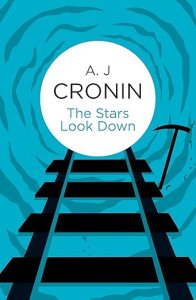
I’m featuring The Stars Look Down by A J Cronin. It’s my current Classics Club Spin book – the rules of the Spin are that this is the book for me to read by 18th December, 2024. So, as it has 712 pages I thought I’d better start reading it now.

Chapter One:

When Martha awoke it was still dark and bitter cold. The wind, pouring across the North Sea, struck freezingly through the cracks which old subsidences had opened in the two-roomed house. Waves pounded distantly. The rest was silence.

Also every Friday there is The Friday 56, hosted by Freda at Freda’s Voice, but she is taking a break and Anne at My Head is Full of Books has taken on hosting duties in her absence. You grab a book and turn to page 56 (or 56% of an eBook), find one or more interesting sentences (no spoilers), and post them.

‘It had come upon her then, while her husband was in prison, the last indignity. And before her grown sons. Inscrutable as the darkness which layabout her, she thought rapidly. She would not have Dr. Scott, nor Mrs Reedy, the midwife , either.

Description from Goodreads

The Stars Look Down was A. J. Cronin’s fourth novel, published in 1935, and this tale of a North country mining family was a great favourite with his readers. Robert Fenwick is a miner, and so are his three sons. His wife is proud that all her four men go down the mines. But David, the youngest, is determined that somehow he will educate himself and work to ameliorate the lives of his comrades who ruin their health to dig the nation’s coal. It is, perhaps, a typical tale of the era in which it was written – there were many novels about coal mining, but Cronin, a doctor turned author, had a gift for storytelling, and in his time wrote several very popular and successful novels.

In the magnificent narrative tradition of The CitadelHatter’s Castle and Cronin’s other novels, The Stars Look Down is deservedly remembered as a classic of its age.

What do you think, does this book appeal to you? What are you currently reading?

Top Ten Tuesday: Book Covers with a House/s on the Cover

Top Ten Tuesday is a weekly meme created by The Broke and the Bookish and now hosted by Jana at That Artsy Reader Girl. For the rules see her blog.

This week’s topic is Books with [Item] on the Cover. This means you choose the item! I’ve chosen Covers with House/s on the Cover.

The Blackhouse by Peter May – Detective Inspector Fin Macleod investigates a murder on the remote Scottish Isle of Lewis shrouded in secrets.

The House of Silence by Linda Gillard –  a novel about families and their secrets – in particular one family, the Donovans, setting in an old Elizabethan manor house, Creake Hall.

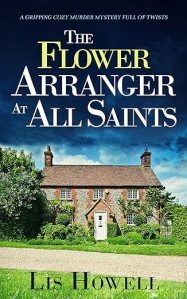
The Flower Arranger at All Saints by Lis Howell – a murder mystery set in a Cumbrian village where the Phyllis the church flower arranger is found dead before the big Easter service.

Autumn Chills by Agatha Christie, a collection of autumn-themed mysteries. Twelve supernatural mysteries and murderous plots featuring Hercule Poirot, Miss Marple and Agatha Christie’s other favourite detectives.

Road Ends by Mary Lawson – a novel set in Canada and Britain about a family in crisis.

The Hog’s Back Mystery by Freeman Wills Croft – an Inspector French murder mystery novel a Golden Age police procedural. When Dr Earle disappears from his cottage, Inspector French is called in to investigate.

The Brontes by Juliet Barker – a biography of the Bronte family containing a wealth of information, with illustrations, copious notes and an index.

The Light Years by Elizabeth Jane Howard – the first in the Cazelet Chronicles. In 1937, the coming war is only a distant cloud on Britain’s horizon. The Cazalet households prepare for their summer pilgrimage to the family estate in Sussex.

Corduroy Mansions by Alexander McCall Smith – set  in a London mansion block, telling the stories of its residents. 

Agatha Christie at Home by Hilary Macaskill – this lovely book explores and illustrates the significance of Devon in Christie’s work, and of Greenway, her house in Devon in particular, —its magnificent gardens and its beautiful setting.

Spell the Month in Books – November 2024

Spell the Month in Books is a linkup hosted by Jana on Reviews From the Stacks on the first Saturday of each month. The goal is to spell the current month with the first letter of book titles, excluding articles such as ‘the’ and ‘a’ as needed. That’s all there is to it! Some months there are optional theme challenges, such as “books with an orange cover” or books of a particular genre, but for the most part, any book you want to use is fair game!

The optional theme this month is Food or Autumn Decorations on the Cover. I’ve focused on books with Food on the covers and these are cookery books that in some instances I’ve been using for many years.

N is for Nigella Express: Good Food, Fast by Nigella Lawson. This is for everyone who loves good food, but just doesn’t have time or patience at the end of the day for a long, drawn-out cooking session. I’ve made several of the recipes in this book – for example Broccoli and Stilton Soup, using frozen broccoli. It cooks in minutes and is very tasty. There are chapters – Super Speedy Suppers, Get Up Go Breakfasts, Packed Lunches and Picnics, Instant Italian, Christmas Quickies and Store Cupboard SOS.

O is for One: Simple One-Pan Wonders by Jamie Oliver. It has over 120 recipes for tasty, fuss-free and satisfying dishes cooked in just one pan. What’s better: each recipe has just eight ingredients or fewer, meaning minimal prep (and washing up) and offering maximum convenience. With chapters including Veggie Delights, Celebrating Chicken, Frying Pan Pasta, Batch Cooking, Puds & Cakes, it all looks simply delicious.

V is for Vegetarian Kitchen by Sarah Brown, a book I’ve had for years, after watching the BBC Vegetarian Kitchen series first broadcast in the late 1980s. I’ve made lots of these recipes – lasagne, casseroles, pasta dishes, flans, tarts and quiches, moussaka, vegetable dishes, and lovely cakes.

E is for Easy Baking by Marks and Spencer, 208 edition, recipes for Cakes, Slices & Bars, Cookies and Small Bakes, and Desserts. I’ve made the recipe for Sticky Toffee Cake, one of my favourite cakes. There are lots more recipes I’ll try making – including Jewel-topped Madeira Cake, which is topped with sliced glacé fruits glazed with honey, Chocolate Chip and Walnut Slices, Viennese Chocolate Fingers and Manhatton Cheesecake, which looks amazing with a digestive biscuit base and topped with a blueberry sauce.

M is for Marguerite Patten’s Every Day Cook Book in colour. This was a wedding present gift in 1969. For many years it was my go-to cookery book, although I also used The Pennywise Cookbook by Lorna Walker, published by the Milk Marketing Board of England and Wales in 1974 – my mum bought it for me from her milkman. The Every Day Cook Book is much more comprehensive and has lots of recipes and colour photographs, including ‘meals for all occasions from family snacks to meals when you entertain’.

B is for The Bean Book by Rose Elliot, a paperback book. This is packed with recipes for cooking with beans and also pulses, described as ‘rich in protein, low in fat, high in fibre, an excellent source of iron, phosphorus and B vitamins‘. There are no photographs. Flicking through it now I don’t think I’ve tried many of the recipes, but the book falls open at the recipe for Haricot Bean and Vegetable Pie which I’ve ticked. I don’t remember making it. It looks time consuming, from soaking the beans, then simmering them with onions, garlic, and stock for an hour, then adding tomato puree and seasoning. Meanwhile you cook potatoes carrots and leeks. Put the leeks and carrots in the base of a casserole dish, top with the bean mixture, sprinkle with grated cheese, and top with mashed potato, sprinkle with more grated cheese, before baking for 30-40 minutes. So different from Nigella’s Express book!

Version 1.0.0

E is for The Encyclopedia of French Cooking by Elizabeth Scotto, a present from my sister. It has sections on the History of French cooking dividing it into la haute cuisine, the finest food by the great French chefs and la cuisine regionale, which is the simple cooking of the provinces or regions of France, cooked by French housewives. There are over 250 recipes, including delicious local specialities. The introduction includes information about French cheeses and other special ingredients, wine and cooking equipment. There is also a detailed glossary of French cooking terms and a map showing the different regions. After that the book is divided into the usual sections – Soups, Hors d’oeuvre & Salads, Fish and so on.

R is for The Ration Book Diet by Mike Brown, Carol Harris and C J Jackson This uses the wartime diet as a model and includes sixty recipes, some taken straight from cookery books of the time, with only minor adjustments, but most are new dishes created using the ingredients that were available during the war. Some of the recipes are taken straight from cookery books of the time, with some minor adjustments, but most are new recipes created using the range of ingredients available during the war. And there is also a chapter on Rationing, which was still in operation when I was a small child, although I didn’t know that at the time. It continued until 1954. This is a very interesting book. Throughout the book there are many illustrations and photographs from the war years. One good thing to come out of the war was that at the end of the war in 1945 as a nation we were healthier than we had ever been before or have been since.

The next link up will be on December 7, 2024 when the theme will be: Christmas or Nonfiction.

Six Degrees of Separation from  Intermezzo by Sally Rooney to White Nights

It’s time again for Six Degrees of Separation, a monthly link-up hosted by Kate at Books Are My Favourite and Best. Each month a book is chosen as a starting point and linked to six other books to form a chain. A book doesn’t need to be connected to all the other books on the list, only to the one next to it in the chain.

This month starts with Intermezzo by Sally Rooney. I haven’t read this book, so this is the description on Amazon UK:

Aside from the fact that they are brothers, Peter and Ivan Koubek seem to have little in common.

Peter is a Dublin lawyer in his thirties – successful, competent and apparently unassailable. But in the wake of their father’s death, he’s medicating himself to sleep and struggling to manage his relationships with two very different women – his enduring first love Sylvia, and Naomi, a college student for whom life is one long joke.

Ivan is a twenty-two-year-old competitive chess player. He has always seen himself as socially awkward, a loner, the antithesis of his glib elder brother. Now, in the early weeks of his bereavement, Ivan meets Margaret, an older woman emerging from her own turbulent past, and their lives become rapidly and intensely intertwined.

For two grieving brothers and the people they love, this is a new interlude – a period of desire, despair and possibility – a chance to find out how much one life might hold inside itself without breaking.

My first link is Thin Air, a novel by Michelle Paver also about two brothers. Kanchenjunga, the third highest mountain in the world, had claimed many lives and no one had reached the summit. Held to be a sacred mountain, it is one of the most dangerous mountains in the world – believed to be the haunt of demons and evil spirits. An unsuccessful attempt had been made in 1907, led by Edmund Lyell, when only two men had returned. The group in 1935, led by Major Cotterell, attempted to follow the 1907 route up the south-west face. Their story is narrated by medic, Dr. Stephen Pearce, accompanying his older brother, Kits. The brothers have always been rivals and this continues as they make their way up the mountain. Things start to go wrong almost straight away and Stephen is full of foreboding.

My second link is a book that also has ‘air’ in the title – Coming Up For Air, Sarah Leipciger’s second novel. It is a beautiful novel, a story of three people living in different countries and in different times. How their stories connect is gradually revealed as the novel progresses. As the author explains at the end of the novel it is a mix of fact and fiction and has its basis in truth. There is grief and loss and despair in each story, but above all, it is about love, and the desire to live. I think Sarah Leipciger is a great storyteller. It is an inspiring book, beautifully written, which emphasises the importance of the air we breathe and the desire to live. I read this book in June 2021.

My third link is An Officer and a Spy, historical fiction by Robert Harris, another book I read in June 2021. It is a gripping book about the Dreyfus affair in 1890s France. Alfred Dreyfus, a young Jewish officer, was convicted of treason by passing secrets to the Germans in 1895 and sent to solitary confinement on Devil’s Island. It’s narrated by Colonel George Picquart, who became convinced that Dreyfus was innocent. Harris goes into meticulous detail in staying accurate to the actual events, but even so this is a gripping book and I was completely absorbed by it from start to finish.

My fourth link is The Count of Monte Cristo, historical fiction by Alexandre Dumas, in which the main character is also wrongly imprisoned on an island. It begins in 1815 when Edmond Dantès, a sailor, having returned to Marseilles is wrongly accused of being a Bonapartist and imprisoned in the Chateau d’If on the Isle of Monte Cristo, for fourteen years. It’s a great story, action-packed, and full of high drama and emotion. Montecristo is a real island in the Tyrrhenian Sea, part of the Tuscan Archipelago, and administered by the municipality of Portoferraio in the province of Livorno.

So My fifth link is also set on a real island, that of the isolated island of Elliðaey off the coast of Iceland in Ragnar Jónasson’s novel The Island, a murder mystery with elements of horror. Four friends visit the island ten years after the murder of a fifth friend, Katla, but only three of them return. One of them, Klara, fell to her death from a cliff – but did she jump or was she pushed? Detective Inspector Hulda Hermannsdóttir is sent to investigate. A suspect had been charged, but had committed suicide before the verdict was announced and the case had been closed. But are the two murders connected, even though they are ten years apart? This book is the second in Jónasson’s Hidden Iceland series.

My final link is also the second book in a series, that is White Nights by Ann Cleeve, the second in her Shetland Quartet, featuring Detective Jimmy Perez. It’s set mainly in the village of Biddista, when Kenny Thomson finds a man’s body hanging in the hut where the boat owners of the village keep their lines and pots. At first it looks as though the man, his face covered by a clown’s mask, has committed suicide, but he’d been dead before he was strung up. As well as the mystery of who killed the man in the clown mask and why, there is also the disappearance 15 years earlier of Kenny’s older brother Lawrence. It was thought that he left the island after Bella had broken his heart. Kenny hadn’t heard from him since and at first thought the dead man could be him.

The books in my chain are mainly a mix of crime and historical fiction. And the chain has become a circle with the last book connecting to the starting book and the first book, all containing two brothers.

What is in your chain, I wonder?

Next month (December 7, 2024), we’ll start with a beach read – Sandwich by Catherine Newman.

Nonfiction November:Week 1 – My Year in Nonfiction

Throughout the month of November, bloggers Liz, Frances, Heather,  Rebekah and Deb invite you to celebrate Nonfiction November with us.

Liz writes: ‘Meet your hosts! Liz (that’s me!), who blogs at Adventures in reading, running and working from home, is an editor, transcriber, reader, reviewer, writer and runner. She likes reading literary fiction and nonfiction, travel and biography. Frances blogs about the books she has read at Volatile Rune and is a published poet, reviewer, sometime storyteller and novelist. Heather of Based on a True Story lives in Ohio with her husband, surrounded by lots and lots of critters! Rebekah reviews social justice books on She Seeks Nonfiction. She is a Pittsburgh-based activist, graphic designer, and cat parent. Deb, who blogs at Readerbuzz, is a Texas librarian-for-life who swims, rides her bike, draws, writes, and loves to read nonfiction-that-reads-like-fiction, literary fiction, classics, and children’s picture books.’

I don’t think I’ll be taking part every week, but this week I am.

Week 1 – Your Year in Nonfiction: Celebrate your year of nonfiction. What books have you read? What were your favorites? Have you had a favorite topic? Is there a topic you want to read about more? What are you hoping to get out of participating in Nonfiction November?
(Hosted by Heather of Based on a True Story)

Nonfiction Read Since December 1, 2023, linked to my reviews, where they exist.

  1. Just One Thing by Michael Mosley 5*
  2. A Memoir of My Former Self by Hilary Mantel 5* – In addition to her celebrated career as a novelist, Hilary Mantel contributed for years to newspapers and journals, unspooling stories from her own life and illuminating the world as she found it. “Ink is a generative fluid,” she explains. “If you don’t mean your words to breed consequences, don’t write at all.” A Memoir of My Former Self collects the finest of this writing over four decades.
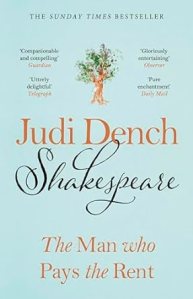
  3. Shakespeare: The Man who Pays the Rent by Judi Dench, Brendan O’Hea 5*
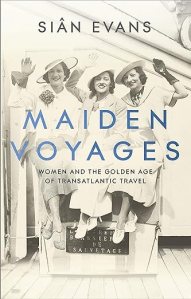
  4. Maiden Voyages by Sian Evans 5*
  5. The Road to Wigan Pier by George Orwell 4*
  1. Great Meadow by Dirk Bogarde 5* – Seen through the eyes of a 10-year old in the late 1930s, this novel recaptures an idyllic childhood, a time of love and gentleness with its sounds and scents intact, whilst the world beyond went to war. It was a great pleasure to read, taking me back to a time before I was born, to that time between the two World Wars, covering the years 1930 to 1934. Dirk (Derek) Bogarde was born in 1921 and his sister Elizabeth in 1924. Theirs was a somewhat privileged childhood, with a live-in Nanny, Lally, who also ran their household. Their father was the art editor of The Times and their mother was a former actress.
  2. The Art of Laziness: Overcome Procrastination & Improve Your Productivity by Library Mindset 2* – There’s nothing new in this book for me, but it’s a good reminder about what I already knew.
  3. Getting Better by Michael Rosen 5* Michael Rosen has grieved the loss of a child, lived with debilitating chronic illness, and faced death itself when seriously unwell in hospital with Covid. In spite of this he has survived, and has even learned to find joy in life in the aftermath of tragedy. In Getting Better, he shares his story and the lessons he has learned along the way. Exploring the roles that trauma and grief have played in his own life, Michael investigates the road to recovery, asking how we can find it within ourselves to live well again after – or even during – the darkest times of our lives. Moving and insightful, this is a wonderful book.
  4. Gladys Aylward: My Missionary Life in China by Gladys Aylward 3* Gladys was convinced that she called to preach the Gospel in China and in 1930 went to Yangchen, in the mountainous province of Shansi, a little south of Peking (Beijing). She worked with a 73-year-old missionary, Jeannie Lawson in an inn where, in the evening, they would entertain their guests with stories from the Bible. Gladys also began taking children into her home, and soon she had an orphanage with about 100 children. Then in 1938 in the spring of 1938, Japanese planes bombed the city of Yangcheng, killing many and causing the survivors to flee into the mountains. Five days later, the Japanese Army occupied Yangchen. She and the children fled walking over the mountains to Sian. In 1957, Alan Burgess,The Small Woman, which I read in my teens. So when I saw this autobiography I was keen to read it.

My favourites are the six books I gave 5 stars to on Goodreads. I like to read books on a wide variety of topics, such as history, philosophy, religion, biography, and diaries and letters. And currently I’m reading Enemies and Neighbours: Arabs and Jews In Palestine and Israel, 1917-2017 by Ian Black, an immensely detailed book; and Islands of Abandonment: Life in the Post-Human Landscape by Cal Flyn, about abandoned places: ghost towns and exclusion zones, no man’s lands and fortress islands – and what happens when nature is allowed to reclaim its place.

By participating in Nonfiction November I’m hoping this will encourage me to read more nonfiction rather than picking up the next novel to read and I’m looking forward to seeing what others recommend.

Are you participating in Nonfiction November this year? Leave me a comment or a link to your post–I’d love to see what you’ve read this year.