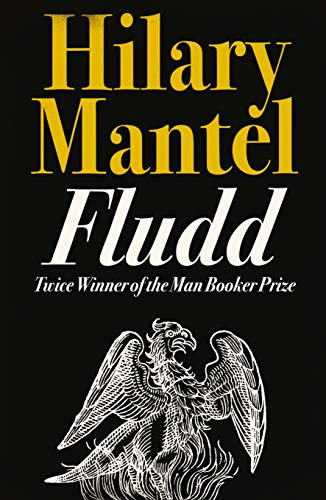
Book Beginnings & The Friday 56: Fludd by Hilary Mantel

Every Friday Book Beginnings on Friday is hosted by Gillion at Rose City Reader where you can share the first sentence (or so) of the book you are reading. You can also share from a book you want to highlight just because it caught your fancy.

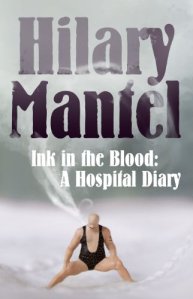
This week I’m featuring Fludd by Hilary Mantel, described as’ a dark fable of lost faith and awakening love amidst the moors.’ It’s very different from the other books by her that I’ve read. For one thing it’s short!

The Book Begins:

On Wednesday the bishop came in person. He was a modern prelate, brisk and plump in his rimless glasses, and he liked nothing better than to tear around the diocese in his big black car.

Also every Friday there is The Friday 56, hosted by Freda at Freda’s Voice. *Grab a book, any book. *Turn to Page 56 or 56% on your  ereader . If you have to improvise, that is okay. *Find a snippet, short and sweet, but no spoilers!

These are the rules:

  1. Grab a book, any book.
  2. Turn to page 56, or 56% on your eReader. If you have to improvise, that is okay.
  3. Find any sentence (or a few, just don’t spoil it) that grabs you.
  4. Post it.
  5. Add the URL to your post in the link on Freda’s most recent Friday 56 post.

Page 56:

That afternoon, Father Fludd undertook a parish tour. Father Angwin accompanied the curate to the front door. ‘They may ask you into their houses’, he said. ‘For God’s sake don’t eat anything. Be back before dark.’ He hovered, anxious. ‘Perhaps you shouldn’t go alone?’

‘Don’t fuss, man’, Fludd said.

Summary (from Amazon)::

Fetherhoughton is a drab, dreary town somewhere in a magical, half-real 1950s north England, a preserve of ignorance and superstition protected against the advance of reason by its impenetrable moor-fogs. Father Angwin, the town’s cynical priest, has lost his faith, and wants nothing more than to be left alone. Sister Philomena strains against the monotony of convent life and the pettiness of her fellow nuns. The rest of the town goes about their lives in a haze, a never-ending procession of grim, grey days stretching ahead of them.

Yet all of that is about to change. A strange visitor appears one stormy night, bringing with him the hint, the taste of something entirely new, something unknown. But who is Fludd? An angel come to shake the Fetherhoughtonians from their stupor, to reawaken Father Angwin’s faith, to show Philomena the nature of love? Or is he the devil himself, a shadowy wanderer of the darkest places in the human heart?

Full of dry wit, compassionate characterisations and cutting insight, Fludd is a brilliant gem of a book, and one of Hilary Mantel’s most original works.

~~~

What do you think – does this book appeal to you too?

Nonfiction November is Coming!

November will be a busy month bookwise as Nonfiction November is happening again this year, as well as Novellas in November!

See Rennie’s blog What’s Nonfiction for the full details.

The 1976 Club

It’s time for the 1976 Club, the bi-annual event where Simon and Karen ask readers across the internet to join together to build up a picture of a particular year in books. Any book published in 1976 counts – in whatever format, language, place.

I’ve previously read and reviewed read just three books published in 1976:

  • Last Seen Wearing by Colin Dexter, the second book in the Inspector Morse books. Inspector Morse is perplexed when a letter of reassurance arrives from young Valerie Taylor, missing for more than two years and presumed dead, in a case that takes a bizarre turn when a mysterious body turns up.
  • Sleeping Murder by Agatha Christie, Miss Marple’s last case, published posthumously in 1976, although Agatha Christie had written it during the Second World War. Miss Marple investigates a murder that had happened 18 years ago.
  • A Quiet Life by Beryl Bainbridge, a semi-autobiographical novel, using her own childhood and background as source material. In an interview she said that her creative urge was fuelled by what happened to her and from the age of 9 or 10 she had started to write about her parents and her background. She described herself as a child as an ‘awkward little devil‘.

I have two other books published in 1976 to read in my TBRs:

The Selfish Gene by Richard Dawkins, described as ‘a classic exposition of evolutionary thought’. I did start to read this book years ago when I first bought it, but I never finished it. The link is to the 40th anniversary edition that includes a new epilogue from the author discussing the continuing relevance of these ideas in evolutionary biology today.

I’d still like to read it, but not right now. Although it is described on the front cover as ‘the sort of popular science writing that makes the reader fell like a genius’ I have a feeling I won’t feel like a genius and it will take me quite some time to read it, especially it is printed in a small font.

The other book is In the Frame by Dick Francis, a murder mystery. Charles Todd—a renowned painter of horses—is shocked when he turns up at his cousin Donald’s house for a weekend visit to find his cousin’s young wife dead on the floor—and Donald the police’s prime suspect. Determined to prove Donald’s innocence, Todd trails a set of clues from England to Australia to New Zealand, only to realize that someone is trailing him. Someone with every intention of taking him out of the picture for good… (Goodreads)

My problem with reading this book this week is that I can’t find my copy!!!

A Z of TBRs: E-Books – J, K and L

It’s been a long time since I last looked at the forgotten e-books on my Kindle, so it’s time to dip into it again. I have a bad habit of downloading books and then forgetting all about them – it’s as though they’ve gone into a black hole.

Today I’m looking at books with titles beginning with the letters J, K and L, with a little ‘taster’ from each. The summaries are from Goodreads.

Jeremy Hutchinson’s Case Histories by Thomas Grant – I bought this in February 2020 after watching the BBC series,The Trial of Christine Keeler, the story of the Profumo affair in 1962 as seen from her perspective. Hutchinson was Keeler’s defence barrister.

Summary: Born in 1915 into the fringes of the Bloomsbury Group, Jeremy Hutchinson went on to become the greatest criminal barrister of the 1960s, ’70s and ’80s. The cases of that period changed society for ever and Hutchinson’s role in them was second to none. In Case Histories, Jeremy Hutchinson’s most remarkable trials are examined, each one providing a fascinating look into Britain’s post-war social, political and cultural history.

A cartoon by Cummings appeared in the Daily Express on 10 July 1963 headed ‘The adventures of James Macbond’. It showed the beleaguered figure of Harold Mavmillan fleeing from three assailants. Kim Philby and his fellow spy John Vassall are both dressed as shady hoodlums, one wielding a knife, the other a pistol both aimed at Macmillan. Christine Keeler is the third, incarnated on the page as a sort of vampiric harpy, her long-nailed hand outstretched trying to clutch the Prime Minister’s coat tails.

That year was a kind of horror show for Macmillan, and he was not to see out 1963 as Prime Minister. His resignation was accepted by the Queen in October.(page 95)

The Keeper of Lost Things by Ruth Hogan – I bought this in May 2017 and can’t remember how I first came across it.

Summary: Anthony Peardew is the keeper of lost things. Forty years ago, he carelessly lost a keepsake from his beloved fiancée, Therese. That very same day, she died unexpectedly. Brokenhearted, Anthony sought consolation in rescuing lost objects—the things others have dropped, misplaced, or accidentally left behind—and writing stories about them.

He took a sip from his drink and lovingly kissed the cold glass of the photograph before replacing it on the table next to his chair. She was not a classic beauty; a young woman with wavy hair and large dark eyes that shone, even in an old black and white photograph. But she was wonderfully striking, with a preserve that still reached out from all those years ago and captivated him. She had been dead for forty years, but she was still his life, and her death had given him his purpose. It had made Andrew Peardew the Keeper of Lost Things. (page 4)

The Lady of Sorrows by Anne Zouroudi – I bought this in April 2013! It is the fourth in Anne Zouroudi’s Mysteries of the  Greek Detective series featuring Hermes Diaktoros. Hermes is a detective with a difference. Just who he is and who he works for is never explained. I have read three of the books in the series. Each one features one of the Seven Deadly Sins.

Summary: A painter is found dead at sea off the coast of a remote Greek island. For our enigmatic detective Hermes Diaktoros, the plot can only thicken: the painter’s work, an icon of the Virgin long famed for its miraculous powers, has just been uncovered as a fake. But has the painter died of natural causes or by a wrathful hand? What secret is a dishonest gypsy keeping? And what haunts the ancient catacombs beneath the bishop’s house?

‘Allow me to introduce myself. I am Hermes Diaktoros, of Athens. Diaktoros being, as you may know, an ancient word for messenger. My father has a strange idea of humour. He’s something of a scholar of the classical world.’

Politely, the priest took the fat man’s hand, which was, in spite of the day’s heat was quite cool to touch.

‘Father Linos Egiotis,’ said the priest.

‘A pleasure,’ said the fat man. ‘Now, I know you must be anxious to close up for siesta, and I won’t keep you.’ He turned back to the icon. ‘She’s very lovely, isn’t she?’ he said. ‘I have been wanting to make her acquaintance for many years. Quite by chance we were passing within a few miles, and had time enough before my next engagement to make the detour. She has quite a reputation, I believe, for performing magic tricks. Magic tricks are a paerticular interest of mine.’

‘Magic tricks?’ queried the priest, with annoyance. ‘The Lady occasionally sees fit to grant miracles. They are acts of divine grace, not magic tricks.’ (page 31)

So, three very different books from the depths of my Kindle. I’m not sure which one to read first. If you’ve read any of these books please let me know what you think. Or if you haven’t read them do they tempt you?

Book Beginnings & The Friday 56: The Couple at No. 9 by Claire Douglas

Every Friday Book Beginnings on Friday is hosted by Gillion at Rose City Reader where you can share the first sentence (or so) of the book you are reading. You can also share from a book you want to highlight just because it caught your fancy.

This week I’m featuring The Couple at No. 9 by Claire Douglas. I’ve read three of Claire Douglas’s books before and loved each one, so I have high hopes for this one. They are dramatic, tense, and full of atmosphere and suspense.

The Book Begins:

I’m in the front garden pulling at weeds that spill out from the borders of the driveway, like gigantic spiders, when I hear yells. Deep and gutteral.

Also every Friday there is The Friday 56, hosted by Freda at Freda’s Voice. *Grab a book, any book. *Turn to Page 56 or 56% on your  ereader . If you have to improvise, that is okay. *Find a snippet, short and sweet, but no spoilers!

These are the rules:

  1. Grab a book, any book.
  2. Turn to page 56, or 56% on your eReader. If you have to improvise, that is okay.
  3. Find any sentence (or a few, just don’t spoil it) that grabs you.
  4. Post it.
  5. Add the URL to your post in the link on Freda’s most recent Friday 56 post.

Page 56:

Lorna had envisaged the day she’d become a grandmother. She knew she wouldn’t be old, because she’d been such a young mother. But she’d expected to be older than forty-sodding-one. What will Alberto think?

Summary::

When Saffron Cutler and boyfriend Tom move into 9 Skelton Place, they didn’t expect to find this.

Two bodies, buried under the patio over thirty years ago.

When the police launch a murder investigation, they ask to speak to the cottage’s former owner – Saffy’s grandmother, Rose, whose Alzheimer’s clouds her memory.

But it is clear she remembers something . . .

What happened thirty years ago?
What part did her grandmother play?
And is Saffy now in danger? . . .

~~~

What do you think – does this book appeal to you too?

Failures of State by Jonathan Calvert and George Arbuthnott

The inside story of the UK’s response to the pandemic from the Insight investigations unit at The Sunday Times

Mudlark, Harper Collins| 18 March 2021| 422 pages| My own copy| 4*

I don’t read a lot of nonfiction, but this year I have been reading more than usual. This book caught my eye in August and although I’ve watched countless TV programmes and interviews and read numerous articles about the coronavirus pandemic I just had to read it.

Blurb:

Failures of State: The Inside Story of Britain’s Battle with Coronavirus recounts the extraordinary political decisions taken at the heart of Boris Johnson’s government during the global pandemic.

Meticulously researched and corroborated by hundreds of inside sources, politicians, emergency planners, scientists, doctors, paramedics and bereaved families, along with leaked data and documents, this is the insider’s account of how the government sleepwalked into disaster and tried to cover up its role in the tragedy – and it exposes one of the most scandalous failures of political leadership in British history.

In the eye of the storm was Boris Johnson, a Prime Minister who idolised Winston Churchill and had the chance to become a hero of his own making as the crisis engulfed the nation. Instead he was fixated on Brexit, his own political destiny and a myriad of personal issues, all while presiding over the UK government’s botched response to the global coronavirus pandemic. After missing key Cobra meetings, embracing and abandoning herd immunity and dithering over lockdown, Johnson left the NHS facing an unmanageable deluge of patients. His inaction resulted in the deaths of many thousands of British people and his own hospitalisation at the hands of the pandemic, yet further reckless decisions allowed a deadly second wave to sweep across the country in the autumn months with the economy on the brink of collapse.

With access to key figures at the top of government during the most tumultuous year of modern British history, Failures of State is an exhaustive and thrillingly told story – and one of the most essential pieces of investigative reporting for a generation.

My thoughts:

The book covers the period from 24 January 2020 – 23 January 2021, with a Prologue covering the period from 24 April 2012 – 23 January 2020. Since it was written time has moved on and further information has become available, but this book is a reminder of how it started and described what subsequently happened. So, much of it was what I already knew, especially about the steps that were taken in the UK to cope with the situation.

In considering the two phrases ‘we were following the science’ and ‘we have taken the right steps at the right time’ they ask was this in fact what happened? They used many sources as described in the blurb and their research gave them the answer ‘no’.

In particular, they question why the government failed to act more swiftly, what the scientists told ministers, whether Britain was equipped to fight a pandemic and what were the consequences. I’m a cautious person and I remember being anxious that not enough was being done at the time and thought that we should have locked down earlier than we did. Reading this book makes me think that I wasn’t being over-cautious. I am also a bit cynical about what I read in the papers and what I hear and see being reported, so I viewed this book with caution too. Many of the sources are named in the book, but many are not.

I am appalled at what this book reveals. I am appalled by the corruption, outright lies, obfuscations, misinformation and incompetence they report – worse than I had thought at the time.

But most of all I am utterly appalled by what is revealed about the NHS and the restrictions that were imposed on reporting what was taking place in hospitals. The NHS had limited capacity to deal with the pandemic and the public were not made aware of the selection process that was used in deciding who could be given intensive care. If it had been reported there would have been widespread panic, terror and outrage. It is appalling that so many people were not given intensive care, and that so many had died who could otherwise have survived.

It is a shocking account of a terrible year – words fail me.