Nagasaki: Life After Nuclear War by Susan Southard

Nagasaki: Life after Nuclear War by Susan Southard is an amazing, heart-wrenching book.
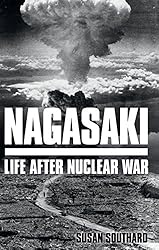
The facts are horrendous – on August 9th 1945, two days after the atomic bombing of Hiroshima, a five-ton plutonium bomb was dropped on the small coastal town of Nagasaki. The effects were cataclysmic.

This must be one of the most devastatingly sad and depressing books I’ve read and yet also one of the most uplifting, detailing the dropping of the bomb, which killed 74,000 people and injured another 75,000. As the subtitle indicates this book is not just about the events of 9 August 1945 but it follows the lives of five of the survivors from then to the present day. And it is their accounts which make this such an emotive and uplifting book, as it shows their bravery, how they survived, and how they were eventually able to tell others about their experiences. Along with all the facts about the after effects of the bombing, the destruction, and radiation, it exposes the true horror of atomic warfare, making it an impressive and most compelling account of pain, fear, bravery and compassion.

Throughout the book the black and white photos illustrate the true horror of the effects of the bomb – photos of Nagasaki both before and after the bomb was dropped, of five survivors – Wada Kohi (aged 18 in August 1945), a street car operator; Nagano Etsuko (aged 16), who worked on a production line in a Mitsubishi airplane parts factory;  Taniguchi Sumiteru (aged 16), who worked at Minchino-o Post Office; Yoshida Katsuji (aged 13), a student at Nagasaki Prefecture Technical School on a ship building course; and Do-oh Mineko (aged 15), formerly a student at Keiho Girls High School, working at the Mitsubishi Arms Factory Onashi Plant. There are also maps showing Japan today and of Nagasaki 1945 showing the Scope of Atomic Bomb Damage.

Susan Southard’s ten years of research has resulted in this impressive book as she reveals what happened in particular to these five survivors, their immediate injuries, the radiation-related cancers and illnesses they have suffered, and their difficulties of daily living still in pain both physical and emotional.

In addition to all that Nagasaki ‘reveals the censorship that kept the suffering endured by the hibakusha [atomic bomb-affected people] hidden around the world. For years after the bombings news reports and scientific research were censored by U.S. occupation forces and the U.S. government led an efficient campaign to justify the necessity and morality of dropping the bombs’ (from the jacket sleeve).

I knew a bit about Hiroshima and Nagasaki before I read this book but it has opened my eyes to the true horror of nuclear war and the need to prevent anything like this happening again.

Many thanks to Souvenir Press Ltd for sending me a complimentary copy for review.

  • Hardcover: 416 pages
  • Publisher: Souvenir Press Ltd (2 Nov. 2015)
  • Language: English
  • ISBN-10: 0285643274
  • ISBN-13: 978-0285643277

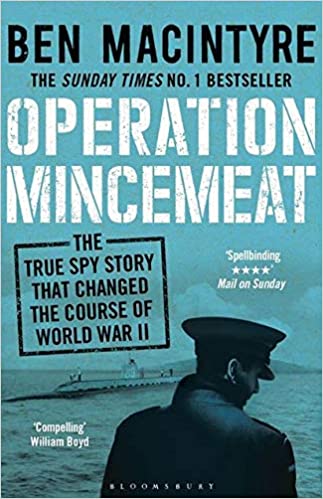
Operation Mincemeat by Ben Macintyre: a Book Review

Subtitled The True Spy Story that Changed the Course of World War II, Operation Mincemeat is about the Allies’ deception plan codenamed Operation Mincemeat in 1943, which underpinned the invasion of Sicily. It was framed around a man who never was.

The success of the Sicilian invasion depended on overwhelming strength, logistics, secrecy and surprise. But it also relied on a wide web of deception, and one deceit in particular: a spectacular con trick dreamed up by a team of spies led by an English lawyer. (page xi)

At first I found this book a little confusing and far too detailed, but as I read on I became absolutely fascinated and amazed at what had actually happened. The plan was to take a dead body, equipped with false documents, deposit it on a beach in Spain, so that it would be passed over to the Germans and divert them from the real target into believing that the preparations to invade Sicily were a bluff.

Operation Mincemeat would feed them both a false real plan, and a false cover plan – which would actually be the real plan (page 58)

The corpse was a Welsh tramp who had committed suicide. His body was clothed in the uniform of an Royal Marine with documents identifying him as Major William Martin and letters about the top-secret Allied invasion plans. This involved creating a fictional character, a whole host of imaginary agents and sub-agents all with their own characteristics and imaginary lives – just as in a novel. The details of the deception were dreamt up by Ewan Montagu, a barrister and Charles Cholmondeley (pronounced Chumley), a flight-lieutenant in the RAF seconded to MI5, the Security Service. Both were enthusiastic readers, which stood them in good stead:

For the task of the spy is not so very different from that of the novellist: to create an imaginary credible world, and then to lure others into it, by words and artifice. (page 62)

The plan was not without its faults and and indeed it contained some potentially fatal flaws, but incredibly it succeeded.

Operation Mincemeat was pure make-believe; and it made Hitler believe something that changed the course of history. (page 307)

This is a book, totally outside my usual range of reading. I wasn’t expecting to enjoy it as much as I did and I think I did enjoy it because it was so far-fetched to be almost like reading a fictional spy story. I marvelled at the ingenuity of the minds of the plans’ originators and the daring it took to carry it out.

Seventy Years Ago Today …

… Neville Chamberlain broadcast that Britain was at war with Germany. In Wartime Britain 1939-1945 by Juliet Gardiner she quotes from the diary of  a twenty-four year old civil servant living in Croydon on 3 September 1939:

The sun is shining, the garden never looked lovelier – everything is in bloom. Tiger [the cat] lies there in the sun; all looks happy and peaceful. But it’s not. War has broken out between England and Germany, beastly, beastly war.

 Winston Churchill’s frame of mind was rather different. He wrote in his memoirs, The Second World War Volume 1: The Gathering Storm, that he knew if war came a major burden would fall on him. On 3 September 1939 he wrote

As I sat in my place [in the House of Commons], listening to the speeches, a very strong sense of calm came over me, after the intense passions and excitements of the last few days. I felt a serenity of mind and was conscious of a kind of uplifted detachment from human and personal affairs. The glory of Old England, peace-loving and ill-prepared as she was, but instant and fearless at the call of honour, thrilled my being and seemed to lift our fate to those spheres far removed from earthly facts and physical sensation.

And so it began …

The Second World War

Sometimes I’m amazed at the links between the books I’m reading. I read the following books by choosing them individually without realising that they all had similar themes. Recently I read One Fine Day by Mollie Panter-Downes, set in England in 1946 just after the Second World War had ended. Then I read Playing with the Moon by Eliza Graham set in 1943/4 up to the present day and now I’ve just started The Great Fortune by Olivia Manning, set in Bucharest at the start of the War (currently I’m in the ‘Phoney War’ period. I’m also joining a local book group my friend goes to and the book for discussion is Surveillance by Jonathan Raban. I picked up that book yesterday and started to read it. To my surprise, although it’s set in Seattle post 9/11 one of the characters, a journalist has been assigned to interview a historian, who had been ‘an orphaned child caught up in the worst barbarities of World War Two’, spending his boyhood ‘among the displaced and terrorized people of central Europe, overrun now by Hitler’s, now by Stalin’s armies’.

I didn’t plan on reading books about the War at all and it was quite by chance that it was near to Remembrance Sunday, but it all seems so appropriate. I decided I should know more about the War and so went to the library. There were so many books that I decided to get a couple of books specifically about D-Day as my father took part in the Normandy landings and also a huge book called Chronicle of the Second World War. I then went to a bookshop and was spoilt for choice with an enormous range of books to choose from. In the end I bought Wartime Britain 1939 – 1949 by Juliet Gardiner. Juliet was the editor of History Today for five years, a research fellow at the Institute of Historical Research, author of several wartime books, and historical consultant for Channel 4’s The 1940s House and The Edwardian Country House. Thank you to Litlove who recommended this book. I thought it looked a good place to start.

So, I’ve now got lots to get me started on my search to know more about the War.