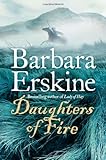
Daughters of Fire by Barbara Erskine

Daughters of Fire is historical time-slip fiction switching between the present day and the first century CE Britannia, a mix of historical fiction, fantasy and romance.  It was with relief that I finished reading it – relief, because although the story of Cartimandua, Queen of the Brigantes tribe is fascinating and that of historian Viv Lloyd Rees is initially interesting, the book is too long, and too wordy.

Daughters of Fire intermingles two stories, that of  Viv and Cartimandua. Viv has published a book on Cartimandua, a book using alternative as well as traditional historical sources – ie using legends, her dreams and visions as well as the writings of Roman historians. She has ‘borrowed’ an ancient cursed brooch from her boss, Professor Hugh Graham, who has criticised her book as fantasy. The rest of her story is their obsession with and struggle to gain control of the brooch.

Cartimandua, back in the first century is beset by enemies on all sides, Romans and  the leaders of the other tribes. It all goes from bad to worse when she betrays Caradoc (Caractacus), the leader of the Catuvellauni tribe, who led the tribes in resisting the Roman invaders and hands him over in chains to the Romans.

For me the essential story was good, but lost impact as it dragged on, drowned in words and by the repetition of the struggles between the characters. Because of this the ending was drained of any impact and suspense for me. I like time-slip stories, the supernatural and the paranormal, so that wasn’t a problem. And I liked the sections explaining Celtic beliefs – their belief in the immortality of the soul, in reincarnations and transmigration of the soul. As one of the characters said:

Remember the world he lived in was an animistic, rainbow world of links and connections which included vast echelons of spirits and gods and ancestors, people dead and people yet to be born, all of whom could be summoned to his aid. (page 258)

In the Author’s Note, Barbara Erskine emphasises that this is above all fiction:

In the absence of written information one has to make do with imagination, dreams and deductive techniques of a dubious nature! … (page 562)

and regarding Cartimandua:

We don’t know her tribe, or if she had children, and although far more is known about her life than that of he much more famous contemporary, Boudicca, she is still an enigma.

So, for all that is historically known about Cartimandua I refer the reader to the Roman historians.

For the truth of her life we must consult archaeology and the oracles.

The rest is silence. (page 562)

A couple of years ago I read Barbara Erskine’s book, The Warrior Princess, another time-slip book, which I also thought was too drawn out and would have been better if the plotting had been tighter. I own one more of her books, which I’ve yet to read – Sands of Time, a collection of short stories, described on the back cover as ‘spine-tingling‘ tales all with ‘a touch of the unexpected … suspense, romance, passion, unexpected echoes of the past.’ I hope, because these are short stories, they will be more succinct than the two books I have read.

This book qualifies for several challenges – Mount To-Be-Read 2013 (it’s been on my shelves for about 4 years), The Historical Fiction Reading ChallengeWhat’s in a Name 6 (in the Fire category) and Once Upon a Time VII (Fantasy).
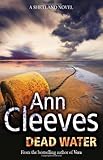
Ann Cleeves and Dead Water

I loved Ann Cleeves’s Shetland QuartetRaven Black, White Nights, Red Bones and Blue Lightning, so I was delighted to read her latest book, Dead Water, which takes the Quartet one step further. Actually, it’s the first book in a new Shetland Quartet, in which each book will be named after the four elements –  earth, air, fire and water. Each of the Shetland books reads well as stand-alones, but I think it’s better to read them in order as you can then follow the development of the main characters. And Dark Water does refer to events in earlier books.

In Dead Water Rhona Laing, the Fiscal, finds journalist Jerry Markham lying dead, drifting in a yoal, a traditional Shetland boat in Aith marina. Markham, a Shetlander visiting his parents, was apparently working on a story for a national newspaper – maybe about the development of renewable energy proposed for Shetland, or maybe his reason was more personal? Detective Inspector Jimmy Perez is not the man he once was, since the death of his fiancée and at first he takes a back seat in the investigations, led by Detective Inspector Willow Reeves (originally from the Hebrides) who is drafted in from the Inverness team to head up the investigation. But eventually his natural curiosity takes over and he decides to help the inquiry, and his knowledge of the local community is vital in catching the killer.

I really enjoyed Dead Water, a mixture of mystery and the creation of  totally believable characters, set in Shetland Mainland.  The book is well paced, with the tension steadily building and Ann Cleeves writes with clarity, so that you can easily picture the people and the places she describes. She gives just the right amount of detail for the reader to feel immersed not only in the story but also in the life of the islands – the history and traditions, and the changes brought about the development of sustainable energy.

Last Tuesday evening D and I went to Main Street Trading bookshop where Ann Cleeves gave a talk about how she first went to Shetland and came to know and love the islands. She also talked about her decision to write crime fiction based in Shetland, and how she first pictured a scene in the snow  which eventually became the first book, Raven Black, after hearing stories of the islands from an old Shetlander.

She also spoke about the new BBC TV Shetland series, which she told us is being broadcast in March, beginning with an adaptation of Red Bones. Admittedly Douglas Henshall, playing the part of Perez, is not her vision of Jimmy Perez, after all, Perez has long dark hair with Spanish ancestry in his blood, whereas Douglas Henshall is  redheaded Scot, but she is happy both with him in the role and with the alterations that have been made. As she explained, once she has finished writing a book it passes out of her hands and each reader has their own individual interpretation. She cannot see what is in the minds of readers, but she can see the director’s interpretation in the TV version of her book! I’ve seen the trailer and it does look good.

Ann Cleeves is an excellent speaker, just as she is an excellent writer. On her website you read about her books and the forthcoming series and also download a leaflet Discover the Mystery of Shetland which has a map, beautiful colour photos and a commentary from Ann about the real and fictitious locations in her books. It’s very good – I was given a copy last Tuesday.

The Case of the Curious Bride by Erle Stanley Gardner

First published in 1935 The Case of the Curious Bride is the 5th Perry Mason book by Erle Stanley Gardner.

Synopsis extracted from the back cover:

An attractive young woman calls at Perry Mason’s office to inquire if a friend can marry again without getting a divorce as her husband had been presumed killed in an air accident seven years previously. Mason sees sinister implications and as a result of his investigations – helped by his secretary Della Street – dramatic developments lead to a court case in which the tables are turned on the police.

My view:

There are plenty of twists and turns in this mystery surrounding Rhoda Montaine, who is accused of murder and it certainly looks as though she is guilty.  I found it very puzzling. I also thought it was unsatisfactory as Perry Mason resorts to trickery, fooling everyone. At times I was at a complete loss to understand what he was doing and why. It all becomes clear at the end, but I found it far-fetched.

  • Paperback: 208 pages
  • Penguin Books 1960 (first published by Cassell 1935)
  • Source: I bought the book
  • My Rating 2/5
  • Challenges: Mount TBR, What’s in a Name 6 (a book with an emotion in the title)

What's In a Name 5 Challenge Completed

I always enjoy this Challenge – my thanks to Beth for hosting the event. I’ve read a mixture of fiction and non-fiction, including three crime fiction books and two memoirs.

The categories and the books I’ve read are as follows:

A book with a topographical feature in the title: The Hanging Valley by Peter Robinson (crime fiction).

A book with something you’d see in the sky in the title: Blue Lightning by Ann Cleeves (crime fiction).

A book with a creepy crawly in the title: The Parasites by Daphne du Maurier.

A book with a type of house in the title: Death at the President’s Lodging by Michael Innes (crime fiction).

A book with something you’d carry in your pocket, purse, or backpack in the title: A Card from Angela Carter by Susannah Clapp (memoir).

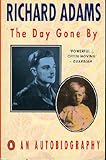
A book with something you’d find on a calendar in the title: The Day Gone By: an Autobiography by Richard Adams.

The Day Gone By: an Autobiography by Richard Adams

This book has been sat waiting patiently for me to read it for some years now. I can’t remember when I bought it, but I bought it because I loved the other books by Richard Adams that I’d read – Watership Down, the story he originally told to his children to while a way a long car journey, Shardik, The Plague Dogs, and The Girl in a Swing.

The Day Gone By is his memoir of his early life from his 1920s childhood at home with his parents in Newbury, Berkshire, to his time at boarding school, then life at university in Oxford and his service in World War Two, up to his return home in 1946 and his first meeting with the girl who became his wife.

He was born in 1920, the youngest child of George and Lilian Adams. The early chapters are about his earliest memories, full of wonder at the natural world around him. It was his father, a doctor, who taught him to recognise and love birds and the countryside. These chapters convey vividly his family’s idyllic post-Victorian pastoral lifestyle. His talent for storytelling came out when he went away to pep school at Horris Hill at the age of 8:

To Horris Hill’s lack of electric light I owe more than I can tell. Indeed, it may very well have been the greatest blessing of my life, for it was this that made me a dormitory story-teller. The shadowy, candle-lit dormitories of winter; or those same dormitories in the fading twilight after sunset; these were the settings for a story-teller such as no electrically lit room could ever provide. (page 138)

At first the stories he told were from those he’d read, but when he had no more to tell he was forced to make them up. During the day he began thinking about what he was going to tell the other boys at night.

The Day Gone By is a detailed account of his early life throwing light on the society in which he lived, the class structure and attitudes and above all the changes that were brought about by the Second World War. His experiences during the war are equally as detailed, conveying the effect it had on his life:

To anyone at all who lived through it, in whatever capacity, the Second World War was an enormous, shattering experience. It was – and I say this in all seriousness – difficult to believe it was really over; one could not remember what things had been like before. Anyway, that no longer mattered much: they weren’t ever going to be the same again. (page 379)

His style of writing changed in the section on his wartime experiences, almost as though he was using the language he spoke at the time. I liked his reflections on life; his opinions on the terrible suffering and cruelties of the war years are especially moving.

The Day Gone By: an Autobiography by Richard Adams. Penguin Books. 1991. 399 pages.

This is the last book completing the What’s In a Name? 5 Challenge – a book with something you’d find on a calendar in the title.

What’s in a Name 6

At this time of year I often think that I won’t take part in any book challenges in the future and I was just thinking that the other day when I saw that Beth Fish Reads had posted about next year’s What’s in a Name challenge, which will run between January 1 and December 31, 2013. As I do like working through my unread books and making lists of what to read next I had to see if it would be easy to fit books to fit the challenge – of course I did! The idea is to read one book in each of the following categories:

1. A book with up or down (or equivalent) in the title: eg Deep Down True, The Girl Below, The Diva Digs up the Dirt

2. A book with something you’d find in your kitchen in the title: Loose Lips Sink Ships, The Knife of Never Letting Go, Breadcrumbs

3. A book with a party or celebration in the title: A Feast for Crows, A Wedding in Haiti, Cocktail Hour under the Tree of Forgetfulness

4. A book with fire (or equivalent) in the title: Burning for Revenge, Fireworks over Toccoa, Catching Fire

5. A book with an emotion in the title: Baltimore Blues, Say You’re Sorry, Dreams of Joy

6. A book with lost or found (or equivalent) in the title: The Book of Lost Fragrances, The World We Found, A Discovery of Witches

  • Books may be any form (audio, print, e-book).
  • Books may overlap other challenges.
  • Books may not overlap categories; you need a different book for each category.
  • Creativity for matching the categories is not only allowed but encouraged.
  • You do not have to make a list of books before hand.
  • You do not have to read through the categories in any particular order.
Here are my choices:
1. A book with up or down (or equivalent) in the title:
  • Ripley Under Water by Patricia Highsmith
  • Rise and Shine by Anna Quindlen

2. A book with something you’d find in your kitchen in the title:

  • Gem Squash Tokoloshe by Rachel Zadok
  • The Various Flavours of Coffee by Anthony Capella
  • The Olive Readers by Christine Aziz
  • Saving Fish from Drowning by Amy Tan
  • The Water Horse by Julia Gregson

3. A book with a party or celebration in the title:

  • Ralph’s Party by Lisa Jewel
  • A Time to Dance, No Time to Weep by Rumer Godden
  • The Birthday Boys by Beryl Bainbridge

4. A book with fire (or equivalent) in the title:

  • Daughters of Fire by Barbara Erskine
  • The Girl who Played with Fire by Stieg Larsson

5. A book with an emotion in the title:

  • Book of Love by Sarah Bower
  • Love in the Time of Cholera by Gabriel Garcia Marquez
  • Sword of Shame by The Medieval Murderers
  • The Pursuit of Happiness by Douglas Kennedy
  • The Soul of Kindness by Elizabeth Taylor
  • The Tenderness of Wolves by Stef Penney

6. A book with lost or found (or equivalent) in the title:

  • The Book of Lost Things by John Connolly
  • The Lost Art of Keeping Secrets by Eva rice
  • The Lost Prophecies by The  Medieval Murderers
  • The Lost Army of Cambyses by Paul Sussman
  • The Inheritance of Loss by Kiran Desai

More than enough!