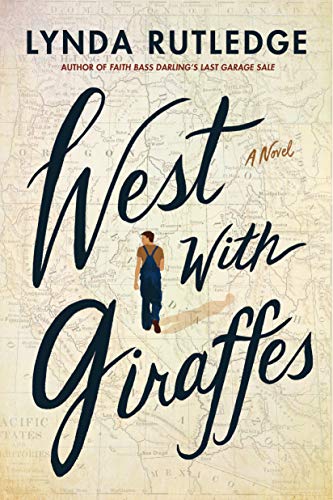
West with Giraffes by Lynda Rutledge

Lake Union Publishing| 2001| 346 pages| e-book| I bought it| 5*

Description on Amazon:

An emotional, rousing novel inspired by the incredible true story of two giraffes who made headlines and won the hearts of Depression-era America.

“Few true friends have I known and two were giraffes…”

Woodrow Wilson Nickel, age 105, feels his life ebbing away. But when he learns giraffes are going extinct, he finds himself recalling the unforgettable experience he cannot take to his grave.

It’s 1938. The Great Depression lingers. Hitler is threatening Europe, and world-weary Americans long for wonder. They find it in two giraffes who miraculously survive a hurricane while crossing the Atlantic. What follows is a twelve-day road trip in a custom truck to deliver Southern California’s first giraffes to the San Diego Zoo. Behind the wheel is the young Dust Bowl rowdy Woodrow. Inspired by true events, the tale weaves real-life figures with fictional ones, including the world’s first female zoo director, a crusty old man with a past, a young female photographer with a secret, and assorted reprobates as spotty as the giraffes.

Part adventure, part historical saga, and part coming-of-age love story, West with Giraffes explores what it means to be changed by the grace of animals, the kindness of strangers, the passing of time, and a story told before it’s too late.

My thoughts:

I read West with Giraffes by Lynda Rutledge in September this year but didn’t get round to writing about it then. I don’t think I need to add anything to the description shown above other than to say that I loved this story. I didn’t really expect to like it as much as I did – that took me by surprise. It has a colourful cast of characters, all fictional apart from the owner of the San Diego Zoo, Mrs Belle Benchley, a remarkable woman. In the Historical Notes at the end of the book she’s described as ‘an early glass-ceiling breaker‘. She began working at the zoo in 1925 as a civil servant bookkeeper, and working her way through a number of different roles eventually becoming known in the late 1930s as ‘the only female zoo director in the world‘. She believed that the only way people would care about wild animals was to meet them.

Not knowing much about American history I found the Historical Notes very helpful, particularly those about the Great Hurricane of 1938, the most destructive storm to strike New England in recorded history until 2012’s Hurricane Sandy. The journey the giraffes took was primarily the Lee Highway, the more southern, of the transcontinental routes at the time, designed to be a southern counterpart to the northern Lincoln Highway. The author’s website is fascinating giving lots of information about the book, photos from newspaper articles and details about her writing process.

It conjures up a vivid picture of America in 1938 during the Great Depression, the Dust Bowl, hobo cards, nomadic workers taking jobs where they could, desperate Hooverville dwellers in shanty towns, sundown town racism, and circus animal cruelty. But of course, it is the giraffes that are the two main characters. It is a remarkable book and if you like historical fiction based on fact, books about travel and an exciting story I think you’d enjoy it too.

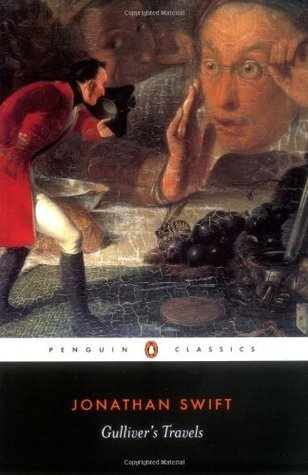
Gulliver’s Travels by Jonathan Swift

The summary on Goodreads:

A wickedly clever satire uses comic inversions to offer telling insights into the nature of man and society. Nominated as one of America’s best-loved novels by PBS’s The Great American Read.

Gulliver’s Travels describes the four voyages of Lemuel Gulliver, a ship’s surgeon. In Lilliput he discovers a world in miniature; towering over the people and their city, he is able to view their society from the viewpoint of a god. However, in Brobdingnag, a land of giants, tiny Gulliver himself comes under observation, exhibited as a curiosity at markets and fairs. In Laputa, a flying island, he encounters a society of speculators and projectors who have lost all grip on everyday reality; while they plan and calculate, their country lies in ruins. Gulliver’s final voyage takes him to the land of the Houyhnhnms, gentle horses whom he quickly comes to admire – in contrast to the Yahoos, filthy bestial creatures who bear a disturbing resemblance to humans.

I think Gulliver’s Travels is such a strange book, definitely not a children’s book as I had thought. There are very many editions of this book. The edition I read is the e-book edition based on the text of Swift’s 1726 original, with the 1899 illustrations of Arthur Rackham. It’s a satire on human nature and the imaginary travellers’ tale literary subgenre about Lemuel Gulliver, a ship’s surgeon who travels to four strange and distant lands.

This is one of those books that I’ve known of since childhood and have known bits of the story, but have never read. I did see a TV cartoon version several years ago and I’ve been meaning to read it for years. It’s a book, which operates on several levels, as the Introduction in one of my copies (an Odhams Press Limited publication) states:

An embittered, middle-aged man sat down to write a book that would scourge the vices and follies of mankind. That book, with its sting mellowed during the passage of two hundred years, has become – of all things – a children’s classic. ‘Gulliver’s Travels’ was the splenetic outburst of a passionate mind, whose genius gave immortality to so transient a thing as satire; but that immortality had a permanent basis – a child-like delight in marvels, a freshness of invention, a limpid style and a selective perception that created images of giants, dwarfs and fabled races with a vivid pulsating life of their own.

I don’t think I’d have liked it very much if I’d read it as a child as there are many passages that would have bored me stiff and which even now I found tedious and heavy going in parts. It satirises the political situation during Swift’s lifetime, and is full of political and social allusions, a lot of which, interesting as it is, passed over my head.

But it is a fantastical fantasy set in such different places, the ones I found most interesting are Lilliput inhabited by tiny people Brobdignag, the land of giants, and the country of the Houyhnhms, where a race of talking horses, rule the Yahoos, strange, filthy humanoid animals that Gulliver viewed with contempt and disgust. Gulliver became a part of one of the horse’s households and grew to admire and wanted to emulate the Houyhnhms’ way of life, which left him horrified with humanity. Less interesting is his visit to Laputa, a flying island and it’s rebellious cities.

It was not really what I expected, and whilst I think a lot of it is absurd and amusing, it’s certainly not a book I can say that I enjoyed, I think it was worth reading and I’m glad I finally got round to reading it.

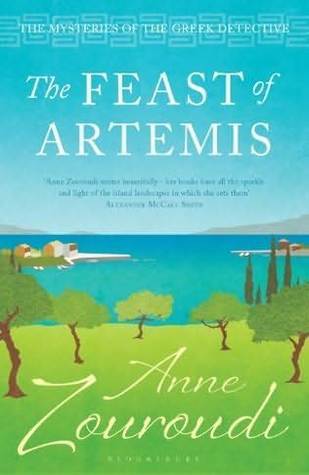
What’s in a Name 2025

I’ve been taking part in Andrea’s What’s in a Name Challenge for years and although I didn’t complete it last year I’ve decided to have a go again this year

It is hosted by Andrea at Carolina Book Nook. The challenge runs from 1st January to 31st December 2025. You can sign up at any time but can only count books you read between those dates. Read a book in any format (hard copy, ebook, audio) with a title that fits into each category.

In 2025, choose 6 books that have titles that contain:

  • Cardinal direction – Titles for this category need to include at least one cardinal direction (North, East, South, West) in the title
  • Wanderlust – Titles for this category need to include words or phrases related to wanderlust: wander, journey, trip, travel, explore, trek, tour, adventure, etc. Or the implication of traveling or exploring.
  • First & last name – Titles for this category need to include both a first name (given name) and last name (surname). The names don’t matter, as long as it’s the first and last of a real person or fictional character.
  • Alliteration – Titles for this category need to include at least two main words that begin with the same letter in the title.
  • Deity – Titles for this category need to include words associated with a deity of some sort. This can be the words “deity,” “god,” “goddess,” or a specific name of a deity. In your comment, please include the culture or religion of the deity (even if the deity isn’t being directly referenced.)
  • Crime – Titles for this category need to include the word “crime,” a specific type of crime, a specific type of criminal, or the name of an infamous criminal.

I’ve got a few choices for each category so I reckon I should be able to complete the challenge this year.

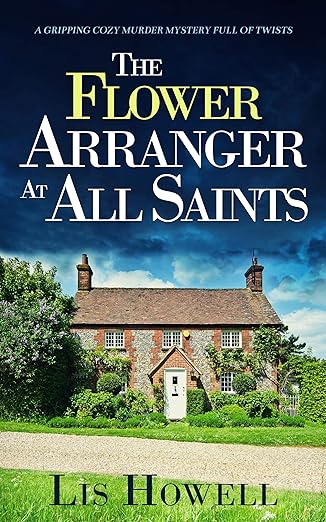
The Flower Arranger at All Saints by Lis Howell

The Flower Arranger at All Saints by Lis Howell was one of Prime Reader’s free books last year that I downloaded. I loved it! it’s my first 5* read of the year.

Synopsis

In quiet Tarnfield, local rivalries and parish feuds simmer under the genteel surface. It’s the sort of place where everyone knows each other’s business. And a new vicar wants to shake things up in the community. Then Phyllis the church flower arranger is found dead before the big Easter service.
With fingers pointing and tensions rising, the village is in turmoil.

Chaotic mum-of-two, Suzy Spencer, has just arrived in Tarnfield. She needs a fresh start after her husband betrayed her. Now she finds herself entangled in the mystery along with quiet widower, Robert Clark. The killer is set to strike again with another floral flourish. Despite their differences, can Suzy and Robert stop the murderer before anyone else suffers?

My thoughts

There is a lot to like in this book. The setting is Tarnfield, a fictional Cumbrian village. The setting is described so well that I could ‘see’ it all. It’s picturesque, quiet and secluded, where everyone knows everybody’s business. The church plays a huge part in village life, but traditions are being upended by the new vicar and his fondness for playing the guitar during sermons.

And the characters are so ‘real’. I believed in them and even though there are many of them they’re all easily distinguishable and I loved the biblical references and flower clues – they’re intriguing. The plot too kept me keen to carry on reading, wanting to know the identity of the murderer. As Suzy and Robert try to get to the bottom of the mystery many secrets are revealed – and it looks as though a relationship between the two of them is developing.There are more deaths and red herrings with several twists and turns before the culprit is found.

Why haven’t I come across this author before and her Suzy Spencer mysteries? The Flower Arranger at All Saints is the first in the series and luckily there are four more for me to read!

About the author

Lis Howell is from Liverpool, UK. She is the author of the Suzy Spencer cozy mysteries. They are set around the fictional town of Norbridge, Cumbria in the North of England. In her varied life, Lis has spent a short time running a post office in a Cumbrian village; and she lived for several years near Hadrian’s Wall between England and Scotland. Lis is an award-winning TV journalist based in London and is now an academic. Like Suzy, she’s a confused churchgoer, although she married a churchwarden! Anglican traditions feature in her books, along with modern media, family life and village intrigue.

I’m taking part in the  What’s In A Name Challenge? this year and this book fits into the category of a NFL team (New Orleans Saints).

What’s in a Name 2024

The What’s In A Name Challenge is being hosted again for 2024 by Andrea at Carolina Book Nook. The challenge runs from 1st January to 31st December 2024. You can sign up at any time but can only count books you read between those dates. Read a book in any format (hard copy, ebook, audio) with a title that fits into each category.

The categories with my provisional choices are:

Double Letters        The Secret Lives of Bees by Sue Monk Kidd

An NFL Team         Giant’s Bread by Agatha Christie

A natural disaster The Year of the Flood by Margaret Atwood

A virtue                     Brave New World by Aldous Huxley

A shape                    Square Haunting: Five Women, Freedom and London Between the Wars by Francesca Ward

Footwear                   The Boy with No Shoes by William Horwood

The Red Monarch by Bella Ellis

Hodder and Stoughton| 18 November 2021| 326 pages| e-book| Review copy| 3*

Blurb

The Brontë sisters’ first poetry collection has just been published, potentially marking an end to their careers as amateur detectors, when Anne receives a letter from her former pupil Lydia Robinson.

Lydia has eloped with a young actor, Harry Roxby, and following her disinheritance, the couple been living in poverty in London. Harry has become embroiled with a criminal gang and is in terrible danger after allegedly losing something very valuable that he was meant to deliver to their leader. The desperate and heavily pregnant Lydia has a week to return what her husband supposedly stole, or he will be killed. She knows there are few people who she can turn to in this time of need, but the sisters agree to help Lydia, beginning a race against time to save Harry’s life.

In doing so, our intrepid sisters come face to face with a terrifying adversary whom even the toughest of the slum-dwellers are afraid of . . . The Red Monarch.


The Red Monarch is the third Brontë Mystery book in which the main characters are the three Brontë sisters, Charlotte, Emily and Anne and their brother Branwell. I’ve read the first two and enjoyed them. But when I came across the first book I wasn’t at all sure I wanted to read it, as I’m never very keen on books that use real people as fictional characters. So, I was delighted to find that I thoroughly enjoyed the books even though, of course, the stories about the Brontës being ‘detectors’, or amateur sleuths, are pure imagination. The setting in the Yorkshire Moors is superb, the characters came across as ‘real’ and the books are well plotted.

And so, I was looking forward to reading The Red Monarch and it began well in Haworth in August 1852 as Charlotte is trying to write Villette. She is in despair after the deaths of her siblings – Emily and Branwell in 1848, and Anne in 1849. Instead of writing she reads a little notebook containing Emily’s poems and one particular poem brought back to her the dreadful events that had taken place and the terrors and cruelties they had seen, on their excursion to London. It had all taken place just after the Brontë sisters’ first poetry collection had been published – in 1846.

It was at this point, right at the beginning of the story about their time in London, that I thought I was reading a completely different type of mystery from the earlier books – not only is in not set in Yorkshire this book is a gothic melodrama. In a terrifying attack on Lydia and her husband Harry, a gang of thieves and murderers, led by Noose, had burst into Harry and Lydia’s bedroom. They had seized Harry and threatened to kill him unless Lydia brought them the jewel that Harry had been ordered to collect. Lydia, who was pregnant, had seven days to save their lives. But it is the Red Monarch, who was in control of the gang, and who held them all under his control – a most villainous and fearsome gangster. In desperation Lydia wrote to Anne for help.

The story is melodramatic, sensational and fast-paced. It is told through each of the sisters’ eyes, each one clearly distinctive, whilst Emily (once more) is the standout character. They are all independent women, strong-willed and determined and as Victorian women, vastly underestimated by the men. But, I had a hard time accepting the Brontë sisters in this story. Whereas in the two previous books I could believe that the Brontë family were just as Bella Ellis has described them, in this book I couldn’t.

The descriptions of mid 19th century London are vivid, clearly depicting the filthy living conditions of the poor, the sights and foul smells. The details of the Brontës’ search for Harry and the missing jewel test their strength, courage and skill in detection.

There are a few other real people who play a minor role, notably Charles Dickens, who is dismissive when Charlotte, somewhat in awe of him, asks for his advice as a writer, telling her to abandon any ideas of being a novelist and to marry, or teach. His companion, Mrs Catherine Crowe, another real author who wrote supernatural tales, was much more approachable and friendly, contacting her spirit friends to help with Charlotte’s search as well as giving her useful advice as a writer. Another character, with a larger role, is Louis Parensell, who develops a passion for Emily. He was not a real person, but Virginia Moore, a Brontë biographer, misread the handwritten title of Emily’s poem ‘Love’s Farewell’ as ‘Louis Parensell’, and developed the theory that Louis was Emily’s secret lover.

As the novel reached its dramatic climax, Emily in particular is in danger of losing her life as she dared to challenge the Red Monarch. I was most interested in the identity of The Red Monarch – was he in fact a real person, or totally fictitious? There various references to him throughout the novel, what was the origin of his name, and what was the meaning of his insignia? It seemed to be two capital Rs back to back topped with a crown and contained within a five-pointed star of pentagram. Anne had first discovered them and she felt sure they carried a secret meaning to those in know. When the identity of the Red Monarch is finally revealed I was surprised – but it is appropriate in that the real person has been described as a maniacal, controlling man.

I enjoyed this book, but I think the two previous books are much better and seem more authentic, aided by being set in the Brontës’ Yorkshire. They were out of place in London. It all seems to me to be over dramatic and unbelievable. The fictional element far outweighs the historical.

~~~

‘Bella Ellis’ is the Brontë-inspired pen name for the author Rowan Coleman, who has been a Brontë devotee for most of her life. As well as writing the Brontë Mysteries she is the .author of sixteen novels including the Richard and Judy pick The Memory Book and the Zoe Ball bookclub choice, The Summer of Impossible Things.

My thanks to Hodder Stoughton for a review copy via NetGalley