Doctored Evidence by Donna Leon: Book Review

doctored-evidenceDoctored Evidence is the first book by Donna Leon that I’ve read. Maybe I should have started with the first Commissario Brunetti book, Death at La Fenice, because I felt as though I’d walked into a room where everyone else knew each other and I didn’t.

It started off well with the murder of the most unlikeable character Maria Battestini. At first Flori, her Romanian maid is suspected of her murder but it is clear from Signora Gismondi’s evidence that the maid could not have had time to kill the old woman. What follows is the investigation of the murder by Commisario Brunetti aided by Signorina Elettra and Inspector Vianello.

It was going well and then I began to get a bit bored as it became bogged with lots of possiblities for who killed Battestini. At the end when the murderer was revealed I only had a vague impression of the character and had to go back to read various scenes again. For me the minor characters were all a bit vague, with the exception of Signora Gismondi who came across very clearly. I would have liked more about her.

I liked Brunetti; he seems to be a maverick character. I think a Commissario is in charge of a police station or division or something similar, but at one point I wondered if his boss was Signora Elettra, only to discover that she works for Brunetti’s boss Vice-Questore Patta. Maybe this would all be clearer to me if I began with the first Brunetti book.

I liked the scenes with Brunetti’s family, his conversations with his wife and the descriptions of their meals. At one point when he tells his wife he won’t be home for a meal she replies “Wonderful”, because she can read while she eats. I also liked the way their discussion about the Seven Deadly Sins influences how he tries to work out the motive behind the murder and that he picks the wrong sin. The scenes with Lieutenant Scarpa, a most unlikeable character, where his antagonism towards Brunetti and the way Brunetti eventually deals with him are among the most vivid in the book.

In a way I was a bit disappointed with Doctored Evidence but overall I liked it enough to look for another book by Donna Leon.

This is the 17th library book I’ve read this year contributing to the Support Your Local Library Reading Challenge 2009.
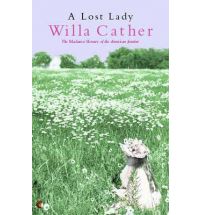
A Lost Lady by Willa Cather: a Book Review

a-lost-ladyI was very impressed with A Lost Lady by Willa Cather and now I want to read more of her books. I read it through in one sitting, which is most unusual for me, but having started it I just had to finish it. Not that there’s any mystery to solve, but just because I was enjoying the story, the writing and the scenes it conjured up in my mind.

A Lost Lady is about Mrs Forrester, a beautiful woman married to an older man, an elderly railroad pioneer living in a house on a hill at Sweet Water in the Nebraska plains along the Burlington railroad. She’s a well-loved, beautiful “lady-like” woman and the house, well known for Mrs Forrester’s hospitality and welcome, is in an idyllic setting. The story is told mainly through the eyes of Judge Pommeroy’s nephew, Niel Herbert, aged 12 at the beginning of the book.

There is an episode near the beginning of the book that completely shocked me, involving boys and a woodpecker. Even the boys watching who were not especially sensitive were “indignant and uncomfortable, not knowing what to do.”  This episode signals the end of an idyllic life style. Captain Forrester looks back with nostalgia at his early days in the West, a time when

One day was like another, and all were glorious: good hunting, plenty of antelope and buffalo, boundless sunny sky, boundless plains of waving grass, long fresh water lagoons yellow with lagoon flowers, where the bison in their periodic migrations stopped to drink and bathe and wallow. “An ideal life for a young man,” the Captain pronounced. (page 48)

His working life was ended by a railroad accident, and it’s now a time when life is changing. He is aging and helpless, and with the failure of the bank in Denver his dreams have ended. Mrs Forrester who adapts to change also symbolises the end of a past age. Niel has idolised her but as she begins to drink and takes a lover he is shattered, disllusioned:

In that instant between stooping to the window-sill and rising, he had lost one of the most beautiful things in his life. Before the dew dried, the morning had been wrecked for him; and all subsequent mornings, he told himself bitterly. This day saw the end of that admiration and loyalty that had been like a bloom on his esixtence. He could never recapture it. It was gone, like the morning freshness of the flowers. (pages 83-4)

Mrs Forrester is indeed “lost”, no longer the woman she was, not only “lost” to Niel, but “lost” to the values of the times. Other themes explored in A Lost Lady are the rise of materialism, a longing for the past seen as a golden age, the spoiling of the countryside in the name of progress and the changing role of women in society. There is also an emphasis on the need to adapt and to accept the possiblity of loss. I can see some similarities to Madame Bovary, in Mrs Forrester’s adultery (the book has been called “the Madame Bovary of the American frontier”), but there aren’t many similarities between the two woman other than that. Madame Bovary reads romantic fiction, is dissatified with her husband and commits suicide, whereas Mrs Forrester carries on with her life, is practical and does not give in to despair.

A Lost Lady is a complex novel, written in 1922 and published in 1923, and although it deals with the passing of the old order it still seems relevant today. Perhaps every age is the end of one period and the start of another.

The Body in the Library by Agatha Christie: Book Review

body-in-library001

I wrote some initial thoughts about The Body in the Library in my Sunday Salon post.  This is the mystery of who killed Ruby Keene. Ruby was eighteen, a professional dancer employed at the Majestic Hotel Danemouth as a dance hostess. Her body was found  in the Bantrys’ library at Gossington Hall in St Mary Mead. Then the charred body of another girl is found in an abandoned quarry. Who killed these girls and why?

The police are investigating the murder, including Inspector Slack, who is anything but slack, an energetic man, with a bustling manner. The police investigation is reinforced by the retired head of Scotland Yard, Sir Henry Clithering, whilst quietly in the background Miss Marple, at the request of Mrs Bantry, is also looking for the murderer.  I had little idea who it was even though I read the book very carefully. I had my suspicions and was completely wrong.

There are various suspects – Colonel Bantry, because the body was found in his library, Basil Blake who is connected with the film industry, has loud, drunken parties, George Bartlett, a rather dim-witted chap who is a guest at the Majestic, apparently the last person to see Ruby alive, and the Jefferson family – Conway Jefferson confined to a wheelchair, who was proposing adopting Ruby as his daughter, Mark, his son-in-law and Adelaide his daughter-in-law. Ruby was hired by the hotel as a dance hostess to partner Raymond Starr (also the tennis coach) after Josie Turner had sprained her ankle.

This is a satisfying murder mystery in that all the clues are there and when Miss Marple reveals who the killer is it is so clear that I don’t know why I hadn’t realised pages earlier, but that is Agatha Christie’s skill. A quick and enjoyable read.

For more reviews of Agatha Christie’s books have a look at the Agatha Christie Challenge.

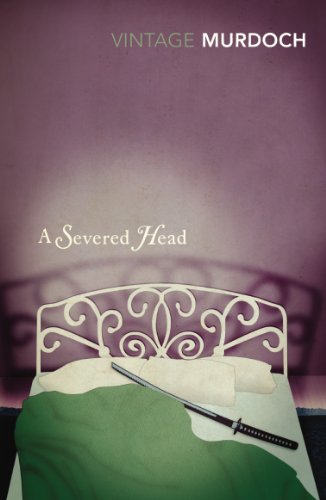
A Severed Head by Iris Murdoch: a Book Review

A severed head 1

This last February was the tenth anniversary of Iris Murdoch’s death. I’ve enjoyed several of her novels and biographies of her by John Bayley, Peter Conradi (an official biography)and A N Wilson (this last one was rather controversial). Recently I’ve read A Severed Head, first published in 1961  and have been wondering what to write about it without giving away too much of the plot.  As I was reading it I thought it would make a good farce and then I discovered that Iris Murdoch had adapted her book for the stage.

I felt I was looking into a different world and time. There are only a few characters – Martin, who is complacently happy with his mistress Georgie and his wife Antonia, Palmer who is Antonia’s analyst, Palmer’s half-sister, Honor, and Martin’s brother and sister Alexander and Rosemary. Iris Murdoch has made a tightly-structured novel, using Martin as the first-person narrator. Martin is shocked when his wife announces that she wants a divorce because she is deeply in love with Palmer. This sets in motion a sequence of events in which Martin’s weakness and need are clearly evident. Throughout the novel Murdoch uses the weather to indicate Martin’s mental and emotional state – the dense fog that covers the London streets and pervades his mind.

The novel depicts an amazing muddle and chaos ensues as Martin like a man possessed pursues Antonia, trying to keep Georgina at arms length whilst still not wanting to let her go.  He is a man in a mid-life crisis behaving like a teenager swept along by his emotions and falling in love at the drop of a hat.

There are some funny episodes as Martin moves his belongings out of his house into a flat and back again but set against that are serious issues such as abortion, marriage, incest and the struggle for power within relationships. Honor is one of the strangest characters. She is a powerful woman, an anthropologist who describes herself as

a severed head such as primitive tribes and old alchemists used to use anointing it with oil and putting a morsel of gold upon its tongue to make it utter prophecies.

She can wield a Japanese samurai sword like an expert, tossing a napkin  in the air she is able to slice it in half as it flutters to the floor. She has a pale sallow face with black gleaming hair, with “something animal-like and repellent in that glistening stare”. On her first appearance at Palmer’s house she appears to Martin like

some insolent and powerful captain, returning booted and spurred from a field of triumph, the dust of battle yet upon him, confronting the sovereign powers whom he was now ready if need be to bend to his will.

It’s not a novel I’d describe as comfortable reading, but it is entertaining.

(This is the 14th library book contributing to the Support Your Local Library Challenge.)

Book Review:The Cat Who Could Read Backwards

The Cat Who Could Read Backwards by Lilian Jackson Braun was on display in my local library. It caught my eye both by its title and its cover. I hadn’t come across any of the “Cat” books before, although I’ve since discovered that there are a lot of them. I like “whodunnits” and cats so I thought it might be entertaining.

Then I read that Zetor had found it “disappointing”, which put me off a bit. I can see what she means. It is rather slow – nearly halfway through the book before the murder – and no the cat can’t read and is as she says pretty average for a feline. But I liked it.

Briefly the book is about Joe Qwilleran, a newspaper reporter assigned to be an art writer, even though he knows little about art. There is a feud between the paper’s art critic, George Bonifield Mountclemens III, and local artists and when Earl Lambreth, who runs the art gallery is found murdered there are plenty of suspects. Qwilleran who used to be a crime reporter gets involved.

 I liked the slowness of it, the humour and above all Koko, the Siamese cat. The cover disappointingly shows a black cat not the beautiful Siamese with a “voice like an ambulance siren” and when Qwilleran first meets him he sees him  in bright daylight which

… emphasized the luster of the pale fur, the richness of the dark brown face and ears, the uncanny blue of the eyes. Long brown legs, straight and slender, were deflected at the ends to make dainty feet, and the bold whiskers glinted with the prismatic colors of the rainbow.

Later on in the book, when Koko is frolicking on the staircase his

… slender legs and tiny feet looking like long-stemmed musical notes were playing tunes up and down the red-carpeted stairs.

I found the art snobbery amusing. For example, an exhibition of a local artist’s watercolours of sailboats is described by Mountclemens by detailing the fine craftsmanship of the picture frames, and dismissing the paintings by saying that they “do not  detract from the excellence of the moldings.”

What I didn’t like was the ending, with the introduction of a new character at such a late stage; most disappointing. Will I read any more of The Cat Who … books? Maybe, if I find them in the library, but I won’t be buying them.

Ferney by James Long: a Book Review

Whether you believe in reincarnation or not Ferney by James Long is a most enjoyable read. It’s difficult to write about it without giving away too much. I liked the balance between historical fact and imagination as the story of Ferney and Gally unfolds.

When Gally and her husband Mike buy a derelict cottage in Penselwood in Somerset they meet Ferney, an old man of 80 who knows the history of the cottage.  When they first see the cottage

It was not much more than a shell, and a green wet-looking shell at that, though the roof was still on. Long and low, the jumbled lines of its random stonework told of many changes and additions over all the busy years. The roof-line took a little step downwards towards the far end. Stone lintels topped window holes filled only by ivy and from the middle of the house a buckled, wooden lattice-work porch jutted out, tilting down on to its knees from the weight of the creeper that had massed on it, sensing an easy opponent.

Gally thinks it is perfect. Despite his misgivings Mike agrees to buy and renovate the cottage because after Gally’s miscarriage he wants to keep her on an even keel and this promised to bring her “more peace and happiness than he had seen since they first met.”  At this point in the book Gally is very fragile, tormented by nightmares and mentally unbalanced (or so I thought).

But right from their first meeting with Ferney he startles them both. Gally sees him as “a  philospher king with a sword in one hand and a book of verse in the other.” And as the bond grows between Gally and Ferney, Mike is upset immediately feeling on the defensive, irritated, and pushed out. And he is quite right to feel like that. Mike is a historian but he finds it hard to believe Ferney’s stories of the past and insists on having proof. The contrast between the two men is a focal point with Gally torn between the two of them.

I loved the way the narrative slips effortlessly from the past to the present as time slips for Gally and she finds herself reliving scenes from long ago. Just what effect does the cottage and the Bag Stone that stands outside have on their lives? And how will the relationship between Gally and Ferney be resolved? I just had to read on and on to find out.

This is the 12th library book I’ve read this year.