The Sunday Salon – Start/Stop Reading

Today I haven’t done much reading so far. I’m in the middle of a few books, which because it’s physically impossible to actually read more than one book at a time means that I start a book, stop, start another one, stop start another and so on. This is because I like to vary my reading and also because another book has taken my fancy and I just have to look at it, which then leads on to reading more than a few pages.

So today I’ve read the start of Thomas Hardy’s short story The Withered Arm in Wessex Tales. It begins in the dairy where the milkmaids are gossiping about Farmer Lodge’s new young wife. Rhoda, one of the milkmaids has an illegitimate son (Farmer Lodge is his father) and she is obsessed by the thought that the new wife will be more attractive than she is. As it is a Hardy story I expect doom and gloom will follow and it will not end happily.

I also read more of Cakes and Ale by W. Somerset Maugham. I started this a while ago and keep coming back to it. I’ve nearly finished it now. It’s in a large heavy book containing a collection of Maugham’s novels which limits my reading because of the book’s bulk and weight.  Cakes and Ale is a scathing and amusing look at the literary world of the early 20th century. It fits in well with reading Hardy, because it is thought that the character of Edward Driffield is based upon Hardy. However, in the introduction to this book Maugham states:

When the book appeared I was attacked in various quarters because I was supposed in the character of Edward Driffield to have drawn a portrait of Thomas Hardy. This was not my intention. He was no more in my mind than George Meredith or Anatole France. … I knew little of Hardy’s life. I know now only enough to be certain that the points in common between his and that of Edward Driffield are negligible. They consist only in both having been born in humble circumstances and both having had two wives.

Maugham met Hardy only once. He describes him as follows:

I remember a little man with an earthy face. In his evening clothes, with his boiled shirt and high collar, he had still a strange look of the soil. He was amiable and mild. It struck me at the time that there was in him a curious mixture of shyness and self-assurance.

This reminded me that I had started to read Claire Tomalin’s biography Thomas Hardy the Time-Torn Man last year. I had stopped when I had reached 1867 (Hardy was born in 1840) because I decided that it would be better if I had read his earlier books before reading about how he written them.  I looked in the index this morning and found that Claire Tomalin had indeed referred to Maugham’s Cakes and Ale and the supposed likeness between Hardy and Driffield. Hardy had died in 1928 and in 1930 when Maugham’s novel appeared and became a best seller, it caused Florence, Hardy’s second wife, “intense distress, especially as she suspected supposed friends such as Sassoon of supplying Maugham with information about her.”

For something completely different this morning I also read the first chapter of A Pack of Lies: twelve stories in one by Geraldine McCaughrean. This won both the Carnegie Medal in 1988 and the Guardian Children’s Fiction Award in 1989. In the first chapter Ailsa meets MCC Berkshire whilst she is in the town library doing a half-day work experience. She invites him home to help in her mother’s antique shop. MCC is a strange man who loves books. Ailsa finds  him in the secondhand book section of the shop reading:

He did not seem to see her, for his face was sunk towards an open book on his lap and he was reading with all the still concentration of a mosquito sucking blood through a sleeping man’s skin.

What an amazing description of concentrated reading. I’m looking forward to reading the rest of this short book.

For the next week I’ll be continuing reading Joanne Harris’s beautiful book Chocolat – more about that when I’ve finished it. I’ve also got the following books lined up to read soon:

  • Man in the Dark by Paul Auster. A Library Thing in the Early Reviewer book.
  • Admit One by Emmett James. I’ve started this as well, but at the time I wasn’t in the right mood for this book, written in a very colloquial  style. I’ll go back to it because the idea of writing your life story through the films you have seen is attractive.

And finally out shopping today I succombed yet again to temptation and bought The Road by Cormac McCarthy, despite reading reviews which tell how heart-rending and depressing this is; One Good Turn by Kate Atkinson, because I enjoyed Case Histories so much; and last but not least In God We Doubt by John Humphrys because I was so interested in his Radio 4 series Humphrys In Search of God, when he asked Archbishop of Canterbury, Dr Rowan Williams; Professor Tariq Ramadan, Muslim academic and author; and Sir Jonathan Sacks, Chief Rabbi about belief in God.

The Sunday Salon

Sunday SalonLast August I read The House at Riverton by Kate Morton and thought it was one of the best books I’d read in 2007. So it was with great anticipation that I started to read The Forgotten Garden. It starts off well, with a little girl in London in 1913 on a boat bound for Australia. The lady who took her to the boat has disappeared and the little girl is found alone on the Maryborough wharf, with no name and no family. All she can remember is that the name of the lady is the Authoress and she has a little white suitcase containing a book of fairy stories written by the lady.

The Forgotten Garden

The novel is about three women – Eliza, Nell and Cassandra and follows their lives from 1900 to 2005. Nell is the little girl in the opening chapter and the book reveals the story of her birth. Of course it’s not just as simple as that – there are several mysteries in this long book. It’s quite easy to read once you have got used to jumping from England in 1913 to Australia in 2005, and in and out of the 1930s and 1975 in both countries and back again to 2005 in England and Australia and sorting out the characters of the three women.

I was enjoying it and then I realised that I was reading a re-working of The Secret Garden, as Eliza is taken as a child of twelve to live with her aunt and uncle at Blackhurst Manor in Cornwall, just as Mary is taken to live with her uncle at Misselthwaite Manor on the Yorkshire Moors, both houses in isolated places, both girls finding it difficult to fit into their new surroundings, both with maids who help them settle in, both with walled gardens and secrets to be discovered. Even down to both having sickly cousins who stay in their rooms.

I was so disappointed that I stopped reading the book! But I picked it up again the next day and carried on. I worked out the ‘mystery’ quite easily and found the book rather predictable, which was also disappointing. Nell attempts to find out the truth about her parents and in 1975 travels to England, eventually finding Blackhurst Manor where the Mountrachet family used to live. After her death in 2005, Cassandra her granddaughter discovers she has been left a surprise inheritance, Cliff Cottage and its forgotten garden in Cornwall, now derelict.

It wasn’t just the predictability of the story I found a let down, I also had difficulty picturing the settings and working out the locations of the cottage, its garden, the maze and Blackhurst Manor even though I re-read their descriptions several times.

I read this book whilst on my recent travels along with The Other Side of You by Salley Vickers, which I also found a bit disappointing – more about that some other time maybe. Other reading this week has been more enjoyable with The Fall of Troy by Peter Ackroyd and Wessex Tales by Thomas Hardy. I also finished reading The Prime of Miss Jean Brodie by Muriel Spark. I first read this about 10 years ago and was a bit worried that I would find it a let down on re-reading it, but thankfully I thoroughly enjoyed it. It’s the next book up for discussion on Cornflower’s Blog on 12 July. For once I’ve read the book well in advance.

I’m also re-reading The Scarlet Pimpernel by Baroness Orczy for the Heart of a Child Challenge. A tale of the French Revolution, a time of terror and tension as the dashing Englishman rescues French aristos destined to death by guillotine. I loved this book as a child and so far it’s living up to my expectations.

The Sunday Salon – Today’s Reading

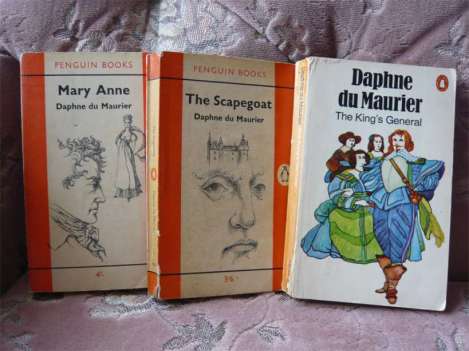
Today I’ve been reading The Flight of the Falcon by Daphne Du Maurier. My introduction to Daphne Du Maurier’s books was Rebecca, when I was a teenager. I then read as many of her books as I could find –Jamaica Inn, Frenchman’s Creek, The Scapegoat, The King’s General and Mary Anne.

Du Maurier bks

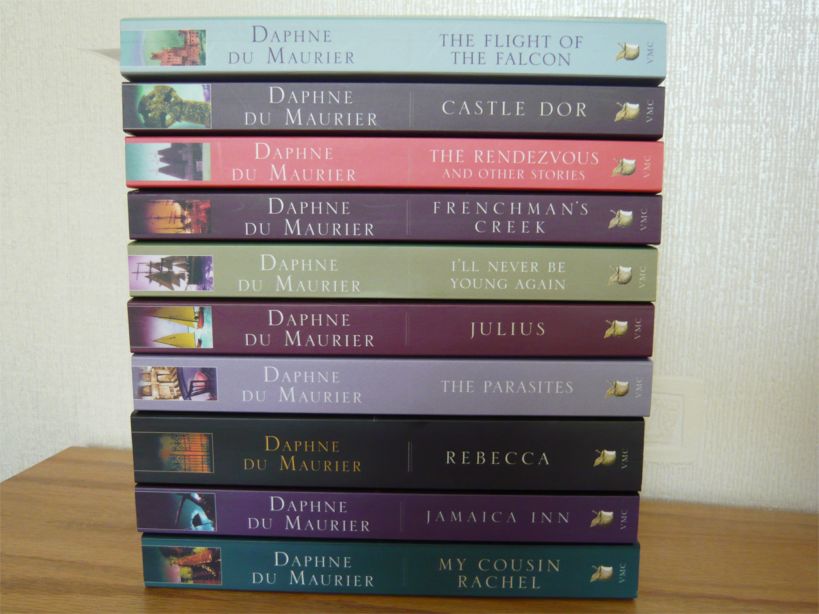
Then I had a big gap in reading her books although I re-read Rebecca several times, until I came across Margaret Forster’s biography Daphne Du Maurier, and I realised how many she had written that I hadn’t read. I bought ten of her books from the Book People (a remarkable bargain at £9.99) last year or the year before and apart from looking at each one, they’ve been sat on the bookshelves unread until yesterday, when I picked out at random The Flight of the Falcon.

I’m about half way through it now and finding it the sort of book that makes me want to read it all in one go; that’s not possible today and anyway I want to make it last as long as possible. It starts in Rome, when Armino Fabbio, a tour guide, comes across an old woman who he thinks is Marta, his family’s servant from his hometown of Ruffano. When she is found, murdered, he returns to Ruffano to find out if it was Marta. It is twenty years since he left and he finds that the town has changed.  Du Maurier used Urbino as the model for Ruffano, and according to Forster’s biography the idea for this story came on a visit to Urbino with her son Kits and on another holiday with Tessa, her daughter when she came across an old woman asleep in the doorway of a church.

There’s a mystery about Armino’s family and the history of the town. Five hundred years earlier it had been terrorised by the Duke Claudio, known as the Falcon, and as Armino arrives the town and university are preparing an enactment of  the uprising of Ruffano against the Falcon for the annual Festival play. There are surprises in store for Armino  and he realises that his own family history is not what he thought it was.

I’ve resisted reading the introduction to The Flight of the Falcon, as I’ve often found that the plot is revealed in an introduction. Why anyone would think that is a good thing to do is beyond me. But I couldn’t help going back to Margaret Forster’s book because I remembered that she described what Daphne was doing and thinking when she was writing. She started to write The Flight of the Falcon in January 1964 at Menabilly when it was cold and raining and she struggled to capture the warmth and sun of Italy in her narrative. She no longer wanted to write straightforward stories, but wanted it to be an allegory, whose meaning was linked with the idea of psychological predestination. Interestingly she didn’t think it was as good as The Scapegoat and the British critics were less than enthusiastic when it was published in January 1965. Well, I enjoyed The Scapegoat years ago, but I’m not bothered about the critics – so far I’m finding it a good story.

The Sunday Salon – Reader Satisfaction

I’m in the middle of two very different books – Going Into a Dark House, a book of short stories by Jane Gardam and Messenger of Truth, a Maisie Dobbs mystery by Jacqueline Winspear. Both are giving me a lot of reader satisfaction; they take me out of myself and into their worlds, peopled by believable characters, set in realistic locations, and with plots that are detailed and complicated enough to keep me wondering how everything will turn out and hoping for a sequel.

I’ve only recently begun to appreciate short stories and still prefer the longer short stories in preference to those of just a few pages. The plus factor is reading short stories is that you can read one in just one session, making it a complete experience. Going Into a Dark House is a collection of eight short stories, all long enough to satisfy my requirements. The title story, which I haven’t read yet is the longest and is in three parts. Death figures quite a lot in these stories, in different guises and also reflections on age, youth and nostalgia. The first story is Blue Poppies which begins: “My mother died with her hand in the hand of the Duchess.” You know at the start that there is a death; the rest of the story leads up to this death and its effect on the daughter.  I like the way Jane Gardam writes, conjuring such vivid images that it seems as those I’m actually witnessing the scene. For example the blue poppies are

… just like Cadbury’s chocolate papers crumpled up under the tall black trees in a sweep, the exact colour, lying about among their pale hairy leaves in the muddy earth, raindrops scattering them with a papery noise. 

Zoo-Zoo is a strange little tale about a dying nun who is taken by two of her fellow nuns to a nursing home to end her days. She is not as senile as they suppose. My favourite story so far in this collection is Dead Children, which I think is absolutely brilliant. How Jane Gardam can write twelve pages about such a deceptively simple meeting of a mother and her two children and infuse them with such depth of meaning and emotion is just beyond me.  The twist at the end makes an ordinary everyday event amazingly extraordinary.

Messenger of Truth is a much longer book and my reading has been spread out over a few sessions already. It is a detective story set in 1930/1 in England. The artist Nick Bassington-Hope has fallen to his death from the scaffolding whilst installing his work at an art gallery. The police believe it is an accident, but his twin sister Georgina isn’t convinced and hires Maisie Dobbs to investigate his death. Along with Nick’s death there is also the mystery of the missing piece of art work that was to be the centre of the exhibition.

I’m just over half-way through this novel and I think I’m going to have to abandon other books I have on the go in order to finish it. Maisie’s methods of investigation take her to the art gallery, to Dungeness where Nick lived in a converted railway carriage and to visit his family at their home near Tenterden. After questioning his friends and seeing Nick’s paintings she becomes convinced the mystery of his death is related to the missing painting and that this is connected to Nick’s experiences as a war artist during the First World War.

I like the way the mystery is set in the cultural and social setting of this period, between the two World Wars. England is a place where there is a great divide between the wealthy and the poor. Maisie’s assistant Billy Beale is struggling to accept that people have money to spend on artwork when others can’t afford food and medicine. The realities of life are highlighted when Billy’s family catch diphtheria and his two year old baby, Lizzie is taken into hospital. The lingering effects of the war are starkly and shockingly described in Georgina’s reminiscences about the treatment during the war of men suffering from shell-shock.

 Maisie is a an independent woman living on her own, working out her relationship with Andrew Dene, who hoped to marry her. Their relationship is floundering as she is absorbed in her work and doesn’t want to give it up and conform to the accepted role of being a doctor’s wife. She is discontent and is seeking a quality out of life that she cannot quite define. She finds the thrill of investigation outweighs her desire to help others. It is the search for truth that motivates and thrills her.

Both books are immensely satisfying.

The Sunday Salon – Book Notes

Another Sunday Salon post. I finished reading three books this week. That’s not as much reading as it sounds as I’d been reading two of them for what seems like ages. I’ve already written about Nigel Slater’s autobiographical Toast,  which I gobbled down. 

The other two books are Inspiration by Wayne W Dyer and The Shipping News by Annie Proulx. Inspiration is subtitled “Your Ultimate Calling“. I borrowed it from the library, partly because I’ve read other books by him and partly because of the front cover with a photograph of a butterfly. I’m glad I didn’t buy this book as I won’t want to read it again. I took a long time over it because I read short sections most mornings. It’s due back at the library next week so I read the last few chapters in one sitting, which I found quite repetitive. In fact the whole book is repetitive – inspiration is living “in-spirit”. Each chapter ends with “Some Suggestions for Putting the Ideas in This Chapter to Work for You”. I think I could probably have just read these and got a good idea of what the book is about. I don’t go along with everything Wayne Dyer advocates but there are some good things in the book, a lot of which I already know but don’t always do, such as unclutter your life, slow down, relax, meditate, turn off the television, be less judgmental of yourself as well as of others, and so on.

I’ve been reading The Shipping News on and off for weeks. Twice I thought I wouldn’t bother reading any more but in the end I did finish it. My problem with it is its style – I don’t like it. Too many fragments. Sentences without nouns, pronouns. And all those lists. But counter-balancing this are the scenes of Newfoundland; the people, the landscape, the ice, wind, snow, storms; at times I felt seasick. I’m going to write more about this in a post on its own.

I’ve started to read The Book Thief by Markus Zusak and although I’ve only read a few chapters I think it’s going to be compulsive reading.

I’ve also started Admit One: a Journey into Film by Emmett James. This promises to be good with the story of his life interwined with films and its correlation to our pasts. With my current obssession with films versus books I’m looking forward to reading more. In the introduction James writes:

I am struck by one, pertinent truth (thanks to the 20/20 hindsight of adulthood). that fact is is this: that a film itself, although unalterable once the physical reel is printed and unleashed, changes continually in the reel of our memory.

I returned one book to the library this week and came home with four more. These are:

  1. Making It Up by Penelope Lively. Taking moments from her life  and asking ‘what if?’ she constructs fictions about possibilities and alternative destinies.
  2. A Splash of Red by Antonia Fraser. A Jemima Shore novel in which Jemima flat-sits for a friend , close to the British Library and receives threatening anonymous phone calls …
  3. Flaubert’s Parrot by Julian Barnes. A multiple mystery of obssession and betrayal concerning two stuffed parrots both claimed as the one Flaubert borrowed from the Museum of Rouen to sit on his desk as inspiration. I read about this in someone’s blog – I’m sorry but I can’t remember who. It sounded so funny that when I saw it on the libray display shelf I just had to borrow it.
  4. Messenger of Truth by Jacqueline Winspear. This is the fourth Maisie Dobbs Mystery. I read the first one of her books, Maisie Dobbs last November and have wanted to read more. Another lucky find that almost jumped off the shelf into my hand.

Now all I need is time to get reading.

Sunday Salon – Today’s Books

Today’s Sunday Salon post is a bit brief. We’ve been away for the last two days, travelling to Scotland and back and I’m rather tired, and have only read for a short time today. I began reading The Shipping News a while back and picked that up again this morning. It’s one of the books that I’d put to one side after watching Atonement and deciding to re-read that book.

I need to refresh my memory of what I’d already read – I’m up to chapter 8. Quoyle, a journalist has taken his two daughters and aunt back to Newfoundland, where he was born, to pick up his life again after the death of his wife in a road accident. He has a job on the local newspaper reporting on car accidents and the shipping news and so far into my reading not much more has happened.

Quoyle who is not the most dynamic character, is a simple soul, easily manipulated by others. A “quoyle” is a coil of rope. The quotation heading chapter 1 adds “A Flemish flake is a spiral coil of one layer only. It is made on deck, so that it may be walked on if necessary”, which seems to describe Quoyle. The book won the Pulitzer Prize for Fiction in 1994 and it’s described on the back cover as “an irresistible comedy of hunan life and possibility.” I’m looking forward to reading more.

But I just had to carry on reading Toast, which I started on Friday, so The Shipping News has lost out again. I’m now over half-way through Toast, which is so good. Nigel Slater has a way of describing food, so that you can almost taste it and there is the additional pleasure of remembering all sorts of food and treats from my childhood – sweets like Refreshers, Love Hearts and Sherbet Fountains, crisps with salt in the separate little blue twist of waxed paper, drinks such as cream soda, pudding like rice pudding, and Heinz Sponge Puddings that you steamed in the tin – I could go on and on. Interspersed with his descriptions of food are his memories of his childhood, becoming increasingly poignant as I read further on. I’m sure I’ll be sad when I’ve finished this book.