Best Books January to June

Kerrie at Mysteries in Paradise recently asked what are your favourite crime fictionbooks so far this year, which got me to thinking about my favourite books as a whole (not just crime fiction). About half the books I read are crime fiction and the other half is a mixture of fiction (of many genres) with a smattering of non fiction.

After much thought I’ve decided on these ten books as my favourite reads so far. I’ve only included one book from Ian Rankin and Agatha Christie, although I’ve read several from each that I rate as highly as the ones I’ve chosen. Six of the books are crime fiction (marked *), there is one non fiction and one book of short stories. They are listed in the order that I read them.

I hope to vary my reading during the rest of 2010, maybe a few more non-fiction books as I have several biographies/autobiographies I’d love to read and more classics, but I expect crime fiction will still be high on my list of best books by the end of the year.

Library Loot

Here’s a pile of books I’ve recently borrowed:

From top to bottom they are

  • Brat Farrar by Joesphine Tey. Patrick had committed suicide, so who is the mysterious young man claiming to be him and calling himself Brat Farrar? I borrowed this because I enjoyed Tey’s books, The Daughter of Time and The Franchise Affair.
  • The Sea Lady by Margaret Drabble: a story of first and last love and the ebb and flow of time giving shape to our lives. I borrowed this because it’s been a long time since I read anything by Drabble, the last one being The Witch of Exmoor.
  • Naked to the Hangman by Andrew Taylor. Detective Inspector Thornhill is under suspicion of murder and his wife and former lover join forces to try to help him. The only other book by Taylor that I’ve read is The American Boy, historical crime fiction, set in 19th century England, with links to Edgar Allan Poe.
  • The Forgery of Venus by Michael Gruber. This was on display at the library in a section of books called ‘Thrills and Chills’, not normally the sort of book I read, but this looked interesting about an art dealer with a dark past and the discovery of a previously unknown masterpiece by Velazquez. When I got the book home I realised I’ve got another book by Gruber – The Book of Air and Shadows, which I started once and put to one side, so I don’t expect much from this book.
  • Truth to Tell by Claire Lorrimer. I fancied reading something different by an author I’d not heard of before. The title appealed to me. The Library Journal blurb tells me it’s ‘Nicely done pyschological suspense, firmly in the cozy tradition.’ It looks more like a historical romance though.
  • Green for Danger edited by Martin Edwards, a collection of short crime fiction stories on the theme of ‘crime in the countryside.’ I’ve become quite a fan of these short story collections. This one includes stories from Robert Barnard, Reginald Hill, Ruth Rendell, Ann Cleeves and Martin Edwards, himself. I think I’ll start with this book.
  • The Death Ship of Dartmouth by Michael Jecks, a medieval mystery set in 1324. In Dartmouth a man is found lying dead in the road and a ship has been discovered half ravaged and the crew missing. I first came across Jecks when I read King Arthur’s Bones by The Medieval Murderers, in which he wrote one of the short stories. I hope this is just as good.

Have you read any of these books – are they any good?

Library Loot is hosted by is a weekly event co-hosted by Eva and Marg that encourages bloggers to share the books they’ve checked out from the library.

Long and Short of It – Booking Through Thursday

btt button

Which do you prefer? Short stories? Or full-length novels?

Comparing short stories and full-length novels is like comparing a weekend away with a month long holiday. A few days away means that you can only skim the surface of a place, not really getting to know it very well, seeing the highlights and you can come home thinking you wanted to stay longer, wanting more. Short stories can be like that. Or a weekend away can be just right  – you’ve seen and done all there is to see and do, you’ve enjoyed it but don’t hanker after any more. Short stories can be like that too.

A month away means that you can settle into a place, explore it in more detail, get to know people and become immersed in it, so much so that you don’t want to go home. Novels can be like that, you never want a good book to end. On the other hand it can get boring, repetitive and tedious and you can’t wait to get home. Novels can be like that too.

In other words both can be right under the right circumstances, but if I had to choose between an enjoyable short break or a longer one then of course I’d go for the longer one.

The Holly-Tree Inn by Charles Dickens

The Holly-Tree Inn by Charles Dickens and others is a lovely little book, both to hold and to read. It’s a Hesperus Press publication, smooth paper and a softback cover with flaps you can use as bookmarks. I received my copy via Library Thing Early Reviewers Programme. I enjoyed reading it.

This was originally published in 1855, being the Christmas number of Dickens’s periodical Household Words. It was so popular that it was then adapted for the stage. It’s a collection of short stories by Dickens, Wilkie Collins, William Howitt, Adelaide Anne Procter and Harriet Parr, around the theme of travellers and  inns. I liked Collins’s and Howlitt’s stories the most.

It begins with a story by Dickens, The Guest in which a gentleman on his way to Liverpool is snowed in at the Holly-Tree Inn in Yorkshire. To keep himself entertained he reminisces about inns he has visited, giving glimpses into travel and inns in the 19th century. Having exhausted his own memories, this story ends with the idea of asking the inmates of the inn for their own stories.

So, the next stories are from:

The Ostler by Wilkie Collins. In this the landlord tell’s the ostler’s tale of his dread of his wife after dreaming that she is about to murder him, a tale of impending doom:

His eyes opened owards the left hand side of the bed, and there stood – The woman of the dream again? – No! His wife; the living reality, with the dream spectre’s face – in the dream-spectre’s attitude; the fair arm up – the knife clasped in the delicate, white hand. (page 53)

The Boots by Charles Dickens – according to Melisa Klimaszewski’s Introduction this tale was such a favourite that Dickens included it in his later public readings. It’s not quite to my taste, a sentimental tale about two young children determined to elope, staying at the Holly- Tree inn:

Boots could assure me that it was better than a picter (sic) and equal to a play, to see them babies with their long bright curling hair, their sparkling eyes, and their beautiful light tread, a rambling in the garden, deep in love.

The Landlord by William Howitt. An entertaining tale of the landlord’s brother who emigrated to Australia in order to better himself. But when they get there they wished they’d stayed in England. It seems they arrived just at the wrong time. Howitt, himself had travelled to Australia in search of gold and his experience is reflected in his tale. 

The Barmaid by Adelaide Anne Procter – a sad story told in verse by the landlord’s niece of Maurice and his love for ‘the loveliest little damsel his eyes had ever seen.’  Not the most challenging of tales.

The Poor Pensioner by Harriet Parr. Hester lives at the inn on ‘broken victuals’, now a poor demented creature refusing to believe that her son was guilty of murder. She waits in vain for his sentence to be reversed. This tale reveals how her wild and wilful ways as a young woman led her to seek for change and excitement with disastrous results. 

The Bill by Charles Dickens. This story completes the cycle. A week has gone by, the Guest’s route is now clear of snow and he can leave.He then discovers that his enforced stay at the inn has changed his life!

Reading this book has made a welcome break in reading modern fiction and has made me keen to read more of Dickens’s and Collins’s books.  I knew nothing about the other authors but fortunately there is a short section at the end with biographical notes about the contributors.

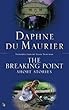
The Breaking Point: Short Stories by Daphne Du Maurier

The Breaking Point, first published in 1959, is my first book for the Daphne du Maurier Challenge. It’s a collection of eight short stories written after The Scapegoat and before The Infernal World of Branwell Bronte. Sally Beauman sums up the stories well in her introduction:

The stories here reflect the concerns of those adjacent books: they are dark, difficult, perturbing – and sometimes shocking. Du Maurier grouped them together under the title The Breaking Point – and they were written during a period when she herself came close to a severe nervous breakdown. They reflect and echo that psychological stress; it runs through them like a fault line. Here, we are a stylistic world away from the smooth technical assurance of her bestselling novels of the 1930s and 1940s: these stories are jagged and unstable; they constantly threaten and alarm; they tip towards the unpredictability of fairy tale, then abruptly veer towards nightmare. They are elliptic, awkward – and they are fascinating. (page ix)

I don’t really need to add much more, other than to indicate the stories themselves.

  1. The Alibi – about a man wanting to escape his ordinary life who takes on a new identity. He lives a double life, which ends as he becomes involved in two deaths.
  2. The Blue Lenses – a truly strange tale of a woman undergoing an eye operation who then sees everyone around her having an animal’s head appropriate to their character. She discovers that she is a victim, subject to betrayal and exploitation, fooled by those close to her.
  3. Ganymede – set in Venice, where a man on holiday is seduced by the beauty of a boy who is killed in a water-skiing accident. He returns home but inevitably he cannot escape his own nature.
  4. The Pool – a supernatural story with a mystical quality about a young girl reaching puberty and her overwhelming sadness at the loss of the hidden secret world she inhabited.
  5. The Archduchess – has a fairy tale atmosphere, about an imaginary principality in southern Europe, where the Archduke’s benign reign is overthrown by the insidious influence of two greedy and jealous men.
  6. The Menace – a silent movie star, a heart-throb until the advent of the ‘feelies’ when it is discovered that his magnetism is almost non-existant. Despite the efforts to raise it by the usual means,such as pretty girls, nothing can be done, until he meets an old friend. This one is much more optimistic than the other stories.
  7. The Chamois – about a married couple hunting for chamois in the Pindus; a chilling story of fear and fanaticism.
  8. The Lordly Ones – about a boy who cannot speak and is thought to be backward. Terrorised by his parents and unable to communicate he finds refuge for a while with the ‘lordly ones’.

The stories tell of double lives, split personalities, paranoia and conflict, each one with a ‘breaking point’. My favourite is The Pool.

Teaser Tuesdays – Crime on the Move

Teaser Tuesdays is a weekly bookish meme, hosted by MizB of Should Be Reading.

Share a couple or more sentences from the book you’re currently reading. You also need to share the title of the book that you’re getting your ‘teaser’ from €¦ that way people can have some great book recommendations if they like the teaser you’ve given!

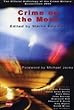
My teaser this week is from Crime on the Move: the Official Anthology of the Crime Writers’ Association of 2005, a collection of short stories edited by Martin Edwards. The last one in the book is Seeing Off George by David Williams.

Disposing of the body was so often the undoing of conspirators like Tristan and Laura, and she knew it. But not only had she lighted upon the perfect solution to their problem, she had also devised a credible story to account for George’s disappearance which would purportedly take place more than a thousand miles away from Farringly. (page 318)

I’ve now finished reading this book, which is an excellent selection of crime stories from a number of authors who were new to me, as well as some very well known ones.