Classics Club Spin: the Result

and it is … number 15, which for me is

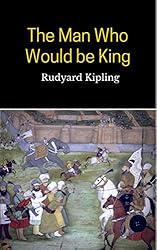
The Man Who Would Be King by Rudyard Kipling, a novella. That’s fine – I should be able to slot that into my Summer reading without any difficulties before 1 August.

I’ve read some of Kipling’s books before, including The Just So Stories, Kim (I thought I’d read this but I haven’t), Rikki-Tikki-Tavi and his poem If. Then there is, of course, The Jungle Book (seen the film and may have read the book).

My copy is an e-book, which I’ve had for several years, so it will also count towards my Mount TBR Reading Challenge too.

Short Story Sunday: The Snow Queen

Short story questI’m taking part in Carl’s Once Upon a Time event, specifically in the Short Story Quest, which involves the reading of one or more short stories that fit within at least one of the four genres of Fairy Tale, Folklore, Fantasy and Mythology, during the course of any weekend, or weekends, during the challenge. Ideally, posting about your short story readings on Sundays or Mondays, but this is not strictly necessary.

I’m reading some of Hans Christian Andersen’s Fairy Tales ‘“ I first read a lot of the tales as a child in my mother’s book: P1010936Andersen was a Danish author, born in 1805 in Odense. He was a prolific writer of plays, travelogues, novels, and poems, as well as fairy tales. Some of his most famous fairy tales include The Emperor’s New Clothes, The Little Mermaid, The Nightingale, The Snow Queen, The Ugly Duckling, Thumbelina, and many more. He died in 1875.

The Snow Queen was one of my favourite stories as a child and I read it many times. So, I have been holding back from reading it now in case I found that the magical experience was no longer there. However, I felt I really wanted to read it this week and told myself that I would stop if it wasn’t as entrancing as before. Of course I read all of it and if it wasn’t quite as magical it was still entrancing.

I wasn’t surprised that I’d forgotten some of the details, but my memories of the way evil came into the world when the magic looking-glass was shattered were vivid and correct. The pieces let loose in the world distorted whatever was reflected in it, so that whatever was good and beautiful dwindled to almost nothing and whatever was worthless stood out boldly. They entered into men’s eyes, so that they saw only evil, or into their hearts, turning them to lumps of ice. Some were made into panes of window glass and some into spectacles. Some are still flying about in the air even today.

I remembered well the two main characters, the childhood friends, Kay and Gerda, and how Kay was changed when his heart and eyes were pierced by pieces of the magic glass  and how he followed  the beautiful Snow Queen and was whisked away to her ice palace.  I also remembered Gerda’s search for him, but not all the detail of how she was enchanted by a strange old woman, who took her into her strange little house, and how the roses and other flowers brought back her memories.

I had forgotten about the Prince and Princess and the Ravens who helped her on her way to look for Kay and the Lapland Woman and the Finland Woman who also helped her. More memorable was The Little Robber Girl who stopped her robber-mother from killing and eating Gerda.

It was the chapter on Kay in the Snow Palace that was most vivid in my memories and it didn’t disappoint me. Kay’s heart was by then just like a lump of ice and he was almost black with the cold and he didn’t recognise Gerda until her tears penetrated his heart, melted the ice and dissolved the broken glass and washed all the pieces of glass from his eyes. It was Gerda’s love that saved him. As the Finland Woman says:

I cannot give her greater power than she already possesses, and do you not see how great that is? Do you not see that men and beasts must serve her, and how barefooted as she is, she has got on so well in the world. She cannot receive power from us, that is in her own heart, and consists in her being a good, innocent child.

What I hadn’t noticed as a child was that this is not only a story of good against evil but also about love versus reason and logic. At first when the ice has entered Kay’s heart and eyes he becomes focussed on science, looking at the snow flakes through a magnifying glass to see their structure and as the Snow Queen lures him from home he couldn’t pray but could only recite his multiplication tables; he could say how many square miles were in the country as well as the number of inhabitants.

The task the Snow Queen gave him whilst she was away from the Palace was the ice-game of understanding to fit together large pieces of ice to make figures of ‘the highest importance’. But he was unable to make the word ‘Eternity’, which the Snow Queen had promised she would give him the whole world if he succeeded. He thought and thought about it until his brain almost cracked. It was only when the ice had melted from his heart and out of his eyes that the pieces of ice danced and formed the letters of the word so that he was able to leave the palace.
Short Story Sunday: The Shepherdess and the Sweep

Short story questI’m taking part in Carl’s Once Upon a Time event, specifically in the Short Story Quest, which involves the reading of one or more short stories that fit within at least one of the four genres of Fairy Tale, Folklore, Fantasy and Mythology, during the course of any weekend, or weekends, during the challenge. Ideally, posting about your short story readings on Sundays or Mondays, but this is not strictly necessary.

This will be a weekly event for me, until the end of the event on 21 June. I’m reading some of Hans Christian Andersen’s Fairy Tales ‘“ I first read a lot of the tales as a child. Andersen was a Danish author, born in 1805 in Odense. He was a prolific writer of plays, travelogues, novels, and poems, as well as fairy tales. Some of his most famous fairy tales include The Emperor’s New Clothes, The Little Mermaid, The Nightingale, The Snow Queen, The Ugly Duckling, Thumbelina, and many more. He died in 1875.

I’m reading from my mother’s book: P1010936This week it’s another fairy tale that I don’t remember reading before – The Shepherdess and the Sweep.

Unlike The Rose Elf, the story I read last week, The Shepherdess and the Sweep is not a gruesome story, but a story of love, romance, and bravery.

The Shepherdess and the Sweep are two china figures who fall in love but their love is threatened by a strange looking carved satyr the children called the Goatsleg-Highadjutant-general-militarycommandant, as he had goat’s legs, short horns and a long beard and was constantly grinning. He stood on top of a very old wooden cabinet, looking down on the beautiful Shepherdess on the table opposite and wanted her for his wife. There is also a bigger china figure than the little couple – a big old Chinese, who could nod his head. He claims authority over the Shepherdess and says she will marry the satyr that night.

So the two little china figures decide to leave the table and venture out into the wide world. In their desperation to escape they decide to climb the chimney, but when they get to the top the Shepherdess is overcome with fear and cries “This is too much” she sobbed, “That I can never bear. The world is too large; oh, were I but back again on the table under the looking glass!”

Illustration from “Fairy Tales, 1850” by Vilhelm Pedersen, Andersen’s first illustrator (from Wikipedia)

Spoiler follows – don’t read the next paragraph if you don’t want to know how this story ends.

The sweep can’t console her and so they climb back down even though he thought it was foolish. But they find that the Chinese figure in his attempt to follow them had fallen and broken into three pieces. The family mended him but his head, which had rolled far off into a corner of the room had to be riveted onto his neck, so that he could no longer nod. He was too proud to tell the Satyr and so when he asked if he were to have the Shepherdess or not, the Chinese figure was silent. And the little couple remained together. So, a happy ending for this tale.

Short Story Sunday: The Rose Elf

Short story questI’m taking part in Carl’s Once Upon a Time event, specifically in the Short Story Quest, which involves the reading of one or more short stories that fit within at least one of the four genres of Fairy Tale, Folklore, Fantasy and Mythology, during the course of any weekend, or weekends, during the challenge. Ideally, posting about your short story readings on Sundays or Mondays, but this is not strictly necessary.

I’m beginning this Sunday, with what I hope will be a weekly event for me, until the end of the event on 21 June. I’ll be reading some of Hans Christian Andersen’s Fairy Tales – I first read a lot of the tales as a child. Andersen was a Danish author, born in 1805 in Odense. He was a prolific writer of plays, travelogues, novels, and poems, as well as fairy tales. Some of his most famous fairy tales include The Emperor’s New Clothes, The Little Mermaid, The Nightingale, The Snow Queen, The Ugly Duckling, Thumbelina, and many more. He died in 1875.

I’m reading from my mother’s book: P1010936

beginning with The Rose-Elf.

I don’t remember reading this story before – and I think I would if I had read it, because it’s such a gruesome story. The Rose-Elf is very short and surprised me by the horror of the events it unfolds.

It begins by describing the Rose-Elf, who is so small he can’t be seen by human eyes. He is a beautiful creature, with two transparent wings reaching from his shoulders to the soles of his feet, making him look like an angel. He lives, as you would suppose in a rose tree, having little rooms behind each rose petal:

‘… what delicious scent filled all his apartments, and how beautifully clear and bright were the walls, for they were the delicate, pale red rose leaves themselves.’

He danced on the wings of butterflies, walked along the veins of leaves, which he looked upon as roads. But one day the weather grew cold and the leaves closed before he could get back inside the roses, so he flew to a honeysuckle for shelter and here he came across a pair of young lovers – a handsome young man and a charming girl. It’s at this point that the story moves from a cosy fairy tale that you would be happy to read to very small children into something dark and chilling. For the girl has a jealous, wicked brother who plots to get rid of the young man and kills him.

The girl is heartbroken and the Rose-Elf who witnesses the murder of her lover, does what he can to help her but this is a tragedy. It’s not an ‘and they all lived happily ever after’ ending. The horror is not in the actual killing but in what happens to the corpse afterwards.

The Queen of the bees hums her praise of the Rose-Elf saying ‘how beneath the smallest leaf dwells one who can expose and avenge crime.’

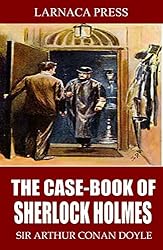
The Case-Book of Sherlock Holmes by Sir Arthur Conan Doyle

The Case-Book of Sherlock Holmes contains twelve short stories first published between 1921 and 1927. In the Preface Conan Doyle  wrote that he hoped his Sherlock Holmes stories had provided

that distraction from the worries of life and stimulating change of thought that can only be found in the fairy kingdom of romance.

In this post I’m only writing about three of them for The 1924 Club; stories that were first published in 1924 (for more details about The I924 Club click on this link). They do indeed, provide both a distraction and a stimulating change of thought. The narrator in these three stories is Dr Watson.

The Adventure of the Sussex Vampire – this was first published in the January 1924 issues of The Strand Magazine in London and Hearst’s International Magazine in New York.

As Sherlock Holmes says when he first heard about a case concerning vampires,‘we seem to have been switched on to a Grimm’s fairy tale.‘ He tells Watson they cannot take it seriously:

Rubbish Watson, rubbish! What have we to do with walking corpses who can only be held in their grave by stakes driven through their hearts? It’s pure lunacy!

But he takes on the case for two reasons – one, he’s interested in the house in Essex belonging to Mr Ferguson where his wife is suspected of being a vampire, and two, Ferguson had known Watson when they played rugby together for Blackheath. His Peruvian wife had been seen attacking his son from a previous marriage and also leaning over her own baby and biting his neck. She refused to explain herself. Holmes solves the mystery, indeed he had reached his conclusion even before arrived in at the house, based on his conviction that the idea of a vampire was absurd. I enjoyed this tale, mainly because Holmes used logic and deduction in coming to his conclusion, overriding the supernatural.

The Adventure of the Three Garridebs – first published in October 1924 in Collier’s Weekly and then in The Strand Magazine in January 1925.

I think this is a rather strange and artificial story, Dr Watson says it may have been a comedy or a tragedy. It led to him being shot in the leg and yet there was certainly an element of comedy. It’s about a man with the unusual name of Garridebs, ostensibly looking for two other men with the same name  to inherit five  million dollars each. Of course, that is not his real reason and the man is none other than a  known murderer.  It shows, however, the depth of Holmes’ feeling for Watson, as he says:

It was worth a wound – it was worth many wounds – to know the depth of loyalty and love which lay behind that cold mask. The clear, hard eyes were dimmed for a moment, and the firm lips were shaken. For the one and only time I caught a glimpse of a great heart as well as of a great brain. All my years of service culminated in that moment of revelation.

It’s in this story too that Watson reveals that Holmes had refused a knighthood.

The Adventure of the Illustrious Client – first published in Collier’s Weekly in November 1924.

At the request of an unnamed but illustrious client, Holmes and Watson investigate the case concerning Violet de Merville, young, rich and beautiful who has fallen under the spell of the notorious Baron Gruner. Her father, General de Merville wants to prevent them from marrying.  Gruner is known as a violent murderer and Holmes is keen to meet a man who may be more dangerous even than the late Professor Moriarty. But he has to enlist the help of one of Gruner’s past mistresses to open Violet’s eyes to the true nature of the man she thought she loved.

I like the personal touches in this story, the opening scene for example shows Holmes and Watson in the drying-room of a Turkish Bath, lying in an isolated corner on two couches, side by side, smoking in a state of lassitude. Watson says that it is where he finds Holmes less reticent and more human than anywhere else. Watson knows that although he was nearer to Holmes than anyone else he was always conscious of the gap between them – Holmes leaves his closest friend guessing what his exact plans may be.

These three stories all illustrate Holmes’ deductive powers and seemingly cold nature but also reveal the depth of feeling between him and Watson. Bur I’m not sure that they reflect anything in particular about what was being published in 1924.

I shall write about the remaining stories in the Case-Book at a later date.

First Chapter, First Paragraph Tuesday: Parker Pyne

Every Tuesday Diane at Bibliophile by the Sea hosts First Chapter, First Paragraph Tuesday Intros, where you can share the first paragraph, or a few, of a book you are reading or thinking about reading soon.

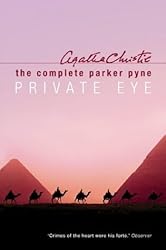
I’ve been looking at some of Agatha Christie’s short stories and wondering which to read first. One of the collections I own is The Complete Parker Pyne: Private Eye. It looks a good place to start.

In the Author’s Foreword Agatha Christie tells how she came to write these stories:

One day, having lunch at a Corner House, I was enraptured by a conversation on statistics going on at a table behind me. I turned my head and caught a vague glimpse of a bald head, glasses and a beaming smile – I caught sight that is, of Mr Parker Pyne. I had never thought about statistics before (and indeed seldom think about them now!) but the enthusiasm with which they were being discussed awakened my interest. I was just considering a new series of short stories and then and there I decided on the general treatment and scope, and in due course enjoyed writing them.

I like the details she gives – the Corner Houses, smarter and grander than tea shops and noted for their art deco style first appeared in 1909 and  remained until 1977. And I love the fact that she was eavesdropping on the conversation going on behind her and the insight this gives into how she got ideas for her stories.

The stories were all written in the 1930s and first appeared in various UK and US magazines. The first story in this collection is The Case of the Middle-Aged Wife and it begins:

Four grunts, an indignant voice asking why nobody could leave a hat alone, a slammed door, and Mr Packington had departed to catch the eight forty-five to the city. Mrs Packington sat on at the breakfast table. Her face was flushed, her lips were pursed, and the only reason she was not crying was that at the last minute anger had taken the place of grief, ‘I won’t stand it,’ said Mrs Packington. ‘I won’t stand it!’ She remained for some moments brooding , and then murmured: ‘The minx. Nasty sly little cat! How can George be such a fool!’