Short Stories on Sunday

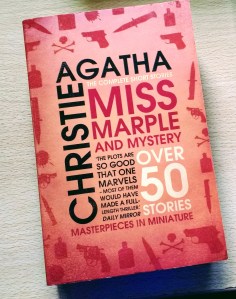
Today I’ve read one of the short stories from Agatha Christie’s collection Miss Marple and Mystery .

IMG_20180513_095855842.jpg

This collection contains 55 stories, 20 of them featuring Miss Marple. I’ve read some of these in other short story collections but there are still many I haven’t read. There is an Short Story Chronology in the Appendix with a table aiming to present all Agatha Christie’s short stories published between 1923 and 1971, listed in order of traced first publication date.

Counting how many there are in total is a difficult task – some stories that first appeared in weekly or monthly magazines were later  re-worked and became chapters in a larger work, some in Partners in Crime were sub-divided into smaller chapters, 13 were re-worked into the episodic novel, The Big Four, and some were rewritten so substantially that they appear separately in different books!

The Lonely God has also been published as an e-book. It was first published in the Royal Magazine in July 1926.

This is an unusual story from Agatha Christie. It’s a love story about two lonely people who meet in the British Museum. Frank is forty, recently returned to England after spending 30 years in Burma. He has no friends and feels he is out of touch with the times, having spent so long abroad. He wanders around aimlessly and strolls into the British Museum one day to look at the Asian curiosities. There he spots a little grey stone idol, a pathetic little figure sitting hopelessly in isolation, elbows on his knees and his head in his hands; ‘a lonely god in a strange country.’

One day he finds a young woman in front of the ‘lonely god‘. Although dressed shabbily she is obviously a poverty stricken lady, fallen on hard times. They are both fascinated by the little stone god and gradually begin a conversation. And then they have tea together in an ABC shop near the Museum. Frank is in love. But when he goes to the see the lonely god again she doesn’t come – and he has no idea where she lives, or even know her name, because she wouldn’t tell him, wanting them to be just ‘two lonely people, who’ve come together and. made friends. It makes it so much more wonderful – and different.’ Frank is heartbroken. Will he ever find her again?

I really enjoyed this little story. As I said not crime fiction, but just a touching little romance that appealed to me. Agatha Christie, however described it in her Autobiography as ‘ regrettably sentimental‘. She had written it after reading The City of Beautiful Nonsense. (Autobiography page 198 in my paperback copy). I had to look up that book. It’s by Ernest Temple Thurston, published in 1909 and described as a ‘sentimental novel’. It is a tale of two cities: mainly about the life of the shabby genteel in Edwardian London, but also in Venice.

Short Stories on Sunday

Today I’ve read one of the short stories from Agatha Christie’s collection Miss Marple and Mystery .

IMG_20180513_095855842.jpg

This collection contains 55 stories, 20 of them featuring Miss Marple. I’ve read some of these in other short story collections but there are still many I haven’t read. There is an Short Story Chronology in the Appendix with a table aiming to present all Agatha Christie’s short stories published between 1923 and 1971, listed in order of traced first publication date.

Counting how many there are in total is a difficult task – some stories that first appeared in weekly or monthly magazines were later  re-worked and became chapters in a larger work, some in Partners in Crime were sub-divided into smaller chapters, 13 were re-worked into the episodic novel, The Big Four, and some were rewritten so substantially that they appear separately in different books!

Manx Gold has also been published as an e-book. It was first published in the Manchester Daily Dispatch between 23-28 May 1930, and as a booklet distributed throughout the island, as a treasure hunt to promote tourism in the Isle of Man. She received a fee of £65 (in today’s money over £4,000!)

Cousins, who are engaged, Fenella and Juan are left an intriguing puzzle by their uncle who lived in the Isle of Man – to find four ‘ treasure chests’, not gold ingots or coins, but actually snuff boxes. In addition there are two more relatives also search for the ‘gold’.

I thought it sounded good, but I have to say that I was rather disappointed by the slightness of this short story. Their uncle has left cryptic clues leading to the ‘chests’ and a couple of sketch maps to guide them to the treasure. But I had no idea what the clues mean and could only read Fenella’s exclamations when they work it out and find the little snuff boxes. Oh, there is also a murder – one of the other relatives is bashed on the head by the other one and left to die.

It’s quite an entertaining little story, but I much prefer Agatha Christie’s full length books.

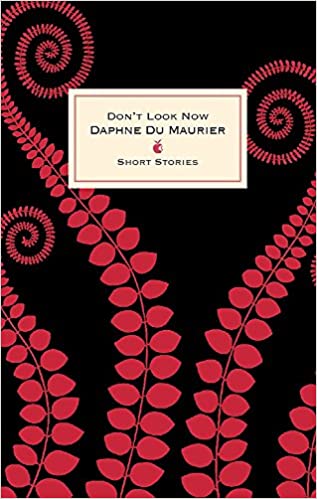
Don’t Look Now and other Short Stories by Daphne du Maurier

I love Du Maurier’s books and her short stories are much better than others I’ve read. My copy of Don’t Look Now and Other Short Stories by Daphne du Maurier is a Virago Modern Classic. The other short stories in this collection are Not After Midnight, A Border-Line Case, The Way of the Cross and The Breakthrough, making this a collection of stories of suspense, mystery and slow, creeping horror.

I read the first story Don’t Look Now (52 pages) a few years ago. It’s a supernatural tale about a couple, John and Laura who have come to Venice to recover after their young daughter’s death. They encounter two old women who claim to have second sight and find themselves caught up in a train of increasingly strange and violent events, involving hallucinations, mistaken identity and a murderer.

I read the other four stories this month. They explore deep fears and longings, secrets and desires. In Not After Midnight (48 pages) a lonely teacher, Timothy Grey, investigates a mysterious American couple, the Stolls, whilst on holiday on the Greek island of Crete. The couple invite him to visit their chalet, with the warning ‘not before midnight’. What he discovers involves a jar or rhyton, shaped into the form of a head resembling Stoll, with dancing satyrs. The story gradually became more and more ambiguous and mysterious – I wondered just what was real and what was imaginary.

In A Border-Line Case (65 pages) a young woman confronts her father’s past after he died. She wants to know more about his early life. He was ex-British Army and she goes to Ireland to search for the man who used to be his friend. When she finds him, she falls in love with him and then discovers something that shocks her completely. This is very intense story.

In The Way of the Cross ( 67 pages) there’s a party of pilgrims who meet disaster in Jerusalem. This is a strange story about seven people from a cruise ship as they follow the Via Dolorosa and each experience their own humiliation, each one meeting the fate they most dread.

The Breakthrough (43 pages) is the oddest and most menacing story of this collection. It is set on the windswept coast of rural Suffolk in an isolated laboratory. It’s about a scientist, experimenting with the idea that when people die there is an untapped source of energy, as their ‘soul’, for want of a better word, leaves their body. He attempts to harness the power of the mind to the most chilling effect, by releasing this energy from a young man, dying of leukaemia, into the mind of a child of ‘sub-standard intelligence’.

I enjoyed these stories – or are they novellas? The longer length means these stories have more depth, characterisation and substance than the shorter stories. I find them more satisfying – and the ambiguity and supernatural elements in these makes them especially thought-provoking. Some are better than others and the one I enjoyed the most is Not After Midnight.

Measure of Malice: Scientific Detection Stories edited by Martin Edwards

The Measure of Malice edited by Martin Edwards is one of the more enjoyable short story collections that I’ve read. It contains 14 stories in which scientific/technological methods are used in the detection of crime. There is an excellent introduction by Martin Edwards with information about the authors, five of whom were doctors, two were engineers and one was an academic chemist.

As always with short story collections some stories are better than others. I’m highlighting a few of the better ones here:

The Boscombe Valley Mystery by A Conan Doyle was originally published in the Strand Magazine in October 1891, and is the first short story to feature Inspector Lestrade. It’s a solid story, solved by Sherlock Holmes by inspecting and analysing the footprints and signs at the scene of the crime.

The Horror of Studley Grange by L T Meade and Clifford Halifax (1894), from Stories for the Diary of a Doctor, originally published in the Strand Magazine. I enjoyed this one although it was pretty easy to predict. Ostensibly a ghost story, the solution involves the use of a laryngoscope.

After Death the Doctor by J J Connington, a Scottish professor of chemistry. This one was first published in 1934, involving a contemporary scientific gadget. The doctor in question is Doctor Shefford who together with Sergeant Longridge, investigate the murder of old Barnaby Leadburn, found dead with his throat cut.

The next two are the ones I enjoyed the most:

The Broken Toad by H C Bailey, first published in 1934, featuring the surgeon and Home Office Consultant, Reggie Fortune as he considers the death of a police constable from poisoning. I enjoyed all the detailed complications and Bailey’s literary mannered style of storytelling.

In the Teeth of the Evidence by Dorothy L Sayers, first published in 1939, about forensic dentistry, which starts as Lord Peter Wimsey is sitting in his dentist’s chair. The police had just visited the surgery, wanting to see his predecessor’s records to identify the victim of a burnt out garage. An upper right incisor crown and the filling in a molar provided the clues to his death. Gory if you actually visualise what is involved!

  • Publisher : Poisoned Pen Press (4 Feb. 2020)
  • Language: : English
  • Paperback : 336 pages
  • ISBN-10 : 1492699624
  • ISBN-13 : 978-1492699620
  • Source: The Poisoned Pen Press via NetGalley
  • My Rating: 3.5*

Short Stories on Sunday

Over several years I’ve been reading my way through Agatha Christie’s books and short stories. I’ve read all her detective/mystery novels and some of her short story collections. In an attempt to read more of the short stories I’ve decided to read some each Sunday, beginning with the stories collected in Miss Marple and Mystery.

IMG_20180513_095855842.jpgThis collection contains 55 stories, 20 of them featuring Miss Marple. There is an Short Story Chronology in the Appendix with a table aiming to present all Agatha Christie’s short stories published between 1923 and 1971, listed in order of traced first publication date. Counting how many there are in total is a difficult task – some stories that first appeared in weekly or monthly magazines were later  re-worked and became chapters in a larger work, some in Partners in Crime were sub-divided into smaller chapters, 13 were re-worked into the episodic novel, The Big Four, and some were rewritten so substantially that they appear separately in different books!

I’ve read some of these in other short story collections but there are still many I haven’t read.

The Girl in the Train is one I haven’t read before. It was first published in Grand Magazine in February 1924 and was adapted as one of the Agatha Christie Hour drama series for by Thames Television in 1982 as part of their ten-part programme. It’s a very short story that also appears in The Listerdale Mystery collection of short stories.

George Rowland is the heir to his Uncle William’s wealth but is left without a job or a home when William throws him out on his heel. On a whim George Rowland decides to catch a train down to Rowland’s Castle, a village which happens to bear his name. A beautiful girl bursts into his compartment, frantically begging to be hidden.  She gives him a package saying it is the key to everything and he is to guard it with his life. Jumping out of the train at the first stop she tells him to follow the little man with a small dark beard getting on the train. His life changes dramatically as he follows her instructions.

It’s a bit of nonsense really, in the same vein as Christie’s Tommy and Tuppence stories. A quick easy read, but entertaining nevertheless and possibly the first of books entitled The Girl … 

The Christmas Card Crime and Other Stories edited by Martin Edwards (British Library Crime Classics)

Here is another collection of short stories from the Golden Age of Murder edited by Martin Edwards: The Christmas Card Crime and Other Stories.

Christmas Card Crime

Poisoned Pen Press, in association with the British Library|1 October 2019|Print length 240 pages|e-book |Review copy|4*

There are eleven stories all set during the Christmas season in this collection and an introduction by Martin Edwards. In it he points out the differences between a short story and a novel. It’s not just the length, but it is also the fact that in a short story there is little space to develop the characters in depth or for lengthy descriptions, so ‘every word must be made to earn its keep‘. He has also prefaced each story with a biographical note, which I found useful as some of the authors were new to me.

The mysteries range in date of publication from 1909 up to 1965. I’ve read stories by some of the authors before, such as Baroness Orczy, John Dixon Carr, Ronald Knox, E C R Lorac, John Bude and Julian Symons, but others were new to me. The ones I enjoyed the most are:

The Motive  Ronald Knox. This story first appeared in The London Illustrated News in November 1937 and is about an attempted murder in a smart hotel on the English Riviera, by a character named ‘Westmacott’ (a pen name used by Agatha Christie).. On Christmas Day after a party the guests decided to play a version of ‘blind man’s buff’ in the swimming pool, which didn’t go as planned.

Another version of ‘blind man’s buff‘, this time called ‘blind man’s bluff‘, is played in the next story also with disastrous consequences.

Blind Man’s Hood by John Dickson Carr writing as Carter Dickson. This first appeared in the Christmas edition of The Sketch in 1937 and is a story inspired by the unsolved Peasonhall murder case of 1902. It is a strange tale about a young couple arriving to spend Christmas with friends, only to find the house empty – except that is for a young woman carrying a white bag, who tells them about a game of ‘Blind Man’s Bluff’ that went very wrong, years ago. It’s a variation on a locked room mystery, with a touch of the supernatural.

Crime at Lark Cottage by John Bingham – this first appeared in the 1954 Christmas Number of The London Illustrated News. Bingham was the 7th Earl of Clanmorris, a journalist who was recruited into MI5, where he worked with David Cornwell, who later wrote spy novels under the name of John Le Carré. This story and the next are my two favourites in the book. It is the story of an escaped convict and an isolated country cottage occupied by a young woman and her little daughter one snowy Christmas. Very atmospheric and tense with an unexpected ending. I’d like to read more of John Bingham’s work.

‘Twixt the Cup and the Lip by Julian Symons – this first appeared in Ellery Queen’s Mystery Magazine in January 1965). Longer than the other stories in this collection it is the tale of Mr Rossiter Payne, a meticulous bookseller who plans a perfect robbery – to steal the jewels, that had once belonged to the Russian royal family, on display in a London department store at Christmas. But Mr Payne had made an uncharacteristic error …

Overall, I enjoyed reading this collection, with a mix of excellent short stories and some that I thought  were too short and had disappointing or predictable endings.

My thanks to the publishers for my review copy via NetGalley.