Completely Unexpected Tales by Roald Dahl

I’m taking part in Short Story September hosted by Lisa at ANZ LitLovers LitBlog She asks us to read a collection and then choose just one story to review, defining a short story as one that can be read in under an hour. It’s fine to mention the titles of other stories in the collection that you also enjoyed, of course. Aim for a review that’s less than 800 words, but this is not a hard-and-fast rule because some stories need less and others need more.

Roald Dahl is well known for his children’s books. He was a poet, screenwriter and a wartime fighter ace, a military pilot who had officially shot down a minimum number of enemy aircraft, typically five or more, during aerial combat.

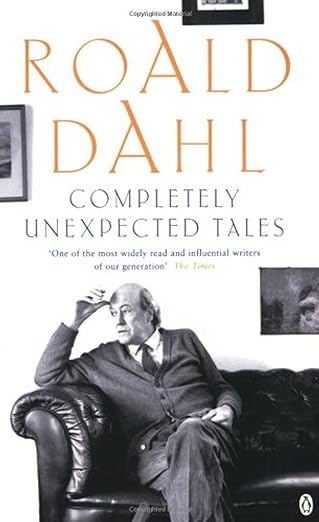
He also wrote numerous short stories for adults. There are several collections of these. I have just one – Completely Unexpected Tales by Roald Dahl, which is made up of two collections: Tales of the Unexpected and More Tales of the Unexpected. I first came across Roald Dahl back in 1979 when I used to enjoy watching these tales in the TV series, Tales of the Unexpected. There are 25 short stories in total in this book, some of them are very short, but I prefer the longer stories. As the title suggests these short stories all end with an unexpected twist, some are more predictable than others, but others did take me by surprise with a sting in the tail.

Roald Dahl was born n Llandaff, Glamorgan. His parents were Norwegian. I bought this book at The Roald Dahl Museum and Story Centre in the village of Great Missenden, Buckinghamshire where Dahl lived until his death in 1990. Previously I’ve read and enjoyed some of his children’s books.

On the back cover Completely Unexpected Tales is described as a superb compendium of vengeance, surprise and dark delight. I haven’t read all the stories yet but a couple stand out for me.The first is William and Mary, which was originally published in 1959 and included in his 1960 collection Kiss Kiss, a sinister story about the darker side of human nature.

After William Pearl died his wife, Mary received a letter which both surprised and shocked her. It wasn’t at all what she had expected. A domineering, unpleasant man he began in usual bossy way by telling her to:

continue to observe those precepts which have guided you so well daring our partnership together. Be diligent and dignified in all things. Be thrifty with your money. Be very careful that you do not . . . et cetera, et cetera.

She had hoped he might have written her something beautiful, that maybe he’d thank her for giving him thirty years of her life and for ironing a million shirts and cooking a million meals and making a million beds, something that she could read over and over again, once a day at least.

But, no this was a letter describing a scientific experiment that Doctor Landy, an Oxford University colleague wanted to do on his brain immediately after his death from cancer. She was shocked and appalled as he proceeded to tell her in great detail what it entailed.

He ended his letter with a postscript reminding her not to drink cocktails… waste money… smoke cigarettes… buy a television apparatus.

After she read it all, she reached for a cigarette, lit it, inhaling the smoke deeply and blowing it out in clouds all over the room. Through the smoke she could see her lovely television set, brand new, lustrous, huge, crouching defiantly but also a little self-consciously on top of what used to be William’s worktable. What would he say, she wondered, if he could see that now?

He disapproved of smoking and also of children and they’d never had any. But after thirty years of doing what he told her, she felt she had to follow his instructions and rang Landy to see whether the experiment had gone ahead. It had and Dahl describes it in disgusting and repulsive detail.

This is a story about control, revenge and the dark side of human relationships and as I read it I wonder how Mary would react. She’d already gone against his ban on smoking and watching television. But would she really break free of his control and could she indeed take revenge on him?

The other story features a couple with a very different marriage – Mrs Bixby and the Colonel’s Coat. Mrs Bixby has been having a secret affair for years with an extremely wealthy man known as the Colonel. When he gives her a beautiful mink coat she wonders what to tell her husband about where she got it. In the end she decides to pawn the coat and tell him she found the pawn ticket in a taxi and then she can retrieve the coat. But will this plan work? Is her dentist husband really as ignorant of her affair as she thinks. I was pleased with the ending of this story of betrayal and deception.

Library Books & Short Story September 2025

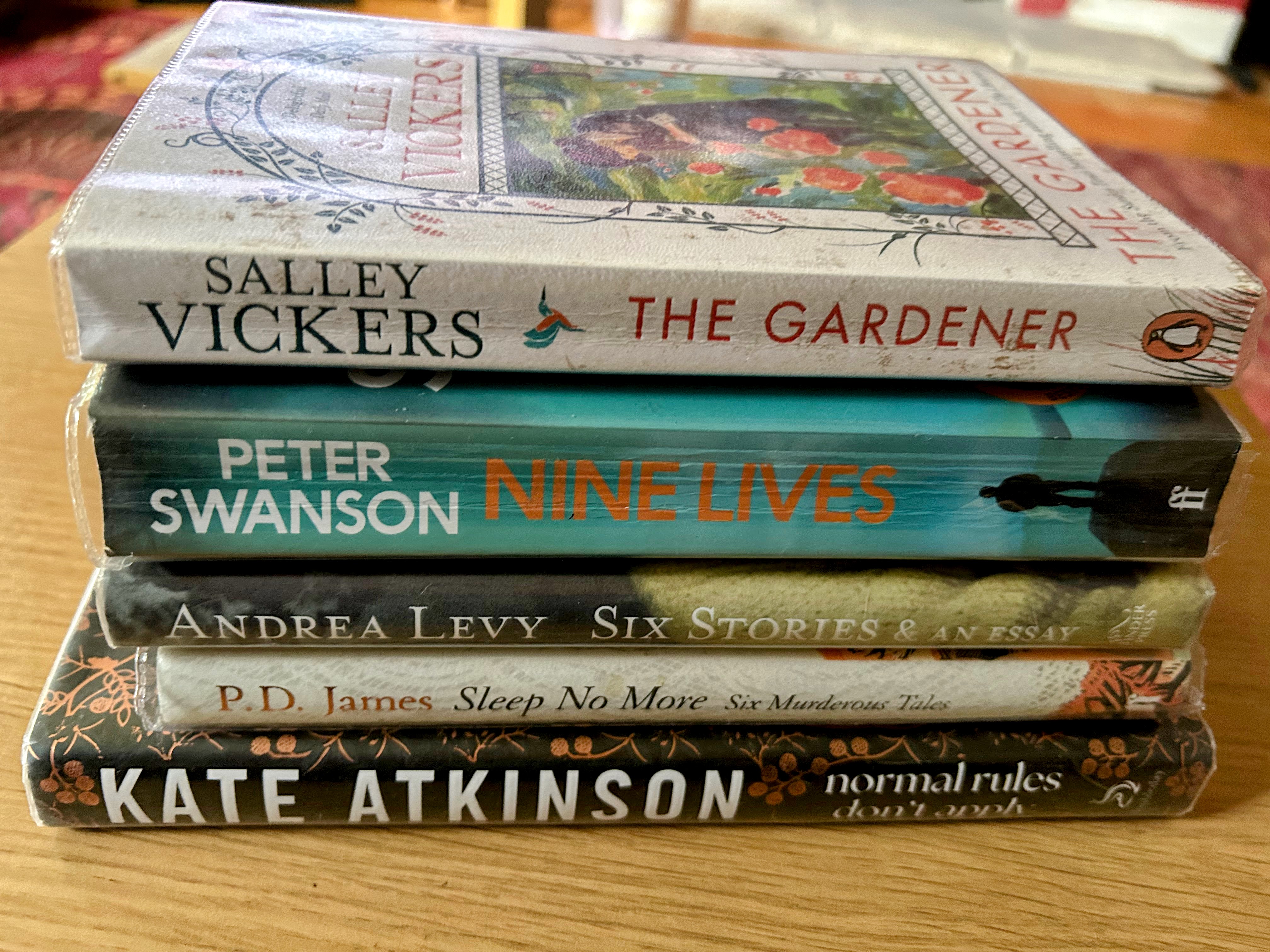
The mobile library van came yesterday and I borrowed three books of short stories to read for Short Story September 2025.

I’ve read books by each of the three following authors before:

Sleep No More: Six Murderous Tales by P D James – each one with the dark motive of revenge.

Normal Rules Don’t Apply by Kate Atkinson – Eleven interconnected stories, where everything is changing, where nothing is quite as it seems.

Six Stories and an Essay by Andrea Levy – This collection opens with an essay about how writing has helped Andrea Levy to explore and understand her heritage. She explains the context of each piece within the chronology of her career and finishes with a new story, written to mark the centenary of the outbreak of the Great War in 1914.

I also borrowed two other books:

The Gardener by Salley Vickers – Previously I’ve read five books by Vickers, and enjoyed them, especially Miss Garnet’s Angel and Mr Golightly’s Holiday. The last one I read was The Librarian, which I thought was rather underwhelming. I hope this one is better.

Nine Lives by Peter Swanson – I haven’t read any of Swanson’s books, but keep seeing them on book blogs and thought I’d see if I like this one.

Short Story September 2025

Lisa at ANZ LitLovers will be hosting a new reading event – Short Story September, running from September 1 to 30. On September 1st Lisa will set up a post where all contributions can be posted so that they form a valuable resource that is easy to find.

To participate, please keep it simple.  We all know that it’s hard to review short story collections, so all you are asked to do is to read a collection and then choose just one story from that collection to review.  To sidestep all the yada-yada about how many words a short story can be, just choose a story that can be read in under an hour.

Contributions should include the name of the short story and its author, and the title of the collection that you found it in, and its editor is there is one.  Please #NameTheTranslator for all translations.  It’s fine to mention the titles of other stories in the collection that you also enjoyed, of course.

Aim for a review that’s less than 800 words, but this is not a hard-and-fast rule because some stories need less and others need more.

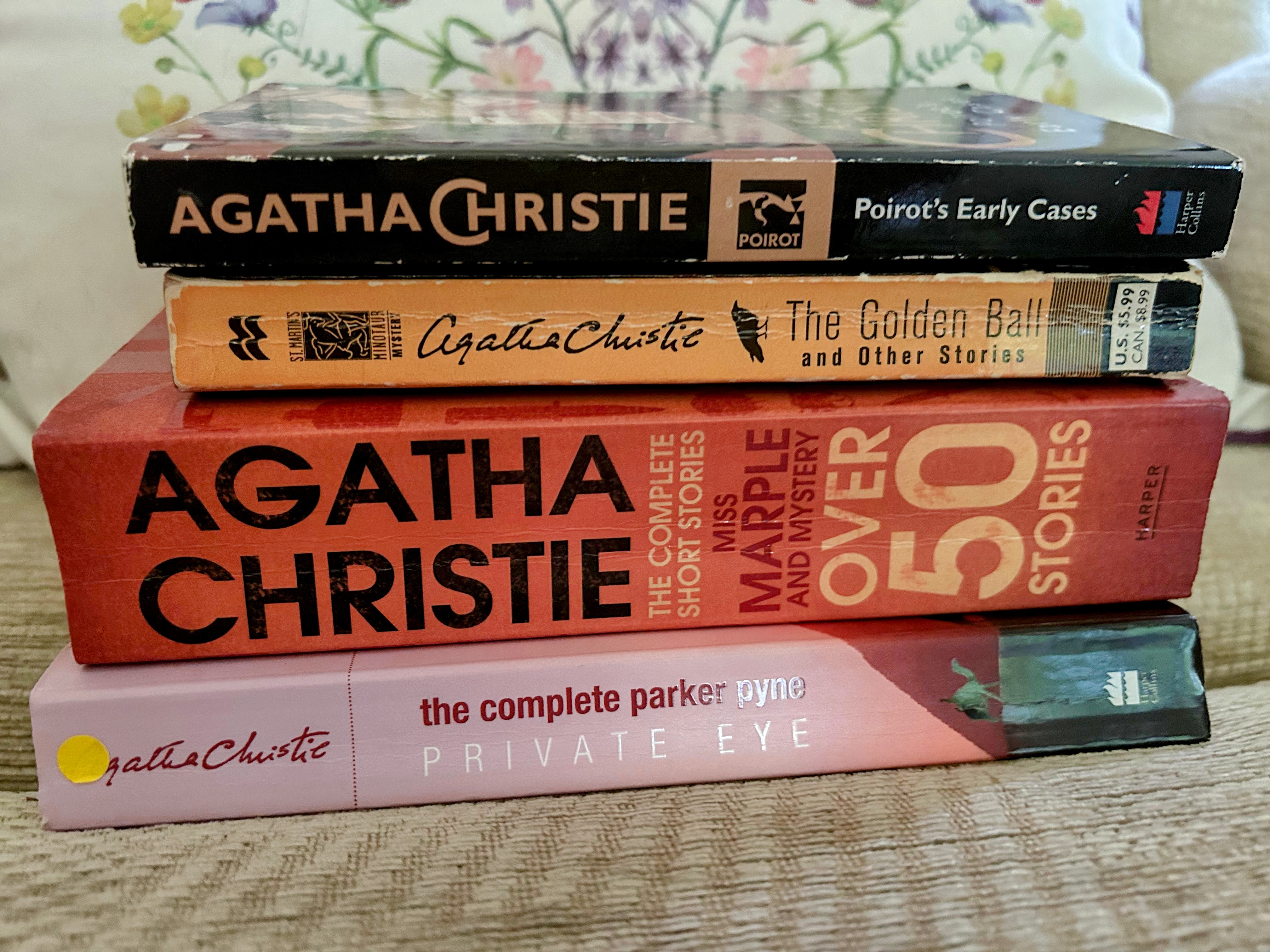
I’ve four collections of Agatha Christie’s short stories I’ve been meaning to read for ages. So, I got them down from the bookshelves:

Poirot’s Early Cases – Captain Hastings recounts 18 of Poirot’s early cases from the days before he was famous from theft and robbery to kidnapping and murder – were all guaranteed to test Poirot’s soon-to-be-famous ‘little grey cells’ to their absolute limit.

The Golden Ball and Other Stories – bizarre romantic entanglements, supernatural visitations and classic murders.

Miss Marple and Mystery: the Complete Short Stories, an omnibus of 55 short stories, presented in chronological order 1923 -1958.

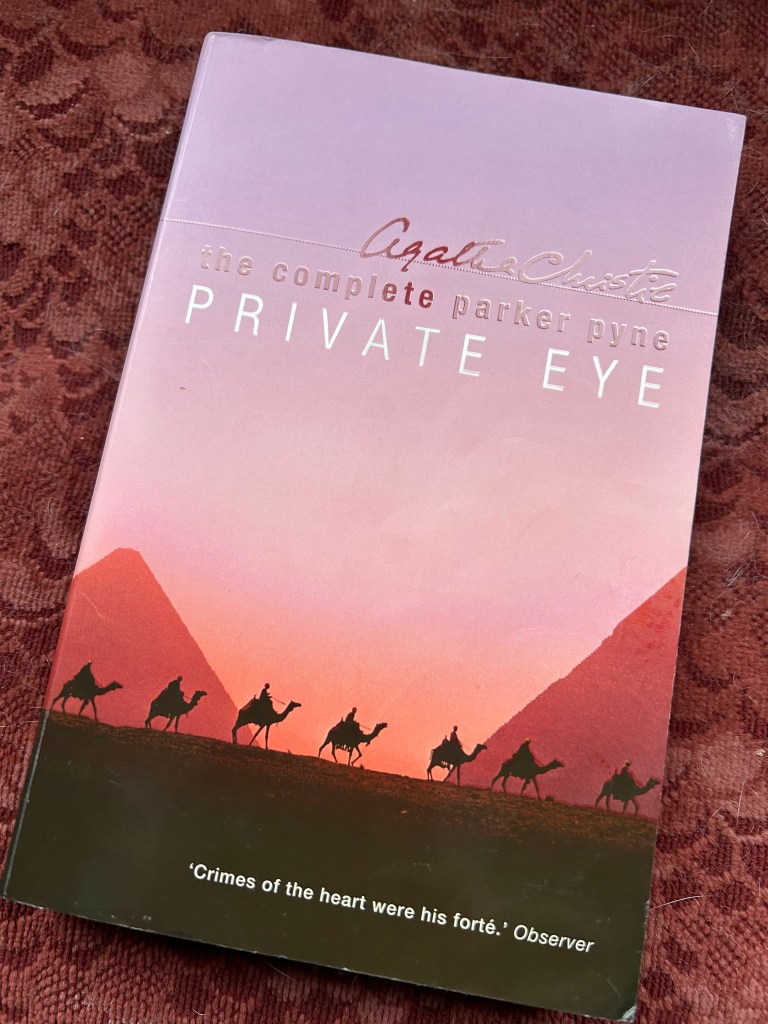
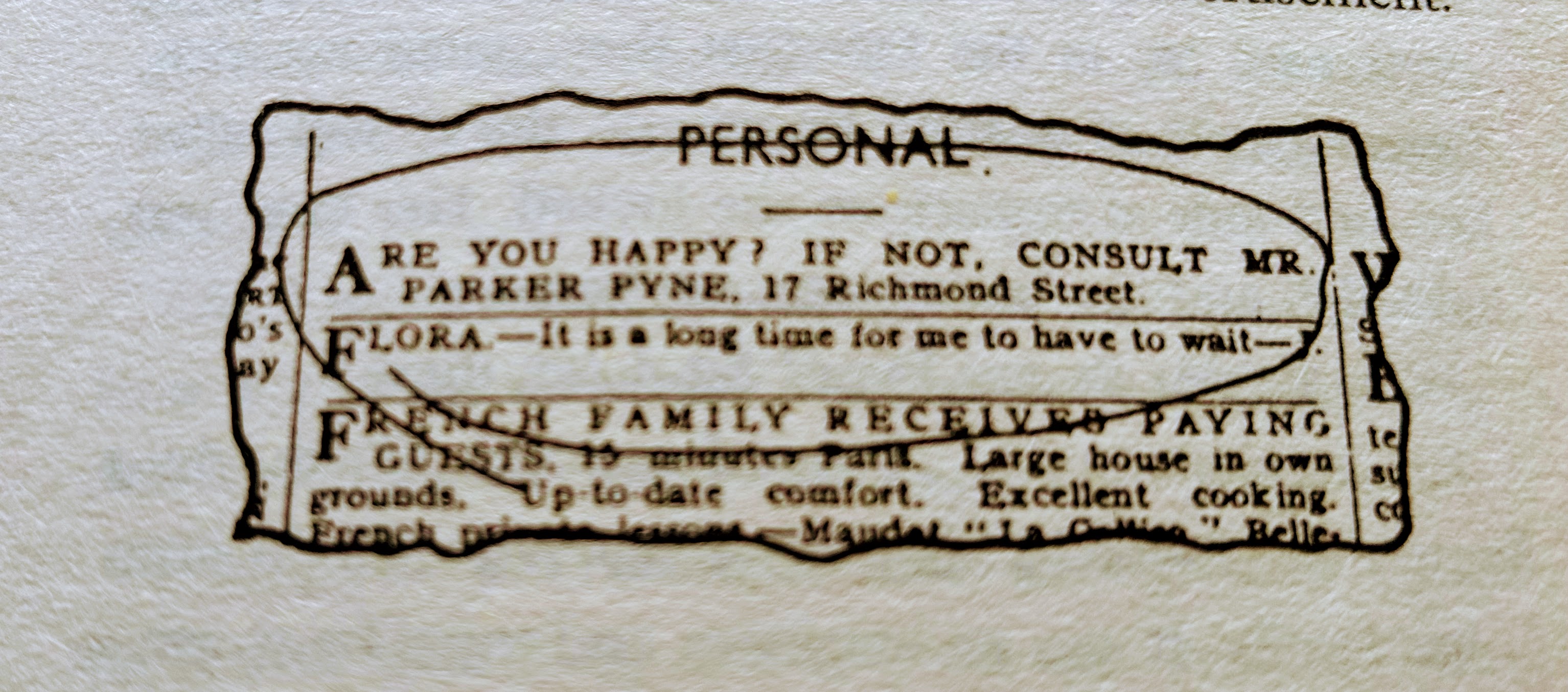
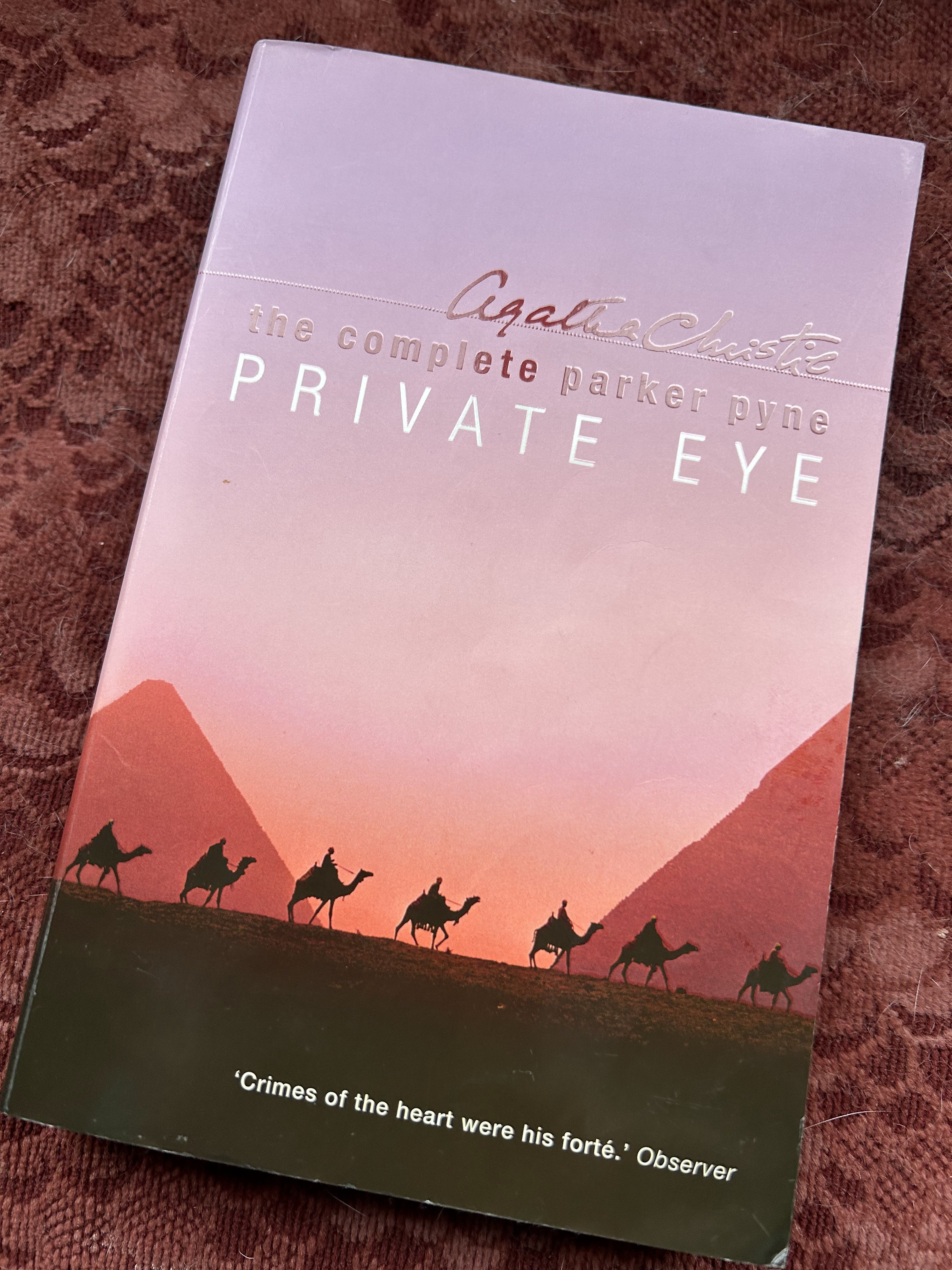
The Complete Parker Pyne, Private Eye – this edition brings together all 14 stories featuring the rather fat and unconventional Mr Parker Pyne.

Top 5 Tuesday:Top 5 books with sizes in the titles

Top 5 Tuesday was created by Shanah at Bionic Book Worm, and it is now being hosted by Meeghan at Meeghan Reads. You can see the Top 5 Tuesday topics for the whole of 2025 here

Today the topic is top 5 books with sizes in the titles.

These are all books I’ve read with links to my posts on them:

Small Things Like These by Claire Keegan. This won the 2022 Orwell Prize for Political Fiction, an award for outstanding novels and collections of short stories, first published in the UK or Ireland, that illuminate major social and political themes, present or past, through the art of narrative. It also won the Kerry Group Irish Novel of the Year 2022.

It is 1985 in a small Irish town. During the weeks leading up to Christmas, Bill Furlong, a coal merchant and family man faces into his busiest season. Early one morning, while delivering an order to the local convent, Bill makes a discovery which forces him to confront both his past and the complicit silences of a town controlled by the church.

Claire Keegan’s style of writing is a refreshing change from so many of the long and complicated books I so often read. It is precise, focused, and beautifully written bringing her characters to life – these are real, ordinary people, living ordinary lives in 1980s Ireland. And the detail is there too in all the particulars of everyday life – it packs a lot into its pages. 

Our Longest Days: A People’s History of the Second World War by the writers of Mass Observation. For six years the people of Britain endured bombs and the threat of invasion, and more than 140,000 civilians were killed or seriously wounded. Men and women were called to serve in the armed forces in record numbers, and everyone experienced air raids and rationing. In these terrible times, volunteers of almost every age, class and occupation wrote diaries for the “Mass Observation” project, which was set up in the 1930s to collect the voices of ordinary men and women.

Using many diaries that have never been published before, this book tells the story of the war – the military conflict, and, mainly, life on the home front – through these voices. Through it all, people carry on living their lives, falling in love, longing for a good meal, complaining about office colleagues or mourning allotment potatoes destroyed by a bomb.

An Awfully Big Adventure by Beryl Bainbridge. First published in 1989 and shortlisted for the Booker Prize, this is set in 1950, as a Liverpool repertory theatre company are rehearsing its Christmas production of Peter Pan. The story centres around Stella, a teenager and an aspiring actress who has been taken on as the assistant stage manager.

It’s semi-autobiographical based on Beryl Bainbridge’s own experience as an assistant stage manager in a Liverpool theatre. On the face of it this is a straight forward story of the theatre company but underneath it’s packed with emotion, pathos and drama. And it’s firmly grounded in a grim post-war 1950s England, food rationing still in operation and bombed buildings still in ruins overgrown with weeds.

The title is taken from Peter Pan, the play about the boy who never grew up, whose attitude to death was ‘To die will be an awfully big adventure.’ Bainbridge’s use of Peter Pan emphasises the themes of reality versus imagination, the loss of childhood innocence, and the quest for love.

Dirty Little Secrets by Jo Spain, a psychological thriller, set in Withered Vale, a small, gated community of just seven houses, outside the small village of Marwood in Wicklow in Ireland. On the surface it is a perfect place where the wealthy live their  privileged lives and keep themselves to themselves – until a cloud of bluebottles stream out of the chimney of number 4 and Olive Collins’ dead and disintegrating body is discovered inside. She had been dead for three months and none of the neighbours had bothered to find out why she hadn’t been seen all that time. But someone must have known what had happened to her – the question being who?

The Shortest Day by Colm Toibin, a short story about the mythical past, about the strange carvings found on certain stones, about archaeology, and about the unknown customs and rituals of our ancient past. It’s storytelling at its best – a tale of wonder and mystery.

Professor O’Kelly is writing notes about Newgrange, also called Bru na Boinne, a circular mound with a retaining wall that had a narrow passageway leading into a vaulted central chamber. There are spirals and diamond shaped designs cut into some of the stones both inside the chamber itself and outside the entrance to the passageway. It’s a burial chamber, a prehistoric monument in County Meath in Ireland, that was built around 3200 BC – older than Stonehenge and the Egyptian pyramids. It’s ringed by a stone circle, stones brought from the Mournes and Wicklow Mountains.

Meanwhile deep within the chamber there were whispers among the dead that the professor was coming again. They are concerned that he would discover the secret of the light penetrating the chamber on the winter solstice – the shortest day of the year. Some of the local inhabitants know of the secret but they never talk about it, except in whispers between themselves. When he arrives they put up a number of obstacles to prevent him from entering the chamber.

Stacking the Shelves: 25 January 2025

It’s Saturday and time for Stacking the Shelves, hosted by Marlene at Reading Reality and the details are on her blog, as well as a huge amount of book reviews. Why not visit her blog if you haven’t already found it? The gorgeous graphic is also used courtesy of the site.

The idea is to share the books you are adding to your shelves, may they be physical or virtual. This means you can include books you buy in physical stores or online, books you borrow from friends or the library, review books, gifts and of course e-books!

These are all e-books I’ve either bought or acquired for free from Amazon since the beginning of this year:

The Woman In Blue: The Dr Ruth Galloway Mysteries 8  by Elly Griffiths. Somehow I missed reading this book when it first came out in 2016, so when I saw it was 99p on Amazon I bought it. It’s book 8 out of 15 in the series. When Ruth’s friend Cathbad* sees a vision of the Virgin Mary, in a white gown and blue cloak, in Walsingham’s graveyard, he takes it in his stride. Walsingham has strong connections to Mary, and Cathbad is a druid after all; visions come with the job. But when the body of a woman in a blue dressing-gown is found dead the next day in a nearby ditch, it is clear that a horrible crime has been committed, and DCI Nelson and his team are called in for what is now a murder investigation.

*I’ve read most of this series. Cathbad is one of my favourite characters.

Greek Lessons by Han Kang, the winner of the 2024 Nobel Prize in Literature, a new-to-me author. This is a new translation by Deborah Smith and Emily Yae Won, of the 2011 novel that explores how a teacher losing his sight and a pupil losing her voice form a poetic bond. It is a short book, of just 149 pages narrated by the two unnamed characters, one a woman grieving for her mother and her son, now in the custody of her ex-husband. She is also experiencing the loss of her ability to speak. The other is a man losing his connection to place and family, as well as the loss of his eyesight.  They meet when the woman attends his Ancient Greek lessons.

Eleven Numbers, a short story by Lee Child. Nathan Tyler is an unassuming professor at a middling American university with a rather obscure specialty in mathematics—in short, a nobody from nowhere. So why is the White House calling? Summoned to Washington, DC, for a top-secret briefing, Nathan discovers that he’s the key to a massive foreign intelligence breakthrough. Reading between the lines of a cryptic series of equations, he could open a door straight into the heart of the Kremlin and change the global balance of power forever. All he has to do is get to a meeting with the renowned Russian mathematician who created it. But when Nathan crashes headlong into a dangerous new game, the odds against him suddenly look a lot steeper.

Genius Gut: 10 New Gut-Brain Hacks to Revolutionise Your Energy, Mood, and Brainpower by Emily Leeming. Microbiome scientist and registered dietitian Dr Emily Leeming explains the ground-breaking evidence on the relationship between food and mood, unveiling the powerful gut-brain connection…and exciting new links to your gut bacteria. I downloaded the sample before deciding to buy this book and think it looks very interesting and easy to read for a non-scientist like me. I never thought much about my gut until I had bowel cancer eighteen months ago!

The Fake Wife by Sharon Bolton. I’ve a lot of her books and have enjoyed them all, so this is one I’m really looking forward to reading. It’s described as an absolutely gripping psychological thriller with jaw-dropping twists. Olive Anderson is dining alone at a hotel when a glamourous stranger joins her table, pretending to be her wife. What starts as a thrilling game quickly turns into something dangerous. But as much as the fake wife has her secrets, Olive just might have more . . .

Library Books: February 2022

The mobile library service is back to normal now and I borrowed these books this week:

From top to bottom they are:

A Legacy of Spies by John Le Carré. It’s the 9th book in his George Smiley series. I’m not sure about reading this one yet as I’ve only read 2 of the series, The Spy Who Came in from the Cold and Tinker, Tailor, Soldier, Spy. But whilst it was there on the shelves I decided to borrow it and at least start it to see if it reads like a standalone. And according to this article on the Penguin website all five of novels in the Smiley series are easily read as standalones. You do not need to read them in order but they do suggest a reading order.

Book description: Peter Guillam, former disciple of George Smiley in the British Secret Service, has long retired to Brittany when a letter arrives, summoning him to London. The reason? Cold War ghosts have come back to haunt him. Intelligence operations that were once the toast of the Service are to be dissected by a generation with no memory of the Berlin Wall. Somebody must pay for innocent blood spilt in the name of the greater good . . .

The Doll-Master and Other Tales of Terror by Joyce Carol Oates. I’m not sure I want to read this book – it’s described on the back cover as ‘Six terrifying tales to chill the blood’.They may be too terrifying! But I have enjoyed her books before, so maybe this one will be OK.

Book description: .

In the title story, a young boy becomes obsessed with his cousin’s doll after she tragically passes away from leukemia. As he grows older, he begins to collect “found dolls” from the surrounding neighborhoods and stores his treasures in the abandoned carriage house on his family’s estate. But just what kind of dolls are they?

In “Gun Accident”, a teenage girl is thrilled when her favorite teacher asks her to house-sit, even on short notice. But when an intruder forces his way into the house while the girl is there, the fate of more than one life is changed forever.

In “Equatorial”, set in the exotic Galapagos, an affluent American wife experiences disorienting assaults on her sense of who her charismatic husband really is, and what his plans may be for her.

The Hour of Imagination by Katharine McMahon. I borrowed this because I’ve read two of her books and enjoyed them.

Book description: Estelle never really knew her mother, Fleur, but is haunted by her legacy. A legendary resistance heroine in the Great War, she had helped Allied soldiers escape from Belgium – and was not alone in paying a terrible price.

Christa’s father was one of those Fleur saved – but he returned home a ruined man. So, when Estelle arrives on Christa’s doorstep hungry for information about her mother, an intense and complex friendship is ignited.

In 1939, as conflict grips Europe once more, Estelle follows her mother’s destiny. Then Christa discovers that Fleur was betrayed by someone close to her and the truth may destroy them all…

Walden of Bermondsey by Peter Murphy. I’ve not read any of his books, so this is unknown territory for me. Peter Murphy spent a career in the law, as an advocate, teacher, and judge. He has worked both in England and the U.S., and served for several years as counsel at the Yugoslavian War Crimes Tribunal in The Hague. This book is the first in his Judge Walden series.

Book description: When Charlie Walden takes on the job of Resident Judge of the Bermondsey Crown Court, he is hoping for a quieter life. But he soon finds himself struggling to keep the peace between three feisty fellow judges who have very different views about how to do their jobs, and about how Charlie should do his. And as if that’s not enough, there’s the endless battle against the “Grey Smoothies”: the humorless grey-suited civil servants who seem determined to drown Charlie in paperwork and strip the court of its last vestiges of civilization. No hope of an easy life for Charlie then, and there are times when his real job – trying the challenging criminal cases that come before him – actually seems like light relief.

I’d love to know what you think – have you read any of these books, if so did you enjoy them? If not, do they tempt you?