Dracula by Bram Stoker: Book Notes

These are my thoughts and reactions on reading Bram Stoker’s Dracula.

I knew the story of Dracula from film and TV versions – with most notably Christopher Lee and later Louis Jourdan as Dracula, but have steered clear of reading Bram Stoker’s book until now. I didn’t really know what to expect from the book but I was interested to know how Stoker described Dracula, was it anything like the film versions? This is what he looked like when Jonathan Harker first entered Castle Dracula:

… a tall old man, clean-shaven save for a long white moustache, and clad in black from head to foot, without a single speck of colour about him anywhere.

… he moved impulsively forward, and holding out his hand grasped mine with a strength that made me wince, an effect which was not lessened by the fact that it seemed as cold as ice – more like the hand of a dead man than a living man.

… His face was a strong – a very strong – aquiline, with high bridge of nose and peculiarly arched nostrils; with lofty domed forehead, and hair growing scantily around the temples, but profusely elsewhere. His eyebrows were very massive, almost meeting over his nose, and with bushy hair that seemed to curl in its own profusion. The mouth, so far as I could see it under the heavy moustache, was fixed and rather cruel-looking, with peculiarly sharp white teeth; these protruded over the lips, whose remarkable ruddiness showed astonishing vitality in a man of his years. For the rest, his ears were pale and at the tops extremely pointed; the chin was broad and strong and the cheeks firm though thin. The general effect was one of extraordinary pallor. (pages 22 – 25)

Not like the film versions I’ve seen.

Dracula is composed of letters, journal entries, newspaper articles and transcripts of phonograph diary entries, from several characters, so the story is told from several different viewpoints. Stoker used a variety of sources in telling his tale – folklore, myths and legends and historical facts, all blended together with his own inventions. It’s a very scenic novel, and I could easily imagine the locations  – most memorable are those describing Jonathan Harker’s journey and first meeting with Dracula. Dracula doesn’t eat and has no reflection in a mirror, can change his shape dramatically and grows younger, but apart from the opening chapters he remains an elusive figure.

It’s also a very sensual and melodramatic novel, full of religious references. So there is the question of life after death, the existence of the soul, the triumph of good over evil, the nature of sexuality,  fear and superstition. Vampires are at the same time appealing and repulsive. Much use is made of hypnotism and putting people into trances. I was struck by the comparison with Christianity – Dracula drinks the blood of his victims and has everlasting life as one of the Un-Dead and Christ gave his life to redeem the world. It reminded me of the Communion Service – this is my body, this is my blood.

It is too an adventure story with a final chase scene and a love story. It reflects the time in which it was written, with women seen as frail creatures unable to withstand the danger that the men confront. Mina Harker, that most resourceful woman, is left behind whilst the men seek out Dracula and plan to kill him. I was puzzled – why was she left alone with no cross and garlic flowers to protect her when the men were fully armed? The outcome was predictable.

I found the character of Renfield most interesting. He is one of Dr Seward’s most dangerous patients in the lunatic asylum, who wavers between lucid and intelligent episodes and sheer madness. His hobby is catching flies and eating them. He progresses to eating spiders and birds.

I thought it was a fascinating book, found it thought-provoking, both whilst I was reading and after. A book which certainly qualifies for the RIP Challenge.

Book Beginnings: Life Support

Life Support by Tess Gerritsen is the fourth book I’ll be reading in the RIP IV Challenge. According to the back cover this is ‘a quick, delightfully scary read‘, which fits in well with the RIP challenge criteria.

It begins:

A scalpel is a beautiful thing.

Dr Stanley Mackie had never noticed this before, but as he stood with head bowed beneath the OR lamps, he suddenly found himself marveling at how the light reflected with diamondlike brilliance off the blade. It was a work of art, that razor sharp lunula of stainless steel. So beautiful in fact, that he scarcely dared to pick it up for fear he would somehow tarnish its magic. In its surface he saw a rainbow of colors, light fractured to its purest elements. (Page 13)

This will be the first book by Tess Gerritsen that I’ve read. It’s been on my bookshelves for quite a while now and I have been wary of reading it in case it’s too gory for me. I didn’t buy it, it was a free book with the magazine Woman and Home, which I buy now and then. When I read the Introduction I was even less sure this book was for me as Tess Gerritsen wrote that she got the idea for the book whilst at medical school (she is a doctor), when she heard the professor say the words ‘human cannibalism’ in his lecture on Creutzfeld-Jakob disease, a viral infection of the brain.

So I put this book way down on my to-be-read books, but since then I’ve read several favourable reviews of other books by Gerritsen so I thought I’d try this one. I like the style of writing in this first paragraph and it does make me want to read on, so when I’ve finished one of my current reads I’m going to start Life Support. Let me know what you think if you’ve read it?

Book Beginnings on Friday is hosted by Katy at A Few More Pages.

Blood Harvest by S J Bolton: a Book Review

I thoroughly enjoyed Blood Harvest, even though (or maybe because) it’s a dark, scary book and one that I found disturbing, but thoroughly absorbing . Each time I had to stop reading it I was eager to get back to it. I’ve previously read S J Bolton’s earlier books – Sacrifice and Awakening – and think that Blood Harvest surpasses both of those.

It’s set in the fictional town of Heptonclough in Lancashire and there is a very helpful map at the start of the book showing the layout of the town. There are two churches, the ancient ruined Abbey Church and standing next to it the ‘new’ church of St Barnabas. The Fletchers have just moved into a new house built on the land right next to the boundary wall of the churchyard:

The Fletcher family built their big, shiny new house on the crest of the moor, in a town that time seemed to have left to mind it’s own business. They built on a modest-sized plot that the diocese, desperate for cash, needed to get rid of. They built so close to the two churches – one old, the other very old – that they could almost lean out from the bedroom windows and touch the shell of the ancient tower. And on three sides of their garden they had the quietest neighbours they could hope for, which was ten-year-old Tom Fletcher’s favourite joke in those days; because the Fletchers built their new house in the midst of a graveyard. They should have known better, really. (page 17)

Tom has a younger brother, Joe and they’re playing in the graveyard when they catch glimpses of a girl watching them, and hear voices. Their little sister, two-year old Millie sees her too.  Tom is terrified, convinced something terrible will happen and then Millie disappears. Harry is the new vicar, getting to know the locals and their strange rituals and traditions. He too hears voices, in the church but can’t find anyone there. Evi, a psychiatrist has a new patient, Gillian, unemployed, divorced and alcoholic, who can’t accept that her daughter died in the fire that burnt down her home. The Renshaws own most of the land, old Tobias, his son Sinclair and his two daughters, Jenny and Christiana.

Heptonclough is not a good place for little girls, three have died over the past ten years and Christiana asks Harry to tell the Fletchers to leave:

‘So many little girls’, she said. ‘Tell them to go, Vicar. It’s not safe here. Not for little girls.’ (page 353)

It’s not safe at all for the Fletcher family. I was completely convinced not only by the setting but also by the characterisation that this place and these people were real. It’s full of tension, terror and suspense and I was in several minds before the end as to what it was all about. I had an inkling but I hadn’t realised the full and shocking truth.

An excellent book to read for Carl’s RIP IV Challenge.

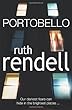
Portobello by Ruth Rendell: A Book Review

Portobello is one of Ruth Rendell’s psychological studies of obsessional and eccentric characters, with a touch of insanity and crime mixed in. I can’t say I ‘enjoyed’ it as in parts it really irritated me, but I did wonder how it was going to end and so read on. The setting is good; the description of the Portobello Road in London brings the area to life, making it a character in its own right:

The street is very long, like a centipede snaking up from Pembridge Road in the south to Kensal Town in the north, its legs splaying out all the way and almost reaching the Great Western Street main line and the Grand Union Canal.

… The Portobello has a rich personality, vibrant, brilliant in colour, noisy with graffiti that approach art, bizarre and splendid. an indefinable edge to it adds a spice of danger. There is nothing safe about the Portobello, nothing suburban. It is as far from an average shopping street as can be imagined. those who love and those who barely know it have called it the world’s finest street. (page 2)

The plot promised to be good, with Eugene Wren finding an envelope filled with money and sets in motion a chain of disastrous events. But it failed to live up to that promise. The money belonged to Joel, a very strange young man who after being attacked in the Portobello Road and losing the envelope, suffered a heart attack and a near-death experience in which he went through a tunnel and was then brought back.  Joel is accompanied by Mithras who came back with him through the tunnel. He descends rapidly into an unreal world shunning the light and doing nothing at all.

Eugene is a secretive man who owns a Fine Art Gallery and is engaged to Ella Cotswold, a doctor. Ella takes on Joel as a private patient even though it’s clear his problems are psychological rather than physical and even when she refers him to a psychotherapist he continues to consult her.

Eugene in an attempt to lose weight and give up smoking tries eating low-calorie sweets and becomes addicted to Chocorange, a sugar-free pastille containing just 4 calories. This is one of the parts of the book that irritated me – it is repeated ad nauseam  how he wants to give up, tries to and fails, how he hides packets everywhere.

A third set of characters are Lance Platt, a petty burglar (who told Eugene the money belonged to him) and his Uncle Gib. Lance Uncle Gib is a reformed burglar, now an Elder in the Church of the Children of Zebulon, who only puts up with Lance living in his house for the rent money. Uncle Gib is another unpleasant character:

… a tall, emaciated old man with his Voltairean face and his fluffy white hair singing hymns as he bounded along. Eccentricity is the norm in the Portobello Road. (page 134)

It’s descriptions like that, that kept me reading this book, for Rendell is expert in depicting sad and seedy individuals, the mentally ill, and obsessed and strangely addicted characters. I wasn’t impressed with the way she tied up all the loose ends; it seemed too sentimental and not in keeping with the rest of the book. Overall and having thought about since finishing it I think that the prose drags the book up beyond the two stars (meaning it was ok) I gave it on Goodreads, so if I could I’d upgrade that to two and half  – I nearly liked it! :)

I’d identified this as a book to read for Carl’s RIP IV Challenge but I’m not sure it fits, although there is some suspense in it and a touch of dark fantasy.

Paperback: 384 pages
Publisher: Arrow (13 Aug 2009)
Language English
ISBN-10: 0099538636
ISBN-13: 978-0099538639
Source: I bought it (in a 3 for 2 in Waterstones)

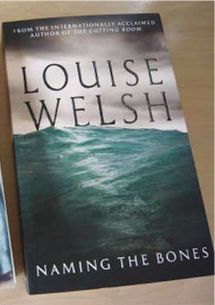
Naming the Bones by Louise Welsh: A Book Review

I’d planned to read Naming the Bones by Louise Welsh, which is from my to-be-read books and it seemed appropriate to include it in the books I’ve selected for the RIP IV Challenge. But as I read it I began to wonder if it really fitted into that category. Although the blurb on the back cover says it is ‘Loaded with Welsh’s trademark wit, insight and gothic charisma‘ the gothic elements are not evident in the first half or so of the book. It’s only as the story unfolds that the mystery element emerges and just a touch of the gothic and the occult comes to the fore.

Naming the Bones2
I found it a slow start as Dr. Murry Watson, an English literature professor from Glasgow University researches the life of a largely unknown poet Archie Lunan. Lunan had died thirty years earlier, presumed drowned off the island of Lismore, although his body had never been discovered. As Murray investigates Lunan’s life, talking to people who had known him, he begins to suspect that Archie’s death may not have been the suicide it seemed and as more deaths come to his attention the mystery grows and becomes more sinister.

Murray’s personal life is in a mess; his relationship with his brother has broken down following their father’s death and his work life is complicated by his affair with his boss’s wife. This is a detailed book, the characters are vivid and memorable and  each location is beautifully described, not only the sights and sounds but smells too:

Murray pulled back his hood. The scent of wood smoke mingled with the falling rain and the damp rising from the sodden earth. It was an ancient smell, the same one the earliest islanders who could be resting, preserved beneath the peat, had known a millennia or so ago. (pages 327-8)

It is when Murray arrives on the island of Lismore in Loch Linnhe on the west coast of Scotland that the pace picks up, and the tension builds. Here Murray finally meets Archie’s girlfriend, Christie and begins to piece together what had happened thirty years ago. The book ends with some ambiguities still to be explained, an ending which I found perfectly in keeping with the story.

I was taken with Welsh’s handling of biography, describing it as

… a paper facsimile of life hurtling towards death. (page 128)

Murray is hoping to discover how much Archie’s life had influenced his art, whereas his former tutor, Professor James, had insisted on the importance of divorcing writers’ lives from their work, thinking it to be reductive and simplistic. It is the work itself that is important and Murray wonders whether this is right and whether he should limit himself to a discussion of the poetry, rather than the man. Again Welsh leaves this open to the reader to decide.

Naming the Bones isn’t the book I thought it was going to be – it isn’t really ‘gothic’, or dark, or about the occult. It isn’t really crime fiction, either. Nor is it anything like the only other book by Louise Welsh that I’ve read – The Cutting Room, which is really gothic and dark. Once I’d got over my expectations I enjoyed the book for what it is – a mystery and a good one too.

  • Paperback: 389 pages
  • Publisher: Canongate Books Ltd (3 Feb 2011)
  • Language English
  • ISBN-10: 1847672566
  • ISBN-13: 978-1847672568
  • Souce: I bought it

R.I.P. VI

The purpose of the R.I.P. Challenge, which runs from 1 September to 31 October, is to enjoy books that could be classified as:

Mystery.
Suspense.
Thriller.
Dark Fantasy.
Gothic.
Horror.
Supernatural.

There are two simple goals for the R.eaders I.mbibing P.eril VI Challenge:

1. Have fun reading.
2. Share that fun with others.

As always Carl is hosting and this is the site to visit if you’re interested in joining in. There are several levels and I’m aiming to do Level One:

Peril the First:

‘Read four books, any length, that you feel fit (my very broad definitions) of R.I.P. literature. It could be Stephen King or Sir Arthur Conan Doyle, Ian Fleming or Edgar Allan Poe’¦or anyone in between.’

I’ll be choosing from these books (in no particular order), all from my to-be-read books:

  • Naming the Bones by Louise Welsh
  • Blood Harvest by S J Bolton
  • Shadows in the Street by Susan Hill
  • Life Support by Tessa Gerritsen
  • Diamonds are Forever by Ian Fleming
  • The Distant Hours by Kate Morton
  • Blood Hunt by Jack Harvey (Ian Rankin)
  • Portobello by Ruth Rendell
  • Great Ghost Stories by Aldous Huxley & others
  • The Turn of the Screw by Henry James – I started this ages ago and never finished it!

This has come at an appropriate time for me as, for once and amazingly, I have no books on the go!

Now I just need to decide which one to read first – I’m torn between Naming the Bones and Blood Harvest!