The House by Simon Lelic

Publication date: 17 August 2017, Penguin

Source: review copy via NetGalley

Blurb:

What if your perfect home turned out to be the scene of the perfect crime?

Londoners Jack and Syd moved into the house a year ago. It seemed like their dream home: tons of space, the perfect location, and a friendly owner who wanted a young couple to have it. So when they made a grisly discovery in the attic, Jack and Syd chose to ignore it. That was a mistake. Because someone has just been murdered. Right outside their back door. And now the police are watching them…

Given the title, The House, I anticipated that the main focus would be a house. And it was, at the beginning, which really raised my expectations that this was going to be a suspense-filled creepy book with hints even of the supernatural. Syd found the house advertised on the internet; the owner had suddenly moved to Australia, leaving the house fully furnished and she was immediately smitten by it. Jack wasn’t so sure – he thought it was creepy, full of junk, with an overgrown garden. But they put in a bid and were amazed when they got it a bargain price.

Jack and Syd share the narrative, explaining how they came to buy the house and their feelings as they move in and experience strange, disgusting smells and scary noises in the night. Then Jack found something nasty in the attic, which I thought must be something so evil, because he didn’t want to tell Syd what it was. He began to worry why the owner had wanted him and Syd to have the house. It’s a nightmare scenario.

But then the focus changed and the mystery of the house was absorbed into a very complex story that is difficult to write about without giving away the plot. As I read on and found out more about Jack and Syd it became clear that this book is not really about the house – it’s about their past lives and in particular about Syd’s. I think that if I had known more about that before, I wouldn’t have chosen to read the book. It’s a story about despair, domestic violence, dark secrets and the effects of the past on the present.

Even thought the main issues are not topics that I want to read about, I did find the book compelling and it drew me along. The characters are believable, so much so that I didn’t like some of them; they are not people I’d want to meet. It was not what I expected from the title or synopsis – and there is nothing supernatural about it. Having said that it is well-written in a conversational style that makes each character easily distinguishable, with a well constructed plot.

My thanks to NetGalley and Penguin, the publishers for a review copy.

  • Format: Kindle Edition
  • File Size: 1289 KB
  • Print Length: 342 pages
  • Page Numbers Source ISBN: 0241983355
  • Publisher: Penguin (17 Aug. 2017)
  • My rating: 3.5*

The Unquiet Dead by Ausma Zehanat Khan

A powerful and thought provoking story

The Unquiet Dead by Ausma Zehanat Khan

I read The Unquiet Dead by Ausma Zehanat Khan in May. It’s due to be published by No Exit Press on 27 July 2017 (first published December 30th 2014).

Blurb:

One man is dead.

But thousands are his victims.

Can a single murder avenge that of many?

When Christopher Drayton’s body is found at the foot of the Scarborough Bluffs, Detectives Esa Khattak and Rachel Getty are called to investigate his death. But as the secrets of his role in the 1995 Srebrenica Massacre surface, the harrowing significance of the case makes it difficult to remain objective. In a community haunted by the atrocities of war, anyone could be a suspect. And when the victim is a man with far more deaths to his name, could it be that justice has at long last been served?

In this striking debut, Ausma Zehanat Khan has written a compelling and provocative mystery exploring the complexities of identity, loss, and redemption.

The harrowing account of the atrocities of Srebrenica in 1995 and the search for justice forms the basis of this intriguing novel. Extracts from statements and reports from survivors of the massacre head each chapter, giving voice to the ‘unquiet dead‘. These are immensely powerful and drive the novel. Alongside that is the investigation by detectives Esa Khattak and Rachel Getty into the death of Christopher Drayton who fell from the heights of the Scarborough Bluffs. Was it suicide, or an accident? Or was he pushed -and if so, who pushed him and why?

This is Ausma Zehanat Khan‘s debut novel but at times events in the past lives of the characters are referred to without much explanation and I felt I must have missed an earlier novel. For me, the investigation into Drayton’s death is the weaker part of the book. I think Rachel is the most convincing character, with Esa more of a shadowy personality, seemingly easily influenced by the women he meets. The other characters and there are a lot, aren’t particularly well-drawn and some are really just caricatures.

But these criticisms aside I think it is a powerful and thought provoking story that brought home to me the devastating and heart breaking horrors of the Srebrenica massacre of 8,000 Bosnian Muslims.

  • Paperback: 320 pages
  • Publisher: No Exit Press (27 July 2017)
  • Language: English
  • ISBN-10: 1843449447
  • ISBN-13: 978-1843449447
  • Source: Review copy via Lovereading
  • My rating: 3*

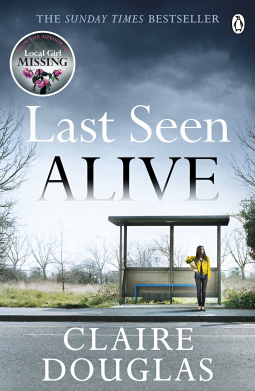
Last Seen Alive by Claire Douglas

Publication date: 13 July 2017, Penguin

Source: review copy via NetGalley

Blurb:

Libby Hall never really wanted to be noticed. But after she saves the children in her care from a fire, she finds herself headline news. And horrified by the attention. It all reminds her of what happened nine years ago. The last time she saw her best friend alive.

Which is why the house swap is such a godsend. Libby and her husband Jamie exchange their flat in Bath for a beautiful, secluded house in Cornwall. It’s a chance to heal their marriage – to stop its secrets tearing them apart.

But this stylish Cornish home isn’t the getaway they’d hoped for. They make odd, even disturbing, discoveries in the house. It’s so isolated-yet Libby doesn’t feel entirely alone. As if she’s being watched.

Is Libby being paranoid? What is her husband hiding? And. As the secrets and lies come tumbling out, is the past about to catch up with them? 

Last Seen Alive is the first novel by Claire Douglas that I’ve read and I loved it. It’s everything the blurb promised, and the secrets and lies never stop coming, right up to the end of the book. To write too much about the plot would only spoil it – you have to experience it as you read to get the full impact.

I can only say that right from the beginning of the book I was hooked as Jamie and Libby arrive at their house swap in the Roseland Peninsula in Cornwall (I’ve been there – it is beautiful) and I felt the suspense and tension as they explored the house by the sea. It’s a remote detached rectangular house with a round turret at one end and inside it had been recently restored. They are dismayed by the contrast with their poky two bed flat in Bath. Immediately alarm bells are going off in Libby’s head, what were the owners’ real reasons for wanting to swap this house for their little flat?

Strange things happen, Libby’s fears escalate and then Jamie begins to question her about her past. He knew that Karen, her best friend had died in a fire when the two of them were in Thailand and that Libby had been lucky to escape. But she doesn’t want to talk about that and she knows that he is keeping things from her too. Then Jamie comes down with a bad attack of food poisoning and ends up in hospital. Their stay in Cornwall comes to an end as the owner tells them he is leaving their flat. They return and from then on everything gets worse – much worse.

Needless to say this is a complicated and complex story, perfectly paced as the secrets are revealed and the lies are exposed. The characterisation is good. As I read I grew to like Libby a lot but began to suspect that maybe she wasn’t as genuine as I first thought and Jamie’s attitude began to irritate me – signs that the characters are well drawn. At one point I began to get a glimmer about the truth as I realised how the Prologue fitted into the story.

I was never really sure who I could believe, just who was telling the truth. It’s one of those books that keeps you guessing right up to the end and this one is excellent, dramatic, tense and so very, very twisty.

My thanks to NetGalley and Penguin, the publishers for a review copy.

  • Format: Kindle Edition
  • File Size: 2751 KB
  • Print Length: 389 pages
  • Page Numbers Source ISBN: 1405926422
  • Publisher: Penguin (13 July 2017)
  • My rating: 5*

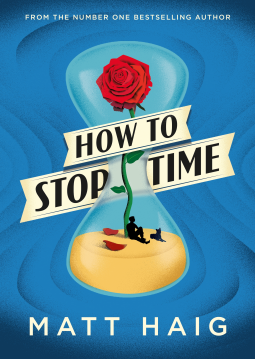
How To Stop Time by Matt Haig

Publication Date: July 6 from Canongate Books Ltd

Source: Review Copy

Blurb:

I am old. That is the first thing to tell you. The thing you are least likely to believe. If you saw me you would probably think I was about forty, but you would be very wrong.’
Tom Hazard has a dangerous secret. He may look like an ordinary 41-year-old, but owing to a rare condition, he’s been alive for centuries. From Elizabethan England to Jazz Age Paris, from New York to the South Seas, Tom has seen a lot, and now craves an ordinary life.

Always changing his identity to stay alive, Tom has the perfect cover – working as a history teacher at a London comprehensive. Here he can teach the kids about wars and witch hunts as if he’d never witnessed them first-hand. He can try and tame the past that is fast catching up with him. The only thing Tom mustn’t do is fall in love.

How to Stop Time is a wild and bittersweet story about losing and finding yourself, about the certainty of change and about the lifetimes it can take to really learn how to live.

My thoughts:

How To Stop Time caught my imagination right from the start and I read it quite quickly, enjoying the trips through time. Tom’s condition is called ‘anageria’, in which, whilst he is actually ageing very slowly, he doesn’t appear to be getting any older. It’s the opposite of ‘progeria’ that causes a child’s body to age very quickly. It causes him problems, particularly in his youth in the late 16th century (he was born in 1581) when people suspected his mother of witchcraft. In more modern times the danger comes from scientists (the ‘new witch finders’) and their experiments to discover the nature and causes of anageria.

Tom tells his life story in flashbacks, switching back and forth in time between the present day and the past. His life is by no means uneventful, meeting amongst others Shakespeare, Richard Burbage, Captain Cook, and Scott and Zelda Fitzgerald. As a young man in Elizabethan England he fell in love with Rose and they had a daughter, Marion, who has the same genetic anomaly. He left his family to keep them safe and lost touch with Marion.  It’s a fascinating book that succeeded in bringing the past to life and transporting me back in time.

How To Stop Time is not just a trip through time because overarching Tom’s story is that of the Albatross Society, whose members have the same condition as Tom, headed by the rather frightening figure of Hendrich. The conditions of belonging to the Society are that every eight years members have to carry out assignments and in return Hendrich helps them to change the identity and thus keeps them safe over the centuries. Tom, who by now just wants to live as normal a life as possible, has become reluctant to carry out the assignments but he carries on as Hendrich says he is close to finding Tom’s daughter, Marion.

It examines the nature of time, the fact that life is continuous and ever-changing, but emphasising that in reality you can only live in the present. Without being in any way moralistic, it demonstrates that life should be lived to the full each day.

My thanks to NetGalley and Canongate Books, the publishers for an uncorrected proof copy for review.

  • Format: Kindle Edition
  • File Size: 1711 KB
  • Print Length: 336 pages
  • Publisher: Canongate Books; Main edition (6 July 2017)
  • My Rating: 4*

The Ministry of Utmost Happiness by Arundhati Roy

I wanted to read Arundhati Roy’s second novel, The Ministry of Utmost Happiness because I’d loved her first novel, The God of Small Things when it won the Booker Prize in 1997.

Blurb:

The Ministry of Utmost Happiness takes us on an intimate journey across the Indian subcontinent from the cramped neighbourhoods of Old Delhi and the glittering malls of the burgeoning new metropolis to the snowy mountains and valleys of Kashmir, where war is peace and peace is war, and from time to time ‘normalcy’ is declared. Anjum unrolls a threadbare Persian carpet in a city graveyard that she calls home.

We encounter the incorrigible Saddam Hussain, the unforgettable Tilo and the three men who loved her – including Musa whose fate as tightly entwined with hers as their arms always used to be. Tilo’s landlord, another former suitor, is now an Intelligence officer posted to Kabul. And then there are the two Miss Jebeens: the first born in Srinagar and buried, aged four, in its overcrowded Martyrs’ Graveyard; the second found at midnight, in a crib of litter, on the concrete pavement of New Delhi.

At once an aching love story and a decisive remonstration, a heart-breaker and a mind-bender, The Ministry of Utmost Happiness is told in a whisper, in a shout, through tears and sometimes with a laugh. Its heroes are people who have been broken by the world they live in and then rescued, patched together by acts of love-and by hope. For this reason, fragile though they may be, they never surrender. Braiding richly complex lives together, this ravishing and deeply humane novel reinvents what a novel can do and can be. And it demonstrates on every page the miracle of Arundhati Roy’s storytelling gifts.

My thoughts:

My initial reaction to it was one of disappointment. After a good beginning I struggled with it because there is so much description, so little plot and such a large cast of characters. At times I was on the verge of abandoning the book, but then first one episode and then another and another held my imagination and I read on. Now, though, I’m glad I finished it as the ending is clearer and more understandable than the middle, where quite frankly I was for the most part bewildered.

It’s a difficult book to read firstly because of its structure (or lack of structure) and secondly because of its content. It’s not a straight narrative, as it moves backwards and forwards in time and place and between different narrators, both in the third and first person, all of which makes it a disjointed and fragmentary book. There are stories within stories, some of which at first appear to be totally unconnected to anything else, but looking back I can see how they become interwoven into the whole (I think).

I preferred the beginning, the story about Anjum, to the rest of the book but by the end it’s as though Roy decided to bring all the strands together, to come back full circle to Anjum and the community she established in the old graveyard in Delhi. Maybe it’s because she spent 10 years or so to write it. For more details about why it took over 20 years for Arundhati Roy to write her second novel see this article, Fiction Takes Its Time in The Guardian.

I’m sure that I didn’t pick up all the political and cultural references, but the issues surrounding caste, nationalism, gender and religious conflict are clear. It’s a book about love and loss, death and survival, grief, pain and poverty. There are outcasts, the hijras – transgender individuals, rape victims, addicts and abandoned babies; and there is a lot of violence, massacres, beatings, tortures and rapes. It’s a heartbreaking book, which doesn’t spare the details. I was relieved to finish it.

Thanks to the publisher for an ARC via NetGalley.

  • Format: Kindle Edition
  • File Size: 2822 KB
  • Print Length: 417 pages
  • Publisher: Penguin; 01 edition (6 Jun. 2017)
  • My rating: 2.5

The Ministry of Utmost Happiness is the first book for my 10 Books of Summer Challenge.

Vindolanda by Adrian Goldsworthy

AD 98: The bustling army base at Vindolanda lies on the northern frontier of Britannia and the entire Roman world. In twenty years’ time, the Emperor Hadrian will build his famous wall, but for now defences are weak, as tribes rebel against Roman rule, and local druids preach the fiery destruction of the invaders.

Flavius Ferox is a Briton and a Roman centurion, given the task of keeping the peace on this wild frontier. But it will take more than just courage to survive life in Roman Britain…

I was quickly drawn into Vindolanda by Adrian Goldsworthy, a novel set in northern frontier of Britain in 98 AD. It’s full of historical detail. Whilst some characters are based on real people about whom little is known apart from their names, most of the characters are fictional, including the main character, centurion Flavius Ferox.  He is based at a small fort called Syracuse (a fictional fort) near the garrison of Vindolanda (modern Chesterholm). Vindolanda is south of Hadrian’s Wall and predates its construction.

The story begins with the arrival of Vindex, the head of the native scouts and a minor son of a chieftain of the Brigantes tribe, who announces that there is a force of at least sixty barbarians in the area planning an attack on the road to Coria (modern day Corbridge). He needs Ferox’s help in hunting these marauders. This is just the start of a series of skirmishes, ambushes and full scale battles. There is at least one traitor in the Roman army informing the tribes of the army’s movements and Ferox is charged with finding out who it is.

I enjoyed reading Vindolanda and the insight it gives into the early period of British history. Adrian Goldsworthy’s Historical Note at the end of the book is excellent, explaining just what is fictional and what is fact in his novel. After Boudicca’s defeat in AD 60 there was little resistance to the Romans in southern Britain, but it was different in northern Britain where there were frequent outbursts of violence, raids and warfare.

There are sections in the Historical Note about the Roman army describing its structure and tactics, on the period before the construction of Hadrian’s Wall, on tribes and druids. The most interesting section for me is the one on Vindolanda and the Writing Tablets found there. These are wooden tablets written in ink on thin sheets of wood. Hundreds of them have survived, most are mundane containing details of daily life, letters, accounts and give an idea about the food they ate and of the social life of the commanders and their families. Among them are details about the commanding officer around AD 98, the Prefect Flavius Cerialis and his wife, Sulpicia Lepidina, both of whom are major characters in the novel.

Vindolanda is a most enjoyable and informative book. I have just one criticism of it, which is purely personal because my eyes always glaze over during battle scenes (both in books and on screen) and in this book there is just too much detail about the battles for me interrupting the storyline, even though the scenes are graphic and fast-paced.

My thanks for the advance review copy I received courtesy of NetGalley and the publishers, Head of Zeus.

  • Hardcover
  • Expected publication: June 1st 2017 by Head of Zeus
  • ISBN13 9781784974688
  • Source: Review copy
  • My rating: 4*

The Author 

Adrian Goldsworthy has a doctorate from Oxford University. His first book, THE ROMAN ARMY AT WAR was recognised by John Keegan as an exceptionally impressive work, original in treatment and impressive in style. He has gone on to write several other books, including THE FALL OF THE WEST, CAESAR, IN THE NAME OF ROME, CANNAE and ROMAN WARFARE, which have sold more than a quarter of a million copies and been translated into more than a dozen languages. A full-time author, he regularly contributes to TV documentaries on Roman themes.

For more information see his website.