Maigret’s Memoirs by Georges Simenon Translated by Howard Curtis

Week 2 in Novellas in November is Novellas in translation and a Maigret book is an obvious choice for me. But Maigret’s Memoirs is not your usual Maigret mystery. This a memoir written by Simenon writing as his fictional character, Maigret.
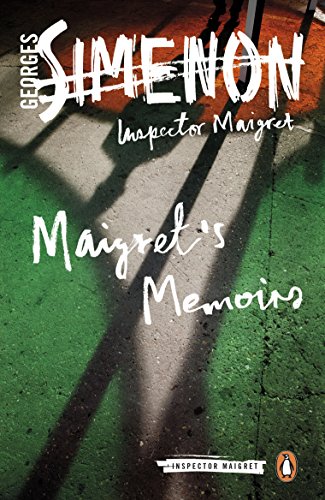
Penguin Classics| 2016| 160 pages| My Own Copy| 4*

I can still see Simenon coming into my office the next day, pleased with himself, displaying even more self-confidence, if possible, than before, but nevertheless with a touch of anxiety in his eyes.’

Maigret sets the record straight and tells the story of his own life, giving a rare glimpse into the mind of the great inspector – and the writer who would immortalise him.

‘One of the greatest writers of the twentieth century . . . Simenon was unequalled at making us look inside, though the ability was masked by his brilliance at absorbing us obsessively in his stories’ Guardian

‘A supreme writer . . . unforgettable vividness’ Independent

The original French version of Maigret’s MemoirsLes Mémoires de Maigret, was first published in 1950. An English translation was later published in Great Britain in 1963. It is unlike any of the other Maigret novels. It’s a fictional autobiography by Georges Simenon writing as Maigret, beginning in 1927 or 1928 when Maigret and Simenon, calling himself Georges Sim, first ‘met’. I don’t recommend reading if you haven’t read some of the Maigret mysteries.

I enjoyed it – it’s a quick entertaining read as Maigret looks back to his first ‘meeting’ with Sim. He fills in some of the background of his early life and talks about his father and how he first met his wife, Louise. Simenon had written 34 Maigret novels before this one and Maigret took this opportunity to correct some of Simenon’s inaccuracies. I recognised some of the books – I’ve read 11 of his first 34 books.

One of the things that irritated Maigret the most was Simenon’s habit of mixing up dates, of putting at the beginning of his career investigations that had taken place later and vice versa. He’d kept press cuttings that his wife had collected and he had thought of using them to make a chronology of the main cases in which he’d been involved. And he also considered some details his wife had noted – concerning their apartment on Boulevard Richard Lenoir, pointing out that in several books Simenon had them living on Place des Vosges without explaining why. There were also times when he retired Maigret even though he was still several years away from retirement. Madame Maigret was also bothered by inaccuracies concerning other characters in the books and by Simenon’s description of a bottle of sloe gin that was always on the dresser in their apartment – that was in actual fact not sloe gin but raspberry liqueur given to them every year by her sister-in-law from Alsace.

Simenon drops facts and information piecemeal in his Maigret books and one thing I particularly like in Maigret’s Memoirs is that it is all about Maigret, but I did miss not having a mystery to solve.
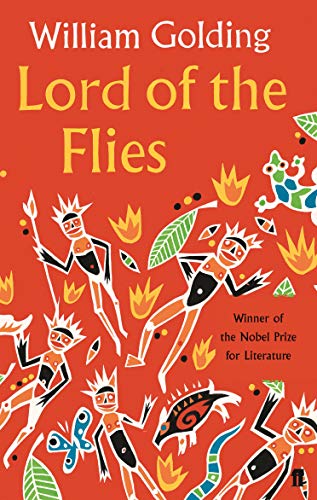
Lord of the Flies by William Golding: a Mini Review of a Short Classic

The first weekly theme for Novellas in November is short classics and I read Lord of the Flies, William Golding’s 1954 novel about a group of boys stranded on a desert island. It was his first novel and it certainly packs a punch. It was described as ‘A post-apocalyptic, dystopian survivor-fantasy … [A novel] for all time … A cult classic.’ Guardian. It’s a quick read of just 183 pages.

What are we? Humans? Or animals? Or savages? What’s grown-ups going to think? Going off-hunting pigs-letting fires out-and now!

A plane crashes on a desert island. The only survivors are a group of schoolboys. By day, they explore the dazzling beaches, gorging fruit, seeking shelter, and ripping off their uniforms to swim in the lagoon. At night, in the darkness of the jungle, they are haunted by nightmares of a primitive beast. Orphaned by society, they must forge their own; but it isn’t long before their innocent games devolve into a murderous hunt …

I thought I’d read this book years ago. But as soon as I began reading I realised I hadn’t read it – it’s one of those books you think you’ve read because you know the basic outline of what happens.

It is frighteningly believable. What at first seemed to the boys as a great adventure – stranded on a desert island, leaving them free to play all day without any annoying interference from adults, soon descended into a sinister nightmare scenario. They elected a leader, Ralph who initially made friends with Jack, the leader of a group of choirboys. But soon the two fell out as Jack, disappointed at not being chosen as leader, tried to take over – and a battle for power followed.

Ralph wanted to make sure they were seen if a ship passed the island and organised the boys to keep a fire going as a smoke signal. But when one of the younger boys thought he saw a beast in the jungle panic set in. Jack made himself the leader of the hunters, promising to hunt and kill the beast band the boys let the fire go out as they joined the hunt. Things got completely out of hand ending in chaos. It is absolutely gripping and very dark, showing the savage side of human nature.

Novellas in November 2022

Novellas in November is being hosted once more by Cathy of 746 Books and Rebecca of Bookish Beck, running from 1-30 November 2022. They suggest 150–200 pages as the upper limit for a novella.

Here’s the schedule:

1–7 November: Short classics (pre 1980) (Rebecca)

8–14 November: Novellas in translation (Cathy)

15–21 November: Short nonfiction (Rebecca)

22–28 November: Contemporary novellas (post 1980) (Cathy)

29–30 November: You might like to post a “New to my TBR” or “My NovNov Month” roundup.

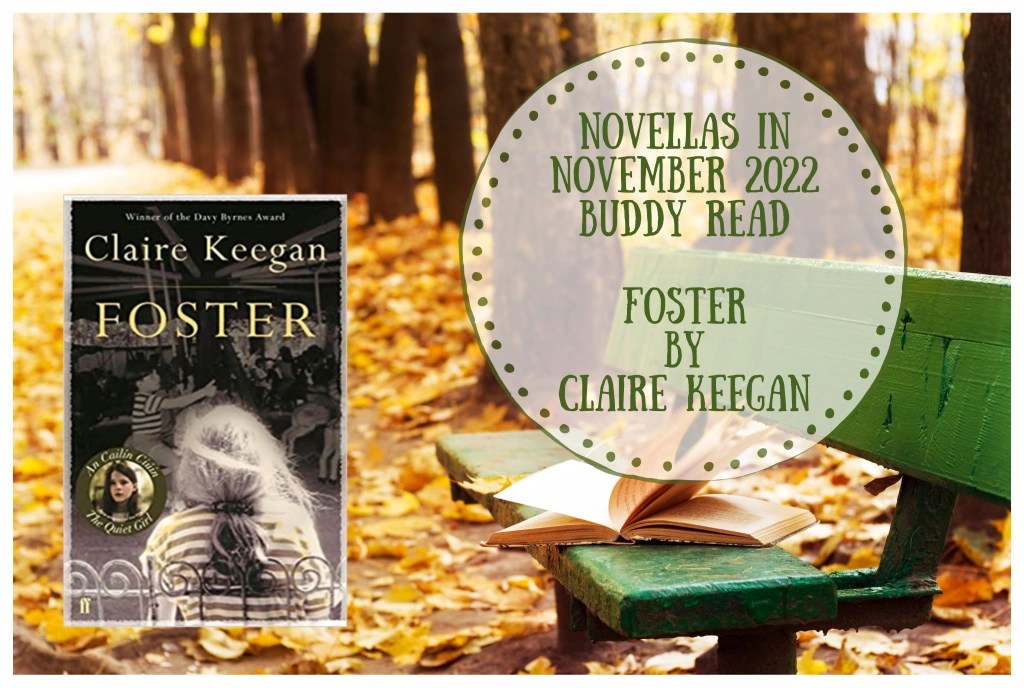
There is also one overall buddy read. Claire Keegan has experienced a resurgence of attention thanks to the Booker Prize shortlisting of Small Things Like These (which I have read – review to follow). Foster is a modern Irish classic that comes in at under 90 pages, and, in its original version, is free to read on the New Yorker website. You can find that here. (Or whet your appetite with Cathy’s review.)

Keegan describes Foster as a “long short story” rather than a novella, but it was published as a standalone volume by Faber in 2010. A new edition will be released by Grove Press in the USA on November 1st, and the book is widely available for Kindle. It is also the source material for the recent record-breaking Irish-language film The Quiet Girl, so there are several ways for you to encounter this story.

I’m aiming to read Foster during November.

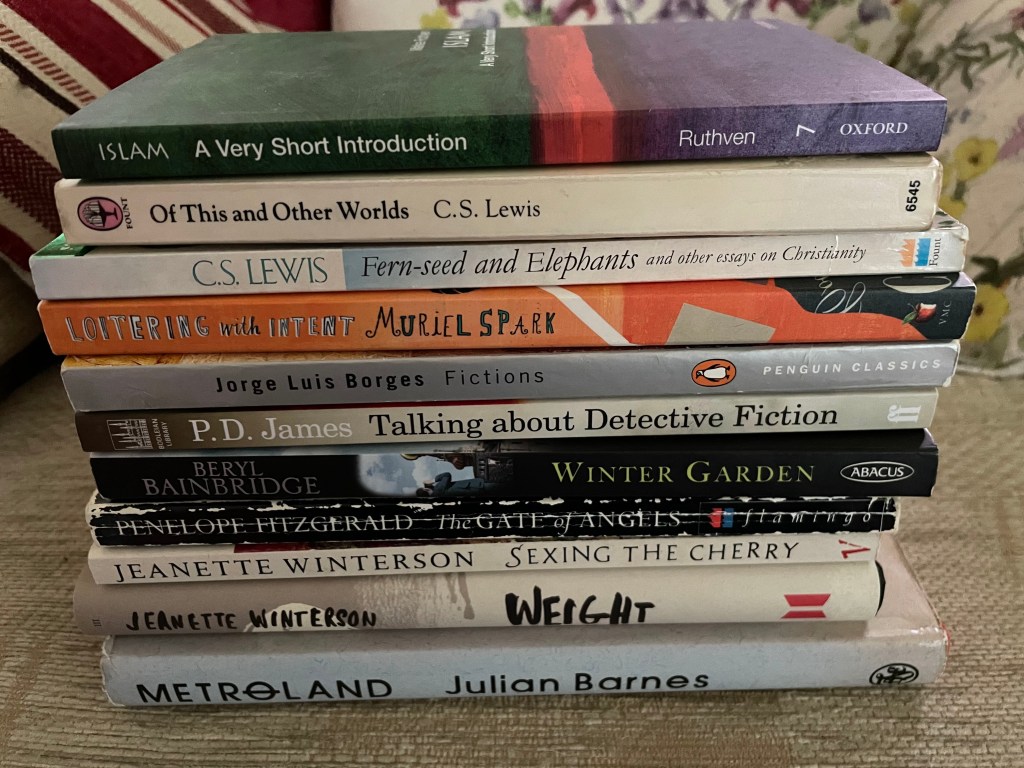
I won’t be taking part every week, as there are other books I want to read. But I’m going to pick a few novellas from this pile. They are a mix of fiction and nonfiction.

And I’ll choose one or more from this selection of novellas on my Kindle:

Lord of the Flies by William Golding
Signal Moon by Kate Quinn
North to Paradise by Ousman Umar
Bill Bailey’s Remarkable Guide to Happiness
The Ardent Swarm by Yamen Manai
Silent Kill by Jane Casey

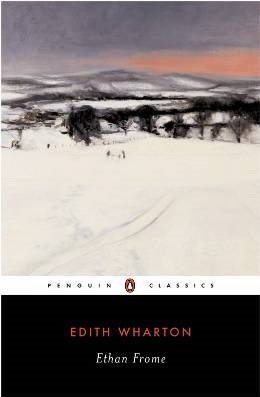
Novellas in November: Ethan Frome

I intended to post this review of Ethan Frome at the weekend, but Storm Arwen stopped that. We were without power from last Friday afternoon until yesterday (Monday) afternoon! It was a cold, dark weekend. So this post about Edith Wharton’s short classic (120 pages) and the ‘buddy’ read is overdue!

I first read it seven years ago and although I remembered that it was a beautifully told tale I didn’t remember all the details. So I loved it all over again when I re-read it. What follows is a revised version of my original review.

It’s a tragedy, signalled right from the beginning of the book, when the unnamed narrator first saw Ethan Frome and was told he had been disfigured and crippled in a ‘smash up’, twenty four years earlier. Life had not been good to him:

Sickness and trouble: that’s what Ethan’s had his plate full up with ever since the very first helping.

Even though Ethan Frome is a tragedy there is light to contrast the darkness, and there is love and hope set against repression and misery. It’s a short book and deceptively simple to read, but there is so much packed into it. As well as striking and memorable characters the setting is  beautifully described – a ‘mute and melancholy landscape, an incarceration of frozen woe‘, in the isolated village of Starkfield (a fictional New England village).

Trapped in an unhappy marriage, Ethan’s life had changed when his father died and he had had to give up his studies to work on the farm. His wife Zeena had always been ill and needing help in the house, which was why her cousin Mattie came to live with them. At first it worked out quite well, but Ethan can’t shrug off a sense of dread, even though he could

… imagine that peace reigned in his house.

There was really even now, no tangible evidence to the contrary; but since the previous night a vague dread had hung on the sky-line. It was formed of Zeena’s obstinate silence, of Mattie’s sudden look of warning, of the memory of just such fleeting imperceptible signs as those which told him, on certain stainless mornings, that before night there would be rain.

His dread was so strong that, man-like, he sought to postpone certainty.

As I said I didn’t remember the details of the tragedy and had thought that the outcome was different, so I was surprised by it. I think that made it even more tragic than I’d thought. I’m glad that I re-read it.

Edith Wharton (1862 – 1937) was an American author. Ethan Frome was first published in 1911 and is in contrast to some of her other books about the New York society of the 1870s to 1920s. It’s a rural tragedy of inevitable suffering and sadness that reminded me of Thomas Hardy’s books.

Picnic at Hanging Rock by Joan Lindsay

Picnic at Hanging Rock is one of the best books I’ve read this year. It was first published in 1967 and has since been republished a few times. The copy I read was published by Vintage in 1998. It’s a novella of 189 pages, with a list of characters at the beginning followed by a note, that indicates the truth of the story it tells is in question:

Whether Picnic at Hanging Rock is fact or fiction the readers must decide for themselves. As the fateful picnic took place in the year nineteen hundred, and all the characters who appear in this book are long since dead, it hardly seems important.

On St Valentine’s Day in 1900, a party of nineteen girls accompanied by two schoolmistresses sets off from the elite Appleyard College for Young Ladies, for a day’s outing at the spectacular volcanic mass called Hanging Rock. The picnic, which begins innocently and happily, ends in explicable terror, and some of the party never returned. What happened to them remains a mystery.

I enjoyed it immensely. I love the detailed descriptions of the Australian countryside and the picture it paints of society in 1900, with the snobbery and class divisions of the period. It’s a hot day, the picnic at the base of Hanging Rock shaded from the heat by two or three spreading gums was going well, and while some of the party dozed in the sunshine four of the girls walked to the Rock to get a closer view. As they walked up to the pinnacles and crags the plain below came into sight, but infinitely vague and distant and a rather curious sound was coming up from the plain, like the beating of far off drums. They neared a monolith rising up in front of them and:

Suddenly overcome by an overpowering lassitude, all four girls flung themselves down on the gently sloping rock in the shelter of the monolith, and there fell into a sleep so deep that a horned lizard emerged from a crack to lie without fear in the hollow of Miranda’s outflung arm.

Nobody had noticed that one of the teacher had also left the picnic. The day ended dramatically when one of the girls ran screaming down to the plain, back to the picnic grounds. She had left the other three girls ‘somewhere up there’, but she had no idea where that was. Despite lengthy searches only one girl was found and she couldn’t remember what had happened. It was all very strange. There’s an eerie feeling hanging over the whole event – during the picnic two of the adults found that their watches had stopped at twelve o’clock and they had no idea of the time. It was as though time had been suspended.

It’s a deceptively simple story, but with so many layers and undercurrents, making this mysteriously compelling reading. All the characters are believable people, each with their own backstories, and all their lives are affected and changed by the events of that one day. There’s a dreamlike quality to the mystery and a suspicion of the supernatural surrounding it. I loved the ambiguity of it all.

This is a Novella in November contribution and also qualifies as an entry for AusReading Month 2021.

Short Classics: The Old Man and the Sea by Ernest Hemingway

It’s the last week of Novellas in November hosted by Cathy and Rebecca, and the final theme is short classics. The buddy read this week is Ethan Frome by Edith Wharton and I’ll post my thoughts later this week. Today my short classic is The Old Man and the Sea by Ernest Hemingway, which won the 1953 Pulitzer Prize for Fiction.In 1954 Hemingway was awarded the Nobel Prize in Literature 1954 for his mastery of the art of narrative and for the influence that he had exerted on contemporary style.

Synopsis – This is the story of an old Cuban fisherman and his supreme ordeal: a relentless, agonizing battle with a giant marlin far out in the Gulf Stream. Using the simple, powerful language of a fable, Hemingway takes the timeless themes of courage in the face of defeat and personal triumph won from loss and transforms them into a magnificent twentieth-century classic.

My thoughts:

A simple story on the surface, told in a few pages, yet full of depth. Hemingway’s language is direct and deceptively simple too, but I was drawn into his descriptive writing, almost a stream of consciousness in placea. I felt the exhaustion of the old man as he struggled to catch the enormous marlin and then to return to the shore with his catch.

It’s one of those books that I find so difficult to write about, a well known story that has received much praise and also a lot of criticism as some people find it boring.. There’s this old man alone on the sea pondering about life and death, what he has achieved and also his failures. He is at the end of his strength and yet he endures. He has perseverance and determination and pride. Pride in his ability and in his way of life. The matter of sin occupies his mind and he thinks it was a sin to kill the fish, even though he did it to keep himself alive and feed many people. Then he thought he was born to be a fisherman:

You did not kill the fish only to keep alive and to sell for food, he thought. You killed him for pride and because you are a fisherman. You loved him when he was alive and you loved him after. If you love him, it is not a sin to kill him. Or is it more?

So, yes this is a simple tale and well told – it is more than just a fishing story and it gave me much to ponder.