Novellas in November 2025 – Books on Kindle

It’s almost time for Novellas in November, hosted by Cathy of 746 Books and Rebecca of Bookish Beck.

I’ve already listed some novellas from my physical TBR shelves and today here are some from my TBR Kindle shelves:

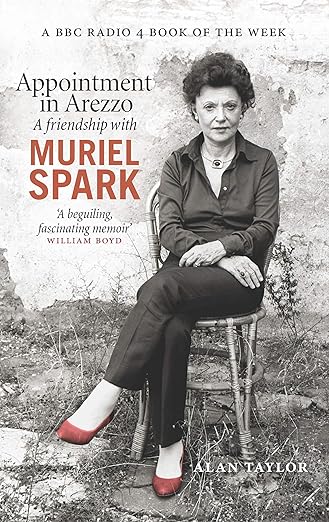
  1. Appointment in Arezzo: A friendship with Muriel Spark by Alan Taylor – 169 pages
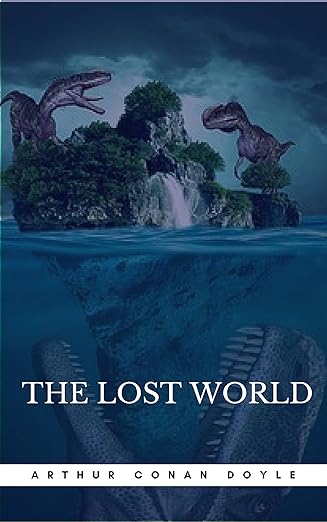
  2. The Lost World by Arthur Conan Doyle – 165 pages
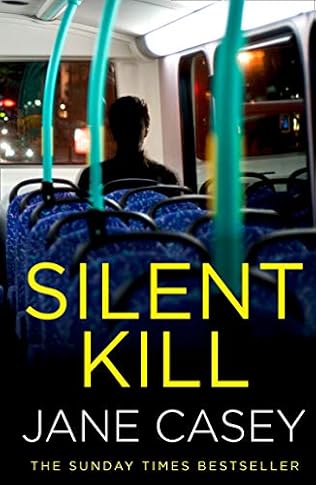
  3. Silent Kill: Maeve Kerrigan Book 8.6 by Jane Casey – 100 pages
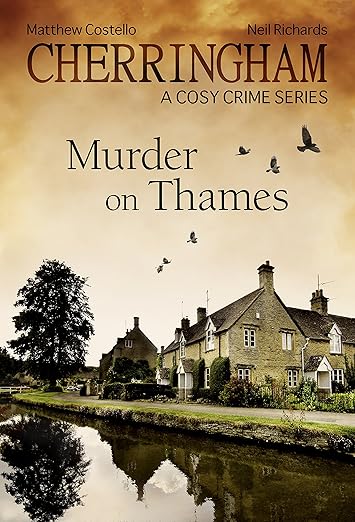
  4. Murder on Thames, a Cherringham: Mystery Shorts Book by Matthew Costello, Neil Richards – 126 pages
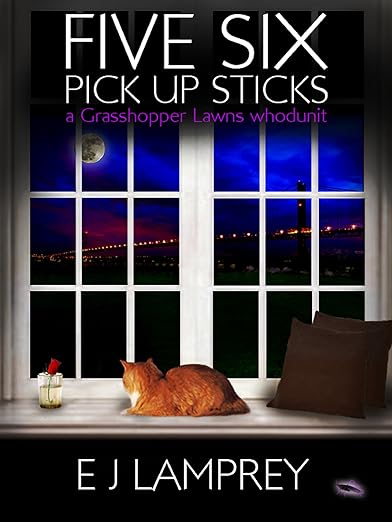
  5. Five Six Pick Up Sticks by EJ Lamprey – 167 pages
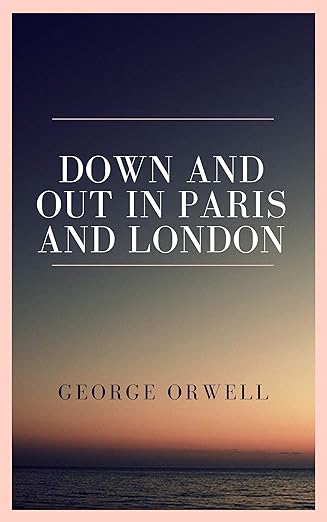
  6. Down and Out in Paris and London by George Orwell – 196 pages
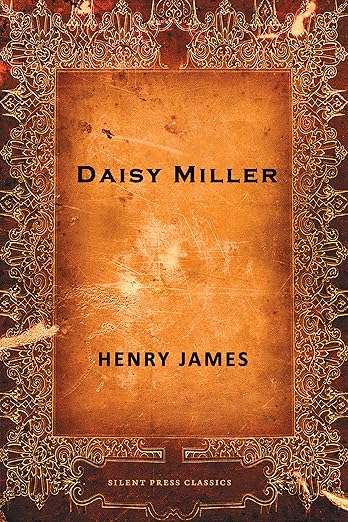
  7. Daisy Miller by Henry James – 69 pages
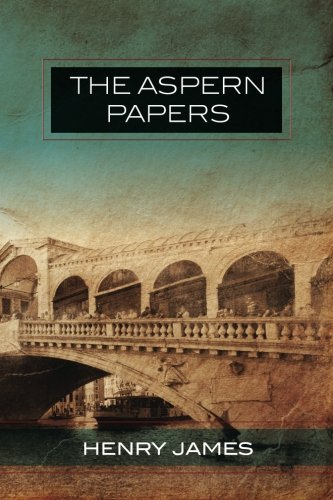
  8. The Aspern Papers by Henry James – 107 pages
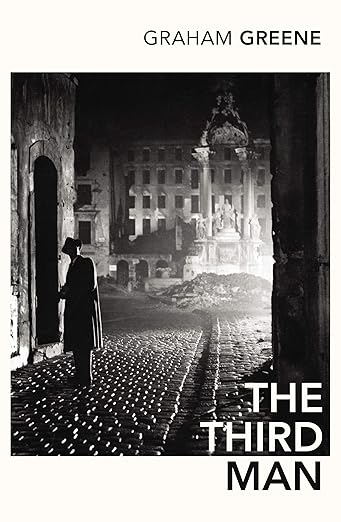
  9. The Third Man and the Fallen Idol by Graham Green – 160 pages
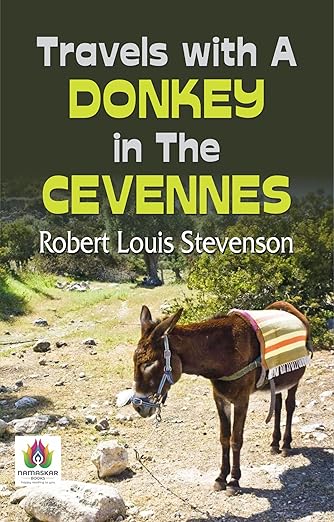
  10. Travels with a Donkey in the Cevennes: A Journey of Solitude and Reflection by Robert Louis Stevenson – 124 pages

Where would you start?

Novellas in November 2025

It’s almost time for Novellas in November, hosted by Cathy of 746 Books and Rebecca of Bookish Beck. It’s now in it’s sixth year. I took part in 2020, 2021 and 2022.

There are no categories this year, although participants are invited to start the month with a My Year in Novellas retrospective looking at any novellas read since last NovNov, and finish it with a New to My TBR list based on the novellas that others have tempted them with over the course of the month.

There are also two buddy reads this year – Seascraper by Benjamin Wood and Sister Outsider by Audre Lorde. 

These are some of the novellas from my TBR shelves:

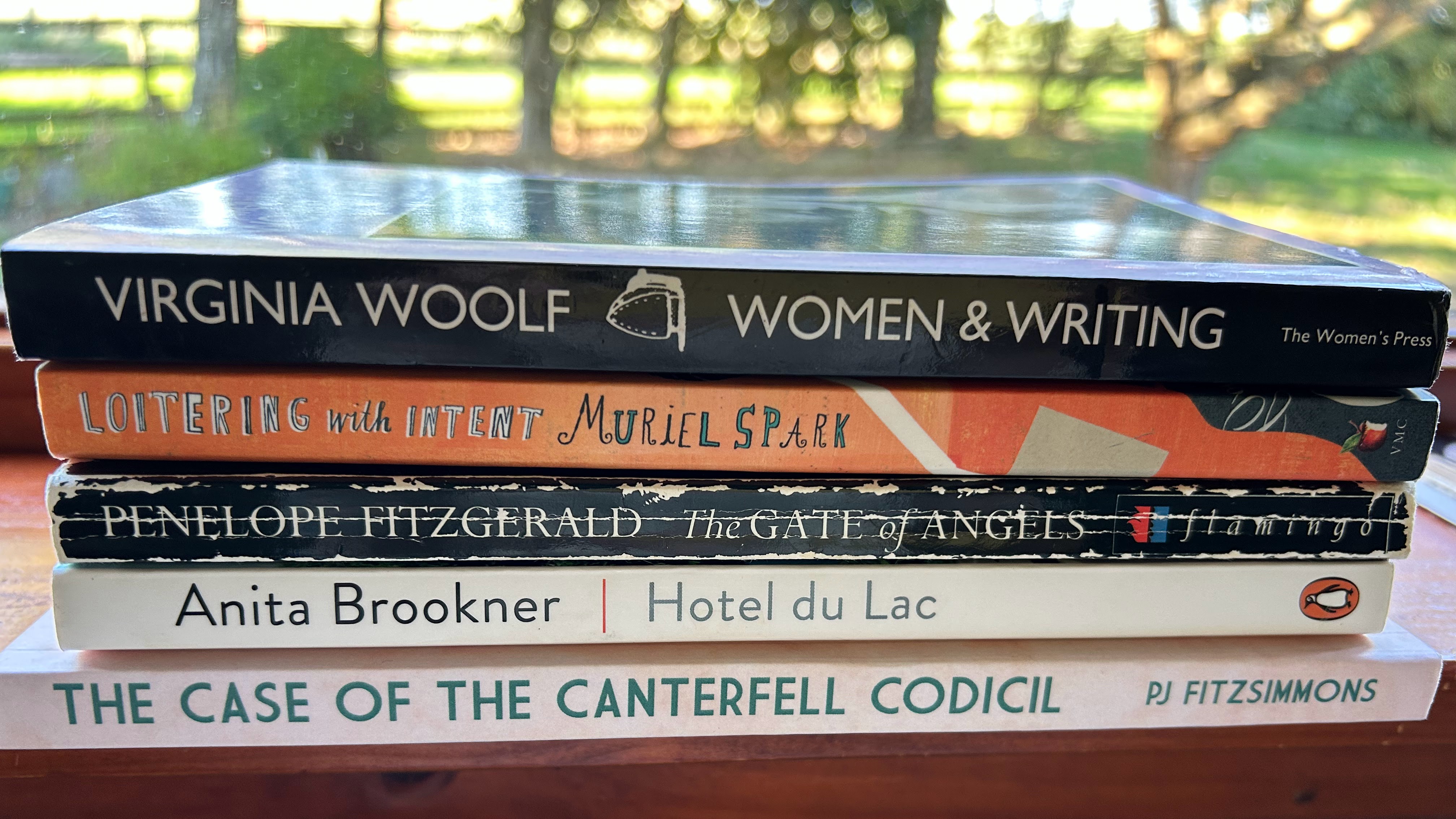
  • Women and Writing by Virginia Woolf – 198 pages
  • Loitering with Intent by Muriel Spark – 172 pages
  • The Gate of Angels by Penelope Fitzgerald – 167 pages
  • Hotel du Lac by Anita Brookner – 184 pages
  • The Case of the Canterell Codicil by PJ Fitzsimmons – 177 pages

At the moment I think I’ll start with The Case of the Canterell Codicil: the first Anty Boisjoly Mystery, described on the back cover:

Anty Boisjoly, nineteen-twenty-never Wodehousian gadabout and clubman , takes on his first case when his old Oxford chum and coxswain is facing the gallows, accused of the murder of his wealthy uncle.

Not one but two locked-room murders later, Anty’s pitting his wits and witticisms against a subversive butler, a senile footman, a single-minded detective-inspector, an irascible goat, and the eccentric conventions of the pastoral Sussex countryside to untangle a multi-layered mystery of secret bequests, ancient writs, love triangles, and revenge, and with a twist in the end that you’ll never see coming.

Where would you start?

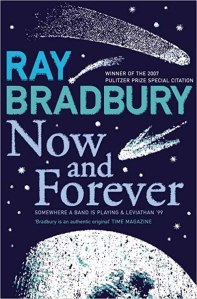
Two Novellas in Now and Forever by Ray Bradbury:#NovNov22

HarperVoyager| 25 June 2012| 240 page| e-book| 4*

Now and Forever is the first book by Ray Bradbury that I’ve read. It contains two novellas – Somewhere a Band is Playing, in which a young writer discovers that all is not as it seems in a nostalgic community, and Leviathan ’99, a retelling of Moby Dick set in space. Two very different stories, each one fascinating, and both with a long history, as Bradbury wrote each one over several decades. They contrast both in style and content. I enjoyed both, but Leviathan ’99 is my favourite.

In the first, Somewhere a Band is Playing, (102 pages) a reporter James Cardiff arrives in Summerton, a small town in the middle of Arizona, a town which seems perfect, a quiet peaceful place. He can hear in the air the quiet sound of a band playing. But the more he explores the more mysterious Summerton becomes. For one thing there are no children and no hospitals or doctors because no one gets ill and even stranger the graves in the cemetery are empty. The story has a nostalgic feel, a sense of melancholy and myth as James, under the guidance of a beautiful young woman, Nefertiti, discovers the truth about Summerton.

Bradbury’s introduction to Somewhere a Band is Playing explains that he begun writing a screenplay and short story about a small town somewhere in the desert and how he had kept encountering Katharine Hepburn either in person or on the screen and was attracted by the fact that she remained youthful throughout the years. Then in 1956 she had made the film Summertime and this had led him to put her at the centre of a story and so Somewhere a Band is Playing slowly evolved. Another element of the story came when he saw the film, The Wind and the Lion and was so taken with the score that he wrote a long poem based on the enchanting music. He then put these elements together to produce this novella, which he dedicated to Anne Hardin, who had encouraged his work and to Katharine Hepburn.

Leviathan ’99’ (101 pages) is dedicated to Herman Melville because after spending a year writing the screenplay for John Huston’s Moby Dick he’d fallen under the spell of Melville and his ‘leviathan whale’. Bradbury then wrote his first script of Leviathan ’99’, which was eventually produced by BBC Radio in London, then as a longer version as a play in 1972. Finally thirty years later he finished writing it as a novella as his ‘final effort to focus and revitalize what began as a radio dream.’

I haven’t read Moby Dick, but I enjoyed this story about spaceships instead of sailing ships, mad astronaut captains instead of seafaring captains and the blind white comet instead of the great white whale. It’s set in 2099 and begins as Ishmael, an astronaut joins the Cetus 7, the largest interstellar ship ever built. The spaceship is on a mission, travelling beyond the stars. His cubicle roommate is Quell, a seven feet tall, green spider who is a telepath. The captain is mad, obsessed with finding the comet, Leviathan, the largest comet in history that had blinded him thirty years earlier. As Quell described it ‘the universe set off a light-year of immensity of photographic flash. God blinked and bleached the captain to this colour of sleeplessness and terror.’

It is an incredible achievement transposing Melville’s 19th century epic into a hundred page novella set in the future.

Two Novellas by Claire Keegan #NovNov22

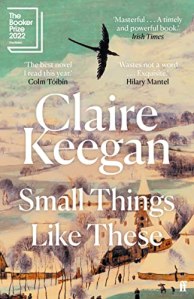
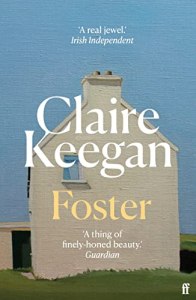
Week 4 in Novellas in November is Contemporary novellas (post 1980). It was only this year that I ‘discovered’ Claire Keegan’s work when her novella, Small Things Like These was shortlisted for the 2022 Booker Prize. I liked the description, so I was eager to read it and I thoroughly enjoyed it. So wanting to read more of her books I read Foster, another novella, which is the buddy read during the Novellas in November event.

Small Things Like These by Claire Keegan (73 pages) 5*

It is 1985, in an Irish town. During the weeks leading up to Christmas, Bill Furlong, a coal and timber merchant, faces into his busiest season. As he does the rounds, he feels the past rising up to meet him – and encounters the complicit silences of a people controlled by the Church.

It won the 2022 Orwell Prize for Political Fiction, an award for outstanding novels and collections of short stories, first published in the UK or Ireland, that illuminate major social and political themes, present or past, through the art of narrative. It also won the Kerry Group Irish Novel of the Year 2022.

Claire Keegan’s style of writing is a refreshing change from so many of the long and complicated books I so often read. It is precise, focused, and beautifully written bringing her characters to life – these are real, ordinary people, living ordinary lives in 1980s Ireland. And the detail is there too in all the particulars of everyday life – it packs a lot into its pages. Bill Furlong is happily married with five young daughters, but he still remembers his own childhood. He never knew who his father was, brought up by his mother and the widow for whom she worked. Life was hard then and his own childhood Christmases were not like his daughters’, and it is this, I think, that makes him such a kind and compassionate man. As he does his rounds delivering coal and wood, he goes to the local convent and is confronted with the cruelty meted out to the young girls living there.

Set in the weeks leading up to Christmas it contrasts the season of hope and joy at the birth of a child with the treatment of unmarried mothers received in the homes known as the Magdalen laundries – and at the end of the story Claire Keegan explains the history of those institutions that were run by the Roman Catholic Church and the Irish State until they were closed down in 1996. Small Things Like These demonstrates the courage and compassion needed to stand up to the power of the church and state.

Foster by Claire Keegan (101 pages) 5*

A small girl is sent to live with foster parents on a farm in rural Ireland, without knowing when she will return home. In the strangers’ house, she finds a warmth and affection she has not known before and slowly begins to blossom in their care. And then a secret is revealed and suddenly, she realizes how fragile her idyll is.

I was amazed at the emotional depth Claire Keegan has instilled into such a few pages. She writes such clear sentences filled with poetic beauty. She shows how a young girl from an overcrowded and poverty stricken family blossomed whilst living with relatives of her mother, the Kinsellas, as her mother is about to give birth to yet another baby.

Yet it is not that straight forward. There is an undercurrent that hints of something that is not right, something that has happened that is never put into words. There is a sadness that pervades the story, along with kindness, caring and compassion. The girl knows she’ll return to her family, but she doesn’t know when, so the story is always told as it is happening. It’s in the present tense, which I never realised until I came to the ending. This is one of the rare instances for me that the use of the present tense seemed just right. The ending too could only happen the way it does. I absolutely loved Foster.
The Black Mountain by Kate Mosse #NovNov22

Week 4 in Novellas in November is Contemporary novellas (post 1980)

The Black Mountain by Kate Mosse (136 pages) 3*

This is a Quick Reads publication – a series of short books by bestselling authors and celebrities. They are designed to encourage adults who do not read often, or find reading difficult, to discover the joy of books. I like the long novels Kate Mosse writes, so I wondered what this short novel would be like.

It is historical fiction set in May 1706 on the northern part of the island of Tenerife, where Ana and her family live in the shadow of a volcano, known locally as the Black Mountain. It’s also a murder mystery – Ana’s father Tomas had apparently committed suicide, but Anna just can’t accept that and reading the letter he’d left she is convinced it was murder. She is determined to find out the truth.

Legend says the mountain has the devil living inside it and when the devil was angry he sent fire and rocks up into the sky. However, there has been no eruption for thousands of years and no one believes it is a threat. Sometimes the earth trembled and shook but the sky never turned red. Until, that is two days after Tomas’ death. He had seen the signs that the mountain was about to erupt and had tried to warn people – but they didn’t want to know. When more tremors occur, and grey ash starts falling Ana realises the danger signs are increasing and she needs to warn people that they must flee before the volcano erupts and destroys their world.

I enjoyed this novella, reading it quickly, feeling almost as though I was also in danger as the Black Mountain threatens to erupt and wondering if Ana would discover the truth about her father’s death in time for her to escape.

The Black Mountain is based on a real historical event. The town of Garachio erupted from May 4 to 5, 1706, which was disastrous not only for the town but also for the entire archipelago. Its port concentrated a large part of the international trade that linked the island with Europe, Africa and America.

~~~

I’ve read a few of the Quick Reads. Here’s a list of all the available titles.

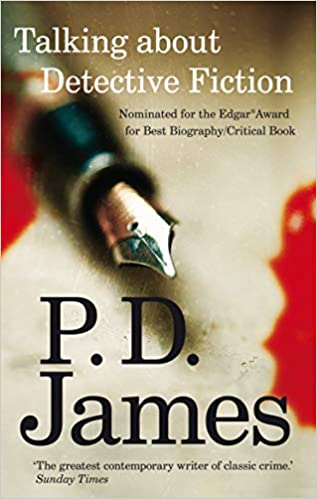
Talking About Detective Fiction by P D James #NovNov22

Week 3 in Novellas in November is Short Nonfiction.

Faber & Faber| 2010| 160 pages| Paperback|My Own Copy| 4*

From the birth of crime writing with Wilkie Collins and Dostoevsky, through Conan Doyle to the golden age of crime, with the rise of Agatha Christie, Ngaio Marsh and Margery Allingham, P. D. James brings a lifetime of reading and writing crime fiction to bear on this personal history of the genre. There are chapters on great American crime writers – the likes of Patricia Highsmith, Raymond Chandler and Dashiel Hammett. James also discusses many of her favourite famous detectives, from Sherlock Holmes to Philip Marlowe.

P.D. James, the bestselling author of Death Comes to Pemberley, Children of Men and The Murder Room, presents a brief history of detective fiction and explores the literary techniques behind history’s best crime writing.

I do like reading books about books and as crime fiction is one of my favourite genres I wanted to read Talking About Detective Fiction by P D James. In December 2006 she was asked to write the book by the Bodleian Publishing House, in aid of the Library. It’s a personal account and being a short book doesn’t go into much detail about any of the writers. It’s an overview of mostly British authors, with just one chapter, entitled Soft-centred and Hard-boiled in which she writes about the differences between the hard-boiled school of American fiction and some of the Golden Age writers.

I’m familiar with the work of most of the authors in this book, but there are some James mentions I haven’t read, such as Dashiell Hammett, who wrote short stories featuring the Continental Op and Sam Spade, who also appears in one full-length novel, The Maltese Falcon. James’ favourite of the hard-boiled writers was Kenneth Millar, who wrote under the pseudonym of Ross Macdonald, novels featuring private detective Lew Archer. But she didn’t give the details of any of his books.

The structure of the book is rather loose and meandering. Although it is divided into eight chapters, the works of some, such as Agatha Christie and Dorothy L Sayers appear in several chapters spread across the book as a whole. The book needs an index to draw the separate entries together! I think the parts I enjoyed the most are those in which James writes about her own methods of working, and the chapter on Telling the Story: Setting, Viewpoint and People.

There is a short bibliography and list of suggested reading at the end of the book. Throughout the book there are several cartoons, which add an amusing touch.

Finally, you need to be aware if you haven’t read The Murder of Roger Ackroyd that without any warning, she gives away not just a little spoiler, but the identity of the murderer! I was amazed!