These names intrigue me and I couldn’t believe they were real when I read about them in Pollock’s Wilberforce. All they meant to me was toast and marmalade and a fizzy drink.
So I looked them up and couldn’t find out much.
Henri Christophe (Wikipedia has an article on him) had seized power in Haiti. He had created a nobility from the former slaves. Their names were derived from the slave holders’ estates and so we have the Duke of Marmalade who was the Commander in Chief and the Comte de Limonade who was the Secretary of State. So, it was oranges and lemons.
I’m always going off on tangents when I’m reading a book – one book always leads to others.
I’m now about half way through Wilberforce and it is growing on me. It’s quite difficult to read because there is a lot of detail about politics in the late 18th century, at the time of William Pitt the younger. It’s a long time since I did this period of British history at school and then I’m sure it wasn’t in so much detail. There are also big chunks quoting from original sources, which is fine for authenticity, but the 18th century style and terminology differs from the 21st century’s. So, concentration is needed for this and also dealing with the number of people connected with Wilberforce. He was most certainly an active person, involved in many areas both in the political and social scene.
I hadn’t realised until reading his book that Wilberforce and Pitt were such friends, nor that Wilberforce was elected to Parliament for Hull in 1780 at the age of 21. Much of the first part of the book is about his campaign against the slave trade and its long and drawn out progress through Parliament and the struggle against the traders, merchants, planters and landed aristocracy whose fortunes derived from sugar and slaves.
To help with my reading I’ve also dipped into a couple of books on my bookshelves – Modern England: from the 18th century to the present by R K Webb and Who’s Who in British History for background information. The book becomes more readable when giving information of the social scene and personal details about Wilberforce himself. More about that when I’ve finished the book and have an overall view of his life.
What I like to get from a biography is a vivid impression of what the person was like, what made him or her tick and after a slow start I’m being to feel as though I’m getting to know Wilberforce as an individual.
This is my copy of Wilberforce by John Pollack, which I’ve just started to read for the book group meeting next Thursday. It has a most annoying front cover because it curls upwards, as you can see. D and I are both reading this and not finding it too enthralling! I don’t think we’ll finish it before the meeting, but that will be OK and we will still be able to give our views. When we’ve finished it (if we finish it) I’ll jot down some thoughts here.
These books are beckoning me. They’re all library books I picked up on Friday. As someone else had reserved it I had to return a book to our local branch library. I didn’t intend borrowing anymore books- I’ve plenty to read. BUT, Arlington Park and Digging to America were on display on the returns counter, along with other books on the Orange Prize Shortlist and so I thought, why not borrow them. The winner, Half of a Yellow Sun by Chimamanda Ngozi Adichie had already gone out, or I’d have borrowed that too.
A quick tour round the library shelves and I also found books by Anita Brookner, Joyce Carol Oates, Reginald Hill and Melvyn Bragg that I hadn’t read. So they all came home with me to add to the To Be Read piles. I really like this little branch library as it always seems to have interesting books, good displays and friendly staff.
This book captivated me. I have read some good books this year, but this one outshines the rest. When I wasn’t reading it I was thinking and talking about it. It’s about experiencing an experience, becoming aware of experiencing the experience and so losing the experience.
I have had the experience of experiencing Jenny Diski’s travels during a year when she visited New Zealand, spent three months in a cottage in Somerset and went to sample the life of the Sami people of Swedish Lapland. No need to go those places myself now. Really, I could be tempted by a trip to New Zealand, but that is only a pipe dream. Now, a cottage in Somerset – that is a real possibility.
I can see myself living in that cottage, but I would not want to be there alone. Her description of her drive to Lilstock, in Somerset identifies the pleasure and gratitude of the present-moment experience of being in a beautiful place, even though this then conjures up the consciousness of
that terribly difficult business of experiencing experience. I am so conscious of me being here, of being me here, not somewhere else, having this experience, that I lose my awareness of what is pleasing me in order to think about the pleasure.
To me being in the right company as well as in the right place enhances rather than diminishes my pleasure.
I don’t need to visit the glow-worm caves or Doubtful Sound in New Zealand, now that Diski has described them to me; indeed she had to miss out on an actual visit to the caves but enjoyed a virtual trip courtesy of an imaginative reading of the brochure ‘what more could we want, particularly as the actual visit to Doubtful Sound was disappointing?‘ And I certainly don’t want to go to cold, dark Lapland even though the enchanting, mythical, magical forest ‘glittering fairyland labyrinth‘ lit up with frost ‘making an intricate latticework which sparkled, twinkled, actually dazzled the eyes, as if the forest had been sprinkled with a layer of diamond dust‘ is beguiling. This is counterbalanced by the difficulty in living in such a hostile environment. Intriguingly this visit was aimed at advertising tourism.
Of course this book is not only about travelling. It is also a personal memoir, and is about being still, being alone, wanting to be alone, phobias and the problems of coping with life and especially with ageing. There is so much in this book that I can empathise with that it is almost alarming. Jenny Diski wants to be alone to a greater extent than I do, but I still identify with feelings such as not wanting to make a noise in case people notice that I’m there, not wanting others to worry about me, and worrying that others are worrying about me; feeling the need to do something such as going out for a walk – not the desire to do it for itself but the feeling that I should want to. On a practical level I also have difficulty with ‘left’ and ‘right’. In my mind I see left and say right etc and like Diski I can only visualise a route for a short distance before it disappears in a grey fuzz in my mind.
There is so much more in this book; it describes adventures in places at the opposite ends of the earth intermingled with personal insights and meditations on solitude and stillness, consciousness and belief systems. I found it a moving, amusing, thought-provoking and original book.
I’ve slowed down in my reading this month, partly because I’ve been blogging more, but also because some of the books have been long and detailed. So, I’ve read 6 books. The first one to be finished was The Giant’s House, which I’ve already written about. I read two non-fiction books – a biography Daphne by Margaret Forster and Alistair McGrath’s The Dawkin’s Delusion? which is a critique of Richard Dawkin’s God Delusion.
Daphne is an extremely well researched and informative account of Daphne Du Maurier’s life, taken from her letters and private papers, with personal memories of her from her children, grandchildren and friends. I didn’t realise until I started this that this year is the 100th anniversary of Daphne Du Maurier’s birth and my reading was enhanced by several broadcasts on the radio and television of dramatisations of her books, plus the excellent programme made by Rick Stein “In Du Maurier Country”, filming the locations of her books and interviews with her family. I’m also enthusiastic about Rick Stein’s books and programmes, (cookery for those who don’t know) – but I digress.
There is too much I could say about Daphne, not least that it is a candid account of her relationships, eg her troubled married life; wartime love affair; and friendships with Gertrude Lawrence and Ellen Doubleday, as well as an excellent source of information on Du Maurier’s method of writing and views on life. She doesn’t sound an easy person to live with or be related to, but that doesn’t detract from her passion for writing and Cornwall. Of course there is Menabilly and the biography gives so much detail of her love for the house and how she renovated and restored it that made me realise all the more how poignant it was when she had to give it up. What makes this book unforgettable for me is Forster’s eloquent way of writing, including so much detail, but never being boring or stilted, leaving me wanting to read on and on. And the book is illustrated with lots of photos.
In complete contrast to this is The Dawkin’s Delusion, which I borrowed from the library. I read Dawkin’s book earlier this year and didn’t have it to hand when I read this one (I’ve lent it to my son), so I had to rely on my memory of The God Delusion. I was interested to read what an Evangelical Christian had made of Dawkin’s book and wasn’t surprised – he didn’t agree with Dawkins! For an excellent review of Dawkin’s book have a look at Bill Hanage’s article “Them’s fightin’ words”on LabLit’s blog . I think I got more out of this article than from McGrath’s book.
Anna Quindlen is a new author to me. I came across her whilst reading Danielle’s blog. Blessings is a satisfying read about a baby abandoned outside “Blessings”, a large house owned by Lydia Blessing. The baby is taken in by Skip, the caretaker cum handyman-gardener, who looks after her at first in secret. The past of all the characters is slowly revealed and the effect that the baby has on them all. It’s a sad book over all, with regrets for what has happened in the past. I shall look out for more books by her.
As for The Thirteenth Tale, I have resisted buying this book, after reading either how fantastic people have found it, or how disappointing it is. The copy I read is a BookCrossing book I found in our local coffee shop. It took me some time to get into this book and I found myself being both reluctant to read it and yet unable to stop. It was only with the appearance of the governess that I found myself actually enjoying the book – and that is the second section. I usually give up on a book before then. Part of the problem I have with this book is that I couldn’t really like the characters, even Margaret, the narrator irritated me somewhat, even though she loves books. Another problem is the ending, which I found to be contrived. All in all, it is not a book I’ll read again and I’m going to release it back to its travels.
Which brings me to The Woodlanders. I borrowed this book from the library to read before continuing with Tomalin’s The Time-Torn Man. I enjoyed it so much that I went out and bought a copy for myself. I’ll post my thoughts in another post. This one has gone on long enough and the sun is shining!
 These names intrigue me and I couldn’t believe they were real when I read about them in Pollock’s Wilberforce. All they meant to me was toast and marmalade and a fizzy drink.


 They’re all library books I picked up on Friday. As someone else had reserved it I had to return a book to our local branch library. I didn’t intend borrowing anymore books- I’ve plenty to read. BUT,
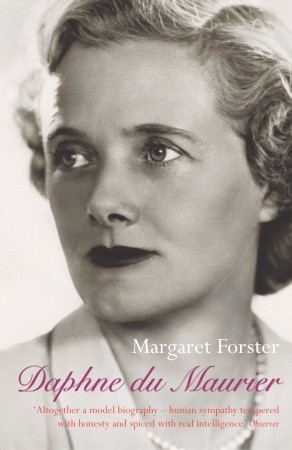
 Daphne is an extremely well researched and informative account of Daphne Du Maurier’s life, taken from her letters and private papers, with personal memories of her from her children, grandchildren and friends. I didn’t realise until I started this that this year is the 100th anniversary of Daphne Du Maurier’s birth and my reading was enhanced by several broadcasts on the radio and television of dramatisations of her books, plus the excellent programme made by Rick Stein “In Du Maurier Country”, filming the locations of her books and interviews with her family. I’m also enthusiastic about Rick Stein’s books and programmes, (cookery for those who don’t know) – but I digress.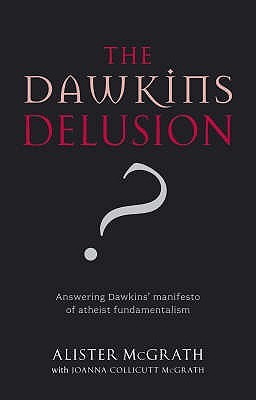

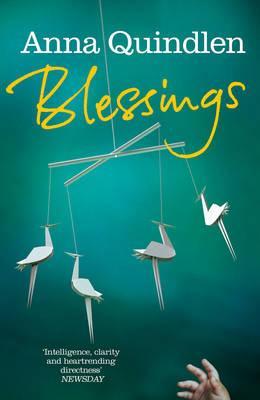
 Anna Quindlen is a new author to me. I came across her whilst reading
 As for The Thirteenth Tale, I have resisted buying this book, after reading either how fantastic people have found it, or how disappointing it is. The copy I read is a BookCrossing book I found in our local coffee shop. It took me some time to get into this book and I found myself being both reluctant to read it and yet unable to stop. It was only with the appearance of the governess that I found myself actually enjoying the book – and that is the second section. I usually give up on a book before then. Part of the problem I have with this book is that I couldn’t really like the characters, even Margaret, the narrator irritated me somewhat, even though she loves books. Another problem is the ending, which I found to be contrived. All in all, it is not a book I’ll read again and I’m going to release it back to its travels.
 BooksPlease