Sunday Salon

tssbadge1I thought I would remind myself of the concept of the Sunday Salon. So I’ve copied this from the Sunday Salon home page  – imagine yourself in some university library’s vast reading room. It’s filled with people–students and faculty and strangers who’ve wandered in. They’re seated at great oaken desks, books piled all around them, and they’re all feverishly reading and jotting notes in their leather-bound journals as they go. Later they’ll mill around the open dictionaries and compare their thoughts on the afternoon’s literary intake….

That’s what happens at the Sunday Salon, except it’s all virtual. Every Sunday the bloggers participating in that week’s Salon get together–at their separate desks, in their own particular time zones–and read. And blog about their reading.

It’s grey outside and it’s raining, so I have some time today to sit and read and then write, even though I should really be sorting out what to pack, what to throw away, and what to take to the charity shops in preparation for moving house.

Today so far I read over my breakfast a few chapters from All the Colours of Darkness by Peter Robinson. This is the second Inspector Banks mystery I’ve read and I’m only at the beginning of this one. So far two bodies have been discovered. One is the body of theatre set designer Mark Hardcastle and appears to be a suicide. But when the second body is found Inspector Banks is dragged back from leave to head the investigation because a senior and experienced officer has to be seen to be in charge. I’ve just made the mistake of glancing at some reviews on Amazon, in which some people have said how disappointing this book is and not up to Robinson’s usual standard. Not everyone agrees of course and I’ll wait until I’ve read it before passing judgement.

I wanted a break from reading crime fiction and wondered what to pick up whilst having a cup of coffee (I’m on my second cup of the day now). I had started Dewey: the Small-Town Library Cat yesterday but it didn’t match my mood this morning. I didn’t feel like a sentimental read, so instead I read some more from Karen Armstrong’s book The Case for God. This is non-fiction indeed – although some may argue that religion is fiction! Any attempt by me to summarise this book would be futile. Basically it’s a run-through of the ideas people have had about ‘God’ over the centuries.

 I like to know an author’s background and qualifications when I’m reading a book like this. I  know that Karen Armstrong became a nun in the 1960s and then left her order and eventually became a writer and broadcaster. According to the information on the book jacket she is also a passionate campaigner for religious liberty, and was awarded the Franklin J Roosevelt Four Freedoms Medal in 2008  for her work. I’ve seen her in discussions on TV and respect her views and way she puts them forward, but I would like to know more about her own personal beliefs.

The Case for God seems to me to be an objective account, mainly concerning the monotheistic faiths, Christianity in particular. This morning I read the chapters on The Enlightenment and Atheism. I have studied the Enlightenment period in the past so I found this chapter easy to read. It contains brief summaries of the various theologians and philosophers of the 18th century both in Europe and America. She writes about Hegel (I know nothing about him, so this was interesting) and points out that

In a way that would become habitual in the modern critique of faith, he had presented a distorted picture of ‘religion’ as a foil for his own ideas, selecting one strand of  a complex tradition and arguing that it represented the whole.

I’ve yet to read what she says about Richard Dawkins, that comes later in the book – should be interesting too.

I haven’t decided yet what I’ll be reading later today. I think I’ll listen to Jerry Springer on Desert Island Discs on the radio this morning. There is a new series on BBC tonight that looks as though it should be good – Garrow’s Law . This is set in the late 18th century – a young, idealistic barrister, William Garrow, is given his first criminal defence case at the Old Bailey by attorney and mentor, John Southouse. So it’s back to crime fiction. It’s based on real cases and William Garrow was a barrister who revolutionised the legal system. So I may not read any more today – other than other Sunday Salon posts that is.

The Perfect Summer by Juliet Nicolson

The Perfect Summer: Dancing into Shadow in 1911 by Juliet Nicolson is a fascinating look at life in Britain during the summer of George V’s Coronation year, 1911.
When I finished reading this book I decided that the summer of 1911 was not “the perfect summer”. It was one of the hottest years of the twentieth century, making life most uncomfortable at a time when most people had no means of getting out of the sweltering heat. Even a trip to the seaside for working class people meant they donned their Sunday best clothes and spent the day standing because they couldn’t afford to hire deck chairs!

Men rarely removed their hats, and the poorer female holidaymaker, possessing neither a special holiday outfit nor light-weight summer clothes, was constrained by the weight of her ‘Sunday best’ – since women dressed for a holiday as they did for a strike – from scrambling over the rocks. These women made an arresting sight against the backdrop of a sparkling blue sea in their artificial-flower-laden hats, their long black skirts brushing the sand as they stood, stifling, in their sturdy black shoes. (page 224)

It was also a summer of discontent as the country was almost brought to a standstill by industrial strikes and the enormous gap between the privileged and the poor was becoming more and more obvious.

Focussing on just the period from May to September this book covers a wide spectrum – from King George’s accession to the throne, Queen Mary’s anxiety over the Coronation and worries about their visit to India (what could she wear?) to debutantes, politicians, poets, factory workers, writers, and women trade unionists. There is little about the suffragettes – they agreed a summer truce for the Coronation. With the benefit of hindsight the threat of the First World War is evident, with the new German warship Panther on its way to Morroco, feared by Winston Churchill (then Home Secretary) and Sir Edward Grey (Foreign Secretary) to be an excuse for territorial aggression.

For me this book was at its best in describing the minutiae of everyday life of both the rich and the poor. One character that sticks in my mind is Eric Horne, a butler. He kept a secret diary:

Not quite the faithful servant he was assumed to be by the deluded individuals who employed him, Eric’s was an increasingly cynical view of the changing world. Some of the noblemen and women he worked for had what seemed to him ‘a kink in the brain’. … Eric bridged the gap between the servers and the served. The evolving memoir, written in his idiosyncratic and uncorrected style, recorded what life was like not only in his pantry below-stairs but in the drawing rooms and bedrooms above. It was incriminating and explosive stuff. Eric knew too much; in fact he knew the truth. (page 149)

He later published two volumes of his memoirs: What the Butler Winked At (1923) and More Winks (1932).

I borrowed The Perfect Summer from the library but there is so much in it that I think I may buy a copy for myself. All the time I was reading it I was thinking this was the world when my grandmother was a young woman and I wondered what it was like for her – how she felt and how much she knew of the national events, living as she did in Wales. The Royal Pageant was at Caernarfon Castle on 13 July that year for the Investiture of the Prince of Wales where ten thousand people attended – I doubt very much she was there!

There is a helpful Dramatis Personnae, a bibliography and useful index. Although the bibliography is extensive, I think I prefer non-fiction to have footnotes, even though they can be a bit distracting, because I like to see the source of the information.

Musing Monday – My Wishlist

Musing Mondays (BIG) Today’s MUSING MONDAYS post from Just One More Page is about books on your wishlist€¦

Last week we talked about keeping a wishlist. Why not pull out that list and show us some of the books you’ve been eyeing off?

I have a wishlist on Amazon, just adding books every now and then. Actually I forget to look at it unless it’s my birthday or Christmas is getting near. I looked at it today for this post and found most of the books are non-fiction – possibly because I read more fiction and non-fiction tends to get overlooked. I’ve copied the descriptions from Amazon.

Some of them have been on the list for years. The oldest entry is dated November 2005! But I do remember adding it after reading some of Iris Murdoch’s novels and thinking Sovereignty of Good would be interesting. I still do.
Iris Murdoch once observed: ‘philosophy is often a matter of finding occasions on which to say the obvious’. What was obvious to Murdoch, and to all those who read her work, is that Good transcends everything – even God. Throughout her distinguished and prolific writing career, she explored questions of good and bad, myth and morality. The framework for Murdoch’s questions – and her own conclusions – can be found in the Sovereignty of Good .

How To Be Free by Tom Hodgkinson. I haven’t read anything by this author and can’t remember where I saw this book but who wouldn’t want to be free?

Read “How To Be Free” and learn how to throw off the shackles of anxiety, bureaucracy, debt, governments, housework, moaning, pain, poverty, ugliness, war and waste, and much else besides.

More recent additions to my wishlist are these:

In Our Time by Lord Melvyn Bragg. I used to listen to this radio series regularly but haven’t managed it recently – this could help fill in the gaps.

Melvyn Bragg’s In Our Time series regularly enlightens and entertains substantial audiences on BBC Radio 4. For this book he has selected episodes which reflect the diversity of the radio programmes, and take us on an amazing tour through the history of ideas, from philosophy, physics and history to religion, literature and biology.

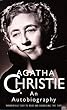
Agatha Christie’s Autobiography. I’ve been reading quite a few of Agatha Christie’s books so I thought I’d like to read more about the author herself.
The life of Agatha Christie as told by herself. It covers her childhood, her first marriage, the birth of her daughter Rosalind, her second marriage to archaeologist Max Mallowan, and an account of her legendary career as a novelist and playwright.

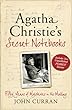
Agatha Christie’s Secret Notebooks
A fascinating exploration of the contents of Agatha Christie’s 73 recently discovered notebooks, including illustrations, deleted extracts, and two unpublished Poirot stories.


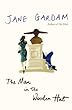
The Man in the Wooden Hat by Jane Gardam. I read Old Fifth a while ago and loved it so I thought this should be good.

Written from the perspective of Filth’s wife, “Betty”, this is a story which will make the reader weep for the missed opportunities, while laughing aloud for the joy and the wit. Filth (Failed In London Try Hong Kong) is a successful lawyer when he marries Elisabeth in Hong Kong soon after the War. Reserved, immaculate and courteous, Filth finds it hard to demonstrate his emotions. But Elisabeth is different – a free spirit.

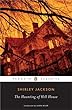
The Haunting of Hill House by Shirley Jackson. I read We Have Always Lived in the Castle earlier this year and loved it. So now I want to read this one.

Hill House stood abandoned six miles off the road. Four people came to learn its secrets. But Hill House stood holding darkness within. Whoever walked there, walked alone.

Sunday Salon – The Case for God by Karen Armstrong

tssbadge1Just as we’ve been all over the place physically – up and down England with occasional forays into Scotland, so my mind and reading has wandered around and I now find that I’ve started several books at once. Some of them are listed on the sidebar over on the right. I’m going to leave them there as a reminder of what I’ve begun, but I’ve decided to concentrate on just reading two books at a time – one non-fiction (Karen Armstrong’s The Case for God;What Religion Really Means) and one fiction (probably Among the Mad by Jacqueline Winspear as I’ve read more of that than the others and it’s a library book that should be returned soon).

Karen Armstrong’s books always impress me – so much detail and words that I have to look up the meaning. I feel rather inadequate when it comes to writing about The Case for God. The book jacket tells me she ‘is one of the world’s leading commentators on religious affairs’ and in the introduction she writes

We are talking far too much about God these days and what we say is often facile. In our democratic society, we think the concept of God should be easy and that religion ought to be readily accessible to anybody. ‘That book was really hard!’ readers have told me reproachfully, shaking their heads in faint reproof. ‘Of course it was!’ I want to reply. ‘It was about God.’ (page 1)

So I knew from the beginning I should concentrate and make notes as I read. I’m now about a third of the way into the book and have several pages of notes of points that particularly interest me. I like this type of book which is balanced and objective, based on extensive  research and knowledge.

Fortunately Karen Armstrong has included a glossary of such words as ‘apophatic’, that I had no idea of  their  meaning (it means ‘speechless’; wordless; silent – referring to theology that defines God in negative terms “God is not …”) and words that I thought I did know such as ‘faith’.  Translated from the Greek ‘pistis; this meant ‘trust, loyalty, commitment’ and did not mean the acceptance of orthodox theology of belief. So when Jesus was berating his disciples for their lack of faith he was not asking them to believe in him but was asking for their commitment to his mission to feed the hungry etc (page 90).

She states that ‘our religious thinking is sometimes remarkably undeveloped, even primitive’ (page 1) and that religion was ‘not primarily something that people thought but something they did.’ (page 4)

This book does not attack anyone’s beliefs – Armstrong states that quarrelling about religion is counterproductive and aims to show how people in the pre-modern world thought about God, throwing light on some problematic issues such as creation, miracles, revelation, faith, belief and mystery. She then traces the rise of the ‘modern God’ (page 9).

I’m reading The Case for God quite slowly and not reading it at night, when I often fall asleep with a book in my hands which means that when I next continue reading I have no idea of what the previous pages were about and have to read them again. So it’s daytime reading with a pen and notebook at hand.

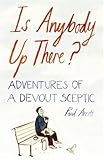
Is Anybody Up There? by Paul Arnott

Subtitled Adventures of  a Devout Sceptic I thought Is Anybody Up There? was an interesting book, although it is more a biography or memoir than an exploration of why Paul Arnott calls himself a sceptic. At times he seemed to me to be advocating most of the world’s religions. He describes how as a child he believed in fairies, leprechauns and Father Christmas, his introduction to Christianity, atheism and his growing interest in Buddhism, Hindusim and Islam.
In fact it’s only with Richard Dawkins that he has any real issues, thinking that “his extrapolations into altruism and faith [in The Selfish Gene] were too deterministic, rich in some answers and impoverished in others.” (page 5)

Writing about Dawkins’s The God Delusion he says

To my mind, it was if he had written a book about football and only focused on the hooligans, corruption in the boardroom, and the few bent referees, ignoring the fantastic skills of both male and female players on the ball and the communal wonder which comes with the scoring of a goal. Dawkins railed against easy targets one after the other, without recognising that every religious person, other than the lunatic fringe he was tilting at, agreed with him wholly about life at the extremes of faith. (page 5)

Arnott’s difficulty is that he just isn’t sure. He explored different faiths, but the “more [he] read and reread, the more any spiritual truth eluded [him].” (page 174) He admits that he “likes religions” (page 211), he commends a “laissez-faire approach” and believes in a “devout acceptance of the beliefs of others” (page 226).  And yes, he does believe there is “somebody” “up there”, whatever that is. His reasons are rather vague -“because of how much is going on out there down here” and because “most people throughout the ages have found it makes more sense to have an idea of divinity than not.”(page 205)

It’s easy reading, with information about a number of religious beliefs, but it’s not very enlightening. Still, I enjoyed reading it.

Seventy Years Ago Today …

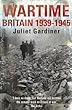
… Neville Chamberlain broadcast that Britain was at war with Germany. In Wartime Britain 1939-1945 by Juliet Gardiner she quotes from the diary of  a twenty-four year old civil servant living in Croydon on 3 September 1939:

The sun is shining, the garden never looked lovelier – everything is in bloom. Tiger [the cat] lies there in the sun; all looks happy and peaceful. But it’s not. War has broken out between England and Germany, beastly, beastly war.

 Winston Churchill’s frame of mind was rather different. He wrote in his memoirs, The Second World War Volume 1: The Gathering Storm, that he knew if war came a major burden would fall on him. On 3 September 1939 he wrote

As I sat in my place [in the House of Commons], listening to the speeches, a very strong sense of calm came over me, after the intense passions and excitements of the last few days. I felt a serenity of mind and was conscious of a kind of uplifted detachment from human and personal affairs. The glory of Old England, peace-loving and ill-prepared as she was, but instant and fearless at the call of honour, thrilled my being and seemed to lift our fate to those spheres far removed from earthly facts and physical sensation.

And so it began …