 Why do writers write? How do they go about it? What inspires them? The Rebecca Notebook and Other Memories gives a glimpse into the mind of Daphne Du Maurier.
Du Maurier began to write Rebecca in 1937 when she was thirty years old, living in Alexandria and feeling homesick for Cornwall. She jotted down chapter summaries in a notebook, setting the book in the mid 1920s ‘about a young wife and her slightly older husband, living in a beautiful house that had been in his family for generations.’ As she thought about it ideas sprang to her mind – a first wife – jealousy, something terrible would happen – a wreck at sea. She became immersed in the story, losing herself in the plot, as so many of us have done ever since.
One question that many people asked her was why she never gave the heroine a name and her answer is so simple – she couldn’t think of one and ‘it became a challenge in technique, the easier because I was writing in the first person.’ I thought this was quite surprising – if it had been me I would have not been able to write it without giving the heroine a name. It’s almost as if Du Maurier identified with her heroine so much that a name wasn’t necessary. It has puzzled me for years and now reading the reason she has no name I’m even more puzzled. See comments.
She made changes to the final published version of Rebecca merging the epilogue into the first chapter and changing the husband’s name from Henry, which she thought dull, to Max and making the housekeeper, Mrs Danvers, more sinister.
I enjoyed the other short pieces in this book – her ‘memories’ of her family and her own life and beliefs. The first three are about her grandfather, George Du Maurier, her father, Gerald and her cousins, the Davies boys. She wrote with nostalgia about George, who was an artist and writer – ‘a man who worshipped beauty’ and Gerald, who she described as ‘the matinee idol’, a leading actor-manager in the 1920s and early 30s.
Then there are memoirs on her thoughts entitled My Name in Lights, Romantic Love, This I Believe and Death and Widowhood. She disliked the ‘trappings of success’, thought there was no such thing as ‘romantic love’. The ‘sceptic of seven who queried the existence of God in the sky, of fairies in the woods, of Father Christmas descending every London chimney in a single magic night, remains a sceptic at fifty-seven, believing all things possible only when they can be proved by scientific fact.’
She wrote Death and Widowhood with the aim of helping others ‘who have suffered in a similar fashion’, about her husband’s death and the finality of being alone, pondering on immortality and the practicalities of daily life.
There are descriptions of finding the house she loved, Menabilly, of the upheaval of leaving it, and the move to Kilmarth (the house she wrote about in her novel The House on the Strand.)
Sunday (written in 1976) looks back on that day’s events when she was a child contrasted with the events of that day in her old age – a day for privacy and reflecting on the miracle of creation and a Creator. Finally, there are three poems, The Writer (1926), Another World (1947) and A Prayer (1967).
Mine is the silence
And the quiet gloom
Of a clock ticking
In an empty room,
The scratch of a pen,
Inkpot and paper,
And the patter of rain.
Nothing but this as long as I am able,
Firelight €“ and a chair, and a table.
(from The Writer, 1926)





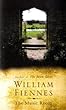 The Music Room
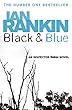 It’s a real page-turner and very complicated. I’m reading it quickly because I want to know what happens next and to see how Rebus gets himself of the terrible mess he is in – suspected by his superiors of being a killer(!) and of corruption back in his early days as a detective, along with Lawson Geddes, his boss at the time. He’s being investigated by a TV company and also by the police themselves in an internal enquiry and all the time he’s spiralling downhill under alcohol and cigarettes. I’m thinking that when I get to the end I may go back to the beginning and read it again more slowly to appreciate the detail.
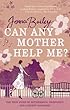 This contrasts so well with the other book I’m reading –


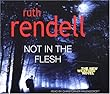 Dave and I listened to this in the car whilst travelling to Northumberland and back. This is an Inspector Wexford mystery – a man taking his dog for a walk discovers a severed hand, which turns out to be part of a skeleton wrapped in a purple sheet. The police have to discover the identity of the victim – and of the body of a second corpse found in a nearby house. Both have been lying undiscovered for at least ten years. I’m not used to listening to books and I did find it a bit difficult to follow. Of course, the sat nav and traffic news kept interrupting which didn’t help, but even so I did get confused. There were too many people and sub-plots. Maybe I should read the book.
 I loved this memoir. Diana Athill comes across as an honest writer, not afraid to say what she thinks, now she is no longer an editor. As the title indicates, she writes about what it is like getting towards the end of her life. At the time of writing she was 89 years old and looking back on her life with few regrets. This is a book I may well buy to re-read at leisure.
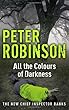 I have mixed feelings about this book, parts of it really interested me, but I could have done without the terrorist attack and involvement of MI5 and MI6. This is only the 2nd Inspector Banks book I’ve read and it’s the 18th in Robinson’s series. I think that doesn’t matter as I had no difficulty in sorting out his relationships and although other cases are referred to this reads OK as a stand-alone book. What I did have difficulty with was believing the spy stuff – one of the victims had been a spook. What I do like is Robinson’s descriptive writing eg:
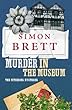 This is the fourth in Simon Brett’s Fethering Mysteries series. It’s set in Bracketts, an Elizabethan house, the former home of Esmond Chadleigh, a celebrated poet during his lifetime. The house is about to be turned into a museum, although not all the Trustees agree. Carole Seddon has been co-opted onto the Board of Trustees and when a skeleton is discovered in the kitchen garden she soon becomes involved in solving the mystery. Then Sheila Cartwright, the bossy domineering former Director of the Trustees is shot, and Carole finds her own life is in danger.
 BooksPlease