A Non-Fiction Adventure

NF Adventure


I don’t read as much non-fiction as fiction. I find it needs more concentration and so often pick up and read fiction. But I do like non-fiction and own quite a lot of it. I’ve been trying to read more and one way that helps me to focus on reading it is the This Isn’t Fiction Reading Challenge run by Birgit at The Book Garden.

Now, thanks to Bev at My Reader’s BlockI’ve found another wayA Non-Fiction Adventure.  Like The Classics Club this one runs for five years. It’s hosted by Michelle of The True Book Addict

The Sign- up is here.

These are the guidelines:

  • Choose 50+ non-fiction books; the number is up to you. Choose 50, 75, 100, 200. It’s entirely your choice.
  • Books must be non-fiction – biography, autobiography, history, memoir, cooking, travel, science, etc.
  • List them at your blog (or on Goodreads or another social media site, if you do not have a blog)
  • Choose your completion goal date five years in the future.

My five years run from 14 August 2013 to 14 August 2018.

My Goal: 50 books, initially choosing from these 60 books: all books I own; there are more, but I think this is enough to start with. I like the idea that your list can change, so this is just a starting point and no doubt I’ll find other books I want to read during the next five years!

Autobiographies/Diaries/Letters

  1. Jane Austen’s Letters
  2. Diaries 1969-1979: The Python Years 1969-1979 by Michael Palin
  3. Between the Woods and the Water: On Foot to Constantinople: From The Middle Danube to the Iron Gates by Patrick Leigh Fermor
  4. Great Meadow: an Evocation by Dirk Bogarde
  5. Slipstream: a Memoir by Elizabeth Jane Howard
  6. Trollope: an Autobiography
  7. A Long Walk to Freedom by Nelson Mandela
  8. The Snow Geese by William Fiennes
  9. A Time to Dance, No Time to Weep by Rumer Godden
  10. Corvus: a Life with Birds by Esther Woolfson
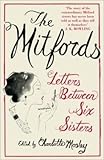
  11. The Mitfords: Letters between Six Sisters by Charlotte Mosley  editor
  12. Chronicle of Youth by Vera Brittain

Biographies

  1. Being Shelley by Anne Wroe
  2. The Wolf That Never Sleeps by Marguerite de Beaumont (Baden-Powell)
  3. The Innocent Man by John Gresham
  4. Mary Queen of Scots by Alison Weir
  5. Victorian People by Asa Briggs
  6. D H Lawrence: the Life of an Outsider by John Worthen
  7. Billy by Pamela Stephenson
  8. The Life of Samuel Johnson by James Boswell
  9. William Barclay by Clive Rawlins
  10. Thomas Hardy: the Time-torn Man by Claire Tomalin
  11. Howard Hughes by Peter Harry Brown
  12. Marilyn Monroe by Barbara Leeming
  13. Shakespeare: the biography by Peter Ackroyd
  14. Charles Dickens: a Life by Claire Tomalin
  15. Dickens by Peter Ackroyd
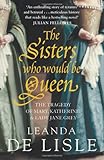
  16. The Sisters Who Would Be Queen: The tragedy of Mary, Katherine and Lady Jane Grey by Leanda de Lisle
  17. Virginia Woolf: a Writer’s Life by Gordon Lyndall
  18. Mary Queen of Scots by Antonia Fraser
  19. L S Lowry: a Life by Shelley Rhode
  20. Agatha Christie at Home by Hilary Macaskill

History

  1. Great Escape Stories by Eric Williams
  2. Big Chief Elizabeth by Giles Milton
  3. Band of Brothers by Stephen E Ambrose
  4. How the Girl Guides Won the War byJane Hampton
  5. The Making of Modern Britain byAndrew Marr
  6. After Elizabeth: the death of Elizabeth and the coming of King James by Leanda de Lisle
  7. Stalingrad by Anthony Beevor
  8. The English by Jeremy Paxman
  9. Shakespeare’s Restless World: An Unexpected History in 20 Objects by Dr N Mcgregor
  10. Wartime Britain by Juliet Gardiner
  11. 1599:  A Year in the Life of William Shakespeare by James Shapiro
  12. The Games We Played by Susan Kelleher
  13. Glencoe by John Prebble
  14. On the Trail of the Assassins by Jim Garrison

Philosophy/ Religion

  1. Sovereignty of Good by Iris Murdoch
  2. Think: a compelling introduction to philosophy by Simon Blackburn
  3. Meditations by Aurelius
  4. C S Lewis: the Man and His God by Richard Harries
  5. Islam: a very short introduction by Malise Ruthven

Reading/ Writing

  1. Virginia Woolf on Women and Writing
  2. A Reading Diary by Alberto Manguel
  3. The Companion to the History of the Book by Simon Eliot & Jonathan Rose editors
  4. How Fiction Works by James Wood
  5. You English Words by John Moore

Miscellaneous

  1. Weeds by Richard Mabey
  2. Gorillas in the Mist by Dian Fossey
  3. Rivers by Griff Rhys Jones
  4. The Penguin Book of Lies by Philip Kerr editor

Sunday Selection: Sisters

One of my aims this year is to reduce my massive backlog of unread books, hence the reason for joining the Mount TBR Reading Challenge.  I’m not doing too badly as so far I’ve read 19, but it’s still only a drop in the ocean. In June I wrote about some of the books I’ve owned for more than a year and today I’m looking at some more the books on the list – in some cases I’ve had these books for several years! It’s about time I read at least one of these sometime soon. I don’t like to plan too far ahead what I’m going to read but I like to have some titles in mind.

When I looked through my books I realised that I was picking out books about SISTERS:

First up for consideration are two non fiction books (the blurbs are extracts from Amazon/Goodreads):

The Sisters Who Would Be Queen: The tragedy of Mary, Katherine and Lady Jane Grey by Leanda de Lisle – this is the story of the tumultuous lives of Lady Jane Grey, known as the ‘Nine-Day Queen’ and her sisters. I’ve had this book for 3 years. I was full of enthusiasm when I first bought it because I’d been reading novels about the Tudor period and thought I’d balance them with non fiction.

Lady Jane Grey is an iconic figure in English history. Misremembered as the ‘Nine Days Queen’, she has been mythologized as a child-woman destroyed on the altar of political expediency. Exploding the many myths of Lady Jane’s life and casting fresh light onto Elizabeth’s reign, acclaimed historian Leanda de Lisle brings the tumultuous world of the Grey sisters to life, at a time when a royal marriage could gain you a kingdom or cost you everything.

The Mitfords: Letters Between Six Sisters by Charlotte Mosley – a selection of unpublished letters between the Mitford sisters – Nancy, Pamela, Diana, Unity, Jessica and Deborah. I’ve had this book for 5 years! I think two of the reasons I’ve not read it before now is that it is so long – over 800 pages and it’s in a very small font.

Carefree, revelatory and intimate, this selection of unpublished letters between the six legendary Mitford sisters, compiled by Diana Mitford’s daughter-in-law, is alive with wit, passion and heartbreak. The letters chronicle the social quirks and political upheavals of the twentieth century but also chart the stormy, enduring relationships between the uniquely gifted ‘and collectively notorious Mitford sisters’. 

And then some novels featuring sisters:

Bunner Sisters by Edith Wharton. I’ve not had this one for that long – just since last November. I down loaded it on my Kindle because it’s a free book and I thought maybe I should try another book by Edith Wharton, having failed to finish The House of Mirth. At the time I was not in the mood for it.

In the days when New York’s traffic moved at the pace of the drooping horse-car, when society applauded Christine Nilsson at the Academy of Music and basked in the sunsets of the Hudson River School on the walls of the National Academy of Design, an inconspicuous shop with a single show-window was intimately and favourably known to the feminine population of the quarter bordering on Stuyvesant Square. It was a very small shop, in a shabby basement, in a side-street already doomed to decline; its fame was so purely local that the customers on whom its existence depended were almost congenitally aware of the exact range of “goods” to be found at Bunner Sisters’.

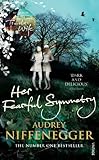
Her Fearful Symmetry by Audrey Niffeneger – I’m not sure how long I’ve had this book, but it’s about three years. I’m not sure I’ll like it as I wasn’t keen on The Time Traveler’s Wife, but it was the time travelling aspect that irritated me with that book – the constant switching backwards and forwards in time. This one looks a bit different.

Set in and around Highgate Cemetery in London. Julia and Valentina are semi-normal American teenagers with an abnormally intense attachment to one another. The girls move to their aunt’s flat, which borders Highgate Cemetery in London and as the girls become embroiled in the fraying lives of their aunt’s neighbors, they also discover that much is still alive in Highgate, including–perhaps–their aunt, who can’t seem to leave her old apartment and life behind.

Rise and Shine by Anna Quindlen, a book I’ve had for six years! I bought it because I’d enjoyed Blessings a satisfying but sad novel about an abandoned baby. 

A novel about two sisters, the true meaning of success, and the qualities in life that matter most. It’s an otherwise ordinary Monday when Meghan Fitzmaurice’s perfect life hits a wall. A household name as the host of Rise and Shine, the country’s highest-rated morning talk show, Meghan cuts to a commercial break but not before she mutters two forbidden words into her open mike. 

In an instant, it’s the end of an era, not only for Meghan, who is unaccustomed to dealing with adversity, but also for her younger sister, Bridget, a social worker in the Bronx who has always lived in Meghan’s long shadow.

I’ve nearly finished reading Third Girl by Agatha Christie, also one of my to-be-read books, so now all I have to do is decide which book to read next. At the moment I’m leaning towards Her Fearful Symmetry, despite my misgivings about The Time Traveler’s Wife.

July's Books

July was a bumper reading month for me, as I finished reading 11 books and I’ve written about 8 of them (those in blue font link to my posts on the books). (And I’ve actually been able to spend some time gardening – when it hasn’t been too hot – or too wet!!!)

  1. Falling Angels by Tracy Chevalier (from TBR books) Historical Fiction
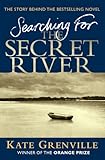
  2. Searching for The Secret River by Kate Grenville (library book) Non Fiction
  3. The Drowning by Camilla Lackberg Crime Fiction
  4. Tamburlaine Must Die by Louise Welsh (from TBR books) Historical/Crime Fiction
  5. The Lost Symbol by Dan Brown
  6. The Bookman’s Tale by Charlie Lovett Historical/Crime Fiction
  7. To Kill a Mockingbird by Harper Lee (from TBR books)
  8. The Sense of an Ending by Julian Barnes (from TBR books)
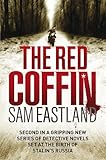
  9. The Red Coffin by Sam Eastland (from TBR books) Historical/Crime Fiction
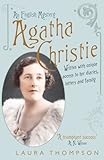
  10. Agatha Christie: an English Mystery by Laura Thompson (library book) Non Fiction
  11. The Case of the Howling Dog by Erle Stanley Gardner (from TBR books) Crime Fiction

It’s been a good month as I’ve read 6 books from my huge pile of unread books, bringing my total of TBRs up to 20 for the year so far. I’m aiming to read as many of my own unread books as I can this year.

There are also 2 non fiction books – shown underlined – a total of 8 for the year so far. I always intend reading more non fiction but usually get sidetracked by the fiction. It generally takes me longer to read non fiction than fiction, so to read 2 in one month is good for me.

Four of the books I read are historical fiction and this means I’ve nearly reached my target of 15 books for the year.

I think the best book I’ve read this month has to be To Kill a Mockingbird by Harper Lee. I loved it and hope to write more about it soon.

Crime fiction is currently making up about half of my reading and this month I’ve read 5. Each month Kerrie at Mysteries in Paradise hosts a post linking to bloggers’ Crime Fiction Picks of the Month.  My Pick this month is The Red Coffin by Sam Eastland.

 Synopsis

It is 1939. The world stands on the brink of Armageddon. In the Soviet Union, years of revolution, fear and persecution have left the country unprepared to face the onslaught of Nazi Germany. For the coming battles, Stalin has placed his hopes on a 30-ton steel monster, known to its inventors as the T-34 tank, and, the ‘Red Coffin’ to those men who will soon be using it. But the design is not yet complete. And when Colonel Nagorski, the weapon’s secretive and eccentric architect, is found murdered, Stalin sends for Pekkala, his most trusted investigator. Stalin is convinced that a sinister group calling itself the White Guild, made up of former soldiers of the Tsar, intend to bring about a German invasion before the Red Coffin is ready. While Soviet engineers struggle to complete the design of the tank, Pekkala must track down the White Guild and expose their plans to propel Germany and Russia into conflict.

My view:

I haven’t read Sam Eastland’s first book, Eye of the Red Tsar, about Inspector Pekkala but I had no difficulty in understanding the background to the novel – it works well as a stand-alone. It’s a fast paced plot with flashbacks to Pekkala’s earlier life as an investigator for the Tsar. He is now an investigator for Stalin, charged with discovering the murderer of Colonel Nagorski. A nicely complicated plot, mixed in with historical facts, but as I know very little Russian history I can’t comment on its accuracy – some interesting information about the Tsarina and Rasputin, and Stalin doesn’t come across as the character I thought he was though. I enjoyed it and it kept me guessing until the end.

Agatha Christie: An English Mystery by Laura Thompson

It took me weeks to read Laura Thompson’s book Agatha Christie: An English Mystery. It has taken me several days to write and re-write this post because I’ve found it difficult to put down my thoughts about it without going into too much detail (and this is still a long post). My overall impression of the book is that I felt as though I was intruding into Agatha Christie’s private life that she had not wanted to be made known. I also think that Laura Thompson had found it difficult to separate the woman from her writing, because throughout the book facts are interspersed with suppositions drawn from Agatha Christie’s novels and in particular from Unfinished Portrait, a novel Agatha wrote under the pseudonym, Mary Westmacott.

Agatha Christie: An English Mystery is described as a ‘perceptive and stylish biography‘ on the jacket sleeve, but it is not just a biography; it is also a study of Agatha Christie’s novels, drawing conclusions from her writing about her thoughts, feelings and emotions and a fictionalised version of Agatha’s disappearance in 1926. Laura Thompson’s sources are unpublished letters, papers and notebooks.

First of all, concerning the study of the novels I was dismayed as I was reading this book at the amount of information she reveals about the crime fiction novels, including giving away who the murderers are in a number of cases. Charles Osborne’s book The Life and Crimes of Agatha Christie is much better, outlining the books, not just her crime novels but also her non-fiction, stories for children, poetry and plays in chronological order and nowhere does he reveal the identity of any of the murderers.

Then the fictionalised version of Agatha’s disappearance is in a chapter called ‘The Quarry‘, which begins ‘Time for a new story‘, words which did not immediately alert me that Laura Thompson was no longer writing strictly from the sources at her disposal but also from her imagination, putting words into Agatha Christie’s mouth that she could not have known, and describing her reactions to the people she met and the newspaper reports of her disappearance. Later in this chapter she wrote:

All biography is story-telling. No life is a code to be deciphered: there will always be gaps and inconsistencies, and it is stories that make the missing connections. Omniscience is for Hercule Poirot. Real life knows less; it has the beauty of mystery; and this, despite the books she wrote, was something that Agatha understood very well. She must have known she had created a puzzle of a different order, with all the geometric complexity of ‘Roger Ackroyd’ – and how to work it out? Turn it this way? That way? – and yet the twist in the tale: it was true, and therefore it could never be solved. It was perfect in fact. The perfect metaphor for human mystery. What could be more impenetrable than the woman who moved through Harrogate like a smiling ghost, reading newspaper reports about her own vanished self? (page 219)

I just wish she had not gone so far down the story-telling line in this book and had left this episode of Agatha Christie’s life as an impenetrable mystery, or at least had made it clear straight away when she was writing imaginatively. I have absolutely no objections to fictionalised versions of a life (for example I really liked Justine Picardie’s book Daphne: a novel, which merges fact and fiction) but I do think it should be obvious that it is fictionalised. Nor do I object to different interpretations of

Laura Thompson quotes from Unfinished Portrait, using this as evidence of Agatha’s thoughts, beliefs, and emotions. In Osborne’s book he also states that Unfinished Portrait, which was published in 1934, is based on events in Agatha’s life:

The story of Celia is remarkably similar to the story of Agatha as readers were eventually to be offered it in ‘An Autobiography’ more than forty years later. Several incidents are common to ‘An Autobiography’  and ‘Unfinished Portrait’, and the novel is quite clearly a fictionalised, more detailed, and emotionally more forthcoming version of the first third of the biography. The portraits of Celia’s mother and her grandmother are really of young Agatha Miller’s mother and the grandmother with who she stayed in Ealing. The men in Celia’s life are the men in Agatha’s life, and Dermot, whom Celia marries, is Archie Christie. (page 105)

but he also quotes from Max Mallowan’s writings about the book, pointing out it is a blend of fact and fiction:

The book is not one of her best because, exceptionally, it is a blend of real people and events with imagination. Only the initiated can know how much actual history is contained therein, but in Celia we have more nearly than anywhere else a portrait of Agatha. (page 106 of ‘The Life and Crimes of Agatha Christie’)

It is evident that Agatha Christie wrote about things she knew – the use of poisons from her work in a pharmacy during the First World War and her journey on the Orient Express are just two examples. Laura Thompson later in the book acknowledges that it is impossible to know what Agatha really thought – this is in the chapter called ‘The Second Husband‘, (page 298) writing about Agatha’s reaction to the Woolleys’ interference with her honeymoon with Max Mallowan. And she acknowledges that it would not have occurred to Agatha Christie that conclusions about her character would be drawn from her remarks in the novels about Jews, ‘blacks’ and servants, so I think it is difficult to decide what inferences can be drawn about Agatha from her fiction!

The last sections of Thompson’s book deal in detail with Agatha Christie’s tax problems and there is a rather ‘gossipy’ section about whether or not Max was having affairs. Overall, I think that the book as a biography is unbalanced, concentrating on the events surrounding Agatha’s disappearance and there is much speculation and supposition. I prefer Agatha’s own version of her life: An Autobiography, in which she merely referred to the events of 1926 thus:

The next year of my life is one I hate recalling. As so often in life, when one thing goes wrong, everything goes wrong. (page 356)

Finally, if biography is ‘story-telling’, about making connections to fill in the missing gaps with stories, then I’m not sure I want to read it and there have been several times when reading this book that I’ve thought about abandoning it. I’m uncomfortable with the feelings it can provoke – disliking gossip, distrusting witnesses who may have a private agenda, and squeamishness about reading private correspondence. I felt all of this whilst reading this book.

I went back to a book I read a few years ago – Hermione Lee’s book Body Parts: Essays on Life-Writing.This is about writing biography and the relationship of biography to fiction and history. Lee writes that biographies must give a ‘quasi-fictional, story-like shape to their material (or no none will read them)’, but against this there is the ‘responsibility for likeness and the need for accuracy’.Gaps and silences give rise to interpretations ‘through a process of conjecture, invention, intuition and manipulation of the evidence.’  Biography may seem as if it is factual because it is constructed from sources such as letters, diaries and other people’s accounts, etc but it is inevitably an interpretation and quasi-fictional. I have to remember that – it’s a reading between the lines! And as Lee says:

Whether we think of biography as more like history or more like fiction, what we want is a vivid sense of the person.

What makes biography so curious and endlessly absorbing is that through all the documents and letters, the context and the witnesses, the conflicting opinions and the evidence of work, we keep catching sight of a real body, a physical life: the young Dickens coming quickly out of a room, sprightly, long-haired, bright-eyed, dandyish, in crimson velvet waistcoat or tartan trousers …

As I read Laura Thompson’s book I did catch glimpses of Agatha Christie, but they were rather swamped by inferences drawn from her books, by the fictionalised version of her disappearance and by the descriptions of her tax problems towards the end of her life. I felt closer to the real Agatha Christie whilst reading her Autobiography. As well as being a record of her life as she remembered it and wanted to relate it, it’s also full of her thoughts on life and writing and in particular about her love of life and the joy of being alive.

But I will carry on reading biographies!

Searching for The Secret River by Kate Grenville

Searching for the Secret River is Kate Grenville’s account of how she came to write The Secret River. Her interest began with her great-great-great grandfather, Solomon Wiseman,who was the original ferryman at Wiseman’s Ferry. Her mother had told her stories about him, but she wanted to know more about what he was like and what he might have done when he first encountered Aboriginal people.

It is a fascinating book detailing how she went about her research into family history and how she imagined his life from facts gleaned from the records and the places he had lived.

She writes about reading. As a short-sighted child reading was her whole life:

I read in the bath, I read on the toilet, I read under the desk at school, I read up in my tree house, feeling the branches of the jacaranda swell and subside under me.

I can identify so well with this. I was a short-sighted child and read everywhere too, walking round the house, in bed under the covers with a torch when I should have been asleep, all the places Kate Grenville read, although not in a tree house – I would have loved a tree house!

She writes about writing. As a writer she couldn’t help examining how other writers went about their writing – seeing how books had been made. One book that helped her with writing The Secret River is Anil’s Ghost by Michael Ondaatje, a novel based on historical events in which some of the characters are apparently versions of real people. She had come to the point in her book where she had written lots of notes, forty-seven folders of notes!! So she made lists to try to organise her writing and then began just writing scenes and descriptions of various aspects – about London and Sydney, the convict system, and what she called ‘elements of memoir.’ But she thought that lots of her writing was dry and dead.

Reading Anil’s Ghost, however she realised that she had to take herself out of the book and find a character to carry out the search for the story of Wiseman and his dealings with the Aboriginal people. To do this she had to see the scenes before she could write them:

The hard part of the writing wasn’t finding the words – they seemed to come reasonably easily. If they started to come reluctantly, I stopped writing and began with something else. The hard part was finding the picture. Once I could see and hear the moment, I could write it.

In her first draft some parts were in the first person, some in the third person, but always from Wiseman’s point of view. The first-person point of view seemed right but then she decided that that didn’t match Wiseman’s character and there were things she wanted the book to say that Wiseman couldn’t say – about the Aboriginal culture for one thing. So, it had to be in the third person, but the ‘third person subjective’ – ‘from Wiseman’s point of view but only partly in his voice.’

There is so much in this book – the research, the notes, the descriptive passage, the numerous drafts, finding the right voices, the characters, identifying the central drama of the novel, the right eighteenth century names, developing Wiseman into a character, renaming him William Thornhill and building a picture of the Thornhill family. Then the dialogue had to be right, to be convincing. She listened to a recording of Robert Browning, went through transcripts of Old Bailey trials, looked at how Dickens, Defoe and other writers put words into their characters’ mouths.She remembered her mother’s and grandfather’s sayings, phrases and idioms. In the end she decided that she wouldn’t try

to reconstruct the authentic sound of nineteenth century vernacular. My job was to produce something that sounded authentic. … I read all the dialogue aloud. If anything hit a false note, it was obvious straight away. This was a bad one for example: ‘That bit of land, he said. Remember, I told you. We’ll lose it if we don’t move soon.’

This sounded terribly drawing-room. I muddied it up: ‘that bit of land, he said. Remember he telled you. We’ll miss out if we don’t grab it.’

She deleted large sections of dialogue.

The whole book is compelling reading, not just because it’s about how she wrote the book and the enormous amount of work she put into research, but also because in itself it paints a picture of life in London in the late eighteenth century and Australia in the early years of settlement in the early nineteenth century. I was captivated from start to finish.

Searching for The Secret River: a Book Beginnings Post

Book Beginnings ButtonGilion at Rose City Reader hosts Book Beginnings on Friday in which you share the first sentence (or so) of the book you are reading, along with your initial thoughts about the sentence, impressions of the book, or anything else the opener inspires.

I’m currently reading Searching for The Secret River by Kate Grenville. It begins:

In the puritan Australia of my childhood, you could only get a drink on a Sunday if you were a ‘bona fide traveller’. That meant you had to have travelled fifty miles or more. Around Sydney a ring of townships at exactly the fifty-mile mark filled with cheerful people every Sunday. One of them was a little place called Wiseman’s Ferry.

I loved Kate Grenville’s book The Secret River, so when I discovered that she had written a book about how she came to write it I just had to get a copy. Her interest began with her great-great-great grandfather, Solomon Wiseman,the original ferryman at Wiseman’s Ferry. Her mother had told her stories about him, but she wanted to know more about, what he was like and what he might have done when he first encountered Aboriginal people … she needed to know.

I haven’t finished the book yet, but it is fascinating – seeing how she went about her research into family history and how she imagined his life from facts gleaned from the records and the places he had lived.