My Friday Post: English Pastoral: An Inheritance by James Rebanks

Every Friday Book Beginnings on Friday is hosted by Gillion at Rose City Reader where you can share the first sentence (or so) of the book you are reading. You can also share from a book you want to highlight just because it caught your fancy.

I’ve just finished reading English Pastoral: an Inheritance by James Rebanks.
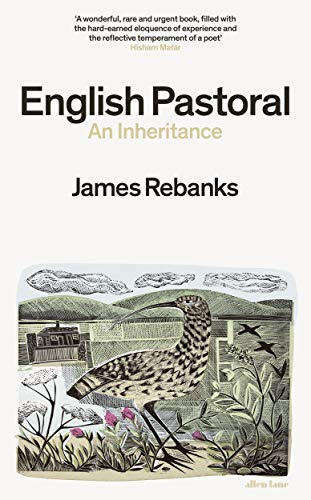
The black-headed gulls follow in our wake as if we are a little fishing boat out at sea. The sky is full of winged silhouettes and screaming beaks, and streaks of white seagull shit splatter like milk down on to the soil. I am riding in the tractor, crammed in behind my grandfather.

Also every Friday there is The Friday 56, hosted by Freda at Freda’s Voice. *Grab a book, any book. *Turn to Page 56 or 56% on your  ereader . If you have to improvise, that is okay. *Find a snippet, short and sweet, but no spoilers!
These are the rules:

  1. Grab a book, any book.
  2. Turn to page 56, or 56% on your eReader. If you have to improvise, that is okay.
  3. Find any sentence (or a few, just don’t spoil it) that grabs you.
  4. Post it.
  5. Add the URL to your post in the link on Freda’s most recent Friday 56 post.
  1. Grab a book, any book.
  2. Turn to page 56, or 56% on your eReader. If you have to improvise, that is okay.
  3. Find any sentence (or a few, just don’t spoil it) that grabs you.
  4. Post it.
  5. Add the URL to your post in the link on Freda’s most recent Friday 56 post.

About the book:

As a boy, James Rebanks’s grandfather taught him to work the land the old way. Their family farm in the Lake District hills was part of an ancient agricultural landscape: a patchwork of crops and meadows, of pastures grazed with livestock, and hedgerows teeming with wildlife. And yet, by the time James inherited the farm, it was barely recognisable. The men and women had vanished from the fields; the old stone barns had crumbled; the skies had emptied of birds and their wind-blown song.

English Pastoral is the story of an inheritance: one that affects us all. It tells of how rural landscapes around the world were brought close to collapse, and the age-old rhythms of work, weather, community and wild things were lost. And yet this elegy from the northern fells is also a song of hope: of how, guided by the past, one farmer began to salvage a tiny corner of England that was now his, doing his best to restore the life that had vanished and to leave a legacy for the future.

This is a book about what it means to have love and pride in a place, and how, against all the odds, it may still be possible to build a new pastoral: not a utopia, but somewhere decent for us all.

I loved it and will write more about it later.
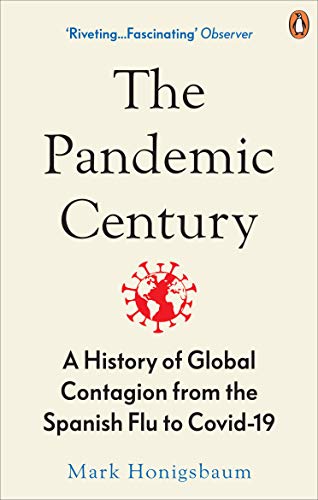
The Pandemic Century by Mark Honigsbaum

Penguin Random House UK| 4 June 2020| 363 pages| Review copy| 3.5*

About the book:

Ever since the 1918 Spanish influenza pandemic, scientists have dreamed of preventing catastrophic outbreaks of infectious disease. Yet, despite a century of medical progress, viral and bacterial disasters continue to take us by surprise, inciting panic and dominating news cycles. From the Spanish flu and the 1924 outbreak of pneumonic plague in Los Angeles, to the 1930 ‘parrot fever’ pandemic and the more recent SARS, Ebola, Zika and – now – COVID-19 epidemics, the last 100 years have been marked by a succession of unanticipated pandemic alarms.

In The Pandemic Century, Mark Honigsbaum chronicles 100 years of history in 10 outbreaks. Bringing us right up-to-date with a new chapter on COVID-19, this fast-paced, critically-acclaimed book combines science history, medical sociology and thrilling front-line reportage to deliver the story of our times.

As we meet dedicated disease detectives, obstructive public health officials, and gifted scientists often blinded by their own expertise, we come face-to-face with the brilliance and medical hubris shaping both the frontier of science – and the future of humanity’s survival.

My thoughts: I found this quite a difficult book to read and even more difficult to write about, so this is just a short overview.

My review copy of The Pandemic Century is an e-book, that unfortunately does not have the chapter on COVID-19. I think this is a very interesting account of the epidemiology, the medical advances and the history of the diseases. Honigsbaum details each pandemic focusing on the origins of the diseases and the scientific research involved in finding the causes, cures, and the methods of containing them.

But whilst parts of it written in a narrative style are fascinating, other parts are heavy going and dry with too much (for me) detailed information about the scientific research. Since 1940 scientists have identified 335 new human infectious diseases and nearly two thirds of them are from animals – and of these 70% originate in wildlife, mostly from bats! And then there is the threat from microbes – bacteria and rickettsial (ticks, lice, fleas, mites, chiggers, and mammals) organisms. I had to check the meanings of lots of words and abbreviations when I was reading this book! Alarmingly Honigsbaum states that ‘Reviewing the last hundred years of epidemic outbreaks, the only thing that is certain is that there will be new plagues and new pandemics.

My thanks to the publishers and NetGalley for a review copy.

Nonfiction November Week 4

Week 4: New to My TBR, hosted by Katie @ Doing Dewey: It’s been a month full of amazing nonfiction books! Which ones have made it onto your TBR? Be sure to link back to the original blogger who posted about that book!

So many books to choose from! Here are a few that appealed to me:

Plus the books recommended to me on my Ask the Experts post on World War Two:

From Shelleyrae – Poland 1939: The Outbreak of World War II by Roger Moorhouse

From Deb Nance:

  • The Splendid and the Vile: A Saga of Churchill, Family, and Defiance During the Blitz
  • Lost in Shangri-la: A True Story of Survival, Adventure, and the Most Incredible Rescue Mission of World War II
  • Unbroken: A World War II Story of Survival, Resilience and Redemption
  • Torpedoed: The True Story of the World War II Sinking of “The Children’s Ship

From The Paperback Princess

  • A Train in Winter by Caroline Moorehead, Hitler and the Habsburgs by James Longo
  • Sons and Soldiers by Bruce Henderson
  • When Books Went to War by Mollie Guptill Manning
  • In the Garden of Beasts by Erik Larson

From Gilt and Dust -No Woman’s World: From D-day to Berlin by Iris Carpenter

From What’s Nonfiction

  • A Woman in Berlin, an anonymous diary of a woman who lived through the Russian occupation of the city
  • Primo Levi’s memoirs like Survival in Auschwitz and The Reawakening,
  • Underground in Berlin.
  • Svetlana Alexievich’s The Unwomanly Face of War is an oral history of the women in the Red Army by Marie Jalowicz Simon

Thanks so much to our hosts, Katie at Doing Dewey, Julie at Julz Reads, Leann at Shelf Aware, and Rennie at  What’s Nonfiction! And thanks to everyone who stopped by with comments and recommendations as well!

Nonfiction November Week 3: Ask the Expert

We’re now in Week 3: (Nov. 12 to 16) of Nonfiction November. The topic is – Be The Expert/Ask the Expert/Become the Expert (RennieWhat’s Nonfiction)

Three ways to join in this week! You can either share three or more books on a single topic that you have read and can recommend (be the expert), you can put the call out for good nonfiction on a specific topic that you have been dying to read (ask the expert), or you can create your own list of books on a topic that you’d like to read (become the expert).

I’ve read a few books on World War 2 and would love to find out more. I have read several novels set during the War, the most recent is V2 by Robert Harris, which has made realise how little I know about it. It is a vast subject and I know there are very many books both fiction and nonfiction about it. My difficulty is where to start!

These are some of the nonfiction books I’ve read/have waiting to be read:

  • Our Longest Days: a People’s History of the Second World War by the Writers of Mass Observation, which is fascinating.
  • Wartime Britain 1939 – 1945 by Juliet Gardiner – I’ve only read some of this book.
  • The Ration Book Diet by Mike Brown, Carol Harris and C J Jackson – social history.
  • Winston Churchill’s six volume History of the Second World War – these look particularly daunting in the amount of detail involved! I’ve start the first volume.
  • Band of Brothers by Stephen E Ambrose – I watched the entire HBO series called Band of Brothers. I started to read the book and stalled!
  • Great Escape Stories by Eric Williams – TBR
  • How the Girl Guides Won the War by Janie Hampton – TBR

There are so many aspects to the war, so many countries involved, so many battles, people, places, politics, so many events that led up to the war, so many technological details and developments, etc, etc. Any suggestions of where to start will be much appreciated.

The Man Behind Narnia by A N Wilson

This week the theme for Novellas in November is nonfiction novellas and I read The Man behind Narnia by A N Wilson, about C S Lewis.

A N Wilson is the author of over forty books – 20 novels, biographies, a three-part history of the last 100 years, and stories for children.

I’ve read a few of his biographies, the latest one I read was about Queen Victoria. At 656 pages it took me 3 months to read and I learned so much and enjoyed it immensely. In 1990 he wrote a full length biography of C S Lewis (which I haven’t read) and in 2013 he made a BBC 4 documentary about Lewis and his work. I didn’t watch the programme, but that didn’t spoil my enjoyment of The Man Behind Narnia. In only 72 pages he writes briefly about Lewis’s life, his own reflections on Lewis’s works, and describes the making of the documentary.

Clive Staples Lewis (1898–1963) was a Fellow and Tutor in English Literature at Oxford University until 1954, when he was elected to the Chair of Medieval and Renaissance Literature at Cambridge University, a position he held until his retirement. He wrote more than thirty books, including Mere Christianity, Out of the Silent PlanetThe Great DivorceThe Screwtape Letters, and The Chronicles of Narnia books.

I first came across Lewis’s books when I was a teenager and a friend lent me The Screwtape Letters and then I read his autobiography, Surprised by Joy – in which he tells the story of his conversion to Christianity and about his childhood in Ireland, his school years and his adolescence – then his time at Oxford University and in 1917 he enlisted and was sent to the front line in France. Since then I’ve read quite a lot of his theological books, including Mere Christianity, as well as The Lion, the Witch and the Wardrobe (the first of his Narnia books) which I read about 15 years ago. I think I’d have enjoyed it more if I’d read it as a child.

I enjoyed Wilson’s book very much, but it really is as much about himself and the effects that Lewis’s writing has had on him as it it is about Lewis. He writes about the places where Lewis lived, Belfast where he was born, Dunluce Castle on the coast where he used to visit with his mother (the castle in the Narnia stories), the places he went to school in England, and Oxford University. I’ve realised in writing this post that Wilson’s book jumps around a lot from place to place whilst covering Lewis’s life at different periods of time, so that it might seem a disjointed book, but it isn’t. As I was reading it, it seemed to flow naturally.

He also writes about Lewis’s relationships with, amongst others his father, and Mrs Moore, his friend’s mother and later his lover (allegedly) and their life together at The Kilns in Headington. He only writes briefly about his marriage to Joy Davidman. Several years ago I remember being enthralled watching Anthony Hopkins, Debra Winger, and Julian Fellowes in Shadowlands (not a dry eye in the cinema). Shadowlands is  about Lewis’s meeting with Helen Joy Davidman and about the events that led to their marriage. And earlier this year I read Becoming Mrs Lewis, a novel by Patti Callahan about Joy Davidman and her meeting and subsequent marriage to Lewis, so I was interested to read what Wilson’s view of their relationship was. He too ‘dissolved into tears‘ whilst watching the film, ‘even though [he] knew the circumstances of Lewis’s marriage to Joy Davidman [bore] only the haziest relationship to the story of ‘Shadowlands’. Interesting, I wondered what he based this on. My impression of Joy from reading Becoming Mrs Lewis was that she was stalking Lewis and I couldn’t warm to her.

In Chapter three he writes about the Narnia stories. Like me Wilson didn’t read the Narnia stories as a child. He hadn’t wanted to spoil his admiration for Lewis’s academic books by dipping into Narnia and found Lewis ’embarrassing’ when he got onto the subject of religion. He finally read them when he was on holiday in the Hebrides with his family and as it was raining he read The Lion, the Witch and the Wardrobe aloud to his daughters. The children were enraptured but he found it disturbing and shocking, with the Atonement theology of the story. But even so he found the story absolutely absorbing.

There is so much packed into this novella that I could probably go on writing about it. But this post is too long already, so I’m going to stop. If you’re interested in knowing more I can recommend reading it. I was fascinated and it has made me want to read more of Lewis’s books. I have little pile of them and haven’t read all of them yet.

The only one I’ve written about on this blog is Letters to Malcolm, a book about prayer. I’m also wondering whether to read Wilson’s biography of Lewis, or maybe Alister McGrath’s more recent biography, written in honour of the 50th anniversary of C. S. Lewis’s death, C S Lewis: A Life: Eccentric Genius, Reluctant Prophet.

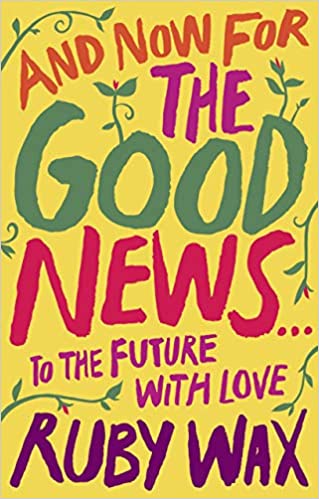
And Now For the Good News … To the Future With Love by Ruby Wax

Penguin Life/ 17 September 2020/ 256 pages/ e-book/ Review copy/ 3*

And Now For the Good News … To the Future With Love by Ruby Wax is a positive look at some recent developments in community, business, education, technology, and food that promise to make the world a better place.

She began writing this in 2018 before the outbreak of Covid-19, but ends the book with some ‘Post Covid-19 Good News.’ Whilst researching for her book she found what she calls ‘green shoots of hope peeping through the soil of civilisation’ that ‘may just bloom into a brighter future.’ It’s easy reading, written clearly in a breezy conversational style, covering a large amount of information. She emphasises the importance of compassion and kindness, of community and on working for the good of all. Maybe, above all she focuses on the benefits of mindfulness and on positive experiences.

She begins with writing about herself and sections about her own story are interspersed between the ‘Bad News’ and the ‘Good News’ throughout the book. In each section she gives a brief history of the topic, along with the story of her own experiences and then looks at examples of how things are improving. Not all of it was new to me, but I did learn a lot, as the book is simply crammed with information.

I’ll just mention two examples that interested me particularly. In the section on Education I was amazed to read about the discipline and regimentation in Chinese schools contrasting with the relaxed and caring approach in Finnish schools. And in the UK she visited a school in Hertfordshire, where children, many from disadvantaged backgrounds, learn about emotions as well as academic topics.

In the Business section she writes about new models of businesses that are ‘going green’ in companies such as the outdoor clothing company Patagonia, based in California. They believe they owe the earth for the industrial impact of business and consequently give away 10% of all profits and are very conscientious about what products they use because the textile industry is one of the most chemically intensive industries on earth, second only to agriculture.

The final section of the book is called ‘To the Future with Love’ in which she summarises the good news for each of the topics covered in her book. Her hope is that we will remember the’ feelings of interconnnectedness and caring for each other and … keep them going’ when the pandemic is over.

Overall, this is an interesting book with some inspiring stories but in places it felt as though I was reading newspaper articles or company brochures, which is why I’ve given it 3 stars rather than 4.

My thanks to the publishers for my copy via NetGalley.