The Lost Army of Cambyses by Paul Sussman

The combination of the legendary ancient mystery about the disappearance of a whole army in Egypt’s western desert in 523 BC, and a modern murder mystery caught my imagination. So I was attracted to reading The Lost Army of Cambyses by Paul Sussman.

The Lost Army of Cambyses is his first book, featuring Inspector Yusuf Khalifa of the Luxor police. It is an action packed adventure story, an easy escapist read, although the ancient mystery element definitely plays second fiddle to the modern murder mystery, with a terrorist plot thrown in the mix.

I enjoyed it. It began well, in Cairo, September 2000, where a mutilated corpse is washed up on the banks of the Nile at Luxor, an antiques dealer is savagely murdered in Cairo, and an eminent British archaeologist is found dead at the ancient necropolis of Saqqara. But as I read on I was less convinced.

Where the book came alive for me was through the character of Yusuf Khalifa, and especially the historical/archaeological aspects of the book highlighted in his meetings with his old teacher and mentor, Professor al-Habibi at Cairo’s Museum of Egyptian Antiquities. Khalifa had wanted to be an archaeologist, but circumstances had meant he’d been unable to complete his studies and he had joined the police force. However he had remained fascinated by the history of his country:

He remembered as a child standing on the roof of their house watching the sunrise over the pyramids. Other children had taken the monuments for granted, but not Khalifa. For him there had always been something magical about them, great triangles looming through the morning mist, doorways to a different time and world. Growing up beside them had given him an insatiable desire to learn more about the past.

… There was something mystical about it, something glittering, a chain of gold stretching all the way back to the dawn of time. (pages 100 – 102)

The other characters were less convincing, becoming stereotypical particularly the ‘bad’ characters, and the violence was a little too violent for my liking. But it still managed to keep me hooked and wanting to know how it would end.

I’d like to read more of Paul Sussman’s books – I much preferred his second book, The Last Secret of the Temple. I’ve yet to read the third book featuring Inspector Khalifa, The Labyrinth of Osiris. More details of his books are on Paul Sussman’s website, which is now being updated by his wife after Paul died very suddenly from a ruptured aneurysm in May 2012.
The Big Four by Agatha Christie

I’ve read a lot of Agatha Christie’s books, most of which I’ve really enjoyed, but I’m not too keen on her books that involve spies and gangs of international criminals who are seeking world domination. And The Big Four, first published in 1927, is one of those books.
Basically it’s a collection of short stories (derived from a series of stories that first appeared in The Sketch, a weekly magazine) in which Hercule Poirot and Captain Hastings lock forces with a vast organisation of crime led by four individuals, in the course of which they uncover the identity of the ‘Big Four’. The aim of the Four is ‘to destroy the existing social order, and to replace it with an anarchy in which they would reign as dictators.’  They are a Chinese man, Li Chang Yen, an American multi-millionaire, a French woman and ‘the Destroyer’, an Englishman. Poirot is convinced that they are behind everything:

The world-wide unrest, the labour troubles that beset every nation, and the revolutions that break out in some. There are people, not scaremongers, who know what they are talking about, and they say that there is a force behind the scenes which aims at nothing less than the destruction of civilisation. (page 25)

In the course of their investigations Poirot and Hastings find themselves in many dangerous  situations, all melodramatic and a little far-fetched, from which they miraculously escape certain death. The Big Four is action packed, with Poirot uncharacteristically chasing off after the criminals, still using his ‘little grey cells’ of course, whilst Hastings is knocked out and kidnapped, and Li Chang Yen threatens to abduct and torture Hasting’s wife, whom he had left behind in their ranch in the Argentine.

This is not one of my favourite Agatha Christie books. But perhaps it is not so surprising that The Big Four is far from her best. It was in  December 1926 that Agatha Christie disappeared after her husband, Archie Christie had told her he wanted a divorce and in 1927 she was still recovering from this. It was her brother-in-law’s suggestion that the last Poirot short stories she had published could be re-written to ‘have the appearance of a book‘ as a ‘stop-gap‘ – and the result was The Big Four, which, I think, suffers from being a loosely connected collection of episodes. Agatha explained in her Autobiography that Campbell Christie had helped her with linking the short stories as she was ‘unable to tackle anything of the kind.‘ (Autobiography page 365)

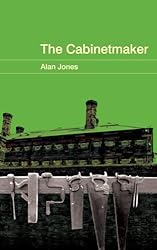
The Cabinetmaker by Alan Jones

When Alan Jones emailed me about reading his book The Cabinetmaker he described it as a gritty crime novel based in Glasgow that tells the story of a local cabinetmaker, Francis Hare, father of a murdered son, and John McDaid, a young detective on the investigation.

He went on to say that it contained some strong language, some sleazy police and a smattering of Glasgow slang, which did make me unsure I wanted to read it. But he also said that it combined Glasgow gang culture, sloppy policing and amateur football with fine furniture making and taking that into account I thought that it probably wouldn’t be your normal run-of-the mill crime fiction.

And I was right – it is different and I did like it, despite some of the language (which actually is no worse than in some other books) and there are no truly gruesome descriptions to put me off. In parts I thought it lost focus somewhat, the crime and justice aspects becoming a bit lost in a wealth of detail about football and furniture making, but apart from that it is a intricately plotted book which had me totally gripped. By the end of the book I realised that there is a purpose to those chapters beyond Alan Jones’s obvious love of football and furniture making. Within them lie the clues to what was really going on in Francis and John’s lives.

The Cabinetmaker follows John McDaid’s life from his first day as a detective up to his retirement in 2008, focussing on one crime – the killing of Patrick Hare, a student by a gang of thugs in Glasglow’s west end. The killers were tried but walked free.  From that point onward the story is of John and Francis and their search for justice.  Patrick’s death was a turning point in their lives and although they become friends through a shared interest in football and cabinet making, under pinning everything is their desire for justice.

There are many characters, including police and villains and at times some of them did begin to blur in my mind, with the exception of Francis, John and Sarah, Patrick’s girl friend, who all stand out as vivid and believable people. There are many twists and turns in the story, before the full truth is revealed. It’s a novel of loss and retribution.

Alan Jones (his pen name) is Scottish, living on the Clyde coast. I see from this interview on Omnimystery News that he is writing another book – I’ll be looking out for it.

The Office of the Dead

The Office of the Dead by Andrew Taylor is the third book in the Roth Trilogy. I read the first two, The Four Last Things and The Judgement of Strangers a couple of years ago and I wish I’d read this one straight afterwards, because I had to refresh my memory before I started The Office of the Dead.

It’s set in the 1950s, some twenty years earlier than The Judgement of Strangers, and completes the story of the Byfield and Appleyard families. I absolutely loved it. As it says on the back cover this is a chilling novel of crime and retribution. It works perfectly well on its own, but is even better if you’ve read the first two books. The way Andrew Taylor has constructed this trilogy, working backwards in time is just perfect.

Synopsis from Andrew Taylor’s website:

It’s 1958, and the party’s over for Wendy Appleyard: she finds herself penniless, jobless and on the brink of divorce. So she runs to her oldest friend Janet Byfield, who seems to have everything Wendy lacks: a handsome husband, a lovely little daughter, Rosie, and a beautiful home in the Cathedral Close of Rosington. David Byfield is on the verge of promotion, and Janet is the perfect wife for an ambitious young clergyman.

But perfection has always been dangerous, and gradually the idyll sours. Old sins come to haunt the present and breed new sins in their place. The shadow of death seeps through the Close, and with it comes a double mystery stretching back to turn-of-the-century Rosington, to a doomed poet-priest called Francis Youlgreave.

Only Wendy, the outsider looking in, glimpses the truth. But can she grasp its dark and twisted logic in time to prevent the coming tragedy?

My view:

The Office of the Dead answers many of the questions I had from the other two books – questions about David Byfield, the theologian who can barely control his emotions; Reverend Francis Youlgreave, the turn of the century canon librarian and poet, and most of all about Rosie, David and Janet’s daughter. In this book she is a small and very self absorbed little girl who has her 5th birthday during the course of the book. She calls herself ‘Nobody‘, because ‘Nobody’s perfect‘ and she can’t be parted from her doll, Angel.

There is also an excellent portrayal of senile dementia in Janet’s father – John Treevor. Janet says he is ‘getting a bit confused‘, but at times he was capable of acting perfectly rationally and at times not – which made it all the more difficult to know what was true and what only took place in his mind, and so all the more tense and sinister. Did John Treevor commit suicide or was he murdered and if so, was it the stranger he said was watching the house, or someone else?

Running alongside the story of the Byfields are several other inter-connecting strands, Wendy (who is the narrator) and her estranged husband, Henry; the man with the bald spot roughly the shape of a map of Africa, who is following Wendy – who is he working for and why is he interested in Canon Youlgreave. Youlgreave, a character from the past who had died in 1903? He is described by old Mrs Gotobed as a ‘good man‘, but he had been forced to resign after he had ‘lost all touch with reality ‘ and had caused a scandal.

In fact the overall mood of the book is about the difficulties in remembering, or is it twisting, the past, about mental breakdowns and about the effect the past had on the future. In that respect I think it’s best to read the books in order.

I’ve just seen that there is a new short story, The Long Sonata of the Dead, about the continuing legacy of Francis Youlgreave, due to be published on Kindle on 1 April. I’m looking forward to reading it.

And then I’d like to read the first two books in reverse order and see what it effect that has on the story. There is so much more I could write about this book – about the characters (totally convincing), about the setting and the writing (well written etc) and about the pace – the creation of tension and suspense etc (just right), but really all I need to say is that I thought it was brilliant!

The King's Evil by Edward Marston

I’m still reading from my own unread books and turned to The King’s Evil for some historical crime fiction. It’s the first in Edward Marston’s Restoration series, featuring Christopher Redmayne, an architect and Jonathan Bale, a parish constable.
The King’s Evil is set in London in September 1666, just as the Great Fire of London has begun, eventually devastating a large part of the old medieval City of London. I liked Marston’s description of the fire, conjuring up the sights and sounds, the fear and panic it caused and the efforts to stop its spread – although I’m sure they didn’t use ‘dynamite’ to blow up houses to create a fire break. Anyway this anachronism didn’t spoil my enjoyment of this book.

Redmayne, a Royalist – a supporter of the Court and King Charles II – has designed a new house for Sir Ambrose Northcott and Bale is a Puritan who views Charles with great disapproval and is wondering if the fire is a consequence of the corruption in society as a result of the Restoration of the Crown:

England was once more ruled by a Stuart king. A monarchy which Jonathan had been pleased to see ended was now emphatically restored. As a result, London was indeed a wicked city and nobody was better placed to see the extent of its depravity than someone who patrolled the streets in the office of constable. Jonathan was a God-fearing man who always sought guidance from above and he was bound to wonder if the conflagration really was a sign of divine anger. There were Biblical precedents of cities being punished for their corruption. (page 26)

The two men are brought together with the discovery of Sir Ambrose’s dead body in the cellars of his partly built new house. It’s a good story with some interesting characters, including Jesus-Died-To-Save-Me Thorpe and Redmayne’s older brother Henry, elegant, fashionable and a dissipated rake, who had introduced Christopher to Sir Ambrose. But it’s the setting in time and place that interested me most – the period when Christopher Wren was the leading architect in rebuilding London – the bustle and energy of the times and the lingering conflict between Royalists and Parliamentarians.

The mystery of who killed Sir Ambrose moves along swiftly, with a few surprises along the way, as you would expect, but nothing too surprising. Redmayne travels to Sir Ambrose’s country house, Priestfield Place in Shipbourne, Kent and crosses the Chanel to Paris following the trail of the killer. It’s the ending of the book that let it down somewhat for me – it’s all a bit rushed and abrupt, but overall I enjoyed it and will read more in the series.

Edward Marston, who also writes under the name of Keith Miles, is a prolific author. He is a former chairman of the Crime Writers’ Association. He has several series of books, listed on his website and also on Fantastic Fiction.

The King’s Evil fits into several challenges I’m doing – The Mount TBR Reading Challenge, TBR Triple Dog Dare,the Historical Fiction Challenge, My Kind of Mystery Challenge and What’s in a Name (royalty category).

They Do It With Mirrors by Agatha Christie

I’m slowly reading my way through Agatha Christie’s books, not in chronological order, but just as I come across them and this month I’ve read They Do It With Mirrors which was first published in 1952.

I don’t think it’s one of her best, but I did like it. It begins with Miss Marple reminiscing with an old friend, Mrs Ruth Van Rydock, an American. Miss Marple has known her and her sister, Carrie Louise since they had been together at a pensionnat in Florence. Ruth is worried about Carrie Louise, who is now living in a country house in the south of England with her husband, Lewis Serrocold, which he has turned into a home for delinquent boys. She can’t put her finger on what is wrong, she just felt the atmosphere wasn’t right, whether it was the boys’ home – ‘those dreadful young delinquents‘ or something else and she asks Miss Marple to visit Carrie Louise to see if her fears are justified.

Miss Marple finds an unhappy household, including Mildred, Carrie Louise’s widowed daughter, Stephen and Alex, her stepsons, and Gina, her adopted daughter’s daughter, married to an American, Wally Hudd. Lewis Serrocold is Carrie’s third husband, described by Ruth as a

‘crank’, a ‘man with ideals’, ‘bitten by the bug of wanting to improve everybody’s lives for them. And, really you know, nobody can do that but yourself.’

All is not well with the boys either – one of them, Edgar Lawson is suffering from delusions, saying his father is Churchill and then that he is Montgomery. He loses control and Lewis takes him into his office, but their raised voices are heard by the others, culminating in the sound of gunshots. But it is not Lewis or Edgar who is killed, but one of the trustees of the home, Christian Gulbrandsen, the brother of Carrie Louise’s first husband who was alone in his study. So Ruth’s fears materialise when Christian is found shot dead and it seems that someone is trying to poison Carrie Louise.

As I expected from the title not everything is as it appears.  The layout of the house is of importance and there is a plan showing how the rooms are connected, but even so I was still in the dark. I hadn’t worked out who the murderer is and had even ruled out the person in question quite early on in the book. Miss Marple, however, was not deceived and had sorted out the reality from the illusion and seen through the misdirection.

… all the things that seemed to be true were only illusions. Illusions created for a definite purpose – in the same way that conjurers create illusions to deceive an audience.

There are a number of points that struck me as interesting as I read the book, not essential to the plot, but maybe revealing Agatha Christie’s opinions and her views of post-war society. There is the subject of self-help and the issue of expecting things to be granted as a right, focussing on providing education for the juvenile delinquents by men crazy with enthusiasm like Lewis Serrocold:

One of those men of enormous will power who like living on a banana and a piece of toast and put all their energies into a Cause.


She makes the point that just because a person comes from a deprived background doesn’t mean they’re going to turn into criminals and it is the honest ones who could do with a start in life – ‘But there, honesty has to be its own reward – millionaires don’t leave trust funds to help the worthwhile.’

There are comments on the oddness of the English, being prouder of defeats and retreats than of their victories, using Dunkirk as an example and the Charge of the Light Brigade. At the same time as I was reading this I was also reading Jeremy Paxman’s The English: a Portrait of a People, in which he also comments on this trait – turning the consequence of catastrophe into a ‘victorious retreat’.

On a more personal level there are her views on the vulnerability of women:

Women have a much worse time of it in the world than men do. They’re more vulnerable. They have children and they mind – terribly – about their children. As soon as they lose their looks, the men they love don’t love them any more. They’re betrayed and deserted and pushed aside.


I can’t help thinking that really was Agatha Christie speaking from experience.