I’ve been doing quite well with Bev’s Mount TBR Challenge so far this year. Up to the end of March I read 14 of my TBRs, so I’ve climbed Pike’s Peak and have made progress up Mont Blanc. Bev asks us to complete one of more questions. I’ve answered two::
Post a picture of your favourite cover so far.
I love this scene on the cover of James Rebanks’ English Pastoral. And the book is wonderful. It is inspirational as well as informative and it is beautifully written.
And secondly, Which book (read so far) has been on your TBR mountain the longest? Was it worth the wait? Or is it possible you should have tackled it back when you first put it on the pile? Or tossed it off the edge without reading it all?
Orlando by Virginia Woolf had been on my TBR shelves for nearly 5 years. It was well worth the wait. It’s such a fantastical novel, spanning 500 years. There are copious literary, historical, and personal allusions; a book steeped in history showing how the passage of time had changed both the landscape and climate of England along with its society.
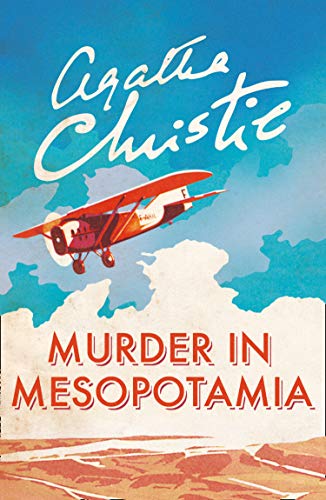
I first read Agatha Christie’s Murder in Mesopotamia in 2012 but never got round to writing about it. It was a good choice to re-read for the 1936 Club as I didn’t remember much about it. It’s a Poirot mystery, but he doesn’t appear until about halfway. As the title tells you it is set in Mesopotamia, the area in the Middle East between the two rivers, Tigris and Euphrates (the area of present-day Iraq, Kuwait, and parts of Iran, Syria, and Turkey).
An archaeologist’s wife is murdered on the shores of the River Tigris in Iraq…
It was clear to Amy Leatheran that something sinister was going on at the Hassanieh dig in Iraq; something associated with the presence of ‘Lovely Louise’, wife of celebrated archaeologist Dr Leidner.
In a few days’ time Hercule Poirot was due to drop in at the excavation site. But with Louise suffering from terrifying hallucinations, and tension within the group becoming almost unbearable, Poirot might just be too late…
Agatha Christie had first visited the Middle East in 1929 travelling on the Orient Express to Istanbul and then on to Damascus and Baghdad. She visited the excavations at Ur and returned there the following spring where she met archaeologist Max Mallowan – by the end of the summer they had decided to marry, which they did on 11 September 1930.So, by 1936 when she wrote Murder in Mesopotamia she had frequently accompanied Max on his archaeological digs and her books set in the Middle East are based on the everyday life that she experienced on a dig and on the people she met.
The murder victim is Louise Leidner, the wife of the leader of the expedition. The novel is narrated by Nurse Amy Leatheran, who had been asked by Dr Leidner to care for Louise, although he is vague about what is wrong with her. It seems she is scared and has nervous terrors. She has fearful visions and the other members of the expedition blame her for the oppressive atmosphere on the dig.
It’s a seemingly impossible murder – she is found in her room, dead from a blow on her head, and suspicion falls on Louise’s first husband who had been sending her threatening letters, or so she had claimed. But no strangers had been seen on or near the expedition house and it is down to Poirot to discover what had actually happened. Fortunately Poirot was in the area, having sorted out a military scandal in Syria (referred to at the beginning of Murder on the Orient Express) and was passing through the expedition site on his way to Baghdad before returning to London.
I thoroughly enjoyed this book, although I think the details of how the murder was committed are rather far-fetched. I was hoping that Agatha Christie had mentioned writing it in her Autobiography, but I couldn’t find any reference to it, although she wrote extensively about her time in the Middle East with Max, and in her fascinating memoir, Come, Tell Me How You Live she wrote about how much she loved the country and its people.
Hodder and Stoughton| 21 January 2021| 259 pages| e-book| Review copy| 3*
Description:
Something sinister is afoot in the streets of Dundee, when a puppeteer is found murdered behind his striped Punch and Judy stand, as children sit cross-legged drinking ginger beer. At once, Dandy Gilver’s semmingly-innocuous investigation into plagiarism takes a darker turn. The gruesome death seems to be inextricably bound to the gloomy offices of Doig’s Publishers, its secrets hidden in the real stories behind their girls’ magazines The Rosie Cheek and The Freckle.
On meeting a mysterious professor from St Andrews, Dandy and her faithful colleague Alex Osbourne are flung into the worlds of academia, the theatre and publishing. Nothing is quite as it seems, and behind the cheerful facades of puppets and comic books, is a troubled history has begun to repeat itself.
My thoughts:
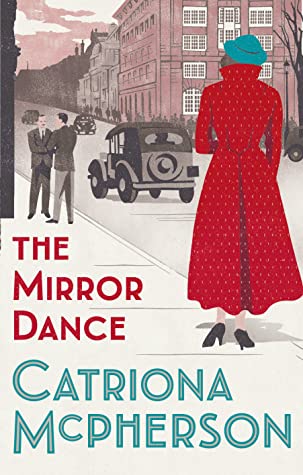
I’ve read some of the Dandy Gilver mysteries by Catriona McPherson, set in the 1920s and 1930s Scotland. The Mirror Dance is the 15th book. The last one I read was the 6th, a few years ago now, so when I saw it on NetGalley I requested it. I was pleased to find, that although I’d missed so many of the books in the series, it’s easy to read as a standalone.
It begins on an August Bank Holiday weekend in 1937, when Dandy (short for Dandelion Dahlia!), a private detective, receives a phone call from Miss Sandy Bissett, a magazine publisher in Dundee. She asks Dandy to go to Dudhope Park to warn the Punch and Judy man there that he is infringing copyrighted property as he is using two of the magazine’s cartoon characters, Rosie Cheeke and Freckles in his show. So, the next day, Bank Holiday Monday, together with her female staff, Grant, her lady’s maid, Becky her housemaid and Mrs Tilling, her cook, Dandy goes to Dundee to see the puppet show, looking out for the appearance of the magazine characters.
But during the show, the puppet Scaramouche extended his neck upwards, unfolding from pleats like an accordion and then stayed still like a tableau. The children lost interest and the adults were grumbling. When Dandy and Grant went to the back of the Punch and Judy tent they found the puppeteer slumped dead behind the scene, with his throat cut. The police are called but Dandy and her partner, Alec take it upon themselves to investigate the murder, an apparently impossible murder, with no signs of the murderer, and no one knew the puppeteer’s name.
I liked the setting. There is a good sense of location in Dundee in the 1930s, when the effects of the First World War were still lingering and the threat of another war was on the horizon. This is a convoluted murder mystery, where there is more than meets the eye. There is a lot of detail about the publishing industry and the theatrical world of the time which was interesting, but overall the amount of detail of everyday life, with all its sights and smells, slowed the book down too much for me.
There are several complications, red herrings and apparent impossibilities and I was puzzled about the relevance of a murder 50 years earlier in the same park, of an earlier Punch and Judy man. I became a bit lost in the detail about the number of women suspects Dandy and Alec consider – there were two, and then perhaps there were three. Who were they and what was the motive for the murder? Gradually that became clear, but I got exasperated at the number of times Dandy and the others went over and over what was happening, working out how it could have happened and why. Although some of it is confusing and I hadn’t worked out the identity of the murderer some of it seemed so obvious to me that I couldn’t see why it took them so long to work it out. So, although I enjoyed the actual murder mystery and the mirror dance aspect, where everything is turned on its head, I did not enjoy how it was told.
My thanks to the publishers and NetGalley for my review copy.
Canongate| 6 August 2020| 325 pages| e-book| Review copy| 4*
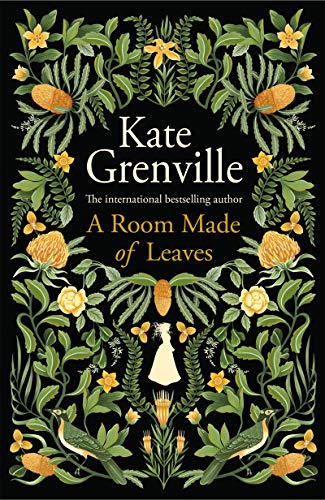
I’m late getting round to reading A Room Made of Leaves, because I am behind with reviewing my NetGalley books. But it was well worth the wait. It’s historical fiction telling the story of the Macarthurs, Elizabeth and John Macarthur, who settled in Australia at the end of the eighteenth century. It’s based on the real lives of the Macarthurs using letters, journals and official documents of the early years of the New South Wales colony. But, although based on fact this is not history, it is fiction, as Kate Grenville makes clear in her Author’s Note at the end of the book (which I read after I read the opening paragraphs of the Editor’s Note at the start of the book).
Description
It is 1788. Twenty-one-year-old Elizabeth is hungry for life but, as the ward of a Devon clergyman, knows she has few prospects. When a soldier, John Macarthur promises her the earth one midsummer’s night, she believes him and with a baby on the way she marries him. Only then he tells her he is to take up a position as Lieutenant in a New South Wales penal colony and she has no choice but to go. Sailing for six months to the far side of the globe with a child growing inside her, she arrives to find Sydney Town a brutal, dusty, hungry place of makeshift shelters, failing crops, scheming and rumours.
All her life she has learned to be obliging, to fold herself up small. Now, in the vast landscapes of an unknown continent, Elizabeth has to discover a strength she never imagined, and passions she could never express.
Inspired by the real life of a remarkable woman, this is an extraordinarily rich, beautifully wrought novel of resilience, courage and the mystery of human desire.
My thoughts:
I’ve enjoyed all of the books by Kate Grenville that I’ve read so far. Her writing suits me – historical fiction, straight-forward story-telling, with good descriptive writing setting the scenes vividly in their locations. I find her books difficult to put down and they stay in my mind long after I’ve finished reading. This one is no exception.
It begins in Devon where Elizabeth was born and grew up, first with her parents and then after her father died on her grandfather’s sheep farm and then with the local vicar’s family, whose daughter, Bridie is her friend. There she meets John Macarthur, an ensign. When she becomes pregnant they marry and then he tells her he has signed on as a lieutenant in the New South Wales Corps in the penal colony at Sydney Cove. But their married life is not a happy one. John was rash, impulsive, changeable, self-deceiving, and given to embarking on grandiose schemes. He was quick to take offence and was dangerously unbalanced. Over the course of their marriage he was forced to return to England twice, at first for four years and later for nine. During that time Elizabeth made the best of life, carrying on with their sheep farm at Parramatta, where she improved the flock, and helped to establish New South Wales as a reliable supplier of quality wool.
One of the outstanding parts of the book for me is her relationship with William Dawes, an astronomer with the Corps, who was mapping the night sky. He had an observatory near Elizabeth’s farm and it was there that she met some of the local inhabitants and learned a bit of their language and about their ways of life. And it is with William that Elizabeth learns to appreciate not just the night sky, but also the landscape and its flora and fauna and in particular the ‘room made of leaves’ – a private space enclosed on three sides by greenery, a place where you could simply be yourself.
This is a book that captivated me from the opening paragraphs, and there is so much more in it than I have mentioned in this post. It gave me much to think about, in particular bearing in mind the epigraph, an actual quotation from one of Elizabeth’s letters: Believe not too quickly, reminding me that this is a work of fiction. I enjoyed it immensely. And it makes me want to know more about the Macarthurs. I came across Michelle Scott Tucker’s biography: Elizabeth Macarthur: A Life at the Edge of the World and I was delighted to see that Kate Grenville references this book as the standard biography in her Acknowledgements. It is now on my wishlist!
Many thanks to the publishers and NetGalley for my review copy.
Transworld Publishers| 18 February 2021 |272 pages | Kindle review copy via NetGalley/ 2*
Heartbroken after a long, painful love affair, a man drives a haulage lorry from England to France. Travelling with him is a secret passenger – his daughter. Twenty-something, unkempt, off the rails.
With a week on the road together, father and daughter must restore themselves and each other, and repair a relationship that is at once fiercely loving and deeply scarred.
As they journey south, down the motorways, through the service stations, a devastating picture reveals itself: a story of grief, of shame, and of love in all its complex, dark and glorious manifestations.
My thoughts:
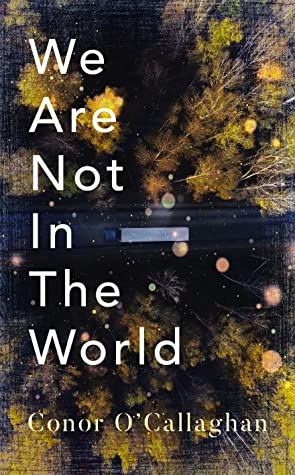
A strange, confusing and depressing book that I read as though I was in fog, never really getting to grips with the plot. It meanders and drifts through the characters, shifting between the past, the near past and the present, and from place to place, as Paddy drives the lorry from England down to the south of France. I was often not sure what was happening, when or where it was happening and to whom it was happening. It’s a stream of consciousness, as the various characters move in and out of focus.
There were times when I wondered why I was reading this, it was like a dream where the scenes move randomly through a number of sequences, and you wake up with that fearful feeling that something dreadful has been going on inside your head that was disturbing, and unsettling. There’s a sense of timelessness and of detachment from the day to day reality – they are not in the world. And yet I was compelled to read on, if only just to get to the end and see if my suspicions about what had actually happened were right. They were, although there is a little twist at the very end that I hadn’t expected.
The fairy tale of Oisin, a tale Paddy tells his daughter, interests me. Oisin was a warrior who fell in love with a fairy named Niamh. He takes her home to Tir na nOg, where they will stay forever young, but he can never return home. After three years he is homesick and returns on a magic horse, on the condition that he has to stay on the horse on pain of death. But three hundred years have actually gone by, not three, and everyone he knew is dead. He meets an old man who knew his father and moving to help him he slips off the horse, touches the ground and dies in an instant. He repeats this story several times to his daughter as they travel through France. It links with Tir na nOg, the name of his family home, now neglected and empty after his mother’s death three years earlier.
This is not an easy read, as you have to concentrate on all the different strands. Paddy’s life is a complete mess, he has lost everything: his family, his home and his sense of belonging. He looks back at the broken relationships with his parents, his brother, ex-wife, daughter, and ex-lover. It’s told in fragments and you have to read between the lines to understand it. I didn’t enjoy the book, and found it difficult to follow. It is too vague, and as soon as I thought I’d begun to understand it, it drifted away into obscurity. and I was left floundering.
My thanks to the publishers and to NetGalley for my advance review copy.
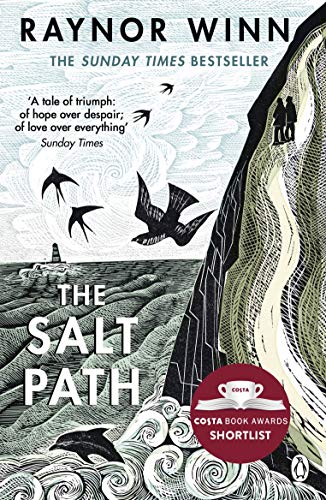
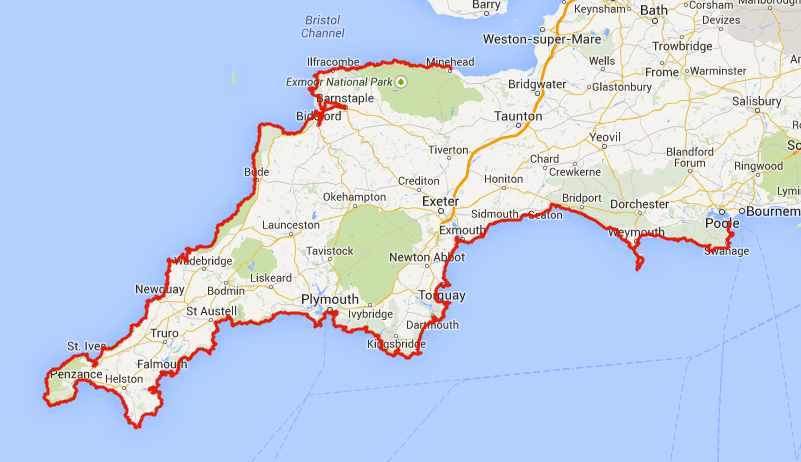
Just days after Raynor learns that Moth, her husband of 32 years, is terminally ill, their home is taken away and they lose their livelihood. With nothing left and little time, they make the brave and impulsive decision to walk the 630 miles of the sea-swept South West Coast Path, from Somerset to Dorset, via Devon and Cornwall.
Carrying only the essentials for survival on their backs, they live wild in the ancient, weathered landscape of cliffs, sea and sky. Yet through every step, every encounter and every test along the way, their walk becomes a remarkable journey.
The Salt Path is an honest and life-affirming true story of coming to terms with grief and the healing power of the natural world. Ultimately, it is a portrayal of home, and how it can be lost, rebuilt and rediscovered in the most unexpected ways.
I first wrote a short post about The Salt Path in this post. I bought the book in 2018 and was keen to read it, but so many other books intervened, and it was only when I saw Raynor Winn on Kate Humble’s Coastal Walks programme on the South West Coastal Path that I remembered about her book.
Raynor and Moth Winn, a couple in their 50s, were homeless, with no means of income except for £48 pounds a week. They had lost their home, business and livelihood, after investing in one of a friend’s companies that had failed. They found out that they were liable to make payments towards the debts of the company, were taken to court and ended up losing not only their savings but also their farm and home.
Despite finding out that Moth has a rare terminal illness, they decided to walk the South Coast Path. He had been diagnosed with corticobasal degeneration (CBD), a brain disease for which there is no cure or treatment apart from pain killers and physiotherapy. The consultant told him that he shouldn’t tire himself, or walk too far and to take care on the stairs. Their decision to walk the Path and camp wild seemed to me both brave and foolhardy and I read this book with absolute amazement that they could take themselves away from medical care and set off, almost totally unprepared and not fit enough to walk 630 miles along a coast path.
At first it was really difficult as Moth struggled with pain and exhaustion, and it horrified me that he could carry on in that condition. They had reached the Valley of Rocks in north Devon, when he sat down on the rocks. He felt he was eighty and was so tired that he hurt everywhere:
Can’t tell if I’m half asleep, or wide awake. It’s like my head’s in fog and I’m walking through treacle. This is the most bollockingly stupid thing we’ve ever done. I want to lie down.(page 58)
He had been taking Pregabalin to ease the nerve pain and had been told not to just stop taking them because of the immense list of withdrawal symptoms. But that is what he had done – they had left his supplies behind them, ready to put in the rucksack, but had forgotten them. Fortunately after a while the pain lessened, he felt much better and his head was clearer. The walking had helped!
They had little to live on, their diet involved lots of rice and noodles, supplemented with wine gums and foraging for blackberries, mushrooms and dandelions. They took it at their own pace, following Paddy Dillon’s Walking Guide of the trail from Minehead on the Somerset coast right round Devon and Cornwall to Poole in Dorset, stopping to pick up their money and buy supplies along the route. But as winter was on the way when they reached Lantic Bay and Pencarrow Head they decided to take up a friend’s offer to stay with her for the winter free of rent if they could help with her building and on her farm.
However, once they stopped walking, Moth’s stiffness and his neurological pain increased and he struggled to move. He seemed to be deteriorating so quickly without the Pregabalin. But they were determined to finish the walk and completed it the next year. Once more, as they walked Moth’s condition improved. He didn’t understand how, thinking it may have ‘something to do with heavy endurance exercise‘, causing some sort of reaction that that they didn’t understand. He didn’t know how it worked but he just felt great.
Living with a death sentence, having no idea when it will be enacted, is to straddle a void. Every word or gesture, every breath of wind or drop of rain matters to a painful degree. For now we had moved outside of that. Moth was on death row, but he’d been granted the right to appeal. He knew CBD hadn’t miraculously disappeared, but somehow, for a while, it was held at bay.(page 243)
The Salt Path is not a book about walking the South Coast Path because you love walking, nor because you want the challenge of walking 630 miles, nor because you love wild camping. And it is not just about about the beauty of the surroundings and the experience of being close to nature (although that is there in Ray Winn’s beautiful descriptive writing). It is about the determination to live life, about overcoming pain and hardship, and the healing power of nature. It is about homelessness and the different reactions and attitudes of the people they met when they told them they were homeless. Some were hostile, some recoiled in horror and moved away as though they were social pariahs. Others were sympathetic and generous.
In this post I have concentrated on Moth’s health, because that is what struck me most as I was reading the book. But there is so much more in it than that. It’s one of the most remarkable books that I have read. I admired their determination and persistence in the face of all the difficulties and obstacles they met, but it is definitely not something I could ever undertake. It both fascinated and appalled me.
After I read The Salt Path I wondered how Ray and Moth are now and came across this article in The Herald, dated 20 September 2020, in which Raynor Winn looks back over these life-changing and challenging events. At lot has happened since then and the story of that is in her second book, The Wild Silence. You can follow Raynor on Twitter @raynor_winn.
Publisher : Michael Joseph; 1st edition (3 Sept. 2020)


 BooksPlease