The Lollipop Shoes by Joanne Harris

ChocolatI read Chocolat by Joanne Harris in 2008 and loved it. Here’s an extract from my post at that time.

It’s the story about Vianne Rocher who arrives in Lansquenet-sous-Tannes, a place that is’ no more than a blip on the fast road between Toulouse and Bordeaux’ on Shrove Tuesday. She takes over the old bakery and transforms it into La Celeste Praline Chocolaterie Artisanale €“ in other words the most enticing, the most delicious and sensuous Chocolaterie, selling not only all sorts and types of chocolate treats but delicious chocolate drinks. Together with Anouk her daughter and Anouk’s imaginary friend Pantoufle the rabbit, she also transforms everyone’s life along the way.

It’s not just a story about a chocolaterie – it’s about fear of the outsider, prejudice against ‘these people’ €“ immigrants, vagrants, and gypsies; bigotry; fear of death, old age and illness; and fear that the Church will lose its purity and that the community will be corrupted by liberal and heretic beliefs. It’s also about how so many lives intersect and interact and above all about the importance of love and understanding in everyone’s life.

So, I had high expectations about the next two books about Vianne Rocher – The Lollipop Shoes (in the US this is published as The Girl With No Shadow) and Peaches for Monsieur Le Curé (in the US – Peaches for Father Francis). Maybe my expectations were too high because I was disappointed – neither book is as good, or as enchanting as Chocolat.

The Lollipop Shoes continues Vianne’s story four years later in Paris with Anouk and a second daughter Rosette. Blown there by the wind, Vianne now goes by the name of Yanne Charbonneau and Anouk, now eleven years old, is known as Annie. Rosette who is nearly four years old has an imaginary friend, a monkey called Bam. Yanne is now trying to live a ‘normal’ life, without using magic, trying to fit in with the people around them. However, her efforts are disrupted by the arrival of Zozie de l’Alba, the young lady with the shiny red shoes – the ‘lollipop’ shoes, Annie calls them. Zozie has no scruples and doesn’t hesitate to practise her own kind of magic, bewitching Annie with her spells and the power of her mind. Zozie’s magic though, is dark magic, evil and dangerous. She’s a stealer of lives and plans to take Vianne’s identity and make Annie her own.

As in Lansquenet-sous-Tannes, Yanne is living above a chocolaterie. This one in Montmarre is owned by Thierry le Tresset, ‘fifty-one; divorced, one son, a churchgoer, a man of rock’. He wants to marry Yanne, but she isn’t sure. Annie is having problems at school, fitting in with the other children and Rosette is a child living very much in her own world, she hardly speaks and communicates by signs. Is Bam just an imaginary friend or is there more to him?

This is really a story about good versus evil and where Chocolat was about the power of love, The Lollipop Shoes is about the strength and destructive power of evil. But there is something missing, there is no sparkle; it’s flat. The story is narrated by Annie, Zozie and Yanne and sometimes I found it difficult to decide which character was the narrator, and had to check the little symbol at the beginning of each chapter. Maybe it’s just me, because other people have really enjoyed this book – there are lots of 4 and 5 stars on both Goodreads and Amazon.

This book qualifies for two challenges – Mount To-Be-Read 2013 and Once Upon a Time VII (Fantasy).
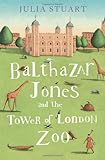
Balthazar Jones and the Tower of London Zoo by Julia Stuart

It’s been a while (2010) since I bought Balthazar Jones and the Tower of London Zoo and I was pleased when I finally got round to reading it to find that I enjoyed this quirky book, at times comical and at times poignant. It’s a mix of historical facts and odd characters, set in the present day at the Tower of London, but with a strangely old-fashioned feel to it. It’s the story of Beefeater Balthazar Jones and his wife Hebe, who live in the Salt Tower. Hebe works at London Underground’s Lost Property Office, full of weird and wonderful things.
It begins:

Standing on the battlements in his pyjamas, Balthazar Jones looked out across the Thames where Henry III’s polar bear had once fished for salmon while tied to a rope. The Beefeater failed to notice the cold that pierced his dressing gown with deadly precision, or the wretched damp that crept round his ankles. Placing his frozen hands on the ancient parapet, he tilted his head back, and inhaled the night. There it was again.

The undeniable aroma had fluttered past his capacious nostrils several hours earlier as he lay sleeping in the Tower of London, his home for the last eight years.

The Queen has decided that all the animals that have been given to her as gifts are to be moved from London Zoo to the Tower of London. This wasn’t a new idea as the ‘man from the palace’ explained to Balthazar Jones that animals had been kept at the Tower from the 13th century until the 1830s and the menagerie had been an immensely popular tourist attraction. The Queen is anxious not to offend the foreign rulers who have sent her the exotic animals and Balthazar, a collector of rare raindrops and the owner of a very ancient tortoise, is charged with taking care of them in the new royal menagerie at the Tower.

The supporting characters include the Reverend Septimus Drew, who writes erotica under the pen name Vivienne Ventress – he is in love, although he can’t bring himself to tell her, with Ruby Dore, the landlady of the Tower tavern, the Rack and Ruin, whose canary refuses to sing. There are the other Beefeaters, the Chief Yeoman Warder and the Ravenmaster who hates the intrusion of the Queen’s animals, which include an Etruscan shrew, a Komodo dragon, howler monkeys and a King of Saxony bird of paradise.

It’s not all eccentric characters and bizarre situations, there’s love and sorrow intermingled. Balthazar and Hebe had a son, Milo who died young and they are both still mourning his death. Balthazar, though is tormented by a terrible secret, which he can’t reveal to Hebe. Since Milo’s death they have drifted apart and Balthazar is devastated when Hebe leaves him. Will they get back together?  What is his secret and will he tell Hebe?

By the end of this book I was thoroughly absorbed into the world of the Tower of London, with all the irritations of living within circular walls, and the Lost Property Office of London’s Underground, where strange things were left such as a magician’s box used to saw glamorous assistants in two and a wooden box containing the remains of Clementine Perkins.  And, I wonder, do all the Beefeaters really have a ‘ruthless specimen of fungus that flourished on the back of their knees‘ as a result of the rain and ‘the damp from their abominable lodgings.‘?

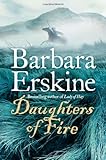
Daughters of Fire by Barbara Erskine

Daughters of Fire is historical time-slip fiction switching between the present day and the first century CE Britannia, a mix of historical fiction, fantasy and romance.  It was with relief that I finished reading it – relief, because although the story of Cartimandua, Queen of the Brigantes tribe is fascinating and that of historian Viv Lloyd Rees is initially interesting, the book is too long, and too wordy.

Daughters of Fire intermingles two stories, that of  Viv and Cartimandua. Viv has published a book on Cartimandua, a book using alternative as well as traditional historical sources – ie using legends, her dreams and visions as well as the writings of Roman historians. She has ‘borrowed’ an ancient cursed brooch from her boss, Professor Hugh Graham, who has criticised her book as fantasy. The rest of her story is their obsession with and struggle to gain control of the brooch.

Cartimandua, back in the first century is beset by enemies on all sides, Romans and  the leaders of the other tribes. It all goes from bad to worse when she betrays Caradoc (Caractacus), the leader of the Catuvellauni tribe, who led the tribes in resisting the Roman invaders and hands him over in chains to the Romans.

For me the essential story was good, but lost impact as it dragged on, drowned in words and by the repetition of the struggles between the characters. Because of this the ending was drained of any impact and suspense for me. I like time-slip stories, the supernatural and the paranormal, so that wasn’t a problem. And I liked the sections explaining Celtic beliefs – their belief in the immortality of the soul, in reincarnations and transmigration of the soul. As one of the characters said:

Remember the world he lived in was an animistic, rainbow world of links and connections which included vast echelons of spirits and gods and ancestors, people dead and people yet to be born, all of whom could be summoned to his aid. (page 258)

In the Author’s Note, Barbara Erskine emphasises that this is above all fiction:

In the absence of written information one has to make do with imagination, dreams and deductive techniques of a dubious nature! … (page 562)

and regarding Cartimandua:

We don’t know her tribe, or if she had children, and although far more is known about her life than that of he much more famous contemporary, Boudicca, she is still an enigma.

So, for all that is historically known about Cartimandua I refer the reader to the Roman historians.

For the truth of her life we must consult archaeology and the oracles.

The rest is silence. (page 562)

A couple of years ago I read Barbara Erskine’s book, The Warrior Princess, another time-slip book, which I also thought was too drawn out and would have been better if the plotting had been tighter. I own one more of her books, which I’ve yet to read – Sands of Time, a collection of short stories, described on the back cover as ‘spine-tingling‘ tales all with ‘a touch of the unexpected … suspense, romance, passion, unexpected echoes of the past.’ I hope, because these are short stories, they will be more succinct than the two books I have read.

This book qualifies for several challenges – Mount To-Be-Read 2013 (it’s been on my shelves for about 4 years), The Historical Fiction Reading ChallengeWhat’s in a Name 6 (in the Fire category) and Once Upon a Time VII (Fantasy).

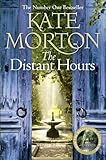
The Distant Hours by Kate Morton

I was hoping that The Distant Hours, Kate Morton’s third book would be as good as the first,The House at Riverton, which I loved. I’ve read her second book The Forgotten Garden, which disappointed me, because it was predictable and I thought it was a re-working of Frances Hodgson Burnett’s book, The Secret Garden. However, I think The Distant Hours is the least satisfying, which is a shame as it promised to be so good at the beginning and the story itself is fascinating …

A dilapidated castle, aristocratic twins, a troubled sister and a series of dark secrets cast a whispery spell … (from the back cover)

It begins with a creepy tale, The True History of the Mud Man, a children’s story written by Raymond Blythe, the owner of the castle. It begins:

Hush – Can you hear him?

The trees can. They are the first to know that he is coming.

Listen! The trees of the deep, dark wood, shivering and jittering their leaves like papery hulls of beaten silver; the sly wind, snaking through their tops, whispering that it will soon begin.

The trees know, for they are old and have seen it all before.

A tale which haunts the book. The dark secrets begin to surface when Edie Burchill’s mother receives a long-lost letter written fifty years earlier from one of the sisters at Milderhust Castle. Edie is intrigued but her mother is reluctant to talk about it and about the time that she was an evacuee at the castle during the war.

The story slips backwards and forwards in time between the 1990s and the Second World War and the characters and the descriptions of the settings are fine – up to a point. But the book moves at a snail’s pace over its 670 pages. There is just too much unnecessary detail, about things on the periphery that never go anywhere. There is so much that it stifles the narrative and the heartaches, betrayals and tragedies become a catalogue of events. I just wasn’t involved. But this is still an enjoyable book, if over long and not as good as her earlier books.

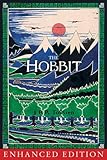
The Hobbit by J R R Tolkien

Many years ago I read Tolkien’s The Lord of the Rings and loved the story, so much so that over the years I’ve re-read the books several times. Somehow I’ve ignored The Hobbit, or There and Back Again, maybe thinking that because it’s a children’s book it was too late for me to appreciate it. So even though I’ve had a copy for years it’s only now that I’ve got round to reading it, spurred on by seeing the film this year. (I read the enhanced version on Kindle.) How wrong I was not to have read it before – The Hobbit is a book that all ages can enjoy.

It’s an adventure story of a quest set in a fantasy world, so beautifully written that it seems completely believable. Bilbo Baggins, a hobbit, is recruited through Gandalf, the wizard, to accompany a party of thirteen dwarves, led by Thorin, on their quest to recover the dwarves’ treasure stolen by Smaug the dragon and regain possession of the Lonely Mountain. Along the way Bilbo grows in confidence and becomes a hero, meeting elves, outwitting trolls, fighting goblins, and above all gaining possession of the ring from Gollum.

The enhanced version has a foreword by Christopher Tolkien, complete with illustrations including manuscript pages and unused drawings, in which he describes how and why his father came to write The Hobbit: he would stand in front of the fire in his study and tell stories to Christopher (then aged between four and five years old) and his brothers. One story, this story, he said, was a long story about a small being with furry feet, which he thought he would call a “Hobbit”. This was in about 1929. The book was eventually published in 1937, written whilst Tolkien was engrossed in writing the myths and legends told in The Silmarillion. He hadn’t intended The Hobbit to be connected to the mythology, but his tale gradually became larger and more heroic as he wrote it.

The Hobbit sold very quickly and people asked for a sequel. At first Tolkien thought that writing more details about Gandalf and the Necromancer (Sauron) would be too dark and that many parents “may be afraid that certain parts of it would be terrifying for bedtime reading.” He also wrote:

Mr Baggins began as a comic tale among conventional and inconsistent Grimm’s fairy-tale dwarves, and got drawn into the edge of it – so that even Sauron the terrible peeped over the edge. And what more can hobbits do? They can be comic, but their comedy is suburban unless it is set against things more elemental. (location 339)

Three days after writing those words he wrote:

I have written the first chapter of a new story about Hobbits – “A long expected party.”

That was the first chapter of The Lord of the Rings. (location 339)

It also includes recently discovered audio recordings of J.R.R. Tolkien reading excerpts from The Hobbit, including the dwarves’ party song, the account of their capture by the three trolls, and Bilbo Baggins’s creepy encounter with Gollum.

The Hobbit is an excellent first book for Carl’s Once Upon a Time VII.

Mount TBR: March Checkpoint

It’s time for the first quarterly check-in post for Mount TBR. Last year I read 25 of my TBR books, so for this year I was determined to read more and rashly stated I was aiming to climb Mt Ararat – that is to read 48 books from my own bookshelves.

I have made a very slow start with just 4 books completed, so not very far up the mountain at all. They are:

  1. The Case of the Curious Bride by Erle Stanley Gardner
  2. The Lacuna by Barbara Kingsolver
  3. Cat Among the Pigeons by Agatha Christie (Poirot)
  4. Small Kindnesses by Fiona Robyn (no review)
The book that has been on Mt TBR the longest is The Lacuna by Barbara Kingsolver. Sadly, although The Lacuna is well written and well researched I felt there was something missing, the personal elements that brought the story to life for me were few and far between; I couldn’t feel involved and just wanted it to end. I persevered because it has had such good reviews and recommendations, but it dragged for me. It’s a long book too!

I wasn’t too impressed with the other books, either, but the stand-out exception was Agatha Christie’s Cat Among the Pigeons,  a Poirot mystery, which I thoroughly enjoyed and it was well worth the wait to read it.