ABC Wednesday: D is for Degas

Edgar Degas (1834 – 1917) was a French artist and is perhaps most well known for his paintings of dancers; ballerinas were his favourite subject:

This is The Dance Class, oil on canvas, 1874 (the Metropolitan Museum of Modern Art). Here the dancers are in various poses at the end of a rehearsal. You can see the exhaustion on their faces and in their figures – see the girl at the front scratching her back, the girls at the back sunk to the floor, and the girl on the right, her arms folded, shoulders rounded and her head drooping down. I love the contrast between them and the rigid figure of the ballet master.Their flimsy tutus stand out so well against the hard diagonal floorboards.

I also like painting L’Absinthe, also called The Absinthe Drinker, A Sketch of a French Café,  or Figures at Café. It’s oil on canvas, 1876 (Musée D’Orsay). It’s a melancholy painting of a forlorn couple in the Café de la Nouvelle-Athènes in Paris.

They are drowning their sorrows. She is drinking absinthe, ‘the Green Fairy’, a lethal drink that was later banned. She is seen staring into space, sad, and desolate, lost in her own world. He is also in his own world, detached, his head turned away from her, as though they aren’t together. Degas’s models for the painting were Ellen Andre, an actress and Marcellin Desboutin, an engraver and artist. They were both annoyed by the painting, which depicted them as alcoholics and Degas had to state publicly that they were not.

I like it just because it tells a tale. It is so expressive and the detail is so fine, the slump of her shoulders, her air of exhaustion and his desire not to be there come over to me so powerfully. It gives the impression that Degas painted this from real life, but actually he painted it in his studio, with the pair carefully posed.

An ABC Wednesday post.

Crime Fiction Alphabet: L is for …

… Lord Edgware Dies by Agatha Christie. This was first published in the UK in 1933 and later the same year in the USA as Thirteen for Dinner. It’s the eighth book featuring Hercule Poirot, narrated by Captain Hastings. Agatha Christie had written it in the autumn of 1931 at her house in Ninevah, whilst with her husband, Max Malloran on his expedition in the Middle East sponsored by the British Museum.

Lord Edgware Dies is set far from Ninevah, in London’s West End. Poirot is having supper at the Savoy with Hastings after they had been to the theatre to see the celebrated American impressionist, Carlotta Adams. At the next table is Jane Wilkinson, Lady Edgware, also a celebrated actress, who Carlotta had impersonated during her show. Jane implores Poirot to help her to ‘get rid of her husband’ – to convince him to agree to a divorce. Poirot agrees to go and see Lord Edgware. Much to Poirot’s surprise, Lord Edgware readily agrees to a divorce, but as Poirot and Hastings leave the house, Hastings is surprised to see an astonishing change in Lord Edgware’s face:

That suave smiling face was transformed. The lips were drawn back from the teeth in a snarl, the eyes were alive with fury and an almost insane rage. (page 33 0f my copy)

The next morning Lord Edgware was found dead, stabbed in the back of the neck. Jane was seen at the house the night before, but there are witnesses who can testify that she was at a dinner party with twelve other guests.  Could Jane have been in two places at once and killed him? She had boasted to her friends that if Poirot couldn’t help her that she would

‘have to call a taxi to go round and bump him off myself. (page 17)

Or was it Carlotta Adams impersonating Jane?

It’s not a simple mystery and there is a second murder which complicates matters. Poirot is at his best, relying on his knowledge of psychology, the ‘employment of the little grey cells‘, which gives him such mental pleasure. There are small personal touches such as this where Poirot compares his moustache to that of Hastings in this conversation between the two of them:

‘You have made a hit, Poirot. The fair Lady Edgware can hardly take her eyes off you.’

‘Doubtless she had been informed of my identity’, said Poirot, trying to look modest and failing.

‘I think it is the famous moustaches’, I said. ‘She is carried away by their beauty.’

Poirot caressed them surreptitiously.

‘It is true that they are unique,’ he admitted. ‘Oh, my friend, the ‘tooth-brush’ as you call it, that you wear – it is a horror – an atrocity – a wilful stunting of the bounties of nature. Abandon it, my friend, I pray of you.’ (pages 12-13)

Yet again, another baffling case solved by Hercule Poirot – a very entertaining book.

The Crime Fiction Alphabet 2012 is a meme hosted by Kerrie at Mysteries in Paradise.

Six Months Summary

I saw that Jo at The Book Jotter has created a new meme, and I thought I’d join in. The idea is to celebrate the first six months of the reading year by putting six books into each of six categories. I’ve altered her categories a bit and not listed any books that disappointed me because I don’t want to draw attention to them. I’ve listed some books in more than one category and have linked the titles to my posts on the books.

I’ve already listed 10 of the best crime fiction books I’ve read this year, but I’ve also included some of them in these categories:

Six authors new to me (and the books I read):

  1. Kathryn Stockett – The Help
  2. Adrienne Dines – The Jigsaw Maker
  3. Terri Armstrong – Standing Water
  4. Vera Brittain – Testament of Youth
  5. Anne Bronte – Agnes Grey
  6. Kate Grenville – The Secret River

Six authors I have read before (and the books I read):

  1. Agatha Christie – several
  2. Jane Austen – Pride and Prejudice
  3. Daphne Du Maurier – My Cousin Rachel
  4. Rosy Thornton – Ninepins
  5. Hilary Mantel – A Place of Greater Safety and Bring Up the Bodies
  6. Charles Dickens – A Tale of Two Cities

Six books I have enjoyed the most:

  1. The Help by Kathryn Stockett
  2. Little Boy Lost by Marghanita Laski
  3. The Redeemed by M R Hall
  4. The Secret River by Kate Grenville
  5. A Quiet Life by Beryl Bainbridge
  6. A Tale of Two Cities by Charles Dickens

Six historical fiction tiles I’ve enjoyed:

  1. The Help by Kathryn Stockett
  2. The Arrow Chest by Robert Parry
  3. The Village by Marghanita Laski
  4. A Place of Greater Safety by Hilary Mantel
  5. Bring Up the Bodies by Hilary Mantel

Six authors I am looking forward to reading more of:

  1. Phil Rickman
  2. M R Hall
  3. Ann Cleeves
  4. Wilkie Collins
  5. Anne Zouroudi
  6. Beryl Bainbridge

Six series of books read or started:

  1. Dandy Gilver by Catriona McPherson – read some
  2. Hermes Diaktoros by Anne Zouroudi – read some
  3. Rose McQuinn by Alanna Knight – read the first
  4. Wycliffe by W C Burley – read some
  5. Shetland Quartet – by Ann Cleeves – read all, but another Jimmy Perez book is on the way
  6. Inspector Alleyn by Ngaio Marsh – read the first

Best new-to-me authors – January to March 2012

Kerrie at Mysteries in Paradise has started a new meme. The idea is to write a post about the best new-to-you crime fiction authors (or all) you’ve read so far this year, 2012. The books don’t necessarily need to be newly published. The meme will run at the end of June, September and December this year.

So far this year I’ve read 10 books by ‘new-to-me’ authors, but only 2 of those are crime fiction. They are:

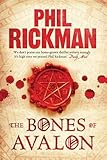
The Bones of Avalon by Phil Rickman, which I read it in January on my Kindle and didn’t have time to write about it. Phil Rickman is not a new author, of course. I had heard of him but had never read any of his books. He has written several books – 11 in the Merrily Watkins series, 6 other novels, including The Bones of Avalon, and a non-fiction book.

The Bones of Avalon set in 1560, is however, Rickman’s first historical crime fiction novel, a genre I particularly like. It has everything, mystery, murder,and witchcraft as Dr John Dee (one of my favourite historical characters – I really enjoyed Peter Ackroyd’s The House of Dr Dee) sets out to discover the whereabouts of King Arthur’s bones. His search takes him to Glastonbury and into danger. Phil Rickman writes on his website: This novel is actually the hardest thing I’ve ever done. I think he pulled it off very well and I hope to read some of his other books.

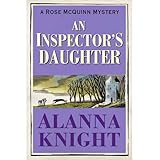
The second new-to-me crime fiction author is Alanna Knight, another well established writer whose work I haven’t come across before. There is a Kindle edition of The Inspector’s Daughter, but I found a copy in my local library.

I wrote a a Book Beginnings post about it and a short account of it earlier – see here. For more details of Alanna Knight’s many books see her website.

I rated both of these books 3.5/5 and both Alanna Knight and Phil Rickman are now on my list of authors to look out for.

The other ‘new-to-me’ authors are (with links to my posts) :

The Alphabet in Crime Fiction

Kerrie’s community meme – The Alphabet in Crime Fiction – is back for 2012 – for full details see her blog, which includes a schedule showing the date that the week’s page will be posted and the letter of the week. It begins on May 21, with, of course, the letter A. Could that be a post about Agatha Christie, or one of her books, I wonder?

The rules are that each Friday you write a blog post about crime fiction related to the letter of the week.

Your post MUST be related to either the first letter of a book’s title, the first letter of an author’s first name, or the first letter of the author’s surname, or even maybe a crime fiction “topic”. But above all, it has to be crime fiction. It is ok to skip a week.

I’ve signed up and will be posting each week where possible – some letters are always tricky!

Booking Through Thursday: An Interview with Me

btt button

Booking Through Thursday asks:

1. What’s your favorite time of day to read? I don’t have a favourite time – any time is best. I read mostly early mornings and late at night.

2. Do you read during breakfast? (Assuming you eat breakfast.) Yes.

3. What’s your favorite breakfast food? (Noting that breakfast foods can be eaten any time of day.) I love porridge for a hot breakfast and muesli when I fancy a cold breakfast.

4. How many hours a day would you say you read? 2 – 3 hours.

5. Do you read more or less now than you did, say, 10 years ago? About the same.

6. Do you consider yourself a speed reader? No

7. If you could have any superpower, what would it be? To read multiple books at the same time.

8. Do you carry a book with you everywhere you go? Not everywhere, but most places – it’s easier now with my Kindle.

9. What KIND of book? If it’s a ‘real’ book it has to be small enough to fit in  my bag or pocket and can be any genre – usually whatever I’m reading.

10. How old were you when you got your first library card? Four or five, I think, or I may have been able to borrow books on my mother’s card, I don’t know. I only remember borrowing books from the library before I went to school aged five.

11. What’s the oldest book you have in your collection? (Oldest physical copy? Longest in the collection? Oldest copyright?) I don’t know the oldest physical book in my collection. It would be one of the books my parents or grandparents owned. I have several of these that I know my parents were given (as school and Sunday School prizes) in the 1920s, but there are a few like these that probably belonged to my grandparents:

Jane Eyre by Currer Bell (Charlotte Bronte) published by Richard Edward King, 88 Curtain Road, E.C. no date probably 1880s- 90s and The Channings by Mrs Henry Wood, published by Richard Bentley and Son, Publishers in Ordinary to Her Majesty the Queen, 1890.

12. Do you read in bed? Yes – see question 1.

13. Do you write in your books?I was brought up never to write in books, but I sometimes do now – in pencil. I have some of my children’s books that I’ve coloured in the line drawings with coloured pencils and some novels I read for school with passages underlined in biro (I’m shocked by my younger self!)

14. If you had one piece of advice to a new reader, what would it be? Read whatever you like and read, read, read. Never believe anyone who tells you that you should be doing something else rather than reading.