Every Friday Book Beginnings on Friday is hosted by Gillion at Rose City Reader where you can share the first sentence (or so) of the book you are reading, along with your initial thoughts about the sentence, impressions of the book, or anything else the opener inspires.
The book I’m featuring this week is The Greedy Queen: Eating with Victoria by Annie Gray, a library book.
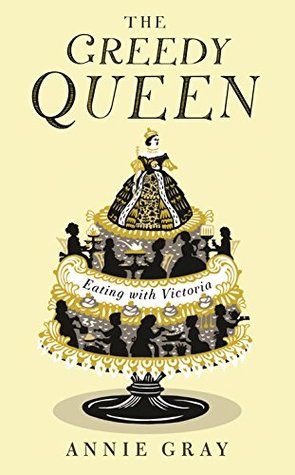
In July 2005 a pair of extraordinarily large bloomers were auctioned in Wiltshire. They sold for £12,900, breaking the record for the previous pair of similarly generously proportioned underwear, which fetched £6,200 a year earlier, and the news of their sale was widely reported across the media.
Also every Friday there is The Friday 56, hosted by Freda at Freda’s Voice.
 These are the rules:
- Grab a book, any book.
- Turn to page 56, or 56% on your eReader. If you have to improvise, that is okay.
- Find any sentence (or a few, just don’t spoil it) that grabs you.
- Post it.
- Add the URL to your post in the link on Freda’s most recent Friday 56 post.
Page 56:
Once again she complains of headaches and lethargy, and turned to food as a solace. Creevey remarked that, ‘she eats as heartily as she laughs, I think I may say she gobbles.’
Blurb:
What does it mean to eat like a queen? Elizabeth gorged on sugar, Mary on chocolate and Anne was known as ‘Brandy Nan’. Victoria ate all of this and more. The Greedy Queen celebrates Victoria’s appetite, both for food and, indeed, for life.
Born in May 1819, Victoria came ‘as plump as a partridge’. In her early years she lived on milk and bread under the Kensington system; in her old age she suffered constant indigestion yet continued to over-eat. From intimate breakfasts with the King of France, to romping at tea-parties with her children, and from state balls to her last sip of milk, her life is examined through what she ate, when and with whom. In the royal household, Victoria was surrounded by ladies-in-waiting, secretaries, dressers and coachmen, but below stairs there was another category of servant: her cooks. More fundamental and yet completely hidden, they are now uncovered in their working environment for the first time.
Voracious and adventurous in her tastes, Queen Victoria was head of state during a revolution in how we ate – from the highest tables to the most humble. Bursting with original research, The Greedy Queen considers Britain’s most iconic monarch from a new perspective, telling the story of British food along the way.
~~~
With chapters on kitchens, cooks, and ordinary eating as well as extraordinary eating this is a different look at Queen Victoria’s life and reign plus an appendix of modernised recipes.
What do you think? Would you keep reading?









 BooksPlease