Wild Swans by Jung Chang

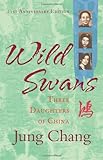
It’s taken me a couple of months to read Wild Swans: Three Daughters of China (first published in 1991), Jung Chang’s book about her grandmother, her mother and herself, telling of their lives in China up to and during the years of the violent Cultural Revolution. Her family suffered atrociously, her father and grandmother both dying painful deaths and both her mother and father were imprisoned and tortured.

Needless to say that this is a harrowing book to read, but it’s also an eye-opener (for me at any rate) about what happened in China under Mao.

Jung Chang was born in Yibin, Sichuan Province, China, in 1952. She was briefly a Red Guard at the age of fourteen, and then a peasant, a ‘barefoot doctor’, a steelworker and an electrician. She came to Britain in 1978, and in 1982 became the first person from the People’s Republic of China to receive a doctorate from a British university. Wild Swans  won the 1992 NCR Book Award and the 1993 British Book of the Year. She lives in London.

In Wild Swans she casts light on why and how Mao was able to exercise such paralysing control over the Chinese people. His magnetism and power was so strong and coupled with his immense skill at manipulation and his ability to inspire fear, it proved enough to subdue the spirit of most of the population; not to mention the absolute cruelty, torture and hardships they had to endure.

I wondered how she knew so much about what happened to her mother and grandmother (I don’t know nearly as much about mine) but in the Introduction she explains that when her mother came to visit her in London they talked every day for months. She talked about their eventful lives – her grandmother had been a concubine of a warlord general and her mother had joined the Communist underground at the age of 15. She also recorded sixty hours of her memories.

I wrote a bit about the book in a Book Beginnings post at the end of last November, when I’d just started to read it. It’s a personal story, reflecting the twentieth century history of China. A remarkable book, full of courage and spirit.

  • Paperback: 720 pages
  • Publisher: HarperPress; New edition edition (1 Mar 2012)
  • Language: English
  • ISBN-10: 0007463405
  • ISBN-13: 978-0007463404
  • Source: borrowed from a friend

Scottish History

Ever since we moved to live just south of the border with Scotland I’ve been interested in learning more about its history. My knowledge was limited to the basics and mainly related to the monarchy – Robert the Bruce, Mary Queen of Scots, James VI of Scotland and I of England, the Jacobite Rebellions, and Bonnie Prince Charlie and so on.

Many books have been written on Scottish history and when I saw this little book some years ago I thought it could be a good place to start to find out more:

A Short History of Scotland by Richard Killeen is by its very nature a summary account and a basic introduction. There are 31 short chapters covering the period from Prehistoric Scotland up to the Twentieth Century – all in 69 pages, including coloured illustrations of people and places.

I found the early chapters the most interesting (maybe because it was mainly new information for me) covering the early periods – Iron Age Celts, Roman Scotland and later invaders – Anglo-Saxons, raiders from Dalriada in Ireland (Irish Celts), Picts and Vikings.

Much of the book is the history of the monarchy. Kenneth MacAlpin was the first King of Scotland (9th century) but not of all modern Scotland – he never established himself in the Borders, which was held by the Anglo-Saxon Northumbrians. Northumbria had formerly extended from the Humber right up to the Forth, and it was not until Malcolm II (1005-34) won the battle of Carham in 1018 that the land north of the Tweed became part of his kingdom.

The book traces the history of Scotland through the various battles for power and control – the Norman settlement of the lowlands founding abbeys and cathedrals, the contest for the crown between John Balliol and Robert Bruce (both members of the Norman aristocracy) and the intervention of Edward I of England in choosing John Balliol as king in 1292 and claiming formal overlordship for himself and his successors.

Scottish kings had paid feudal homage to English kings before the 1290s. As far back as 1174, William the Lion had acknowledged himself the formal vassal of Henry II. Such acts did not imply that Scotland was a dependency of England. In the first place, England and Scotland hardly existed in the modern sense. The age of centralised states with uniform laws, secure boundaries with centralised administration – all things we take completely for granted – lay well in the future. (page 28)

Edward’s actions triggered Scottish resistance, with William Wallace winning victory over the English at Stirling Bridge in 1297. Wallace was then defeated within a year at the Battle of Falkirk. Robert the Bruce gained the crown, and in 1314 defeated Edward II at the Battle of Bannockburn: ‘the battle which confirmed Scotland as an independent kingdom.’ (page 31)

Moving forward in time, Killeen describes the history of Scotland until the Reformation as ‘a guignol of intrigue, faction and murder mixed with solid achievement.’ The rest of the book includes chapters on the Stewarts, Mary Queen of Scots, the Union of Crowns (1603), the Civil War, Glencoe, the Act of Union (1707), Scottish Enlightenment, the Clearances and the Industrial Revolution.

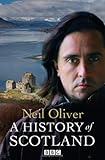
Reading this little book has spurred me on to read more detailed histories and I’ve started with Neil Oliver’s A History of Scotland. More about that another time.

Book Beginnings: Wild Swans by Jung Chang

I’m currently reading Wild Swans by Jung Chang.

It begins:

At the age of fifteen my grandmother became the concubine of a warlord general, the police chief of a tenuous national government of China. The year was 1924 and China was in chaos. Much of it, including Manchuria, where my grandmother lived, was ruled by warlords. the liaison was arranged by her father, a police official in the provincial town of Xixian in southwest Manchuria, about a hundred miles north of the Great Wall and 250 miles northeast of Peking.

Wild Swans is a family memoir – the story of three generations of woman in Jung Chang’s family – her grandmother, mother and herself. This is the 2003 edition with an introduction by Jung Chang explaining how she came to write the book. She had always dreamed of being a writer, but growing up in Mao’s China it seemed out of the question, with most writers suffering in endless police persecutions. It was only after she had been allowed to come to Britain in 1978 to study that she had the freedom to write and to write what she wanted.

So far, I’m finding it fascinating, reading about her grandmother, who was one of the last generation of Chinese woman to suffer the practice of binding feet. I knew of this practice, but hadn’t realised just how much the little girls suffered and continued to suffer throughout their lives.

As this book is so long (over 600 pages in a small font) it’s going to take me quite a while to read it. I’l probably write a few posts on my progress.

First Chapter, First Paragraph is hosted by Diane at Bibliophile by the Sea.

October’s Books

October has been another good month for reading. As in September I read ten books, listed below (the titles are linked to my posts on the books):

  1. The Judgement of Strangers by Andrew Taylor 4/5
  2. Dancing Backwards by Salley Vickers 3.5/5 (library book)
  3. Fear in the Sunlight by Nicola Upson 3/5 (Kindle)
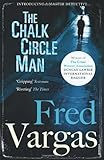
  4. The Chalk Circle Man by Fred Vargas 4.5/5 (library book)
  5. Sweet Tooth by Ian McEwan 3/5
  6. The House of Silk by Anthony Horowitz 4/5
  7. Hickory Dickory Dock by Agatha Christie 4.5/5
  8. Mrs Harris MP by Paul Gallico 4/5
  9. The History of Scotland by Richard Killen 4/5 (from TBR books)
  10. The Expats by Chris Pavone 3.5/5 (Kindle)

So, a total of 9 fiction books of which 6 were crime fiction, and 1 non fiction. Two of the books were library books, 2 were e-books and 1 book was from my to-be-read books (books I’ve owned before January 2012).

It’s difficult to pick a Book of the Month this time as I’ve rated all of the books as 3 and over (meaning they were good, enjoyable books), with just two as 4.5/5 (meaning I thought they were very good and I wanted to get back to them each time I had to stop reading).

I was tempted to say my Book of the Month is Agatha Christie’s Hickory Dickory Dock, because it’s good on characterisation, but overall I think it has to be The Chalk Circle Man by Fred Vargas for it’s sheer quirkiness and cleverly constructed plot.

For more books of the month see Kerrie’s Crime Fiction Pick of the Month on her blog Mysteries in Paradise.


Book Beginnings on Friday

This morning I finished reading Faulks on Fiction by Sebastian Faulks, a book I’ve been reading slowly for a few weeks (my review coming soon). It’s time to choose another non-fiction book to take its place. It’s got to be a book I can read in small bites and not lose the thread, maybe a biography/autobiography, or a diary, collection of letters, or a history book.

I’ve looked at a few and have decided on this one:

The half-timbered mansion disappeared long ago, and the paved thoroughfare lies buried beneath the dust of centuries. The Great Fire tore the heart out of this corner of Elizabethan London, devouring books, buildings and streets. One of the few things that survived is a small and insignificant-looking map – crinkled, faded, but still bearing the proud name of its owner. (page 1)

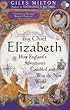
This is the beginning of Giles Milton’s about the first English settlement in the New World in the sixteenth century. It’s Big Chief Elizabeth: how England’s Adventurers gambled and won the New World. I’ve read his earlier book Nathaniel’s Nutmeg, which is a fascinating tale of the ‘competition between England and Holland for possession of the spice- producing islands of South-East Asia throughout the 17th century.’
I like the beginning of Big Chief Elizabeth, which within a few words captures the mystery and appeal of history for me. I’m looking forward to discovering more about the map and its owner.

Blurb from the back cover:

Big Chief Elizabeth has it all: gallant English seadogs, coiffured courtiers, exotic locations and lots of fights with pirates, Spaniards and Indians. (Sunday Telegraph)

Plus I’m interested to read Giles Milton’s newest book, Wolfram: the Boy who Went to War.

Book Beginnings on Friday is hosted by Katy at A Few More Pages.

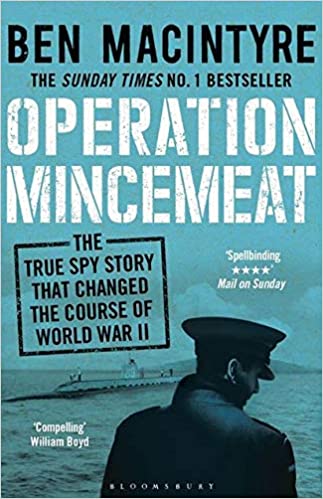
Operation Mincemeat by Ben Macintyre: a Book Review

Subtitled The True Spy Story that Changed the Course of World War II, Operation Mincemeat is about the Allies’ deception plan codenamed Operation Mincemeat in 1943, which underpinned the invasion of Sicily. It was framed around a man who never was.

The success of the Sicilian invasion depended on overwhelming strength, logistics, secrecy and surprise. But it also relied on a wide web of deception, and one deceit in particular: a spectacular con trick dreamed up by a team of spies led by an English lawyer. (page xi)

At first I found this book a little confusing and far too detailed, but as I read on I became absolutely fascinated and amazed at what had actually happened. The plan was to take a dead body, equipped with false documents, deposit it on a beach in Spain, so that it would be passed over to the Germans and divert them from the real target into believing that the preparations to invade Sicily were a bluff.

Operation Mincemeat would feed them both a false real plan, and a false cover plan – which would actually be the real plan (page 58)

The corpse was a Welsh tramp who had committed suicide. His body was clothed in the uniform of an Royal Marine with documents identifying him as Major William Martin and letters about the top-secret Allied invasion plans. This involved creating a fictional character, a whole host of imaginary agents and sub-agents all with their own characteristics and imaginary lives – just as in a novel. The details of the deception were dreamt up by Ewan Montagu, a barrister and Charles Cholmondeley (pronounced Chumley), a flight-lieutenant in the RAF seconded to MI5, the Security Service. Both were enthusiastic readers, which stood them in good stead:

For the task of the spy is not so very different from that of the novellist: to create an imaginary credible world, and then to lure others into it, by words and artifice. (page 62)

The plan was not without its faults and and indeed it contained some potentially fatal flaws, but incredibly it succeeded.

Operation Mincemeat was pure make-believe; and it made Hitler believe something that changed the course of history. (page 307)

This is a book, totally outside my usual range of reading. I wasn’t expecting to enjoy it as much as I did and I think I did enjoy it because it was so far-fetched to be almost like reading a fictional spy story. I marvelled at the ingenuity of the minds of the plans’ originators and the daring it took to carry it out.