The Body in the Ice by A J MacKenzie

The Body in the Ice (Romney Marsh Mystery #2)

Blurb:

Christmas Day, Kent, 1796

On the frozen fields of Romney Marsh stands New Hall; silent, lifeless, deserted. In its grounds lies an unexpected Christmas offering: a corpse, frozen into the ice of a horse pond. It falls to the Reverend Hardcastle, justice of the peace in St Mary in the Marsh, to investigate.But with the victim’s identity unknown, no murder weapon and no known motive, it seems like an impossible task.

Working along with his trusted friend, Amelia Chaytor, and new arrival Captain Edward Austen, Hardcastle soon discovers there is more to the mystery than there first appeared. With the arrival of an American family torn apart by war and desperate to reclaim their ancestral home, a French spy returning to the scene of his crimes, ancient loyalties and new vengeance combine to make Hardcastle and Mrs Chaytor’s attempts to discover the secret of New Hall all the more dangerous.

Historical crime fiction is one of my favourite genres and The Body in the Ice by A J MacKenzie is a most enjoyable read. It’s the 2nd Hardcastle and Chaytor Mystery set in Romney Marsh and the surrounding countryside in 1796-7. I haven’t read the first one in the series, The Body on the Doorstep, but it didn’t seem to matter as I had no difficulty in reading this as a standalone, even though there are references back to the first book, but I do intend to read it as I enjoyed the second book so much.

Reading historical crime fiction is a different experience from reading modern crime fiction – no modern technology, just old-fashioned crime detection and deduction and a certain amount of intuition.  The late eighteenth century is a newish period for me, but The Body in the Ice appears (as far as I can judge) to be well grounded historically and geographically.

Historically this is the period after the end of the American War of Independence, so Britain and America are at peace, but Britain and revolutionary France are at war with the constant threat of a French invasion. Geographically, the area is not one I know but there is a map showing the locations together with a plan of New Hall, at the beginning of the book an empty and bleak (fictional) house owned by the Rossiter family, and also the Rossiter Family Tree.

The winter of 1796-7 was exceptionally harsh and cold and on Christmas Day in the village of St Mary in the Marsh, on the Kent coast Amelia Chaytor is spending the day with her friends, spinsters Miss Godfrey and Miss Roper when their maidservant bursts in and announces that she has seen someone at New Hall stables, frozen into the ice face down. Previously two men had been seen arriving at the Hall and at first it looks as though one of them has killed the other as they have both disappeared.

The Reverend Hardcastle is informed and as a justice of the peace he sets out to investigate the murder, aided by Joshua Stemp, the parish constable. It’s soon obvious that this is a complicated matter as the body they pulled from the ice was that of a black woman, dressed as a man.

Add into the mix the American family who arrive after the murder to establish their claim to their ancestral home, the village community, smugglers and French spies, and slavery and racism. The characters of Revd Hardcastle and Amelia Chaytor in particular are well drawn and convincing. His sister, Cordelia provides a comic element – she is a gothic novelist, who incidentally gave a young Jane Austen writing tips, accompanied by her cowardly (but lovable) dog Rodolpho.

It’s fast paced, and like all good mysteries it’s full of twists and turns, tension and drama, mixed together with both national and local politics. I enjoyed it immensely and will read more books by A J Mackenzie. The next book in the series will be The Body in the Boat.

My thanks to the publishers and NetGalley for my copy of this book.

The Authors:

A J Mackenzie is the pseudonym of Marilyn Livingstone and Morgen Witzel, an Anglo-Canadian husband-and-wife team of writers and historians. They write non-fiction history and management books under their own names, but ‘become’ A J MacKenzie when writing fiction. For more details about the authors and their books see their website.

  • Format: Kindle Edition
  • File Size: 1094 KB
  • Print Length: 368 pages
  • Publisher: Zaffre (20 April 2017)
  • Source: Review copy
  • My Rating: 5*

First Chapter, First Paragraph: Past Encounters

Every Tuesday Diane at Bibliophile by the Sea hosts First Chapter First Paragraph Tuesday Intros to share the first paragraph sometimes two, of a book that she’s reading or planning to read soon.

This week’s first paragraph is from Past Encounters by Davina Blake, one of my TBRs. I was reorganising my bookshelves yesterday when I found this book at the back of one of my double stacked shelves. I’d forgotten I’d got it. That’s the drawback of double shelving.

Past EncountersIt begins:

1955 Rhoda

I saw him do it. Put his fist through the window of our back door. The blurred shadow at the window, then the crack as his white knuckles burst through. I was coming downstairs with a batch of laundry and my first thought was that it was a burglar. But then I saw Peter’s white face as the splatter of glass fell away.

I dropped the clothes and rushed through the kitchen, calling, ‘Are you all right?’ Only afterwards did I have time to think, what a ridiculous question. My husband had just put his fist through a door. On purpose. Of course he wasn’t all right.

Blurb (from the back cover)

From the moment Rhoda Middleton opens one of her husband’s letters and finds it is from another woman, she is convinced he is having an affair. But when Rhoda tracks her down, she discovers the mysterious woman is not his lover after all, but the wife of his best friend, Archie Foster. There is only one problem – Rhoda has never even heard of Archie Foster.

Devastated by this betrayal of trust, Rhoda tries to find out how and why her husband, Peter, has kept this friendship hidden for so long. Her search leads her back to 1945, but as she gradually uncovers Peter’s wartime secrets she must wrestle with painful memories of her own. For if they are ever to understand each other, Rhoda too must escape the ghosts of the past.

Taking us on a journey from the atmospheric filming of Brief Encounter, to the extraordinary Great March of prisoners of war through snow-bound Germany, this is a novel of friendship, hope, and how in the end, it is the small things that enable love to survive.

Would you keep on reading – or not?

See What I Have Done by Sarah Schmidt

Lizzie Borden took an ax
And gave her mother forty whacks
When she saw what she had done,
She gave her father forty-one.

Or did she?

On the 4 August 1892 Andrew Borden and his second wife, Abby, were brutally murdered in their home at 92 Second Street in Fall River, Massachusetts and Andrew’s daughter, Lizzie, was charged with the murders. She was tried and was acquitted in June 1893 and speculation about the murders and whether Lizzie was guilty or not continues to the present day. See What I Have Done by Sarah Schmidt is a work of fiction based on true events using various resources.

File:Lizzie borden.jpg
Lizzie Borden c.1890

Lizzie was thirty two at the time of the murders but in this fictionalised account she seems emotionally much younger, more like a teenager than a mature woman.

The narrative is shared by Lizzie, her sister Emma, Bridget their maid and Benjamin, a ‘friend’ of Lizzie’s Uncle John, and moves backwards and forwards in time, before and after 4 August 1892. Lizzie’s account is the strangest and it takes you right inside her mind. She is a disturbed and unstable character to say the least and I had the most unsettling feeling as I read that I was right inside her crazy, demented mind.

The writing is ambiguous in parts, lending enough credence to cast doubt on Lizzie’s guilt – and then in other parts I was convinced that she had committed the murders. It’s the introduction of Benjamin, a fictional character, a vicious and violent man, that provides an explanation of what happened to the murder weapon, that the police were unable to find.

Sarah Schmidt’s prose highlights the senses – the sights, sounds, smells, and tastes are aroused. The tension is palpable, and the fear and feverish atmosphere in the Borden’s house comes to a climax in the gruesome murders. It is indeed eerie and compelling, a mesmerising book.

I received this as an ARC from the publisher, the Atlantic Monthly Press, via NetGalley. And it is published in the US on 1 August 2017 in hardback.

Amazon US

  • Hardcover: 324 pages
  • Publisher: Atlantic Monthly Press (August 1, 2017)
  • Language: English
  • ISBN-10: 0802126596
  • ISBN-13: 978-0802126597

See What I Have Done is also published in the UK today, 2 May 2017, as an e-book by Tinder Press

Amazon UK

See What I Have Done

  • Format: Kindle Edition
  • File Size: 1571 KB
  • Print Length: 336 pages
  • Publisher: Tinder Press (2 May 2017)

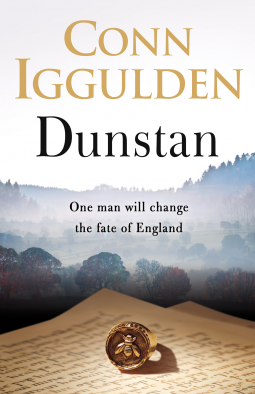
Dunstan by Conn Iggulden

History has always fascinated me, but I don’t know very much about the medieval period, so I was keen to read Dunstan: One Man Will Change the Fate of England by Conn Iggulden, to be published on 4 May 2017. It is historical fiction following the life of Dunstan who was born some time between 910 and 920. He was the Abbot of Glastonbury, then Archbishop of Canterbury and later canonised as a saint. I thoroughly enjoyed it and learned a lot about the period.

Summary (from the publishers)

The year is 937. England is a nation divided, ruled by minor kings and Viking lords. Each vies for land and power. The Wessex king Æthelstan, grandson of Alfred the Great, readies himself to throw a spear into the north.

As would-be kings line up to claim the throne, one man stands in their way.

Dunstan, a fatherless child raised by monks on the moors of Glastonbury Tor, has learned that real power comes not from God, but from discovering one’s true place on Earth. Fearless in pursuit of his own interests, his ambition will take him from the courts of princes to the fields of battle, from exile to exaltation.

For if you cannot be born a king, or made a king, you can still anoint a king.

Under Dunstan’s hand, England may come together as one country – or fall apart in anarchy . . .

From Conn Iggulden, one of our finest historical writers, Dunstan is an intimate portrait of a priest and murderer, liar and visionary, traitor and kingmaker – the man who changed the fate of England.

Conn Iggulden has brought the period to life with this book, fleshing out the historical records. It’s written in the first person, past tense, so we see events through Dunstan’s eyes. He and his younger brother Wulfric were brought up by the monks at Glastonbury Abbey. It’s a harsh, cruel life, but Dunstan has a vision that he will build a cathedral and his ambition and determination help him to make his vision a reality.

The book is set during the reigns of several kings, Æthelstan, the grandson of Alfred the Great, then of Ã†thelstan’s brother Edmund, who was king for just five years before he was killed. He was followed by another brother, Eadred, then by Edmund’s sons, Edwy and Edgar, who divided England between them. They were followed by Edmund’s grandson, Edward and finally by Ethelred the Unready, his much younger brother. I hope I have got the sequence correct.

This was a period of great unrest and conflict, as England eventually became unified under one High King, and was attacked repeatedly by the Vikings. Dunstan was manipulative, dedicated, ruthless and proud. It was these characteristics that enabled him to succeed. He was present at the Battle of Brunanburh in 937, in which Ã†thelstan defeated an alliance of Viking and Celtic warriors for control of the country and became the first king of England.

Dunstan also reformed the monasteries, imposing the rule of St Benedict, was instrumental in the building of Glastonbury Abbey, was an adviser to Eadred, exiled by Edwy, and reinstated by Edgar before being appointed Archbishop of Canterbury.

My summary of this book really does not do it justice. I was fascinated by it and the detail is impressive. It incorporates many tales about Dunstan, including the one where he is said to have pulled the devil’s nose with a pair of tongs. Conn Iggulden’s version of this tale is truly horrific. His Historical Note explains his use of the sources he has used and explanations of his use of names, notes on spelling, titles, on the Battle of Brunanburh, on Gothic Arches, and on the many miracles that Dunstan is said to have performed. Where there are gaps in the historical records Iggulden has filled them in to present his story of a man who achieved so much despite his flaws and self-doubt.

My thanks to NetGalley and the publishers for an advance proof copy of Dunstan.

Amazon UK 

  • Format: Kindle Edition
  • File Size: 2224 KB
  • Print Length: 464 pages
  • Page Numbers Source ISBN: 071818145X
  • Publisher: Penguin (4 May 2017)

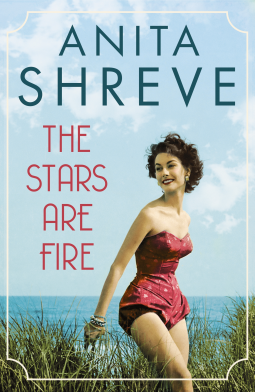
The Stars are Fire by Anita Shreve

I really wanted to like The Stars are Fire, Anita Shreve’s latest book. However, I don’t think it’s one of her best books and I’m not keen on the cover, which I think does not represent the story.

It begins well, describing the continuous wet spring when it seemed the rain would never stop and Grace Holland prays for a dry day. She’s in a difficult marriage, with her two young children, both under the age of two and pregnant with her third child. They live in a shingled bungalow two blocks in from the ocean in Hunts Beach (a fictional town) on the coast of Maine. The rain is followed by the long hot summer of 1947, then a drought sets in, followed by devastating fires. The Stars are Fire paints a convincing picture of life just after the Second World War. Grace’s daily life is difficult constrained by the social conventions and attitudes of the late 1940s.

The fires are getting closer to Hunts Beach when Gene, Grace’s husband joins the volunteers trying to bring the fires under control and she is left alone with the children. Grace’s strength and ingenuity is tested as she and her children survive the fire only to find that everything around her has gone – all the houses, her best friend and neighbour; those who have survived are leaving and her husband is missing. She has nothing.

Grace, however, is resilient and resourceful. Helped by her mother and strangers she begins to build a new life, finds work and experiences a freedom she had never known before. But then it all changes. I don’t want to write any more as I don’t want to give away any spoilers.

The Stars are Fire is easy reading and I finish it in one day. It is written from Grace’s perspective and in the present tense, which I often find irritating. But it is a page-turner and I did want to know what happened next. I didn’t enjoy the second half of the book as much as the first. And I think the ending rather trite. It’s a book about loss and grief, about how people’s lives can be changed in an instance and how they react and face up to emotional and physical challenges.

My thanks to the publishers and NetGalley for a proof copy of this book.

  • Format: Kindle Edition
  • File Size: 1042 KB
  • Print Length: 256 pages
  • Publisher: Little, Brown Book Group (18 April 2017)
  • My rating: 3*

The Kill Fee by Fiona Veitch Smith

The Kill Fee (Poppy Denby Investigates #2)

The Kill Fee is the second book in the Poppy Denby Investigates series. I haven’t read the first book, The Jazz Files, but I had no difficulty reading this second book as it reads well as a standalone, with enough detail of previous events for me to follow the story.

It is set in London in 1920 with flashbacks to Russia in 1917. Poppy is the Arts and Entertainments Editor at the Daily Globe and whilst she is covering an exhibition of Russian Art at the Crystal Palace a guard is shot and injured and one of the Fabergé Eggs on display is stolen. It’s not just an extremely valuable Egg, one that had been owned by a member of the Tsar’s family, but one that is said to contain a secret that could threaten royal families throughout Europe.

This is reminiscent of the Golden Age crime fiction as Poppy sets about finding who stole the Egg and there are plenty of suspects. The theft is followed by a couple of murders and a poisoning, and a secret passageway as Poppy chases around London in hot pursuit of the killer.

Its an enjoyable read that kept me entertained with a mix of fictional and historical characters and a look at 1920s’ society. I particularly liked the Russian connection and the information about White and Red Russians and the Russian Revolution of 1917 – by 1920 this was coming to a head in the Crimea. The book begins with an episode in Moscow in 1917 as an unnamed man in a bearskin coat enters the house of an aristocratic family to find a scene of carnage. Most of the family have been murdered, but he rescues a small girl, her little dog and her English nanny. How this fits into the rest of the book only gradually becomes clear.

There is a map of 1920s London that helps to follow the action and a list of the fictional and historical characters that I found useful. Fiona Veitch Smith explains in her historical Note at the end of the book how she got the idea for The Kill Fee and how she blended fact with fiction. Apart from a few ‘tweaks’ she has stuck to the historical timeline, as far as she is aware, moving the Russian Embassy to Kensington Gardens seven years earlier than it really did and bringing forward the selling of paper poppies by one year – these were launched by the British Red Cross in 1921. The plotline of the theft of the Fabergé Egg and the exhibition at the Crystal Palace is a figment of her imagination. She apologises for ‘any unintentional errors you may find.’

Well, I did find another anachronism. At one point (page 209 in my paperback copy) Poppy and Daniel are arguing as he drives across London approaching the Victoria Embankment when he had to slow down ‘to allow a family to cross the road at a pelican crossing.‘ I think this must be a typing error as although pedestrian crossings existed more than 2000 years ago, (as can be seen in the ruins of Pompeii), pelican crossings weren’t introduced in the United Kingdom until 1969.

None of this affected my enjoyment of the book as the world of London in the 1920s came to life and the complex plot and fast pace kept my brain ticking over, keeping track of the different sub-plots and characters. The kill fee in the title refers to the money offered to Rollo, the Daily Globe owner and editor-in-chief, to stop him from publishing the story concerning the theft of the Fabergé Egg.

My thanks to LibraryThing Early Reviewers for my copy of this book.

  • Paperback: 320 pages
  • Publisher: Lion Fiction (16 Sept. 2016)
  • Language: English
  • ISBN-10: 1782642188
  • ISBN-13: 978-1782642183

This is my 10th book for the Mount TBR Challenge.