Small Wars by Sadie Jones: Book Beginnings on Friday & The Friday 56

Every Friday Book Beginnings on Friday is hosted by Gillion at Rose City Reader where you can share the first sentence (or so) of the book you are reading. You can also share from a book you want to highlight just because it caught your fancy.

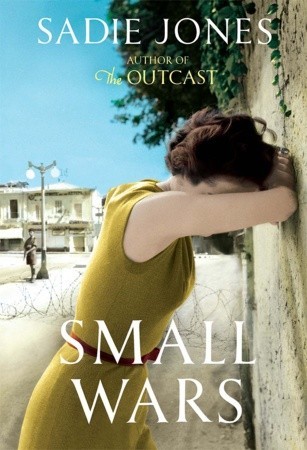
Small Wars by Sadie Jones is historical fiction set mainly in Cyprus in the late 1950s where Major Hal Treherne and his wife Clara and their baby daughters are stationed during the ‘enosis’ (union with Greece) uprising. I’ve read about two thirds of it so far and it is good.

The book begins with a Prologue at Sandhurst in July 1946.

An English rain was falling onto the instruments of the band, onto their olive green uniforms and the uniforms of the cadets as they marched. The quiet rain lay in drops on the umbrellas of the families watching, on the men’s felt hats and the women’s gloved hands; it dampened the grey and green countryside around them and put beads of water onto everything.

The Royal Military Academy Sandhurst (RMAS) is where all officers in the British Army are trained to take on the responsibility of leading their soldiers. The main character is Hal Treherne and this opening chapter is about his passing out parade after he completed his basic training as an officer.

Also every Friday there is The Friday 56, hosted by Freda at Freda’s Voice, but she is taking a break and Anne at My Head is Full of Books has taken on hosting duties in her absence. You grab a book and turn to page 56 (or 56% of an eBook), find one or more interesting sentences (no spoilers), and post them.

Page 56 is in Part Two, which is set in Limassol, Cyprus ten years later in 1956 during the Emergency. Hal has been promoted to a major.

‘It was a sharp sudden valley and it wasn’t fanciful to consider it sinister, with the slithering hard stones and earth that went steeply downward. For most of the day it would be in shadow. Hal had seen the gradients on the map, but was still surprised by the extremity of the land and that anyone would choose to build a farm there, so deep.

Description from Amazon UK:

Hal Treherne is a soldier on the brink of a brilliant career. Impatient to see action, his other commitment in life is to his beloved wife, Clara, and when Hal is transferred to Cyprus she and their twin daughters join him. But the island is in the heat of the emergency; the British are defending the colony against Cypriots – schoolboys and armed guerillas alike – battling for union with Greece.

Clara shares Hal’s sense of duty and honour; she knows she must settle down, make the best of things, smile. But action changes Hal, and the atrocities he is drawn into take him not only further from Clara but himself, too; a betrayal that is only the first step down a dark path.

It was longlisted for the Orange Prize for Fiction in 2010. The Orange Prize for Fiction, now known as the Women’s Prize for Fiction is an annual award that recognizes the best novel written in English by a woman, regardless of nationality.

Nicholas Nickleby by Charles Dickens: Book Beginnings on Friday & The Friday 56

Every Friday Book Beginnings on Friday is hosted by Gillion at Rose City Reader where you can share the first sentence (or so) of the book you are reading. You can also share from a book you want to highlight just because it caught your fancy.

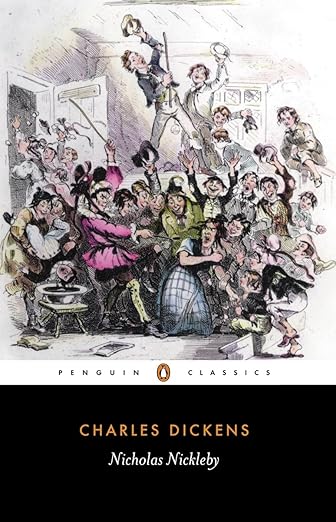
I’m getting to the end of reading Bleak House by Charles Dickens, so I’m looking around to find a book to read to replace it. One of the books I might read is Nicholas Nickleby by Charles Dickens.

Nicholas Nickleby is the third novel by Charles Dickens, originally published as a serial from 1838 to 1839 and published in book form in 1839. I know very little about and don’t remember watching any of the adaptations on TV or film.

The book begins:

There once lived, in a sequestered part of the county of Devonshire, one Godfrey Nickleby: a worthy gentleman, who, taking it into his head rather late in life that he must get married, and not being young enough or rich enough to aspire to the hand of a lady of fortune, had wedded an old flame out of mere attachment, who in her turn had taken him for the same reason. Thus two people who cannot afford to play cards for money, sometimes sit down to a quiet game for love.

Also every Friday there is The Friday 56, hosted by Freda at Freda’s Voice, but she is taking a break and Anne at My Head is Full of Books has taken on hosting duties in her absence. You grab a book and turn to page 56 (or 56% of an eBook), find one or more interesting sentences (no spoilers), and post them.

On page 56

‘Stop,’ cried Nicholas hurriedly; pray hear me. This is the grossest and wildest delusion, the completest and most signal mistake, that ever human being laboured under, or committed. I have scarcely seen the young lady half-a-dozen times, but if I had seen her sixty times, or am destined to see her sixty thousand thousand, it would be, and will be, precisely the same.

Description from Goodreads:

When Nicholas Nickleby is left penniless after his father’s death, he appeals to his wealthy uncle to help him find work and to protect his mother and sister. But Ralph Nickleby proves both hard-hearted and unscrupulous, and Nicholas finds himself forced to make his own way in the world. His adventures gave Dickens the opportunity to portray an extraordinary gallery of rogues and eccentrics, such as Wackford Squeers, the tyrannical headmaster of Dotheboys Hall, a school for unwanted boys; the slow-witted orphan Smike, rescued by Nicholas; and the gloriously theatrical Mr. and Mrs. Crummles and their daughter, the ‘infant phenomenon’. Like many of Dickens’s novels, Nicholas Nickleby is characterised by his outrage at cruelty and social injustice, but it is also a flamboyantly exuberant work, revealing his comic genius at its most unerring.

The Boy With No Shoes by William Horwood: Book Beginnings on Friday & The Friday 56

Every Friday Book Beginnings on Friday is hosted by Gillion at Rose City Reader where you can share the first sentence (or so) of the book you are reading. You can also share from a book you want to highlight just because it caught your fancy.

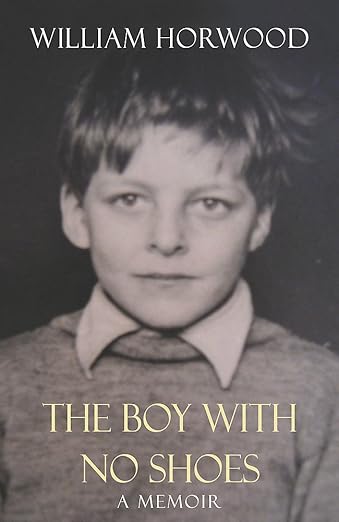
I’m featuring The Boy With No Shoes by William Horwood, a memoir I started to read today. William Horwood is an English novelist. His first novel, Duncton Wood, an allegorical tale about a community of moles, was published in 1980. It was followed by two sequels, forming The Duncton Chronicles, and also a second trilogy, The Book of Silence. William Horwood has also written two stand-alone novels intertwining the lives of humans and of eagles, The Stonor Eagles and Callanish , and The Wolves of Time duology. Skallagrigg, his 1987 novel about disability, love, and trust, was made into a BBC film in 1994. In addition, he has written a number of sequels to The Wind in the Willows by Kenneth Grahame.

In 2007, he collaborated with historian Helen Rappaport to produce Dark Hearts of Chicago, a historical mystery and thriller set in nineteenth-century Chicago. It was republished in 2008 as City of Dark Hearts with some significant revisions and cuts under the pen name James Conan.

The book begins with the Author’s Note:

When I was thirty-four and had been iller than I knew for two long years, my recovery began in the strangest and most magical of ways. I woke one day from dreaming and saw myself when very young, as clearly as in a black -and-white Kodak photograph. I saw how desperately the little boy I once was had needed someone to talk to in a world where no one wanted to listen.

From the Prologue:

My name is Jimmy and there was a man in my time long ago, before the Boy and the Girl, before my Darktime, before Granny came to help me; and the man held my hand and took me out of our cold house into the sun and then along a street to a great big place with a sign outside

From Chapter 1 Running:

The park keeper in his uniform and hat shouted at me and grabbed one of my ears and pulled me towards him.

‘KEEP OFF THE GRASS!’ he yelled, so close it made my eardrums ache.

Also every Friday there is The Friday 56, hosted by Freda at Freda’s Voice, but she is taking a break and Anne at My Head is Full of Books has taken on hosting duties in her absence. You grab a book and turn to page 56 (or 56% of an eBook), find one or more interesting sentences (no spoilers), and post them.

On page 56 the characters are talking about the day that Edmund Hillary from New Zealand and Sherpa Tensing from Tibet had climbed the highest mountain in the world. No one in the whole history of the world had stood on top of it before.

Uncle Max said, ‘This is a great day for England and the monarchy.’

Granny said, ‘It seems to me that it is a great day for New Zealand and for Tibet, and a bad day for Mount Everest. It is nothing to do with England at all, let alone the Queen.

Description from Goodreads:

Five-year-old Jimmy Rova is the unwanted child of a mother who rejects him, and whose other children bully him. The one thing he can call his own is a pair of shoes, a present from the only person he feels has ever loved him. When they are cruelly taken away, Jimmy spirals down into a state of loneliness and terrible loss from which there seems no recovery. This triumphant story of a boy’s struggle with early trauma and his remarkable journey into adulthood is based on William Horwood’s own remarkable childhood in south-east England after the Second World War. Using all the skills that went into the creation of his modern classics, Horwood has written an inspiring story of a journey from a past too painful to imagine to the future every child deserves.
The Talented Mr Ripley by Patricia Highsmith: Book Beginnings on Friday & The Friday 56

Every Friday Book Beginnings on Friday is hosted by Gillion at Rose City Reader where you can share the first sentence (or so) of the book you are reading. You can also share from a book you want to highlight just because it caught your fancy.

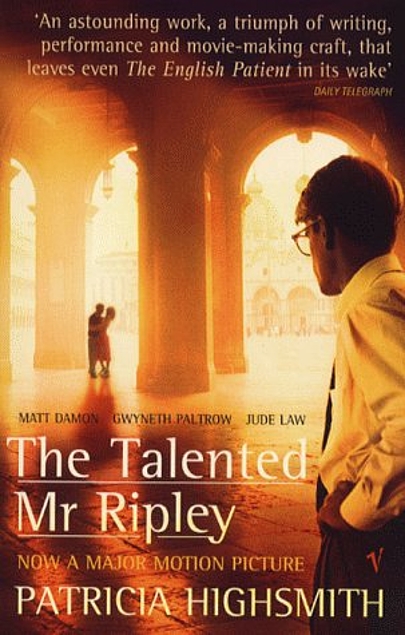
I’m featuring The Talented Mr Ripley by Patricia Highsmith, one of my TBRs. After reading Strangers on a Train I thought I’d try this, the first book in Patricia Highsmith’s five-book Ripley series.

I first came across this several years ago listening to the opening episode of the BBC’s Radio 4 adaptation of the book and thought I’d like to read the book.

Tom Ripley is struggling to stay one step ahead of his creditors and the law, when an unexpected acquaintance offers him a free trip to Europe and a chance to start over. Ripley wants money, success and the good life and he’s willing to kill for it. When his new-found happiness is threatened, his response is as swift as it is shocking.

My copy is a secondhand paperback published by Vintage in 1999, first published in 1955.

MY BOOK BEGINNING

Tom glanced behind him and saw the man coming out of the Green Cage, heading his way. Tom walked faster. There was no doubt that the man was after him.

Also every Friday there is The Friday 56, hosted by Freda at Freda’s Voice, but she is taking a break and Anne at My Head is Full of Books has taken on hosting duties in her absence. You grab a book and turn to page 56 (or 56% of an eBook), find one or more interesting sentences (no spoilers), and post them.

The American’s name was Freddie Miles. Tom thought he was hideous. Tom hated red hair, especially the kind of carrot-red hair with white skin and freckles. Freddie had large red-brown eyes that seemed to wobble in his head as if he were cocked-eyed, or perhaps he was only one of those people who never looked at anyone they were talking to.

What do you think? Would you carry on reading?

The Singing Sands by Josephine Tey: Book Beginnings on Friday & The Friday 56

Every Friday Book Beginnings on Friday is hosted by Gillion at Rose City Reader where you can share the first sentence (or so) of the book you are reading. You can also share from a book you want to highlight just because it caught your fancy.

I’m featuring The Singing Sands, by Josephine Tey, an Inspector Grant mystery, one of the books I’m currently reading.

It was six o’clock of a March morning, and still dark. The long train came sidling through the scattered lights of the yard, clicking gently over the points.

Also every Friday there is The Friday 56, hosted by Freda at Freda’s Voice, but she is taking a break and Anne at My Head is Full of Books has taken on hosting duties in her absence. You grab a book and turn to page 56 (or 56% of an eBook), find one or more interesting sentences (no spoilers), and post them.

I’ve seen the lighthouse on the point there standing up in the air. Yes. halfway up in the sky. I’ve seen the hill there change shape until it looked like a great mushroom. And as for those rocks by the sea, those great pillars of stone, they can turn light and transparent and move about as if they were walking through a set of the Lancers.

Description:

En route for the Outer Hebrides on sick leave, Inspector Grant literally stumbles upon the body of a young man in a train compartment that reeks of whisky. Grant firmly walks away from the corpse, determined to let nothing interfere with his holiday plans.
But he absentmindedly carries a newspaper away from the scene with him, a newspaper with a cryptic poem scribbled in the margin: The beasts that talk, The streams that stand, The stones that walk The singing sand . . . That guard the way To Paradise.
The memory of the unknown dead man’s face and the strange verse drive Grant into investigating, even though the police are content to call it an accidental death. What are the beasts that talk? Who wrote it? When? It isn’t long before Inspector Grant finds that his holiday is becoming more and more a busman’s holiday. Trail leads to trail: some blind alleys, some red hot. Who was the passenger in compartment B Seven? Was his death accidental or was it murder?

Josephine Tey was a pseudonym for Elizabeth Mackintosh(1896 – 1952). She was a Scottish author who wrote mainly mystery novels. I’ve read four of her books before and enjoyed them, especially The Daughter of Time, a mix of historical research and detective work. Inspector Alan Grant is in hospital and to keep his mind occupied he decides to discover whether Richard III really did murder his nephews – the Princes in the Tower.

This one is looking good, so far. What do you think? Are you tempted to read it? If you have read it would you recommend it? Do let me know.

Bleak House by Charles Dickens: Book Beginnings on Friday & The Friday 56

Every Friday Book Beginnings on Friday is hosted by Gillion at Rose City Reader where you can share the first sentence (or so) of the book you are reading. You can also share from a book you want to highlight just because it caught your fancy.

I’m featuring Bleak House, one of the books I’m currently reading.

Chapter 1 In Chancery

London. Michaelmas term lately over, and the Lord Chancellor sitting in Lincoln’s Inn Hall. Implacable November weather. As much mud in the streets as if the waters had but newly retired from the face of the earth, and it would not be wonderful to meet a Megalosaurus, forty feet long or so, waddling like an elephantine lizard up Holborn Hill.

Also every Friday there is The Friday 56, hosted by Freda at Freda’s Voice, but she is taking a break and Anne at My Head is Full of Books has taken on hosting duties in her absence. You grab a book and turn to page 56 (or 56% of an eBook), find one or more interesting sentences (no spoilers), and post them.

I found it a quite delightful place – in front, the pretty avenue and drive by which we had approached (and where, by the by, we had cut up the gravel so terribly with our wheels that I asked the gardener to roll it) at the back, the flower garden, with my darling at her window up there, throwing it open to smile at me, as if she would have kissed me from that distance.

The narrator in this passage is Esther Summerson. She and the two wards in the Jarndyce and Jarndyce case, had arrived at Bleak House and she is describing the scene that she saw from her bedroom window on their first morning at Bleak House.

Description:

Bleak House is the ninth novel by Charles Dickens, published in twenty monthly installments between March 1852 and September 1853. It is held to be one of Dickens’s finest novels, containing one of the most vast, complex and engaging arrays of minor characters and sub-plots in his entire canon. The story is told partly by the novel’s heroine, Esther Summerson, and partly by an omniscient narrator. Memorable characters include the menacing lawyer Tulkinghorn, the friendly but depressive John Jarndyce and the childish Harold Skimpole, as well as the likeable but imprudent Richard Carstone.

At the novel’s core is long-running litigation in England’s Court of Chancery, Jarndyce and Jarndyce, which has far-reaching consequences for all involved. This case revolves around a testator who apparently made several wills, all of them seeking to bequeath money and land surrounding the Manor of Marr in South Yorkshire. The litigation, which already has consumed years and sixty to seventy thousand pounds sterling in court costs, is emblematic of the failure of Chancery. Dickens’s assault on the flaws of the British judiciary system is based in part on his own experiences as a law clerk, and in part on his experiences as a Chancery litigant seeking to enforce his copyright on his earlier books. His harsh characterisation of the slow, arcane Chancery law process gave memorable form to pre-existing widespread frustration with the system. Though Chancery lawyers and judges criticized Dickens’s portrait of Chancery as exaggerated and unmerited, his novel helped to spur an ongoing movement that culminated in enactment of the legal reform in the 1870s. In fact, Dickens was writing just as Chancery was reforming itself, with the Six Clerks and Masters mentioned in Chapter One abolished in 1842 and 1852 the need for further reform was being widely debated.

I first read this book many years ago before I began my blog.