Book Beginnings & The Friday 56: Ammonites and Leaping Fish by Penelope Lively

Every Friday Book Beginnings on Friday is hosted by Gillion at Rose City Reader where you can share the first sentence (or so) of the book you are reading. You can also share from a book you want to highlight just because it caught your fancy.

I was on holiday in the Lake District last week, overlooking Esthwaite Water. There were two shelves of books in our apartment and one of them was Ammonites and Leaping Fish: a Life in Time by Penelope Lively, so I read it whilst we were away. I’ll write more about it in a later post (although I’ve not been keeping up with reviewing the books I’ve read this summer).
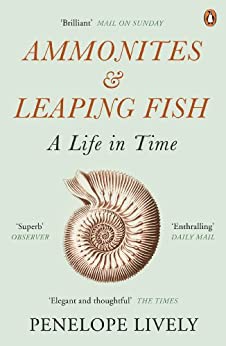
This is not quite a memoir. Rather it is a view from old age.

And a view of old age itself, this place at which we arrive with a certain surprise – ambushed, or so it can seem. The view from eighty for me. One of the few advantages of age is that you can report on it with a certain authority; you are a native now and know what goes on here.
Also every Friday there is The Friday 56, hosted by Freda at Freda’s Voice, where you grab a book and turn to page 56 (or 56% of an eBook), find one or more interesting sentences (no spoilers), and post them.

Page 56:

When I was on the other side of the Atlantic a few years ago staying with my best friend in America, she produced a photo she had found of the two of us taken in the early 1980s. We gazed at it with surprised respect; ‘Weren’t we young!’ said Betty. Actually verging on middle age, but never mind – our reaction was in perfect accord: an acknowledgement of those other selves.

Penelope Lively is one of my favourite authors and I’ve been reading her books for years, all of them are enjoyable and this one is no exception. I thoroughly enjoyed it.

Synopsis from Amazon:

In this charming but powerful memoir, Penelope Lively reports from beyond the horizon of old age. She describes what old age feels like for those who have arrived there and considers the implications of this new demographic. She looks at the context of a life and times, the history and archaeology that is actually being made as we live out our lives in real time, in her case World War II; post war penny-pinching Britain; the Suez crisis; the Cold War and up to the present day. She examines the tricks and truths of memory. She looks back over a lifetime of reading and writing. And finally she looks at her identifying cargo of possessions – two ammonites, a cat, a pair of American ducks and a leaping fish sherd, amongst others. This is an elegant, moving and deeply enjoyable memoir by one of our most loved writers.

Book Beginnings & The Friday 56: All Among the Barley by Melissa Harrison

Every Friday Book Beginnings on Friday is hosted by Gillion at Rose City Reader where you can share the first sentence (or so) of the book you are reading. You can also share from a book you want to highlight just because it caught your fancy.

Yesterday I finished reading Shrines of Gaiety, Kate Atkinson’s new book which will be published in September. I’ll write about it in a later post. Although I’m still reading The Return of the King and The Island, I wondered what I’d like to read next. I was thinking of reading  Lion by Conn Iggulden, the first in a new series ‘The Golden Age’, set in Ancient Greece in the 5th century BC. But, today I wasn’t in the mood for ancient historical fiction and fancied something more rural and more modern – and spotted All Among the Barley in a pile of books waiting to be read. It’s set on a farm in Suffolk just before the Second World War.

Prologue

Last night I lay awake again, remembering the day the Hunt ran me down in Hulver Wood when I was just a girl.

And then Chapter 1:

My name is Edith June Mather and I was born after the end of the Great War. My father, George Mather, had sixty acres of arable land known as Wych Farm; it is somewhere not far from here, I believe. Before him my grandfather Albert farmed the same fields, and his father before him, who ploughed with a team of oxen and sowed by hand.

Also every Friday there is The Friday 56, hosted by Freda at Freda’s Voice, where you grab a book and turn to page 56 (or 56% of an eBook), find one or more interesting sentences (no spoilers), and post them.

Page 56:

Unlike Doble, whose family had been tied to ours for generations, John was what we in the village called a ‘furriner’, having been born sixty miles or more north of us, where our clay gave way to flat, rich peat.

Synopsis from Amazon:

WINNER OF THE EU PRIZE FOR LITERATURE

‘BOOK OF THE YEAR’ NEW STATESMAN, OBSERVER, IRISH TIMES, BBC HISTORY MAGAZINE

The fields were eternal, our life the only way of things, and I would do whatever was required of me to protect it.


The autumn of 1933 is the most beautiful Edie Mather can remember, though the Great War still casts a shadow over the cornfields of her beloved home, Wych Farm.

When charismatic, outspoken Constance FitzAllen arrives from London to write about fading rural traditions, she takes an interest in fourteen-year-old Edie, showing her a kindness she has never known before. But the older woman isn’t quite what she seems.

As harvest time approaches and pressures mount on the whole community, Edie must find a way to trust her instincts and save herself from disaster.

I chose this book because earlier this year I enjoyed Melissa Harrison’s novella, Rain: Four Walks in English Weather, which is about four rain showers, in four seasons, across Wicken Fen, Shropshire, the Darent Valley and Dartmoor. I like the way she writes about the natural world and All Among the Barley looks as though it will bring to life a world governed by the old rural traditions, in an evocation of place and a lost way of life.

What do you think? Have you read this book ?

Book Beginnings & The Friday 56: The Island by Victoria Hislop

Every Friday Book Beginnings on Friday is hosted by Gillion at Rose City Reader where you can share the first sentence (or so) of the book you are reading. You can also share from a book you want to highlight just because it caught your fancy.

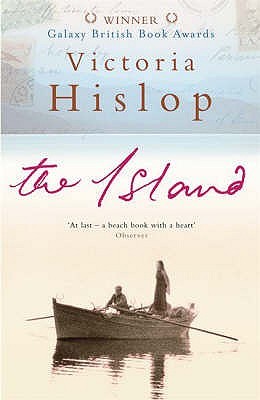
I’m currently reading The Island by Victoria Hislop, a book I’ve had on my bookshelves for years. The Wanderlust Bingo challenge has given me a massive nudge to read it now as it is the perfect book for the Island category! It is historical fiction inspired by a visit to Spinalonga, the abandoned Greek leprosy colony, an island off the coast of Crete, a stone’s throw from Plaka. I’ve now read 25% of this book and am enjoying it so far.

Plaka, 1953

A cold wind whipped through the streets of Plaka and the chill of the autumnal air encircled the woman, paralysing her body and mind with a numbness that almost blocked her senses but could do nothing to alleviate her grief.

Also every Friday there is The Friday 56, hosted by Freda at Freda’s Voice, where you grab a book and turn to page 56 (or 56% of an eBook), find one or more interesting sentences (no spoilers), and post them.

Page 57 (page 56 is blank):

1939

Early May brings Crete its most perfect and heaven-sent days. On one such day, when the trees were heavy with blossom and the very last of the mountain snows had melted into crystal streams, Elena left the mainland for Spinalonga. In cruel contrast to this blackest of events, the sky was brilliant, a cloudless blue

Synopsis from Amazon:


On the brink of a life-changing decision, Alexis Fielding longs to find out about her mother’s past. But Sofia has never spoken of it. All she admits to is growing up in a small Cretan village before moving to London. When Alexis decides to visit Crete, however, Sofia gives her daughter a letter to take to an old friend, and promises that through her she will learn more.

Arriving in Plaka, Alexis is astonished to see that it lies a stone’s throw from the tiny, deserted island of Spinalonga – Greece’s former leper colony. Then she finds Fotini, and at last hears the story that Sofia has buried all her life: the tale of her great-grandmother Eleni and her daughters and a family rent by tragedy, war and passion.

She discovers how intimately she is connected with the island, and how secrecy holds them all in its powerful grip…

I’ve read three other books by Victoria Hislop and enjoyed them so I’m expecting this one to be good too.

What do you think? Have you read this book ?

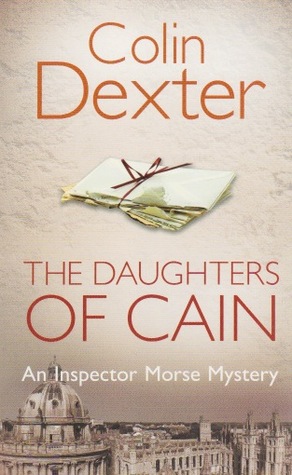
Book Beginnings & The Friday 56: The Daughters of Cain by Colin Dexter

Every Friday Book Beginnings on Friday is hosted by Gillion at Rose City Reader where you can share the first sentence (or so) of the book you are reading. You can also share from a book you want to highlight just because it caught your fancy.

I began reading Colin Dexter’s Inspector Morse books years ago and have read 9 of the 13 books in the series, mostly out of order, so I’ve been reading the earlier books to fill in the gaps, as it were. Chief Inspector Morse is one of my favourite fictional detectives (maybe even the favourite). I first ‘met’ him years ago in the ITV series Inspector Morse and so, just as Joan Hickson is forever in my mind as Miss Marple and David Suchet is Poirot, John Thaw is Morse. This post is about the 11th book The Daughters of Cain.

It begins with a Prolegomena ie Prologue

Natales grate numeras?
(Do you count your birthdays with gratitude?)
(Horace, Epistles II)

On Mondays to Fridays it was fifty-fifty whether the postman called before Julia Stevens left for school.

Julia is a teacher, not a pupil.

Also every Friday there is The Friday 56, hosted by Freda at Freda’s Voice, where you grab a book and turn to page 56 (or 56% of an eBook), find one or more interesting sentences (no spoilers), and post them.

Page 56:

She’d never loved anyone in life really – except for her mum. But amongst her clients, that rather endearing, kindly, caring sort of idiot, Felix, had perhaps come nearer than anyone.

Synopsis from Goodreads:

Bizarre and bewildering – that’s what so many murder investigations in the past had proved to be… In this respect, at least, Lewis was correct in his thinking. What he could not have known was what unprecedented anguish the present case would cause to Morse’s soul.

Chief Superintendent Strange’s opinion was that too little progress had been made since the discovery of a corpse in a North Oxford flat. The victim had been killed by a single stab wound to the stomach. Yet the police had no weapon, no suspect, no motive.

Within days of taking over the case Chief Inspector Morse and Sergeant Lewis uncover startling new information about the life and death of Dr Felix McClure. When another body is discovered Morse suddenly finds himself with rather too many suspects. For once, he can see no solution. But then he receives a letter containing a declaration of love… 

What do you think? Have you read this book – or any of the Inspector Morse books?

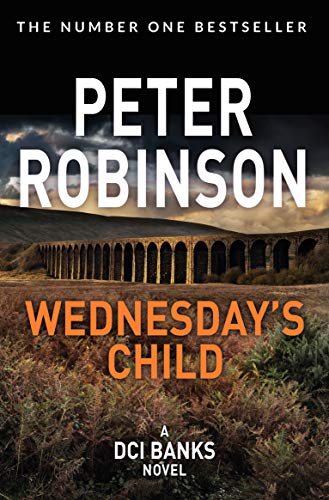
Book Beginnings & The Friday 56: Wednesday’s Child by Peter Robinson

Every Friday Book Beginnings on Friday is hosted by Gillion at Rose City Reader where you can share the first sentence (or so) of the book you are reading. You can also share from a book you want to highlight just because it caught your fancy.

My book this week is Wednesday’s Child by Peter Robinson. I began reading his Inspector Banks books years ago and have read 11 of the 26 books in the series, mostly out of order, so I’ve been reading the earlier books to fill in the gaps, as it were. This morning reading Margot’s post I remembered that the next book in the series I have to read is the 6th book, Wednesday’s Child.

The room was a tip, the woman was a slattern. On the floor, near the door to the kitchen, a child’s doll with one eye missing lay naked on its back, right arm raised above its head. The carpet around it was so stained with ground-in mud and food it was hard to tell what shade of brown it had originally been. High in one corner, by the front window, pale flowered wallpaper had peeled away from a damp patch. The windows were streaked with grime, and the flimsy orange curtains needed washing.

Also every Friday there is The Friday 56, hosted by Freda at Freda’s Voice, where you grab a book and turn to page 56 (or 56% of an eBook), find one or more interesting sentences (no spoilers), and post them.

Page 56:

‘The superintendent mentioned the Moors Murderers, Brady and Hindley,’ said Banks. I know he’s got a bee in his bonnet about that case, but you have to admit there are parallels.’

Synopsis from Amazon

When two social workers, investigating reports of child abuse, appear at Brenda Scupham’s door, her fear of authority leads her to comply meekly with their requests. Even when they say that they must take her seven-year old daughter Gemma away for tests . . .

It is only when they fail to return Gemma the following day that Brenda realizes something has gone terribly wrong.

At the same time, Banks is investigating a particularly unpleasant murder at the site of an abandoned mine. Gradually, the leads in the two cases converge, guiding Banks to one of the most truly terrifying criminals he will ever meet . . .

Mmm … It sounds very grim! What do you think? Have you read this book – or any of the Inspector Banks books?

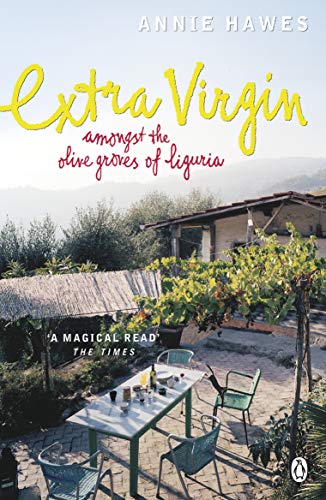
Book Beginnings & The Friday 56: Extra Virgin by Annie Hawes

Every Friday Book Beginnings on Friday is hosted by Gillion at Rose City Reader where you can share the first sentence (or so) of the book you are reading. You can also share from a book you want to highlight just because it caught your fancy.

My book this week is Extra Virgin: Amongst the Olive Groves of Liguria by Annie Hawes. I had completely forgotten that I had bought this book; I have no idea when or where I bought it, but it’s there on my bookshelves waiting to be read. I’m guessing I bought it after reading other books about life in Italy by Frances Mayes, Bella Tuscany and  Under the Tuscan Sun about restoring a crumbling villa and building a new life in the Italian countryside, full of the pleasures of living in Tuscany – the sun, the food, the wine and the local people. 

It begins with a Prologue:

Hearing the racket from above, Franco wades through his pile of prunings and peers up through the trailing branches. A pair of foreign females, skin so white it’s blinding in the glare of the sun, are messing about outside Pompeo’s old place, a few terraces uphill, shouting and giggling.

Followed by Chapter I :

Glamour , we soon spotted was not the outstanding feature of the village of Diano San Pietro.

Also every Friday there is The Friday 56, hosted by Freda at Freda’s Voice, where you grab a book and turn to page 56 (or 56% of an eBook), find one or more interesting sentences (no spoilers), and post them.

Page 56:

Here in Liguria you are surrounded by life-threatening terrors.

Synopsis from Amazon

A small stone house deep among the olive groves of Liguria, going for the price of a dodgy second-hand car. Annie Hawes and her sister, on the spot by chance, have no plans whatsoever to move to the Italian Riviera but find naturally that it’s an offer they can’t refuse. The laugh is on the Foreign Females who discover that here amongst the hardcore olive farming folk their incompetence is positively alarming. Not to worry: the thrifty villagers of Diano San Pietro are on the case, and soon plying the Pallid Sisters with advice, ridicule, tall tales and copious hillside refreshments …