First Chapter First Paragraph: Julius

First chapterEvery Tuesday Diane at Bibliophile by the Sea hosts First Chapter First Paragraph Tuesday Intros, where you can share the first paragraph or (a few) of a book you are reading or thinking about reading soon.

One of the books I’m currently reading is Julius by Daphne du Maurier. The first chapter is called Childhood (1860-1872). It begins:
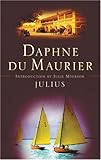
 His first instinct was to stretch out his hands to the sky. The white clouds seemed so near to him, surely they were easy to hold and to caress, strange-moving, things belonging to the wide blue space of heaven.

They floated just above his head, they almost brushed his eyelids as they passed, and he only had to grasp the long curling fringe of them with his fingers and they would belong to him instead, becoming part of him for ever. Something in him whispered that he must clutch at the clouds and bring them down from the sky. So he held out his hands to them and they did not come. He cried out to them and they did not come. They passed away from him as though they had never been, indifferent and aloof; like wreaths of white smoke they were carried away by the wind, born of nothing, dissolving into nothing, a momentary breath that vanished in the air.

What do you think? Would you keep reading?

I did and I’m finding it quite captivating. The ‘he’ in these first two paragraphs is Julius and right from his birth you can see him reaching out for things beyond his grasp.
First Chapter First Paragraph Tuesday Intros

Every Tuesday Diane at Bibliophile By the Sea hosts First Chapter First Paragraph First chapterTuesday Intros, to share the first paragraph or (a few) of a book you are reading or thinking about reading soon.

The Cabinet Room, 10 Downing Street, London, 4.30pm, 9 May 1940

Churchill was last to arrive. He knocked once, sharply, and entered. Through the tall windows the warm spring day was fading, shadows lengthening on Horse Guards Parade. Margesson, the Conservative Chief Whip, sat with Prime Minister Chamberlain and Foreign Secretary Lord Halifax at the far end of the long, coffin-shaped table which dominated the Cabinet Room. As Churchill approached them Margesson, formally dressed as ever in immaculate black morning coat stood up.

‘Winston.’

Churchill nodded at the Chief Whip, looking him sternly in the eye. Margesson, who was Chamberlain’s creature, had made life difficult for him when he had stood out against party policy over India and Germany in the years before the war.He turned to Chamberlain and Halifax, the Prime Minister’s right-hand man in the government’s appeasement of Germany. ‘Neville. Edward.’ Both men looked back; no sign today of Chamberlain’s habitual half-sneer, nor of the snappy arrogance which had alienated the House of Commons during yesterday’s debate over the military defeat of Norway. Ninety Conservatives had voted with the Opposition or abstained; Chamberlain had left the chamber followed by shouts of ‘Go!’ The Prime Minister’s eyes were red from lack of sleep or perhaps even tears – though it was hard to image Neville Chamberlain weeping. Last night the word around a feverish House of Commons was that his leadership would not survive.

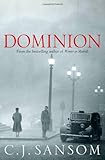
This is the opening of Dominion by C J Sansom, a novel about what might have happened, an alternative history, if Germany had been triumphant in the Second World War. All events that take place in this book after 5 p.m. on 9 May 1940 are imaginary.

I’ve read and enjoyed Sansom’s earlier books, the five Matthew Shardlake historical mysteries and Winter in Madrid, historical fiction set in Spain in 1940, but I wasn’t sure I wanted to read Dominion, his latest book, described on the book jacket as ‘a vivid, haunting re-imagining of 1950s Britain’ and ‘a gripping, humane spy thriller and a poignant love story.’

I like the opening paragraphs I’m still not sure because ‘re-imaginings’ don’t exactly appeal to me. I prefer historical fiction to be historical and fiction to be fiction, not  an alternative version of history. But when I saw a copy on the library shelves I was tempted to at least look at it and brought it home to see if it’s any good. After all it’s written by C J Sansom, so it can’t be bad, can it?

First Chapter First Paragraph: The Sea Change

Every Tuesday Diane at Bibliophile by the Sea hosts First Chapter First Paragraph Tuesday Intros, to share the first paragraph or (a few) of a book she is reading or thinking about reading soon.

The Sea Change

This week I’m featuring a book that was published in May this year. It is The Sea Change, a debut novel by Joanna Rossiter.

It begins with a Prologue, set in Kanyakumari India, in 1971 where Alice is thousands of miles away from home the day after her wedding:

It is there before we know about it. Being Born. A Persian rug, unrolling. Our wave, heavy like death.

‘Up! Up!’ a voice shouts from outside the guesthouse. It doesn’t belong to James. ‘It’s coming!’

Where is he?

Stone. Bone. think hard and then harder. That’s how it hits the shore. It takes the beach in one breathtaking gulp, palm trees dominoing down and fishing boats scattering as easily as the seeds of a dandelion. Streets fuse into the flesh of the water, like new limbs, new skin, until it morphs into a moving city. Trucks and tuk-tuks roll over and over like shorts in a washer: houses are picked up whole. Then, with sea-soaked hands, the water sets itself alight. flames – blinding and orange – buoy themselves forward on black, black, mirrorless liquid.

I’ve quoted more than the first paragraph because the words drew my eyes on down the page with such dramatic images of the destructive power of the sea and our powerlessness as it sweeps across the landscape. I can visualise it so easily. And where is James?

First Chapter First Paragraph Tuesday Intros

First chapterEvery Tuesday Diane at Bibliophile by the Sea hosts First Chapter First Paragraph Tuesday Intros, to share the first paragraph or (a few) of a book she is reading or thinking about reading soon.

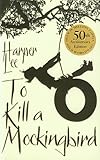
This week I’m featuring a book that I’ve known about for many years, but have never read until now. It is To Kill a Mockingbird by Harper Lee and although I haven’t finished it yet it’s promising to be one of the best books I’ve read for a long time. Although she had written some long short stories before this was her first novel (and only novel!) and published in 1960 it became an immediate best seller.

It begins:

When he was nearly thirteen my brother Jem got his arm badly broken at the elbow. When it healed, and Jem’s fears of never being able to play football were assuaged, he was seldom self-conscious about his injury. His left arm was somewhat shorter than his right ; when he stood or walked the back of his hand was at right-angles to his body, his thumb parallel to his thigh. He couldn’t have cared less, so long as he could pass and punt.

When enough years had gone by to enable us to look back on them, we sometimes discussed the events leading to his accident. I maintain that the Ewells started it all, but Jem, who was four years my senior, said it began the summer Dill came to us, when Dill first gave us the idea of making Boo Radley come out.

I’m not writing any more about it right now – not until I’ve finished it (less than 100 pages from the end) – except that it has captured my imagination completely and given me plenty to think about!

First Chapter First Paragraph Tuesday Intros

Every Tuesday Diane at  Bibliophile by the Sea hosts First Chapter First Paragraph Tuesday Intros, sharing the first paragraph or (a few) of a book she’s reading or thinking about reading soon.

Today I’m in the mood for reading short fiction and picked this book off my to-be-read shelves. It’s Tamburlaine Must Die by Louise Welsh, set in 1593 it tells the story of playwright, Christopher Marlowe’s last days, weaving together fact and fiction. It’s only 140 pages.

It begins:

I have four candles and one evening in which to write this account. Tomorrow I will lodge these papers with my last true friend. If I survive the day, they will light our pipes. But should I not return, he has instructions to secrete this chronicle where it will lie undiscovered for a long span, in the hope that when these pages are found, the age will be different and my words may be judged by honest eyes.

When I read the first four words I immediately thought of the Ronnie Barker and Ronnie Corbett sketch from years ago in the Two RonniesThe Four Candles. I don’t suppose that is the response Louise Welsh would have expected, but there it is, that’s what came to my mind. But this is not a comedy as this summary from Amazon reveals:

London, 1593. A city on edge. Under threat from plague and war, strangers are unwelcome, suspicion is wholesale, severed heads grin from the spikes on Tower Bridge. Playwright, poet and spy, Christopher Marlowe walks the city’s mean streets with just three days to find the murderous Tamburlaine, a killer escaped from the pages of his most violent play. Tamburlaine Must Die is the searing adventure of a man who dares to defy both God and the state and whose murder remains a taunting mystery to the present day.

What do you think? Would you keep reading?

First Chapter ~ First Paragraph Tuesday Intros

First chapterEvery Tuesday Diane at  Bibliophile by the Sea hosts First Chapter First Paragraph Tuesday Intros, sharing the first paragraph or (a few) of a book she’s reading or thinking about reading soon.

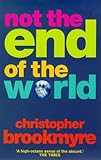
Recently I was looking through my many shelves of unread books and came across Not the End of the World by Christopher Brookmyre, a book I started some time again and put to one side, intending to get back to it quite soon. Time has since whizzed by and now, even though I have a bookmark indicating where I got up to, I’ll have to start it again.

It begins with a Prologue:

Joey Murphy was a fisherman. He was the captain and proprietor of a small trawler that was the whole world to him, but which he knew to be merely a speck on the endlessness that was the Pacific Ocean.

He believed in God.

He believed in Jesus.

He believed in His death, resurrection and bodily ascension.

I could have stopped quoting the opening paragraphs here, but that would not really have given a clear indication of the tone of this book. It continues:

He also believed in ghosts, poltergeists, demonic possession, Satanic possession, flying saucers, alien abduction, Roswell, Bigfoot, the Loch Ness monster, the Bermuda Triangle, telepathy, telekinesis, pyrokinesis, spontaneous combustion, levitation, reincarnation, out-of-body consciousness and the rapture.

There’s more, but I think this should be enough to get the picture that Joey believes in ‘stuff that makes the world seem a more interesting place.

Unlike other books by Brookmyre this is not set in Scotland, but in Los Angeles with Lt Larry Freeman of the LAPD investigating the disappearance of the crew of an oceanic research vessel who had gone missing in the Pacific along with their mini-submarine. But there is ‘a Glaswegian photographer with an indecipherable accent and a strong dislike of hypocrisy or of a terrorist who seems to have access to plutonium as well as Semtex.’ (source: Brookmyre)