More Books from Barter Books

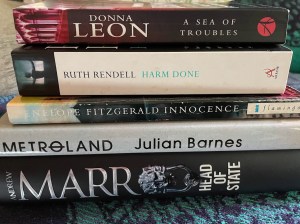
We went to Barter Books in Alnwick last week. It’s back to normal now – busy, but not too crowded. I didn’t go with any specific books in mind and just browsed the shelves. These are the books I brought home with me – I’m still in credit so these were ‘free’, as it were.

From top to bottom they are:

A Sea of Troubles by Donna Leon, a Commissarion Brunetti murder mystery. It’s been ages since I read one of her books. This one is set on the island of Pellestrina, south of the Lido on the Venetian Lagoon, where two clam fishermen have been murdered.

Harm Done by Ruth Rendell, an Inspector Wexford Mystery. I’ve read a few of her Wexford Mysteries. Two young girls have disappeared and then two far more serious crimes are committed, which affect the lives and attitudes of both the police and the public.

Innocence by Penelope Fitzgerald, set in the 1950s when Italy was picking up the pieces after the war. It’s historical fiction about an Italian marriage between an aristocratic girl and a low-born neurologist from rural southern Italy. I haven’t read any of her books, although I have The Gate of Angels on my TBR shelves.

Metroland by Julian Barnes – is a novel about Christopher Lloyd and his experiences growing up in the suburbs of London (so-called Metro-land), his brief life in Paris as a graduate student and the early years of his subsequent marriage. I’ve read and enjoyed two of his other books. This one was his first book.

Head of State by Andrew Marr – political fiction, described as a darkly comic tale of deception and skullduggery at Downing Street and Whitehall. Set in 2017, with the country on the edge of a political precipice, this was Marr’s first novel. I’ve read some of Marr’s history books and used to watch the Andrew Marr Show on Sunday mornings. I know that Head of State has had some critical reviews, but I thought I’d see for myself what it’s like.

If you’ve read any of these books I’d love to know what you think of them.
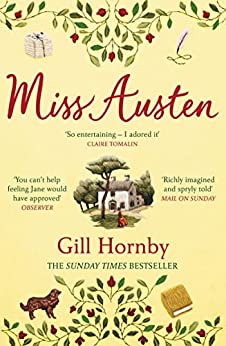
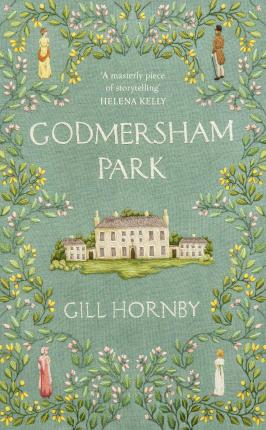
Miss Austen & Godmersham Park by Gill Hornby

In January I read Miss Austen by Gill Hornby, but despite enjoying it I didn’t write about it then. And in September I read Godmersham Park. Both are based on Jane Austen and her relationships with family and friends.

Miss Austen is the untold story of the most important person in Jane’s life – her sister Cassandra. After Jane’s death, Cassandra lived alone and unwed, spending her days visiting friends and relations and quietly, purposefully working to preserve her sister’s reputation. Set in 1840, Cassandra in her ’60s, visits Isabella Fowle following the death of her father, the Reverend Fowle when Isabella is packing up her parents’ belongings so that a new reverend can move in. Cassandra is convinced that her own and Jane’s letters to Eliza Fowle, the mother of Cassandra’s long-dead fiancé, are still somewhere in the vicarage. Eventually she finds the letters and confronts the secrets they hold, secrets not only about Jane but about Cassandra herself. Will Cassandra reveal the most private details of Jane’s life to the world, or commit her sister’s legacy to the flames?

I was surprised by how much i enjoyed this book as I don’t usually like spin-offs, sequels or prequels of my favourite books, but I really enjoyed this book as Cassandra relives her life with Jane, revealing what life was like for spinsters living in the early 1800s. It is different from Jane Austen’s own novels but still manages to recreate that flavour of her novels that I have loved ever since I first read Pride and Prejudice. It’s very well researched, a novel that held my attention from the beginning right to the end. A definite 4.5 star book.

I didn’t enjoy Godmersham Park quite as much as Miss Austen. It is the fictionalised life of Anne Sharp, employed as the governess to Fanny, Jane Austen’s niece. Fanny’s father was Edward Austen, who was adopted by the wealthy Knight family (Thomas Knight was a cousin), taking their name in 1812. Anne became one of Jane’s closest friends.

Little is actually known about Anne as Gill Hornby acknowledges in her Author’s Note. So the story of her early life before her arrival in 1804 at Godmersham Park is a ‘fiction, fashioned out of the biographies of other, contemporary genteel ladies who found themselves working as governesses.’ But the two years she spent working for the Austen family were recorded by Fanny in her diaries and so Gill Hornby has closely followed her account. Henry Austen, Jane’s favourite brother was a regular visitor at Godmersham and Jane, Cassandra and their mother visited too during those two years.

Anne had no experience of teaching, but was left with no alternative as her mother had died and she had to find employment. She found it difficult – treated neither as a servant nor as one of the family, she risked dismissal if she overstepped the mark. Similarly she found that Henry Austen’s attention put her in the most awkward situations. But when Jane visited she was able to relax in her company and the two struck up a friendship.

I can’t quite put my finger on why I find this novel not as good as Miss Austen. But it moves at a slower pace and apart from the mystery that surrounds Anne’s father, I didn’t find it as absorbing – there’s that anticipation in Miss Austen of will Cassandra find the letters and what will they reveal. In parts Godmersham Park came over to me as just a tiny bit flat and I never grew as fond of Anne as I did of Cassandra. Having said that, I did enjoy this book enough to give it 3.5 stars.

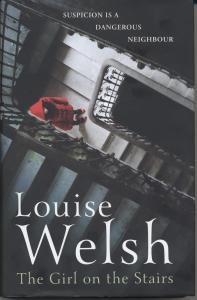
Throwback Thursday: The Girl on the Stairs by Louise Welsh

Today I’m looking back at my post on The Girl on the Stairs by Louise Welsh, a dark, psychological thriller, full of atmosphere and claustrophobic tension. I first reviewed it on August 29, 2012.

My review begins:

The Girl on the Stairs is Louise Welsh’s latest book. It’s a book that once I started reading it I just had to finish it. It’s full of suspense and increasing tension as Jane moves to an apartment in Berlin to join her partner, Petra. Everything is new to her, she only speaks a little German, she doesn’t know the area and has no friends there. And she’s pregnant.

Click here to read my full review

~~~

Undercurrent by Barney Norris

This is another short review of a book I read in the summer and didn’t manage to review before I went away on holiday. I really enjoyed it.

Random House| 25 August 2022| 257 pages| e-book Review Copy| 4*

Blurb:

Years ago, in an almost accidental moment of heroism, Ed saved Amy from drowning. Now, in his thirties, he finds himself adrift. He’s been living in London for years – some of them good – but he’s stuck in a relationship he can’t move forward, has a job that just pays the bills, and can’t shake the sense that life should mean more than this. Perhaps all Ed needs is a moment to pause. To exhale and start anew. And when he meets Amy again by chance, it seems that happiness might not be so far out of reach. But then tragedy overtakes him, and Ed must decide whether to let history and duty define his life, or whether he should push against the tide and write his own story.

Filled with hope and characteristic warmth, Undercurrent is a moving and intimate portrait of love, of life and why we choose to share ours with the people we do.

A few years ago I read Turning for Home by Barney Norris and thought it was a moving book with emotional depth. Undercurrent has very much the same tone, plumbing the same depth of emotion, as he tells the story of a family’s grief and loss as well as love.

The main story centres around Ed and his immediate family, but the narrative includes the stories of his grandparents and great grandparents. He had a troubled childhood, living on a farm in Wales with his mother, stepfather and stepsister, Rachel. His mother wants him and Rachel to take over the farm when she dies, but neither of them want to, which leaves Ed feeling guilty and frustrated. But when his mother becomes seriously ill and dies he has to make a decision.

It’s also the story of his grandparents and great grandparents, beginning in 1911 in India when Arthur, an Englishman met and later married Phoebe a young Indian teenager. When the First World War broke out they moved to England and Arthur enlisted in the navy. She never got over leaving India and sank into depression and melancholy. Their son, Leo, was greatly affected by his mother’s mental illness and caring for her and the farm became too much for him, resulting in tragedy. The women in the family followed the same pattern as Phoebe – following the men, their lives changing for better or worse.

I don’t feel I have done justice to this novel, finding it quite difficult to review. It’s a quiet thoughtful book that explores the nature of our relationships and emotions. The central theme is the pull of home, that sense of belonging, of attachment to a place, and how our past has shaped our lives. Alongside this there is the desire for a new life, and new experiences. It is beautifully written.

My thanks to the publishers for a review copy via NetGalley.

The Classics Club Spin Result

The spin number in The Classics Club Spin is number …

which for me is Moll Flanders by Daniel Defoe. The rules of the Spin are that this is the book for me to read by 29th January 2023.

Synopsis

I grew as impudent a Thief, and as dexterous as ever Moll Cut-Purse was’

Born and abandoned in Newgate Prison, Moll Flanders is forced to make her own way in life. She duly embarks on a career that includes husband-hunting, incest, bigamy, prostitution and pick-pocketing, until her crimes eventually catch up with her. One of the earliest and most vivid female narrators in the history of the English novel, Moll recounts her adventures with irresistible wit and candour—and enough guile that the reader is left uncertain whether she is ultimately a redeemed sinner or a successful opportunist. 

I hesitated before adding this book to my Classics Club list and now I’m not sure that I do want to read it. I’m hoping that at least I’ll like it. If you have read it I’d love to know what you thought of it.

Did you take part in the Classics Spin? What will you be reading?

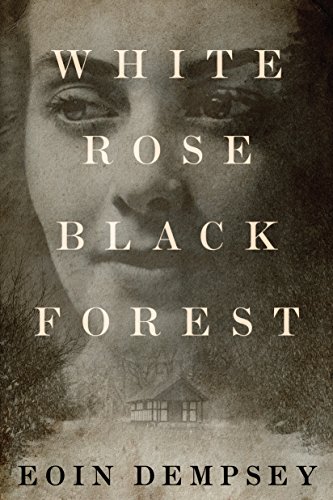
White Rose, Black Forest by Eoin Dempsey

Rating: 3 out of 5.

This is the second of several short posts as I try to catch up with writing reviews of books I read earlier this year.

White Forest, Black Rose by Eoin Dempsey is a World War 2 novel which is different from other books set during the War that I’ve read before, told from the perspective of a German who opposed the Nazis. It is set in the Black Forest, Germany in 1943, where Franka Gerber is living alone in an isolated cabin, having returned to her home town of Freiburg after serving a prison sentence for anti-Nazi activities.

It is December and the Forest is blanketed in deep snow when she discovers an unconscious airman lying in the snow wearing a Luftwaffe uniform, his parachute flapping in the wind. Taking him back to the cabin she saves his life, but whilst he is unconscious she hears him speak in English and so it seems that he is not who she first thought he was. Both his legs are broken and, having been a nurse, Franka is able to set the bones, and tries to discover his true identity. Trapped in the cabin they both gradually reveal details of their past lives and learn to trust each other.

It is a tense, claustrophobic novel and as soon as he is able to walk they decide to leave the cabin and so begins a race against time, as they are hunted by the Gestapo. Can they trust each other enough to join forces on a mission that could change the face of the war and their own lives forever?

White Rose, Black Forest is a novel inspired by true events, although the author doesn’t clarify what is fact and what is fiction. I enjoyed it, especially the historical aspects. The White Rose movement in Germany was a non-violent intellectual resistance group in Nazi Germany, who conducted an anonymous leaflet and graffiti campaign that called for active opposition to the Nazi regime.

It slots into the Forest box in the Wanderlust Bingo card and is also one of my TBRs, a book I’ve owned since 2018.