Whilst I’ve been busy moving house Kerrie’s A-Z Crime Fiction meme has featured the letters J and K. Now that I have the computer up and working (well D actually did that for me) I’m having a little break from unpacking boxes to add to the series. I’ve written about the following books earlier in this blog and have adapted my reviews for this post.
 J is for A Judgment in Stone by Ruth Rendell.
This portrays Eunice, an illiterate woman and a psychopath who does anything to stop anyone from finding out that she can’t read or write. Her ingenuity and resourcefulness is amazing. She blackmails people and killed her father. I found the whole premise of such a damaged person apparently functioning normally in society scary.


I felt helpless whilst reading this, desperately wanting the Coverdales to realise Eunice’s problems, but they were blind to the fact that Eunice was illiterate and although they tried to prevent her meeting Joan they were unaware of the danger they were in. This inflamed Eunice and pushed her into taking the actions she did.
Although Eunice’s crime is known right from the start, that does not detract from the suspense. It actually makes it worse – you know that the murder is going to happen and as the reasons why it happens become clear, the tension builds relentlessly.
 is for King of the Streets by John Baker.
I read this over two years ago. It depicts violent murder in graphic detail, which I found hard to stomach and the subject matter of the abuse and murder of children is neither easy nor pleasant to contemplate, but it’s a quick read.  This was the third book I’d read by Baker, all set in York and featuring the private detective, Sam Turner and his assistant Geordie (naive, but street-wise). Sam is investigating the murder of a blackmailer and the death of a teenage runaway, hampered by a gangster and his “minders”.
It’s well written, giving insight into the minds of both the detective and the criminal characters. I particularly liked the nickname ‘Gog’ for one of the ‘minders’, who trashes Sam’s office. Gog is, as the name suggests, a huge giant of a man, with little reasoning power, but plenty of brawn, looked after (not very successfully) by his brother, Ben. Baker also refers to Gulliver’s Travels in describing Gog as ‘Brobdingnagian’. At times I even felt sorry for Gog.
I enjoyed this book immensely, despite the violence it portrays.


 I particularly liked the way Montalbano’s thoughts are revealed and his relationship with his bosses. He’s another detective who works well on his own and with his own team independently of his superiors. He loves food and there are various desciptions of the meals he savours with great relish. He is also a bit of a philosopher – sitting in an old olive tree whilst musing on life and his work:
 I think
  Dave and I listened to this in the car whilst travelling to Northumberland and back. This is an Inspector Wexford mystery – a man taking his dog for a walk discovers a severed hand, which turns out to be part of a skeleton wrapped in a purple sheet. The police have to discover the identity of the victim – and of the body of a second corpse found in a nearby house. Both have been lying undiscovered for at least ten years. I’m not used to listening to books and I did find it a bit difficult to follow. Of course, the sat nav and traffic news kept interrupting which didn’t help, but even so I did get confused. There were too many people and sub-plots. Maybe I should read the book.
 I loved this memoir. Diana Athill comes across as an honest writer, not afraid to say what she thinks, now she is no longer an editor. As the title indicates, she writes about what it is like getting towards the end of her life. At the time of writing she was 89 years old and looking back on her life with few regrets. This is a book I may well buy to re-read at leisure.
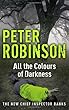 I have mixed feelings about this book, parts of it really interested me, but I could have done without the terrorist attack and involvement of MI5 and MI6. This is only the 2nd Inspector Banks book I’ve read and it’s the 18th in Robinson’s series. I think that doesn’t matter as I had no difficulty in sorting out his relationships and although other cases are referred to this reads OK as a stand-alone book. What I did have difficulty with was believing the spy stuff – one of the victims had been a spook. What I do like is Robinson’s descriptive writing eg:
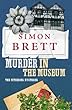 This is the fourth in Simon Brett’s Fethering Mysteries series. It’s set in Bracketts, an Elizabethan house, the former home of Esmond Chadleigh, a celebrated poet during his lifetime. The house is about to be turned into a museum, although not all the Trustees agree. Carole Seddon has been co-opted onto the Board of Trustees and when a skeleton is discovered in the kitchen garden she soon becomes involved in solving the mystery. Then Sheila Cartwright, the bossy domineering former Director of the Trustees is shot, and Carole finds her own life is in danger.
 Nocturnes
