Westwood by Stella Gibbons: a Book Review

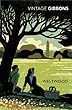
I found Westwood by Stella Gibbons a slightly disappointing book. I liked it, but didn’t love it, as I’d hoped I would. I do enjoy descriptive writing, and there are some beautiful descriptive passages, but there were far too many, even for me, which eventually made me wish Gibbons would just get a move on. Lynne Truss in the introduction wrote that she loves it deeply and it made her laugh and weep. I found it amusing in places and also touching. It’s a slow meander through the characters, their lives and their houses.

Margaret Steggles, a plain young woman finds a ration book on Hampstead Heath which provides her with an introduction into the lives of Gerard Challis and his family, his beautiful wife, Seraphina, his self-absorbed daughter Hebe and her spoilt children and Zita the family’s maid. Margaret idolises Gerard, who is a playwright. He in turn falls under the spell of her best friend, Hilda. The contrast between Margaret and Hilda is marked. Margaret is serious, somewhat of a snob, ‘not the type to attract men’, and impressed by the artistic circle surrounding the Challis family. Hilda, a beautiful young woman who attracts many male admirers has no trace of romance in her nature and Margaret realises that Hilda ‘would not or could not be serious’. Margaret becomes obsessed with Gerard’s house, Westwood and longs to be there whenever she can. Feeling that she has outgrown Hilda, she cultivates a friendship with Zita.

This is not a wartime novel, although it is set in London just after the Blitz and there are some wonderful descriptions of the city and its unexpected green and unspoilt places amidst the ruins of bombed houses. Although the war is not really in focus, the atmosphere of the times infuses the novel. The nature of war itself is discussed by Grantey, the family’s old nurse in her conversation with Hebe:

… it’s all part of God’s plan for doing away with war for good and all.

All those dreadful explosions and atrocities and secret weapons they keep on talking about, … and not knowing when you go to bed at night if you’ll be alive when you wake up in the  morning – that’s all part of God’s plan. He’s letting it get worse and worse, so’s it’ll destroy itself, like; it’ll get so bad not even wicked people’ll want it , and then it’ll stop. (page 277)

Really???

It’s a novel about relationships, about friendship, about hope and longing and above all about disappointment and ‘coming to terms with life’.

*Slight spoiler alert follows*

*I wouldn’t have known without Lynne Truss’s introduction to the book that Gerard was based on the writer Charles Morgan, who had annoyed Stella Gibbons, and Gerard’s characters in his dreadful plays are parodies of Morgan’s female characters. Morgan had claimed that a sense of humour was lacking in writers.The pompous Gerard is the butt of the humour in the novel  – in particular the scene where his grandchildren find him in a compromising situation in Kew Gardens – that did make me smile.*

  • Paperback: 464 pages
  • Publisher: Vintage Classics (4 Aug 2011)
  • Language English
  • ISBN-10: 009952872X
  • ISBN-13: 978-0099528722
  • Source: I bought it
  • My Rating 3/5

Stella Gibbons’s more famous novel is Cold Comfort Farm. I used to think I’d read it, now I’m not so sure. I like Westwood just enough to make me curious to look out for it. If you’ve read it, or Westwood, what are your views?

A Classics Challenge 2012

It’s that time of year when ‘challenges’ for next year keep appearing on book blogs. Each year I think I won’t join in and each year I do attempt a few. Here’s one that appeals to me, but not as a ‘challenge’ (see my previous post for my views about ‘challenges’). This one promises to be more interactive:

It’s A Classics Challenge, devised by Katherine Cox of November’s Autumn. It involves reading seven works of Classic Literature in 2012, but only three of the seven may be re-reads.

But, instead of writing a review as you finish each book (of course, you can do that too), visit November’s Autumn on the 4th of each month from January 2012 – December 2012, where you will find a prompt, it will be general enough that no matter which Classic you’re reading or how far into it, you will be able to answer. There will be a form for everyone to link to their post.

I like the idea.

My Reading List

I have quite a lot of unread classics on my bookshelves and even more loaded onto my Kindle, so I have plenty to choose from. At present I think I’ll start with these seven books (but the titles could most likely be substituted for others when I actually get down to reading!)

  • Emma by Jane Austen – a re-read. I first read this many years ago. Recently I read Sebastian Faulks’s view of Emma as a snob in his book Faulks on Fiction and decided it was time to re-read the book.
  • The Woman in White by Wilkie Collins. I read The Moonstone earlier this year and liked it very much, which spurred me on to get The Woman in White.
  • Three Men in a Boat by Jerome K Jerome – a book that I’ve known about for ages, but have never read. It’s a humorous story of a boating expedition on the River Thames. I’m looking forward to some comedy.
  • Wives and Daughters by Elizabeth Gaskell. The only Gaskell book I’ve read is Cranford – time to remedy that with this tale of the mid-19th century England pre the Industrial Revolution.
  • Kidnapped by Robert Louis Stevenson. I’m re-living my youth with this book, which I first read at school, when I was about 13 or 14. I can’t remember much about it, except that I thoroughly enjoyed it at the time. It’s historical fiction set in 18th century Scotland, based on real people.
  • Our Mutual Friend by Charles Dickens. This is a mammoth book (nearly 900 pages) with many characters. I hope I don’t get bogged down in it – it looks as though I’ll need to concentrate.
  • The Voyage Out by Virginia Woolf. I began to read this (Woolf’s first novel) a few years ago. I love Mrs Dalloway and To the Lighthouse, but the opening of this didn’t grab my attention as much and I got distracted by other books. I’ll have to start it again.

Writing this has made me keen to read them all – but which one to pick first?

White Nights by Ann Cleeves: a Book Review

White Nights (Shetland Island, #2)

White Nights by Ann Cleeves is the second in her Shetland Quartet, featuring Detective Jimmy Perez. The first book is Raven Black, which I read and wrote about last year. I enjoyed this one just as much as the first and, although I think it stands well on its own, I think it best to read them in order as some of the characters appear in both and you can follow the development of their relationships.

White Nights is set mainly in Biddista, a fictional village of a few houses, a shop, an art gallery and restaurant called the Herring House, and an old Manse. Kenny Thomson finds a man’s body hanging in the hut where the boat owners of the village of Biddista keep their lines and pots. Perez recognises the dead man – he’s the mystery man who had caused a scene the previous evening at the opening of Bella Sinclair’s and Fran Hunter’s art exhibition. At first it looks as though the man, his face covered by a clown’s mask, has committed suicide, but he’d been dead before he was strung up and the murder team from Inverness, headed up by Roy Taylor, are called in. It takes quite some time before they can identify the dead man and even longer before the motive for killing him is revealed. And that is only after more deaths have occurred.

This is a most satisfying book for me. It’s not only full of believable characters, each one an individual in their own right, it also has a nicely complicated plot and a great sense of location. As well as the mystery of who killed the man in the clown mask and why, there is also the disappearance 15 years earlier of Kenny’s older brother Lawrence. It was thought that he left the island after Bella had broken his heart. Kenny hadn’t heard from him since and at first thought the dead man could be him.

It’s the place, itself, that for me conveyed the most powerful aspects of the book. The ‘white nights’ are the summer nights when the sun never really goes down. They call it the ‘summer dim’, the dusk lasts all night, and in contrast to the bleak, black winters, fills people with ‘a kind of frenzy‘. The landscape and the climate certainly play a great part in people’s lives.Taylor feels very much an outsider, almost too impatient to cope with what he thinks is Perez’s hesitant approach, until it occurred to him that

here in this bizarre, bleak, treeless community, Perez’s strange methods might actually get results. (page 263)

I could see the landscape and the sea, and I could hear the birds, the kittiwakes on the cliffs, the puffins and skuas. The Shetland Islands are part of theBritish Isles, but are so far north of the mainland that they are on about the same latitude as the southern point of Greenland.

However, I did think that the ending came rather suddenly after the careful build up to the mystery. The tension just gradually faded away as it became obvious who the culprit was. But I still think it’s a very good book, that held my interest, one that made me want to get back to it each time I had to put it down.

  • Paperback: 340 pages
  • Publisher: Pan (5 Jun 2009)
  • Language English
  • ISBN-10: 0330448250
  • ISBN-13: 978-0330448253
  • Source: Library Book
  • My Rating: 4/5

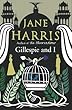
Gillespie and I by Jane Harris: a Book Review

Gillespie and I by Jane Harris is a cleverly told story, narrated by Harriet Baxter, alternating between events in 1888-90 (in Glasgow) and those in 1933 (in London). In 1888 Harriet moved to Glasgow where she got to know the painter, Ned Gillespie and his family. At first I liked Harriet but as I read on I became increasingly doubtful about her character, even though she comes across as an honest, reliable person. But, as she relates what her life is like in 1933 my impression of her began to change.

All is well at first but than a tragedy occurs which forms the major part of the book. It’s signalled in advance, when Harriet refers to the ‘horrible events’ that lay in the future. To say any more would be too much of a spoiler.

The setting of the book in Glasgow of the late 19th century is well described, helped by plans in the front of the book. The characters are also convincing, even some of the minor ones and her portrayal of Ned’s disturbed daughter, Sybil is quite chilling. This is a very detailed book, both about the place, artists and, through the account of a trial, the Scottish legal system of that period. It’s a book that lingered in my mind after I finished reading and if it wasn’t so long I’d like to re-read it in the light of what I now know.

  • Hardcover: 528 pages
  • Publisher: Faber and Faber (5 May 2011)
  • Language English
  • ISBN-10: 0571275168
  • ISBN-13: 978-0571275168
  • Source:an uncorrected proof from the publishers (via LibraryThing Early Reviewers)
  • My rating 3.5/5

I haven’t read Jane Harris first book, The Observations, although I’ve owned it for a while. It’s probably time I read that one too.

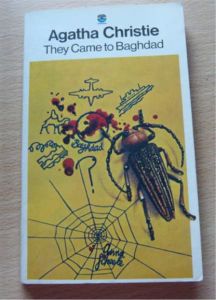
They Came to Baghdad by Agatha Christie: a Book Review

They came to Baghdad

I made copious notes as I read Agatha Christie’s They Came to Baghdad because it’s such a complex plot and there seemed to be so many significant events and people that I wanted to clarify what was happening. This is not one of Agatha Christie’s detective novels – no Miss Marple or Hercule Poirot,-  just Victoria Jones, a short-hand typist, a courageous girl with a ‘natural leaning towards adventure’ and a tendency to tell lies. Set in 1950 this is a story about international espionage and conspiracy. The heads of the ‘great powers‘ are secretly meeting in Baghdad, where if it all goes wrong ‘the balloon will go up with a vengeance.’ And an underground criminal organisation is out to make sure it does go wrong, aiming at ‘total war – total destruction. And then – the new Heaven and the new Earth.’

Victoria gets involved after one meeting with a young man, Edward, who is going out to Baghdad the following day to join an archaeological dig. She thinks he’s an incredibly good-looking man and considering herself an excellent judge of character is immediately attracted to him. As she has just been fired from her job, impulsively she decides to follow him to Baghdad, claiming to be the niece of Dr Pauncefoot Jones, Richard’s boss .

At the same time a British secret agent, Carmichael, is trying to get to Baghdad with important information, and is his life is in great danger. Will he get there? Anna Scheele, a mysterious character is also on her way to Baghdad and there are hints that she is at the centre of things. Just who is she and what side is she on?

Alongside the mystery, Agatha Christie’s descriptions of the locations, local people and of the archaeological dig are superb, no doubt taken from her experience of her own visits to Baghdad and Iraq. I enjoyed it for its entertaining plot, the authenticity of the background and its great characters, in particular I grew very fond of the amazing Victoria Jones.

  • First published in 1951 by William Collins & Co Ltd
  • My copy a secondhand paperback Fontana Books, 1980
  • My Rating: 4/5

R.I.P. VI Challenge Completed

Carl’s R.I.P. VI  challenge ended on 31 October and I’m pleased that I completed Peril the First, which was :

Read four books, any length, that you feel fit (my very broad definitions) of R.I.P. literature. It could be Stephen King or Sir Arthur Conan Doyle, Ian Fleming or Edgar Allan Poe’¦or anyone in between.

I read the following books (linked to my reviews):

These are all books that were on my to-be-read list. I think Blood Harvest has to be my favourite of the four and I thoroughly enjoyed it – a dark, scary book, disturbing, and completely gripping.  I was particularly pleased that I finally read The Turn of the Screw as I first started to read it some years ago. It’s an ideal book for the RIP Challenge. Thanks go to Carl for hosting.