The Christmas Book Hunt by Jenny Colgan

Summary from Amazon:

A heartwarming meet-cute short story from the Sunday Times bestselling author of The Christmas Bookshop. A Christmas mission…

Mirren’s beloved great-aunt Violet is seriously ill. Her one Christmas wish is to be reunited with a long-lost hand-illustrated book from her childhood, a challenge Mirren gladly accepts to give Violet some much-needed festive cheer.

An enchanting journey…

With no sign of the cherished volume online, Mirren falls into the fascinating world of rare books. From London to snowy Hay-on-Wye and Edinburgh’s cobbled streets, she chases leads from bookshop to bookshop—and bumps into mysterious, charming Theo, who, unbeknownst to her, is searching for the same book for reasons of his own…

The start of a new chapter?

As the two join forces to track the book down before time runs out for Violet, will Mirren find her Christmas miracle—and maybe even a kiss under the mistletoe… ?

I normally don’t choose to read romantic stories, and I’m not a fan of short stories but The Christmas Book Hunt by Jenny Colgan sounded interesting because of the book connection. Although it’s described as a short story, at over 100 pages I think it is really a novella. It looked at first as though I was going to find it too cutesy but once the story got going I began to enjoy it. Mirren is looking for a copy of A Child’s Garden of Verses by Robert Louis Stevenson, a particular one that had belonged to her Great Aunt Violet. It was a special edition, with hand-drawn plates by Aubrey Beardsley and now Great Aunt Violet, who is in hospital seriously ill would love to see the book for Christmas. I loved that book as a child, so this is what made the story irresistible for me. It’s easy reading and I read it quickly.

I also liked the story of Mirren’s search in various bookshops in various places in England and Scotland trying to track down what had happened to that particular version of the book. She went to the book town Hay-on-Wye, bookshops in Edinburgh and a secondhand bookshop in Northumberland that sounds very like Barter Books in Alnwick, my favourite bookshop. I was not so keen on the romance element as the relationship develops between Mirren and Theo, who is not the person he appears to be. There are one or two coincidences that cropped up towards the end of the book that I thought were rather remarkable and conveniently tied up all the ends. But overall it was the book element that I found most satisfying.

Top 5:Books:Book Covers

Top 5 Tuesday was created by Shanah at Bionic Book Worm, and it is now being hosted by Meeghan at Meeghan Reads. For details of all of the latest prompts for October to December, see Meeghan’s post here.

Today the topic is Book Covers: What are some of your favourite covers that you have seen this year? Maybe these were reprints, redesigns or alternate covers that came out this year, or maybe they are brand new books!!

These are books I’ve read this year – one new and the rest books that were on my TBR shelves. I love them for their combination of colours, and the scenery.

Where Water Lies by Hilary Tailor – her second novel published in June this year.

Every morning is the same for Eliza: she swims in Hampstead Ponds, diving into her memories, reliving the heady days of her teenage friendship with Eric and Maggie. The obsession, the adoration, and the sense of belonging she always craved was perfect, until everything was destroyed in a single afternoon. With guilt never far from the surface, she still asks herself: what really happened that day?

Then one morning, on a street corner, the past collides with the present. Eliza is now a respected member of the community and the carefully constructed life she has built comes crashing down. Should she track down the one person who may be able to forgive her? Or should she keep the past where it belongs?

Soon Eliza begins to wonder: will learning the truth set her free – or will it only drag her down deeper?

The Children’s Book by A S Byatt

From the renowned author of Possession, The Children’s Book is the story of the close of what has been called the Edwardian summer: the deceptively languid, blissful period that ended with the cataclysmic destruction of World War I. In this compelling novel, A.S. Byatt summons up a whole era, revealing that beneath its golden surface lay tensions that would explode into war, revolution and unbelievable change — for the generation that came of age before 1914 and, most of all, for their children.

Famous author Olive Wellwood writes a special private book, bound in different colours, for each of her children. In their rambling house near Romney Marsh they play in a story-book world – but their lives, and those of their rich cousins and their friends, the son and daughter of a curator at the new Victoria and Albert Museum, are already inscribed with mystery. Each family carries its own secrets.

They grow up in the golden summers of Edwardian times, but as the sons rebel against their parents and the girls dream of independent futures, they are unaware that in the darkness ahead they will be betrayed unintentionally by the adults who love them.

Into the Tangled BanK: Discover the Quirks, Habits and Foibles of How We Experience Nature by Lev Parikian

This is non fiction about nature. It’s easy reading, Parikian writes with humour, in a chatty style, but also richly descriptive. I loved it, it is compulsive reading. He is a storyteller, so there are lots of anecdotes and stories, plus his thoughts on nature and how we view it. Amongst many other topics he ponders about the ethics of zoos – something that puzzles me too – and wonders if the definition of a nature lover is becoming that of one who loves nature programmes. There’s a lot packed into this book.

Great Meadow by Dirk Bogarde, first published in 1992, Great Meadow is volume five of Bogarde’s best-selling memoirs.

A recollection of his childhood, from 1927 to 1934 when he was a 19 year old, living in a remote cottage in the Sussex Downs with his sister Elizabeth and their strict but loving nanny, Lally. For the children it was an idyllic time of joy and adventure: of gleaning at the end of summer, of oil lamps and wells, of harvests and harvest mice in the Great Meadow.

With great sensitivity and poignancy, this memoir captures the sounds and scents, the love and gentleness that surrounded the young boy as the outside world prepared to go to war.

The Hog’s Bank Mystery by Freeman Wills Croft

This is a British Library Crime Classic, first published in 1933, during the Golden Age of detective fiction between the two world wars. Dr James Earle and his wife live near the Hog’s Back, a ridge in the North Downs in the beautiful Surrey countryside. When Dr Earle disappears from his cottage, Inspector French of Scotland Yard is called in to investigate. At first he suspects a simple domestic intrigue – and then begins to uncover a web of romantic entanglements beneath the couple’s peaceful rural life.

Dean Street December

DeanStreetDecember is hosted by Liz @ Adventures in reading, running and working from home. Dean Street Press is a publisher devoted to republishing lost gems of vintage literature, from Golden Age Detective novels to middlebrow novels by twentieth century women writers. Read from DSP, review the book(s) you’ve read and link them up on the post on Liz’s blog.

These are the Dean Street Press books I have on my Kindle ready to read – I’m aiming to read at least some of these:

  1. Arrest the Bishop? by Winifred Peck
  2. The Draycott Murder Mystery by Molly Thynne
  3. Evenfield by Rachel Ferguson
  4. A Harp in Lowndes Square by Rachel Ferguson
  5. A House on the Rhine by Francis Faviell
  6. The Other Side of the Moon: David Niven by Sheridon Morley
  7. The Red Lacquer Case by Patricia Wentworth
  8. Thalia by Francis Faviell
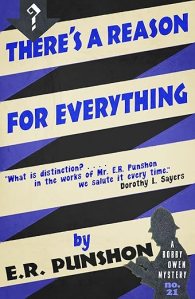
  9. There’s a Reason for Everything by E.R. Punshon
  10. Who Pays the Piper? by Patricia Wentworth

The Uncommon Appeal of Clouds: Book Beginnings & The Friday 56

Every Friday Book Beginnings on Friday is hosted by Gillion at Rose City Reader where you can share the first sentence (or so) of the book you are reading. You can also share from a book you want to highlight just because it caught your fancy.

I’m featuring The Uncommon Appeal of Clouds by Alexander McCall Smith, an Isabel Dalhousie book, that I’ve borrowed from my local lbrary.

Chapter One:

‘Mozart’ said, Isabel Dalhousie. And then she added, Stinivasa Ramamjan .

Also every Friday there is The Friday 56, hosted by Freda at Freda’s Voice, but she is taking a break and Anne at My Head is Full of Books has taken on hosting duties in her absence. You grab a book and turn to page 56 (or 56% of an eBook), find one or more interesting sentences (no spoilers), and post them.

But then, we can misjudge each other so easily, she thought; so easily.

Description from Amazon:

As a mother, wife, employer and editor of the Review of Applied Ethics, Isabel Dalhousie is aware that to be human is to be responsible. So when a neighbour brings her a new and potentially dangerous puzzle to solve, once again Isabel feels she has no option but to shoulder the burden.

A masterpiece painting has been stolen from Duncan Munrowe, old-fashioned philanthropist, father to two discontented children, and a very wealthy man. As Isabel enters into negotiations with the shadowy figures who are in search of a ransom, a case where heroes and villains should be clearly defined turns murky: the list of those who desire the painting – or the money – lengthens, and hasty judgement must be avoided at all cost. Morals, it turns out, are like Scottish clouds: complex, changeable and tricky to get a firm grip on; they require a sharp observational eye, a philosophical mindset, and the habit of kindness. Fortunately for those around her, Isabel Dalhousie is in possession of all three.

I’ve read some of his other Isabel Dalhousie books and enjoyed them. So I’m hoping to enjoy this one too. I really like the gentle pace of these books and what I find so fascinating is that whilst not a lot actually happens, a lot goes on in Isabel’s head.

What do you think, does this book appeal to you? What are you currently reading?

Patronage by Maria Edgeworth: Book Beginnings & The Friday 56

Every Friday Book Beginnings on Friday is hosted by Gillion at Rose City Reader where you can share the first sentence (or so) of the book you are reading. You can also share from a book you want to highlight just because it caught your fancy.

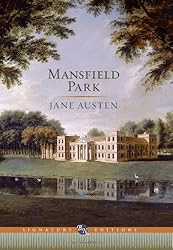
I’m featuring Patronage by Maria Edgeworth. This is one of my TBRs and I meant to include it in my Top Ten Tuesday post this week. Maria Edgeworth (1768 – 1849) was a contemporary of Jane Austen, publishing novels at the same time – Patronage was published just 5 months before Mansfield Park in 1814.

From the back cover:

Patronage was one of the most eagerly anticipated novels of Jane Austen’s day. It sold out within hours of publication.… an adventurous soap opera about the trials and fortunes of two neighbouring families in Regency England, both of which had sons and daughters setting out in the world. … a bright and mischievous critique of the way young men gained careers and young women gained husbands.

It begins:

‘How the wind is rising!’ said Rosamond. ‘God help the poor people at sea tonight!’

Also every Friday there is The Friday 56, hosted by Freda at Freda’s Voice, but she is taking a break and Anne at My Head is Full of Books has taken on hosting duties in her absence. You grab a book and turn to page 56 (or 56% of an eBook), find one or more interesting sentences (no spoilers), and post them.

‘I hope, with all my heart, I hope,’ continued Rosamond, that Buckhurst will have some sense and steadfastness to refuse, but I heard his father supporting that foolish Colonel Hauton’s persuasions and urging his poor son to go with those people to Cheltenham.

Description from the publisher:

Meet the Percys and Falconers, neighbouring families, each with three sons and two daughters to launch into Regency society. The hardworking, independently minded and dutiful Percys are happy to work their way up in the world but are undermined by their scheming rivals who use Patronage to grab at instant fame and fortune. With their sons eased into lucrative but ill-suited diplomatic and clerical jobs, and their daughters bankrupting themselves to scale the heights of fashion, the Falconers are heading for a tumble; while the moral steadiness and strong family ties of the Percys allow them to attain both the heights of their chosen professions and a glittering match.

Nonfiction November:Week 3 – Book Pairings

Throughout the month of November, bloggers Liz, Frances, Heather,  Rebekah and Deb invite you to celebrate Nonfiction November with us.

Week 3 (11/11-11/15) Book Pairings: This week, pair up a nonfiction book with a fiction title. Maybe it’s a historical novel and the real history in a nonfiction version, or a memoir and a novel, or a fiction book you’ve read and you would like recommendations for background reading. Or two books on two different areas have chimed and have a link. You can be as creative as you like! (Liz)

Liz further clarifies in her Pairings post:  ‘I offer a mix of fiction/nonfiction pairs, fiction/nonfiction/memoir sets and nonfiction/nonfiction.’

After the Hamas-led attack on Israel on October 7, 2023 I decided I needed to know more about what had led up to it. And I found lots of books, including these:

Nonfiction/Fiction – I’m aiming to write more about these books in due course.

Enemies and Neighbours: Arabs And Jews In Palestine And Israel, 1917-2017 by Ian Black (nonfiction)

This is an extremely detailed chronological account of events in this conflict from the years from 1882 preceding the Balfour Declaration in 1917 to 2017. Ian Black was a British journalist who worked for The Guardian holding the posts of diplomatic editor and Europe editor as well as Middle East editor. I’m quoting from his obituary in January 2023: ‘he embodied the correspondent’s duty to show fairness to both parties. That refusal to reinforce the narrative of one side alone informed his writing on the Israel-Palestine conflict from the start.’ So I thought this could be a good place to start. And as far as I can tell it is an unbiased and factual account,with many references to Black’s sources, and it took me a long time to read it. In the Preface Black states:

It tries to tell the story of, and from both sides, and of the fateful interactions between them. … This book is intended for the general reader … It is based on a synthesis of existing scholarship and secondary sources: primary research covering the entire 135-year history is far beyond the capability of any one author. Specialised publications like the Journal of Palestine Studies, Israel Studies, and the Jerusalem Quarterly are vital resources.

I learnt a lot that I hadn’t known before, but I decided I still needed to know more and next I bought:

The Israeli-Palestinian Conflict: What Everyone Needs to Know by Dov Waxman (nonfiction), which I’m still reading.

Dov Waxman is the Rosalinde and Arthur Gilbert Foundation Chair of Israel Studies at the University of California Los Angeles (UCLA) and the director of the UCLA Y&S Nazarian Center for Israel Studies. His research focuses on the conflict over Israel-Palestine, Israeli politics and foreign policy, U.S.-Israel relations, American Jewry’s relationship with Israel, Jewish politics, and contemporary antisemitism. He frequently gives media interviews and public talks on these topics. (Taken from his website).

This book is more readable than Black’s and is written as a series of questions and answers covering the conflict from its nineteenth-century origins up to the present day (2019). It explains the key events, examines the core issues, and presents the competing claims and narratives of both sides. In the Preface Waxman states he has tried

to present the different perspectives and narratives of Israelis and Palestinians and avoid ‘playing the blame game’. … Neither side is wholly innocent or completely guilty, and both have legitimate rights and needs.

Out of It: a novel about Israel, Palestine and Family by Selma Dabbagh, fiction.

Selma Dabbagh is a British-Palestinian writer and lawyer. Her 2011 debut novel, Out of It was nominated for a Guardian Book of the Year award in 2011 and 2012 and is one of The Guardian’s list of five best books to explain the Israel-Palestine conflict.

I haven’t read this. I saw it reviewed in The Guardian. It’s set in Gaza City during the Second Intifada in the 2000s. It’s about the Mujahed family, chronicling their hopes and dreams as well as their suffering.

Blurb from Amazon:

Gaza is being bombed. Rashid – an unemployed twenty-seven year

old who has stayed up smoking grass watching it happen – wakes to hear that he’s got the escape route he’s been waiting for: a scholarship to London. His twin sister, Iman – frustrated by the atrocities and inaction around her – has also been up all night, in a meeting that offers her nothing but more disappointment. Grabbing recklessly at an opportunity to make a difference, she finds herself being followed by an unknown fighter.

Meanwhile Sabri, the oldest brother of this disparate family, works on a history of Palestine from his wheelchair as their mother pickles vegetables and feuds with the neighbours.

Written with extraordinary humanity and humour, and moving between Gaza, London and the Gulf, Out of It is a tale that redefines Palestine and its people. It follows the lives of Rashid and Iman as they try to forge paths for themselves in the midst of occupation, religious fundamentalism and the divisions between Palestinian factions. It tells of family secrets, unlikely love stories and unburied tragedies as it captures the frustrations and energies of the modern Arab world.

To the End of the Land by David Grossman, translated by Jessica Cohen (fiction) – another book I haven’t read.

David Grossman is one of the leading Israeli writers of his generation, and the author of numerous works of fiction, non-fiction, and children’s literature. His work has appeared in The New Yorker, and been translated into twenty-five languages around the world. He lives on the outskirts of Jerusalem.

Description from Fantastic Fiction:

Ora is about to celebrate her son Ofer’s release from Israeli army service when he voluntarily rejoins. In a fit of magical thinking, she takes off to hike in the Galilee, leaving no forwarding information for the ‘notifiers’ who might deliver the worst news a parent can hear. Recently estranged from her husband, she drags along an unlikely companion: their once best friend Avram, who was tortured as a POW during the Yom Kippur War and, in his brokenness, refused to ever know the boy or even to keep in touch with them.

Now, as they hike, Ora unfurls the story of her motherhood and initiates the lonely Avram in the drama of the human family – a telling that keeps Ofer alive for both his mother and the reader. Her story places the most hideous trials of war alongside the daily joys and anguish of raising children: never have we seen so clearly the reality and surreality of daily life in Israel, the currents of ambivalence about war within one household, the burdens that fall on each generation anew.

Grossman’s rich imagining of a family in love and crisis makes for one of the great antiwar novels of our time.